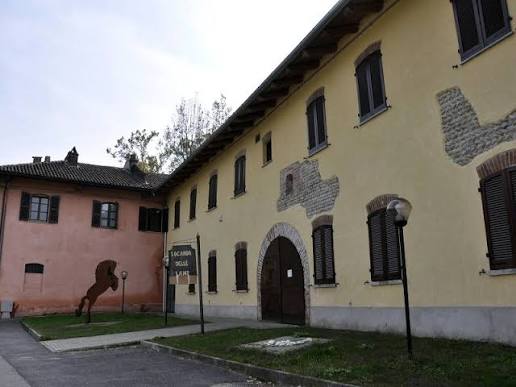
Two hotels that together offered 54 rooms and almost 100 beds in 2009 are now set to disappear from Rimini’s hospitality map. The Municipality plans to compulsorily acquire Villa del Sole and Superga, demolish them in 2027 and redevelop the site as parking and public green space. Yet behind what may appear to be a local urban-regeneration story lies a highly relevant investment question for investors, lenders and hotel owners: when does a property originally developed as a hotel cease to have hospitality as its highest and best use?
In Miramare, Rimini, the story of two properties that for decades formed part of the Riviera’s traditional family-run hotel sector is approaching its final chapter: Hotel Villa del Sole and Hotel Superga, two adjoining buildings located at 25 and 23 Viale Guglielmo Marconi respectively.
The Municipality of Rimini intends to proceed with the compulsory acquisition and subsequent demolition of both properties. The announced scheme involves a total investment of approximately €2.5 million and is expected to return around 750 square metres to public use, creating parking spaces, landscaped areas, improved accessibility and other public amenities.
The acquisition is expected to be completed in early 2027, with demolition works scheduled to begin in the spring.
For InvestimentiAlberghieri.it, however, the significance of the case lies not simply in the demolition itself. It provides an almost complete illustration of the economic life cycle of a hotel asset:
operation → obsolescence → closure → loss of economic function → physical deterioration → alternative use of the site.
That transition deserves closer examination.
Villa del Sole and Superga: Two Small Hotels from Rimini’s Traditional Tourism Model
These were not buildings that had never operated successfully as hotels.
An official Rimini accommodation guide from 2009 provides a relatively detailed picture of the two properties at the time.
Hotel Superga, at 23 Viale Marconi, was listed as a three-star hotel with 27 rooms and 47 beds.
The neighbouring Villa del Sole, at number 25, was classified as a two-star hotel with 27 rooms and 51 beds.
Together, the two hotels therefore offered:
54 rooms and 98 beds.
Those are far from insignificant numbers when viewed in the context of the Riviera’s traditional small-scale hotel sector.
Later tourism platforms indicate approximately 29 rooms for each property, which may reflect subsequent changes to their internal configuration or simply different methods of classification.
The more important point is that these were genuine operating hotels, not unfinished developments or dormant hotel licences attached to otherwise unused buildings.
The History of Hotel Superga: A Classic Riviera Family Hotel
Hotel Superga represented the type of business that sustained Romagna’s seaside tourism industry for decades.
A three-star property of relatively modest size, it operated with an in-house restaurant, direct guest relationships, beach agreements and the traditionally hands-on management approach associated with family-run Riviera hotels.
Historical descriptions of the property refer to a restaurant, entertainment activities, parking facilities, an affiliated beach establishment and an offering primarily centred around the classic seaside holiday experience.
Reviews relating to actual stays at the property were still being posted in 2021.
Guests frequently praised the food, staff and value for money, while recurring criticism focused on the small size of some rooms and bathrooms and the need to modernise parts of the property.
From an investment perspective, this is significant.
Superga does not appear to have disappeared from the market because there was no demand for accommodation in the destination.
Rather, the case seems much closer to a structural challenge affecting a considerable part of Italy’s small independent hotel stock:
the hotel business may still have a market, while the building requires progressively greater capital expenditure simply to remain competitive.
When the capital required to reposition an asset becomes disproportionate to the EBITDA that can realistically be generated after refurbishment, continuation of the existing hotel use can no longer be assumed to represent the optimal economic solution.
Villa del Sole: From Budget Hospitality to Abandonment
Villa del Sole also had a genuine hospitality history.
Historical commercial sources described it as a small hotel close to the beach, positioned between Rimini and Riccione and directly managed by its owners.
In 2009, it had 27 rooms and 51 beds.
Guest reviews show that the hotel was still operating in 2018, although some comments were already pointing to the ageing physical condition of the property.
Other sources from the same period describe a property of approximately 29 rooms and contain references suggesting that the hotel still had an active management team.
The subsequent deterioration appears to have been relatively rapid.
By July 2023, both Villa del Sole and Superga were being described as disused hotels in connection with a Carabinieri operation targeting illegal occupation of abandoned properties.
By 2025, Villa del Sole was officially described by the Municipality as having been closed for some time and subject to unauthorised entry, requiring cleaning works and the physical sealing of access points with welded metal mesh.
The intervention also involved Hotel Superga.
Within only a few years, therefore, the properties had moved from operating hospitality businesses marketed to paying guests to buildings that generated costs and security issues while producing no hotel revenue.
The Corporate Position: What Can Actually Be Verified
When examining the corporate structure, it is essential to distinguish between three different concepts:
the hotel operator,
the owner of the real estate, and
the current corporate owner of the property.
These are frequently — and incorrectly — treated as though they were the same thing.
For Villa del Sole, one particularly relevant piece of historical information emerges.
Publicly accessible corporate databases identify the business:
HOTEL VILLA DEL SOLE DI GERSTL TANJA
with the following details:
Legal form: sole proprietorship
REA registration: RN-327110
VAT number: 02430610218
Registered address: Via Marconi 25, Rimini
Business activity: hotels and similar accommodation — ATECO 55.1
This indicates that, at least as far as the operating business recorded in the commercial register is concerned, Villa del Sole was associated with a sole proprietorship rather than a limited company.
Strictly speaking, therefore, there was no corporate shareholding structure to analyse within that business: a sole proprietorship has neither shareholders nor equity participations.
However, an important distinction must be made.
This does not prove that the sole proprietorship owned the hotel building.
The operating entity and the real estate owner may be entirely separate.
This distinction is fundamental in professional hotel due diligence.
Who Owns Villa del Sole and Superga Today?
The September 2026 report introduces an important new element: according to Il Resto del Carlino, both properties are currently owned by the same company.
That means that, at least according to the current ownership structure reported by the newspaper, the two assets are now controlled by a single corporate entity.
However, the published source does not disclose the company’s name or its shareholders.
The other publicly accessible sources reviewed do not provide sufficiently robust evidence to connect the current real estate owner with the historic businesses that operated the hotels.
It would therefore be inappropriate to attribute ownership to a specific company merely on the basis of online associations.
To establish conclusively:
-
the current property-owning company;
-
its shareholders and ownership percentages;
-
directors and corporate officers;
-
previous owners;
-
acquisition date and title;
-
mortgages and other encumbrances;
-
financing arrangements;
-
the historic chain of title;
a professional investigation would need to cross-reference Land Registry records, mortgage and title searches, and historical Companies Register filings.
That is precisely the type of verification that should precede any professional investment decision involving a distressed hospitality asset.
2009–2027: A Timeline of the Two Hotels
The available information nevertheless makes it possible to reconstruct a relatively clear timeline.
2009
Hotel Superga is recorded as a three-star hotel with 27 rooms and 47 beds.
Villa del Sole is listed as a two-star property with 27 rooms and 51 beds.
2018
Villa del Sole is still operating and receiving guests.
Some customer feedback already highlights signs of physical obsolescence.
2021
Hotel Superga continues to accommodate guests.
Food and service are frequently praised, while a number of reviews point to ageing rooms and bathrooms.
2023
Both properties are described as disused.
Law-enforcement authorities intervene in relation to unauthorised occupation.
2025
Further interventions are undertaken by the Municipal Police and Carabinieri.
Access to Villa del Sole requires securing, while Superga is also reported as abandoned.
May 2026
The municipal project to acquire and demolish the hotels begins to emerge publicly, with the site intended for redevelopment as public space.
September 2026
Municipal inspections and project development are under way.
The total investment is indicated at approximately €2.5 million, with demolition scheduled for 2027.
This timeline makes the case particularly instructive from an investment perspective.
This Is Not an Isolated Case: Rimini Has 154 Inactive Hotels
The significance of the Miramare case becomes even clearer when placed within the wider structure of Rimini’s hotel market.
Urban-planning documentation published by the Municipality of Rimini in August 2026 identifies 1,073 hotel properties, of which:
919 are active
154 are inactive
Inactive hotels therefore account for approximately 14% of the hotel stock surveyed.
The southern part of the municipality, which includes Miramare, contains 721 hotel properties, of which 95 are inactive.
Perhaps the most revealing statistic, however, concerns hotel size.
According to the municipal analysis:
Active hotels: approximately 35 rooms on average
Inactive hotels: approximately 22 rooms on average
It is difficult not to identify a relationship between asset scale and economic sustainability.
Small independent hotels can remain highly successful under the right conditions.
But when they must simultaneously absorb the cost of:
-
generational succession;
-
major refurbishment;
-
energy-efficiency upgrades;
-
fire-safety compliance;
-
digitalisation;
-
distribution costs;
-
rising labour expenses;
-
evolving guest expectations;
small scale can become a structural disadvantage.
With approximately 27–29 rooms each, Villa del Sole and Superga fall directly within this segment.
The Question an Investor Should Ask: Is the Property Worth More as a Hotel or in an Alternative Use?
The crucial question is not simply how much the land is worth or how cheaply the property can be acquired.
It is:
Which configuration generates the greatest sustainable economic value?
In professional valuation terminology, this is the concept of Highest and Best Use.
To determine whether a building’s optimal use remains hotel-related, four basic conditions should be assessed:
legally permissible;
physically possible;
financially feasible;
maximally productive.
A property does not automatically pass this test simply because the word “Hotel” still appears on its façade.
The Purchase Price Is Only the Beginning of the Investment
For an investor considering the potential reopening of properties such as these, the correct calculation would never simply be:
purchase price ÷ number of rooms.
The investor would need to assess:
**Acquisition Price
-
Transaction Costs
-
Structural Capex
-
MEP Works
-
Fire-Safety Compliance
-
Energy-Efficiency Works
-
FF&E
-
OS&E
-
Pre-Opening Costs
-
Working Capital
-
Marketing and Repositioning
-
Interest During Construction
= Total Investment Cost**
Only after establishing this figure would it make sense to compare the required capital with prospective operating performance:
ADR × Occupancy × Available Rooms
and, subsequently, with GOP, EBITDA and the terminal value of the stabilised asset.
This is the difference between acquiring a cheap hotel property and acquiring a good hotel investment opportunity.
They are not the same thing.
A Simple Investment Example
Consider a hypothetical 28-room hotel available at what initially appears to be a highly attractive acquisition price.
Assume the following investment requirement:
€1.2 million acquisition price
€1.8 million building works and MEP systems
€500,000 FF&E, pre-opening expenses and working capital
The true investment would therefore amount to:
€3.5 million
At that point, the investor should no longer ask:
“Am I buying 28 rooms for approximately €42,800 per key?”
The correct question becomes:
“Can this market economically support approximately €125,000 of total investment per key?”
That is a fundamentally different investment proposition.
The Cost of Doing Nothing
Villa del Sole and Superga also illustrate another factor that investors and owners often underestimate.
A closed hotel does not remain economically static.
As time passes, the following may increase:
-
structural deterioration;
-
vandalism;
-
illegal occupation;
-
insurance costs;
-
maintenance requirements;
-
legal exposure;
-
security costs;
-
future regulatory-compliance expenditure;
-
capital required to reopen.
At the same time, the following may deteriorate or disappear altogether:
-
goodwill;
-
reputation;
-
tour-operator relationships;
-
repeat clientele;
-
experienced staff;
-
commercial positioning.
It is therefore entirely possible that:
the operating value of a hotel declines faster than the underlying land value appreciates.
This may be the single most important lesson from the Miramare case.
When Demolition Creates More Value Than Refurbishment
From a hotel operator’s perspective, the idea may initially seem counterintuitive.
Yet some assets reach a point at which demolition represents a more rational form of value creation than hotel refurbishment.
In Miramare, the buyer will effectively be a public authority, and the objective is therefore not conventional real estate investment returns but the creation of parking, green areas, public safety and improved urban quality.
The underlying economic principle, however, also applies to private capital:
a building should not be retained simply because it already exists.
It should be retained where its continued existence produces greater value than the available alternatives.
From Two Hotels to an Urban Liability
By 2023, the two properties were already the subject of law-enforcement intervention following unauthorised occupation.
In July 2025, the Municipality intervened again together with the Municipal Police and Carabinieri.
At Villa del Sole, cleaning works and the sealing of access points with welded metal barriers became necessary, while works were also carried out around Superga.
By then, the properties had undergone a fundamental economic transformation:
from productive assets to urban liabilities.
The cost of their inactivity was no longer borne exclusively by the owner.
It had begun to create negative externalities for the surrounding neighbourhood.
This is precisely the point at which the management of a distressed asset can become an issue not only for ownership, but also for municipalities, lenders, creditors and the wider community.
The Miramare Case and the Future of Italy’s Small Independent Hotel Stock
Villa del Sole and Superga should not simply be interpreted as the story of two unsuccessful hotels.
That would miss the broader issue.
They represent a much larger question:
What should be done with hotel stock that can no longer economically support the investment required to remain competitive?
There are several possible strategies.
1. Hotel Refurbishment
Where the location and prospective operating performance can justify the required capital expenditure.
2. Asset Aggregation
In certain circumstances, two or more small properties may become economically viable when integrated into a larger hotel operation.
3. Repositioning
A change in segment, category, brand or operating model may restore competitiveness.
4. Conversion
Where planning regulations permit alternative uses capable of generating higher value.
5. Demolition and Redevelopment
Where the existing building no longer possesses characteristics that justify its preservation.
The decision should be driven by financial analysis, not by attachment to the historical use of the asset.
The Due Diligence That Should Precede Any Investment
Before acquiring a closed or distressed hotel, a professional investor should verify at least the following.
1. Real Estate Ownership and Chain of Title
Land Registry records, mortgage searches, historic title and existing encumbrances.
2. Ownership Versus Operation
Establish who owns the real estate and who operated the hotel business.
3. Planning and Zoning
Permitted uses, restrictions, expansion potential, demolition rights and conversion opportunities.
4. Realistic Capex
Not a generic cost-per-square-metre assumption, but a genuine reopening and repositioning budget.
5. Prospective Operating Performance
Realistic ADR, occupancy, RevPAR, GOP and EBITDA assumptions.
6. Total Investment Cost
The full amount of capital required through to asset stabilisation.
7. Exit Value
The projected value of the stabilised hotel compared with the total capital invested.
8. Alternative Use Value
The value of the property if it does not remain a hotel.
Only by combining these elements can an investor determine whether an apparently attractive purchase price truly represents an investment opportunity.
The Real Lesson from Villa del Sole and Superga
In 2009, the two hotels together offered almost 100 beds.
In 2021, at least one of them was still welcoming paying guests.
By 2023, both were already disused.
By 2027, they may no longer exist.
That trajectory is far more instructive than the simple announcement of two demolitions.
It demonstrates one of the fundamental principles of hotel investment:
A hotel does not have value merely because it is a hotel. It has value when the capital required to maintain it — or bring it back to market — can be adequately remunerated by the cash flows the asset is capable of generating.
Once that relationship breaks down, the question is no longer how to preserve the historical hotel use.
The question becomes:
What is the highest and best use of the asset today?
That is the question that should precede every investment involving obsolete, closed or distressed hotel properties, including assets arising from UTP and NPL situations.
Confidential Hotel Investment Analysis for Investors, Lenders and Owners
Investimenti Alberghieri analyses hotel opportunities, real estate assets, distressed situations and special situations through an integrated assessment of real estate fundamentals, hotel operations, financial sustainability and alternative value-creation scenarios.
The combined expertise of Investhotel Capital Partners, Hotel Management Group and Roberto Necci enables investors and stakeholders to assess not merely what a hotel property may be worth today, but which operating, financial and strategic structure could maximise its future value.
For confidential asset reviews, investment feasibility studies, turnaround strategies, repositioning and extraordinary transactions:
info@investimentialberghieri.it