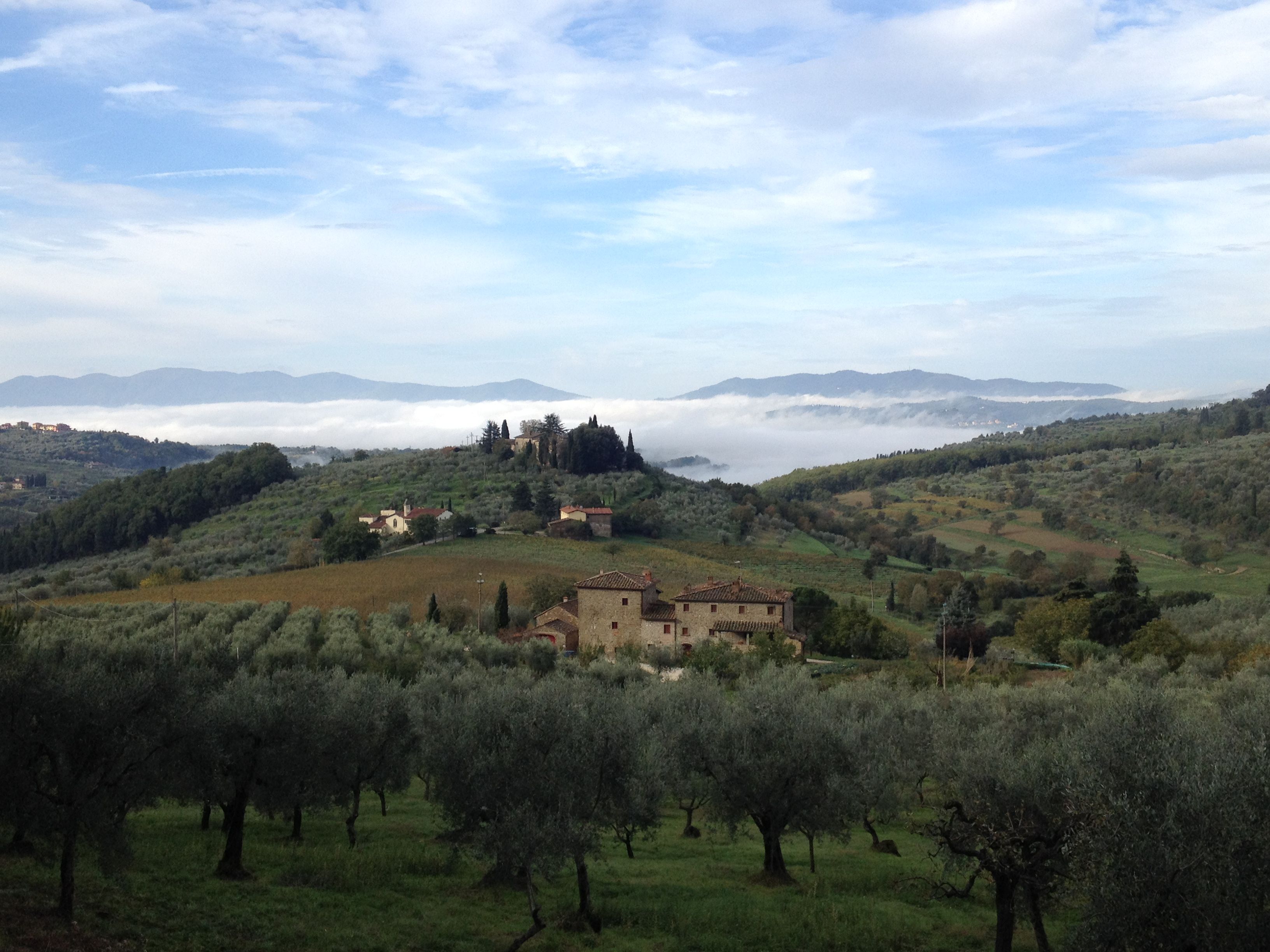
Italy’s rural tourism sector has a competitive advantage that is extremely difficult to replicate: distinctive real estate assets, landscape, heritage, agriculture, culture and territorial authenticity.
But an asset, on its own, is not an investment.
A country estate, masseria, wine property or historic residence may command significant real estate value while still generating inadequate returns.
This is where the real issue begins.
Transforming rural tourism from a family-owned asset into a structured hospitality business requires a fundamental change in approach: governance, financial planning, margin control, CAPEX discipline, management capabilities and an operating model that can be clearly assessed by lenders and investors.
The question is therefore no longer simply:
How much is the property worth?
The more relevant question is:
What capacity does that property have to generate cash flow, earnings and long-term value through professional management?
Much of the future of Italian rural hospitality will depend on this distinction.
From real estate asset to hospitality product
Many Italian rural hospitality businesses originate from family-owned properties.
An agricultural estate gradually opens to hospitality.
A few guest rooms are added.
Then comes food and beverage.
Events follow.
Eventually, the offer may expand into experiential activities, wellness, wine tourism or proprietary agricultural products.
This evolution can be commercially attractive, but it often occurs without a corresponding redesign of the business structure.
The result is an organisation in which real estate ownership, operations, family ownership and finance remain intertwined.
For a small property, this model may be perfectly workable.
As revenues, investment requirements and operational complexity increase, however, an informal structure can become one of the principal barriers to growth.
The first step is therefore to distinguish clearly between:
-
real estate ownership;
-
operating company;
-
management;
-
invested capital;
-
financial debt;
-
expected return.
This distinction makes it possible to understand where value is actually created and where risk is concentrated.
Owning an asset does not mean owning a profitable business
In Italian rural tourism, a significant proportion of family wealth is often tied up in physical assets.
Land, historic buildings, agricultural structures, vineyards and hospitality properties may represent substantial wealth.
But asset value does not necessarily correspond to the economic value of the operating business.
For a bank, investor or family office, the critical issue is not simply the value of the underlying collateral.
What matters is the company’s ability to generate sustainable and predictable cash flows.
A project backed by several million euros of real estate may still be financially weak if it cannot generate adequate operating margins.
Conversely, an asset of lower real estate value may become highly attractive if it benefits from:
-
clear positioning;
-
resilient demand;
-
pricing power;
-
strong margins;
-
disciplined cost control;
-
credible management;
-
a coherent growth strategy.
This integrated perspective on ownership, operations and investment lies at the heart of the approach developed across the ecosystem comprising RobertoNecci.it, InvestimentiAlberghieri.it, Investhotel.it and HotelManagementGroup.it.
When rural tourism becomes a real business
The transformation occurs when the project is no longer dependent solely on the day-to-day involvement of the owning family.
A structured business must be capable of being understood, measured and managed.
This requires at least five essential components.
Positioning
The first mistake is assuming that the beauty of the property is sufficient.
It is not.
A rural hospitality project must clearly understand what it is actually selling.
That may be:
-
hospitality;
-
wine experiences;
-
wellness retreats;
-
luxury countryside stays;
-
destination weddings;
-
food tourism;
-
corporate retreats;
-
slow tourism;
-
experiential travel.
Positioning determines pricing, customer segments, distribution strategy and revenue mix.
Revenue model
The second issue is revenue composition.
A sophisticated rural hospitality business should not necessarily rely on accommodation alone.
The model may incorporate:
-
rooms;
-
food and beverage;
-
events;
-
wine tourism;
-
wellness;
-
experiences;
-
retail;
-
agricultural activities;
-
proprietary products;
-
memberships;
-
corporate programmes.
The objective is not to add services indiscriminately.
It is to build coherent, measurable and profitable revenue streams.
Organisation
When everything depends on the owner, the business is not truly scalable.
Clear responsibilities, procedures, budgeting, reporting and control systems are required.
An investor should be able to understand quickly:
who makes decisions;
who manages operations;
who exercises control;
who approves investment expenditure.
Without this clarity, operational risk increases.
Financial control
Revenue, GOP, EBITDA, payroll costs, food cost, departmental profitability and cash flow cannot be figures reconstructed only once a year.
They must become everyday management tools.
The real step change occurs when ownership stops looking only at revenue and begins analysing the quality of the margin.
Reporting
A business seeking access to capital must speak a language that external stakeholders can understand.
Budget.
Forecast.
Variance analysis.
Cash flow.
Operating KPIs.
CAPEX plan.
Debt service.
A project does not become investable because it is attractive.
It becomes investable when it is understandable.
Capital enters when the project becomes readable
Many projects seek capital too early.
They approach investors before the business model itself has been properly defined.
That is a mistake.
A professional investor must be able to determine relatively quickly:
-
how much capital is required;
-
where that capital will be deployed;
-
what returns it may generate;
-
over what timeframe;
-
with what degree of risk;
-
under what governance structure;
-
with what potential exit strategy.
If this information is unavailable, the investor is not evaluating an opportunity.
The investor is being asked to build the opportunity on behalf of the owner.
And that is precisely what reduces the likelihood of securing investment.
CAPEX: where many projects become financially fragile
Transforming a rural property into a competitive hospitality product may require substantial capital expenditure.
Renovations.
Building systems.
Guest rooms.
Swimming pools.
Spas.
Kitchens.
Energy efficiency upgrades.
Landscaping.
Technology.
Every euro of CAPEX should, however, have a clear economic rationale.
The question is not:
How much will the project cost?
The more relevant question is:
What additional economic return can that investment generate?
Efficient CAPEX should produce at least one of the following outcomes:
-
higher ADR;
-
increased occupancy;
-
longer operating season;
-
stronger ancillary revenues;
-
lower operating costs;
-
improved margins;
-
enhanced asset value.
If none of these effects can be measured, CAPEX risks becoming a capital commitment rather than a value-creating investment.
EBITDA, cash flow and financial sustainability
One of the recurring weaknesses in rural hospitality is the gap between accounting profitability and actual cash generation.
To assess a project properly, it is essential to distinguish between:
-
operating EBITDA;
-
recurring maintenance;
-
CAPEX;
-
taxation;
-
debt service;
-
working capital requirements.
A property may report satisfactory operating results while still generating insufficient cash to support its financing structure.
This is where bankability becomes critical.
At Investhotel.it, these issues are analysed specifically from the perspective of financial sustainability, debt structuring and the asset’s ability to generate cash flows consistent with the capital employed.
Governance: the real transition from family ownership to enterprise
Many Italian rural hospitality businesses originate within owning families.
This is often a strength.
The family understands the territory, controls the asset and is directly committed to the project.
As the business grows, however, the same structure can become a constraint.
Who approves the budget?
Who decides on CAPEX?
Who evaluates management?
Who monitors performance?
How are profits distributed?
How is the entry of an external investor managed?
What happens in the event of disagreement between shareholders?
These are operational questions, not theoretical ones.
For an external investor, governance can be as important as the underlying asset.
A company with defined responsibilities, reporting systems and clear decision-making processes is far more investable than one in which every decision is governed informally by family relationships.
Generational transition as a financial event
Generational transition is often treated exclusively as a family matter.
In reality, it is also a financial event.
Different generations may pursue different objectives.
Some family members may wish to continue operating the business.
Others may prefer to monetise their interests.
Others may wish to retain ownership of the real estate while stepping away from operations.
A number of structures may therefore emerge:
-
entry of a minority investor;
-
separation between PropCo and OpCo;
-
appointment of an external operator;
-
partial disposal;
-
refinancing;
-
establishment of a family holding company;
-
development through a joint venture.
The quality of the chosen structure may determine whether the business can grow without compromising the family’s underlying wealth.
Equity and debt: two fundamentally different forms of capital
One of the most common mistakes is using debt to finance risks that should properly be absorbed by equity.
Debt must be repaid.
Equity absorbs business risk.
A development-stage project with substantial CAPEX requirements and a significant ramp-up period is unlikely to be appropriately financed entirely through bank debt.
The financing structure should therefore be built around:
-
available equity;
-
total CAPEX;
-
projected cash flows;
-
DSCR;
-
maximum sustainable leverage;
-
financing tenor;
-
potential grace periods.
The right question is therefore not:
How much debt can we obtain?
It is:
How much debt can the project genuinely sustain without placing the business under excessive financial pressure?
The role of management
An exceptional asset can generate mediocre results if it is poorly managed.
This risk is particularly relevant in rural hospitality, where the authenticity of the experience can sometimes obscure the need for rigorous operational discipline.
The guest may perceive spontaneity.
The business behind that experience must be highly professional.
Revenue management, distribution, cost control, food and beverage, staffing, maintenance, CRM and commercial strategy must all be managed systematically.
This is one of the core areas addressed by HotelManagementGroup.it, with a focus on operations, efficiency and the economic sustainability of hospitality businesses.
From a single agriturismo to a territorial platform
One of the most interesting developments in rural tourism may be the move beyond the traditional concept of the agriturismo.
A sophisticated rural property can become a genuine territorial economic platform.
It can integrate:
hospitality;
food and beverage;
agricultural production;
wine tourism;
wellness;
events;
culture;
retail;
experiences.
Under this model, hospitality becomes the point of connection between the territory, the underlying asset and the customer.
This can make the project more difficult to replicate and potentially more attractive to investors seeking differentiated assets.
But uniqueness alone is not enough.
It must be supported by the ability to generate margins.
Investability and bankability are not the same thing
A project may be highly attractive to an equity investor while remaining unsuitable for traditional bank financing.
Alternatively, it may be relatively easy to finance but generate insufficient returns for an equity investor.
Four dimensions should therefore be assessed separately:
asset value;
operating performance;
debt sustainability;
equity returns.
Confusing these dimensions often results in flawed investment decisions.
InvestimentiAlberghieri.it was developed precisely to examine this intersection between capital, real estate, operations and strategy.
The objective should not simply be to find capital.
It should be to determine which form of capital is compatible with the project and at what stage it should be introduced.
The real step change: building a transferable business
There is one further indicator that is particularly important.
A genuine business should be capable of operating without the founder being permanently present.
When an operation depends entirely on one individual, its enterprise value is inherently fragile.
When processes, management, reporting systems and procedures are in place, value becomes transferable.
And transferability is precisely what professional capital looks for.
Professionalisation therefore serves not only to improve operating performance.
It transforms the underlying property into a business that can be financed, valued, opened to external investors or, where appropriate, eventually sold.
From family wealth to an investable business
The future of Italian rural tourism will not depend solely on the quality of its real estate.
It will depend on the ability to transform that real estate into functioning businesses.
The asset will remain the starting point.
But governance, management, capital, reporting and financial discipline will increasingly determine ultimate value.
The difference between a family-owned property and an investable hospitality business is therefore not primarily one of size.
It is one of organisation.
A family may decide not to sell.
It may choose not to bring in external equity.
It may prefer to retain full control.
But to make those choices from a position of strength, it must first create a business capable of being analysed, financed and valued.
That is the decisive transition.
Not necessarily transforming family wealth into capital.
But transforming family wealth into a business capable of attracting capital when capital is required.
Conclusion
Italian rural tourism represents one of the hospitality sectors with the greatest potential for value creation.
It benefits from assets that cannot easily be replicated.
But assets alone are not enough.
True value emerges from the interaction between:
real estate + operations + capital + governance + cash generation.
It is this combination that transforms a family-owned property into a structured hospitality enterprise.
And it is this transformation that can make Italian rural tourism stronger, more financeable and more attractive to professional investors.
For family owners, investors and operators, the starting point should therefore always be an independent assessment of the project: asset value, operating model, CAPEX, profitability, financing structure, governance and value-creation strategy.
For investment analysis, asset enhancement, development and hospitality project structuring:
info@investimentialberghieri.it
Further insights: