Servatur Hotels & Resorts’ move into the former Allegro Isora in Tenerife, which is set to become Servatur Isora Suites, is not just another hotel transaction in the Canary Islands.
It is an interesting case because it separates three dimensions that are often confused in hotel investment: ownership, equity participation and operational control.
Servatur is not simply acting as a traditional buyer of a hotel property. The transaction involves a €2.7 million investment to acquire a 49% stake in Hotel Isora and, more importantly, a long-term lease and operating agreement with a duration of 13 years. The asset comes from the perimeter of Hotel Investment Partners, the hotel platform controlled by Blackstone funds, with Singapore’s sovereign wealth fund GIC also involved.
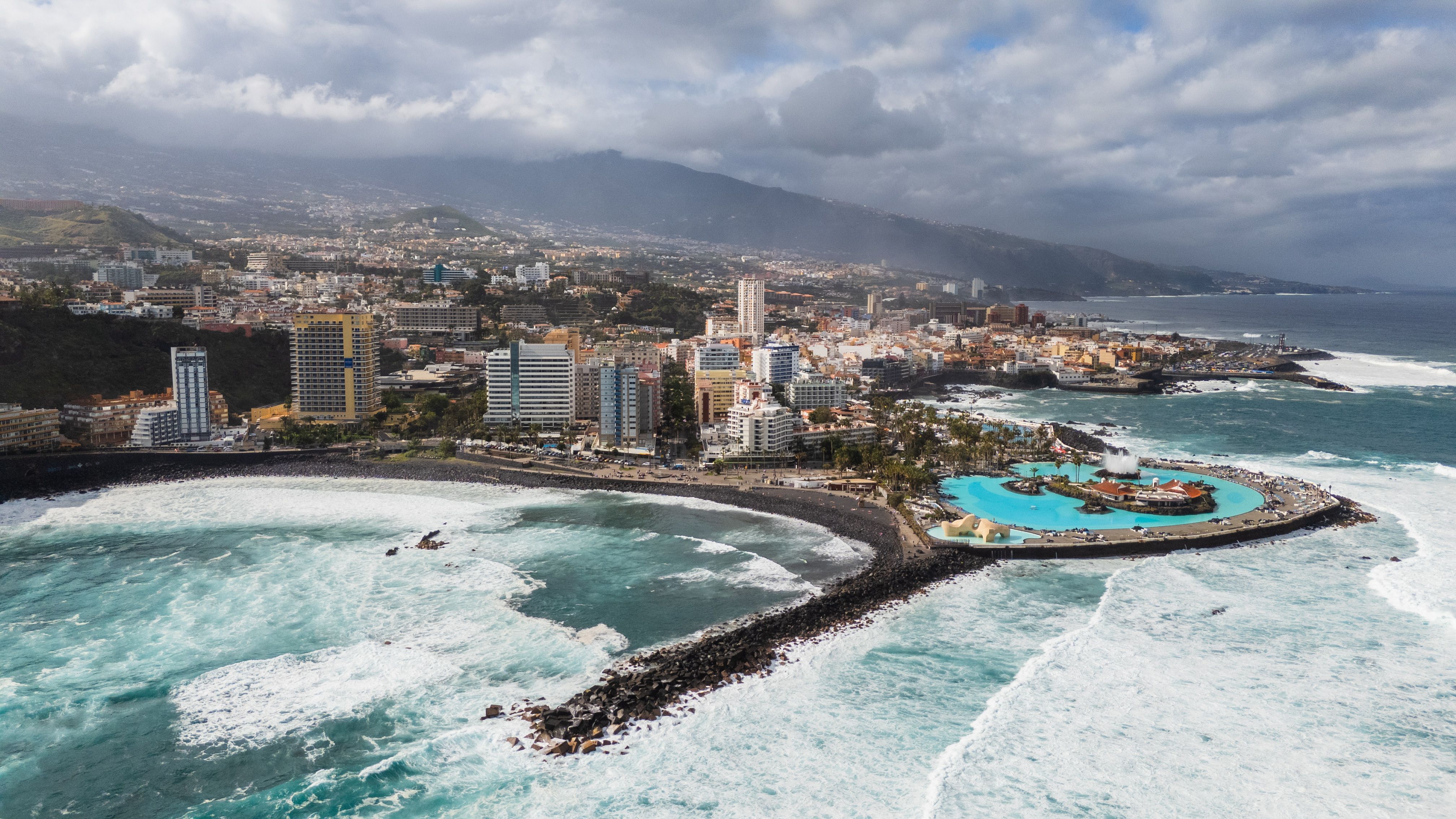
The hotel is a four-star property located in Playa de la Arena, on the south-western coast of Tenerife, around 30 minutes from Tenerife South Airport. It has approximately 311 rooms, a restaurant, bars, swimming pools and a resort product suited to leisure guests, families and holiday stays.
The central point, however, is not simply the change in control. The central point is the industrial strategy behind the transaction: Servatur is entering the asset to renovate it, reposition it, operate it directly and transform it into Servatur Isora Suites.
That makes the deal far more interesting than a conventional real estate acquisition. Here, value is not being pursued only through ownership of the hotel, but through the ability to reshape its economic potential through management, capex, branding and distribution.
For further analysis of hotel funds, transactions, value creation and hospitality investment strategies, visit the Investimenti Alberghieri blog.
Value is not created by ownership alone, but by controlling the economic levers
In the traditional hotel market, value is often associated with ownership of the property. Whoever owns the walls is seen as the central player in the transaction.
In professional hotel investment, however, value can also be created by controlling other levers: management, contract, brand, product, distribution, capex and commercial positioning.
This is what makes the Servatur-Isora case particularly interesting. Servatur enters the asset with a significant equity stake, but above all it gains operational control of the hotel for a long period. That provides the industrial timeframe required to invest, change the perception of the product, improve performance and stabilise the new positioning.
In a hotel, value does not depend only on who owns the asset. It depends on who is able to make it perform.
The decisive question is not only:
who owns the hotel?
The more important question is:
who controls the levers that determine revenue, costs, reputation, capex and operating margin?
The answer explains why many modern hotel transactions are no longer simple real estate deals, but hybrid structures in which capital, operations and industrial strategy come together.
Tenerife and the value of liquid leisure destinations
Tenerife is one of Europe’s most resilient leisure destinations. It benefits from international demand, strong air connectivity, less extreme seasonality than many Mediterranean destinations and a consolidated resort positioning.
For a hotel investor, this type of destination offers an important advantage: liquidity.
Liquidity is not only about the ability to sell the asset in the future. It is also about the depth of tourism demand, the presence of qualified operators, the ability to attract capital, the availability of benchmarks and the ease with which funds, family offices, banks and hotel platforms can understand the investment case.
A hotel in a liquid leisure destination has more strategic options. It can be renovated, repositioned, assigned to a new operator, refinanced, included in a portfolio or sold to institutional investors.
Location, however, is not enough. Even in a strong destination, a hotel can lose competitiveness if the product is outdated, if the rooms no longer match demand, if the common areas are not aligned with the positioning or if management fails to turn occupancy into margin.
That is where the Servatur-Isora transaction becomes relevant: it is not relying only on Tenerife as a destination, but on the transformation of the hotel product itself.
From traditional resort to suites product: rebranding as a value lever
The transition from Allegro Isora to Servatur Isora Suites is not simply a change of name.
The rebranding signals a clear direction: greater emphasis on space, comfort, leisure stays, families, medium-length holidays and perceived quality.
In the resort market, the word “suites” is not neutral. It suggests larger rooms, greater autonomy, a more residential experience and potential growth in average rate. If supported by a real product upgrade, it can affect ADR, RevPAR, online reputation and commercial distribution.
The key point is this: rebranding creates value only when it is substantive.
Changing the name without changing the experience is cosmetic marketing. Changing the product, rooms, services, standards, communication, sales channels and operations can reshape the hotel’s profit-and-loss potential.
In a resort, value often depends on three questions:
-
is the product aligned with current demand?
-
is the price aligned with perceived quality?
-
can management turn the repositioning into margin?
If the answer is yes, rebranding is not just communication. It is asset management.
Capex: not a cost, but capital that must generate a return
The renovation planned by Servatur is one of the most relevant elements of the transaction.
In hotels, capex is often seen as a cost item. In reality, when designed properly, it is a value lever.
A well-planned renovation can increase perceived quality, improve average rate, reduce maintenance costs, upgrade systems, make operations more efficient and strengthen the hotel’s competitive position.
But capex must be selective. Not every investment generates a return. Not every refurbishment increases value. Not every euro spent produces ADR.
The real question is:
which investment genuinely changes the hotel’s ability to generate sustainable income?
In the case of a resort such as Isora, the most sensitive areas are rooms, bathrooms, pools, food and beverage, common areas, energy efficiency, visual identity, family services, digital experience and online reputation.
Effective capex does not merely improve the look of a hotel. It changes its potential income statement.
HIP, Blackstone and GIC: the logic of hotel platforms
The presence of Hotel Investment Partners, Blackstone and GIC makes the transaction even more significant.
HIP is one of Southern Europe’s leading hotel platforms, specialising in well-located leisure assets that can often be renovated, repositioned and paired with qualified operators. Blackstone represents global private equity capital, while GIC represents long-term sovereign capital.
This combination confirms a clear trend: the European resort sector has become a more mature, financial and industrial investment class.
Leisure hotels are no longer merely tourism businesses. They are assets that can be aggregated, transformed, managed through specialist platforms and enhanced through portfolio strategies.
In this context, the entry of an operator such as Servatur is not just an operational detail. It is part of the value strategy.
The individual hotel becomes part of a platform. The platform selects the operator. The operator transforms the product. Capex supports the repositioning. The new positioning must generate income. That income then supports the value of the asset.
This is the chain that defines professional hotel investment.
Why this transaction also matters for the Italian market
The Servatur-Isora case is about Tenerife, but it carries a highly relevant lesson for Italy.
Italy has a large stock of resort hotels, leisure properties, holiday villages, seasonal hotels and tourism assets with untapped potential. Many are located in strong destinations, but suffer from outdated products, underdeveloped family management, weak commercial capabilities, unclear contractual structures or the absence of a credible capex plan.
The problem is not always demand. Very often, the problem is the conversion of demand into value.
A hotel can be located in an excellent destination and still not be investable. It can have good occupancy and insufficient margins. It can have pricing potential and fail to express it. It can have rooms, spaces and services, but no clear positioning.
To attract qualified capital, an Italian hotel must be presented not only as an accommodation business, but as an industrial project.
An investor wants to understand:
-
what demand the hotel currently serves;
-
what demand can be developed;
-
what product needs to be renewed;
-
what capex is required;
-
which management model is most suitable;
-
which brand or soft brand could strengthen the positioning;
-
what ADR can be achieved;
-
what operating margin is sustainable;
-
what contract governs the asset;
-
what exit strategy is credible.
Potential value is not enough. It must be translated into a readable plan.
The hotel guides published on RobertoNecci.it explore these themes in depth: hotel valuations, investments, management agreements, business leases, franchising, governance, management control, asset management and value creation strategies.
Management as part of real estate value
The Servatur-Isora transaction highlights a decisive point: in hotels, operational control can be just as important as property ownership.
In many hotel investments, value depends not only on who owns the asset, but on who operates it, with what expertise, with what commercial system, with what brand and with what operational capability.
A specialist operator can significantly change the economic profile of a hotel. It can improve revenue management, distribution, pricing, cost control, reputation, customer segmentation, service quality and staff productivity.
This is especially true in resorts, where operational complexity is high. Food and beverage, entertainment, pools, maintenance, seasonal staffing, tour operators, OTAs, direct channels, packages and online reviews all affect profitability.
Management is not an accessory function. It is a component of real estate value.
A poorly managed hotel is worth less, even if the property itself is good. A well-managed hotel can be worth more, even when the product still requires investment.
Rebranding, management and distribution: the value creation triangle
In a transaction such as Isora, value creation depends on three connected levers:
-
rebranding;
-
management;
-
distribution.
Rebranding redefines the promise to the market. Management must make that promise credible. Distribution must turn it into paying demand.
If one of these levers is missing, the project loses strength.
A new name without new management risks being cosmetic. Good management without clear positioning may fail to achieve rate. Effective distribution without an adequate product may generate occupancy, but not value.
The goal is not to fill the hotel. The goal is to make it perform.
This is an essential distinction for the Italian market, where many hotels still confuse occupancy with profitability. A full hotel is not necessarily a profitable hotel. A hotel with low rates, high costs and intermediated distribution can work hard and create little value.
The real indicator is not only how many rooms are sold. It is how much sustainable margin is produced per available room.
Price, stake, capex and return: the real architecture of the investment
The Servatur-Isora case is also interesting because it shows that hotel investment does not always mean acquiring 100% of the property.
Several layers are involved:
-
equity investment;
-
lease and operating agreement;
-
operational control;
-
capex plan;
-
rebranding;
-
expected return;
-
long-term investment horizon.
This architecture is far more sophisticated than a traditional sale and purchase transaction.
The question is not only:
how much does the hotel cost?
The right question is:
how much total capital is required to bring the asset to the level at which it can generate the expected return?
This total capital includes the entry stake, renovation, transition costs, rebranding, marketing, systems, training, potential initial losses and the time required for stabilisation.
That is why hotel due diligence must always connect real estate analysis, contractual structure, industrial plan and prospective profit and loss.
Those who look only at the property risk underestimating capex. Those who look only at operations risk underestimating the physical constraints of the asset. Those who look only at revenue risk missing the fragility of margin. Those who look only at the contract risk failing to understand whether the hotel can actually sustain that economic model.
A serious hotel investment is built by integrating all these dimensions.
For further insight into the perspective of investors, funds and specialist operators, the InvestHotel blog covers hotel investments, funds, distressed credit, acquisitions, disposals, due diligence and value-enhancement transactions.
Five lessons from the Servatur-Isora transaction
The Servatur transaction involving the former Allegro Isora offers five useful lessons for hotel owners, investors and operators.
First: the value of a resort hotel does not depend only on the destination, but on the ability to update the product.
Second: capex is not a cost if it changes the asset’s positioning, rate potential and margin.
Third: rebranding creates value only when it is supported by a real transformation of the guest experience.
Fourth: operational management is an integral part of hotel real estate value.
Fifth: a hotel becomes investable when ownership, contract, management, capex and expected return are credibly connected.
These lessons fully apply to the Italian market as well.
Many Italian hotels do not simply need to be sold. They need to be prepared for the market. They must be analysed, repositioned, documented, enhanced and presented through a logic that capital can understand.
An unprepared hotel is not necessarily excluded by investors. But it is perceived as riskier. And risk, in capital markets, almost always translates into a discount on value.
Conclusion: a hotel is worth more when it has a credible project
The Servatur-Isora transaction shows that hotel value is not created only by owning the property. It is created by the quality of the project.
A hotel creates value when location, product, management, capex, brand, distribution and financial strategy all work in the same direction.
The real leap does not occur when an asset changes hands. It occurs when its economic potential changes.
For this reason, anyone who owns a hotel and is considering a sale, value-enhancement process, refinancing or approach to qualified investors should ask one decisive question:
is my hotel a real estate asset to be described, or an investment project to be demonstrated?
The difference between these two answers can affect the price, the timing of the transaction, the number of interested investors and the quality of the offers received.
Hotel Management Group supports owners, investors, funds, family offices and operators in the analysis, due diligence, value creation, development and structuring of hotel investment transactions.
If you are considering the sale of a hotel, the acquisition of an asset, the restructuring of a property or the development of a hotel investment project, you can explore the group’s advisory, governance and development activities at HotelManagementGroup.it.
A hotel creates value when it stops being described merely as an accommodation business and starts being designed, managed and financed as a strategic asset.
Roberto Necci - r.necci@robertonecci.it