The acquisition of the Shangri-La Hotel Dubai by AHS Properties for approximately US$300 million is far more than a major hotel transaction. It is a clear signal of how the international hospitality investment market is evolving: high-end hotels in irreplaceable locations are increasingly being valued not only as operating businesses, but as strategic real estate assets.
According to Khaleej Times, AHS Properties acquired the Shangri-La Dubai from Mismak Asset Management, in what stands out as one of the most significant recent single-asset real estate transactions in Dubai.
The economic figure is substantial: approximately US$300 million for a luxury hotel on Sheikh Zayed Road, one of the emirate’s most important urban arteries. Based on the hotel’s 302 rooms and suites, the implied value is approximately US$991,000 per room or suite. If the property’s 126 serviced apartments are also included, the indicative value becomes approximately US$700,000 per accommodation unit.
This figure should not be read merely as a hotel metric. In transactions of this nature, the price per key does not simply reflect the hotel’s current income-generating capacity. It also captures the scarcity of the location, the underlying land value, the prestige of the address, the long-term potential of the asset and the strategic importance of controlling a property in an area that is extremely difficult to replicate.
In other words, AHS Properties did not just buy a hotel. It bought a position.
This was not just a hotel acquisition. It was the acquisition of a position
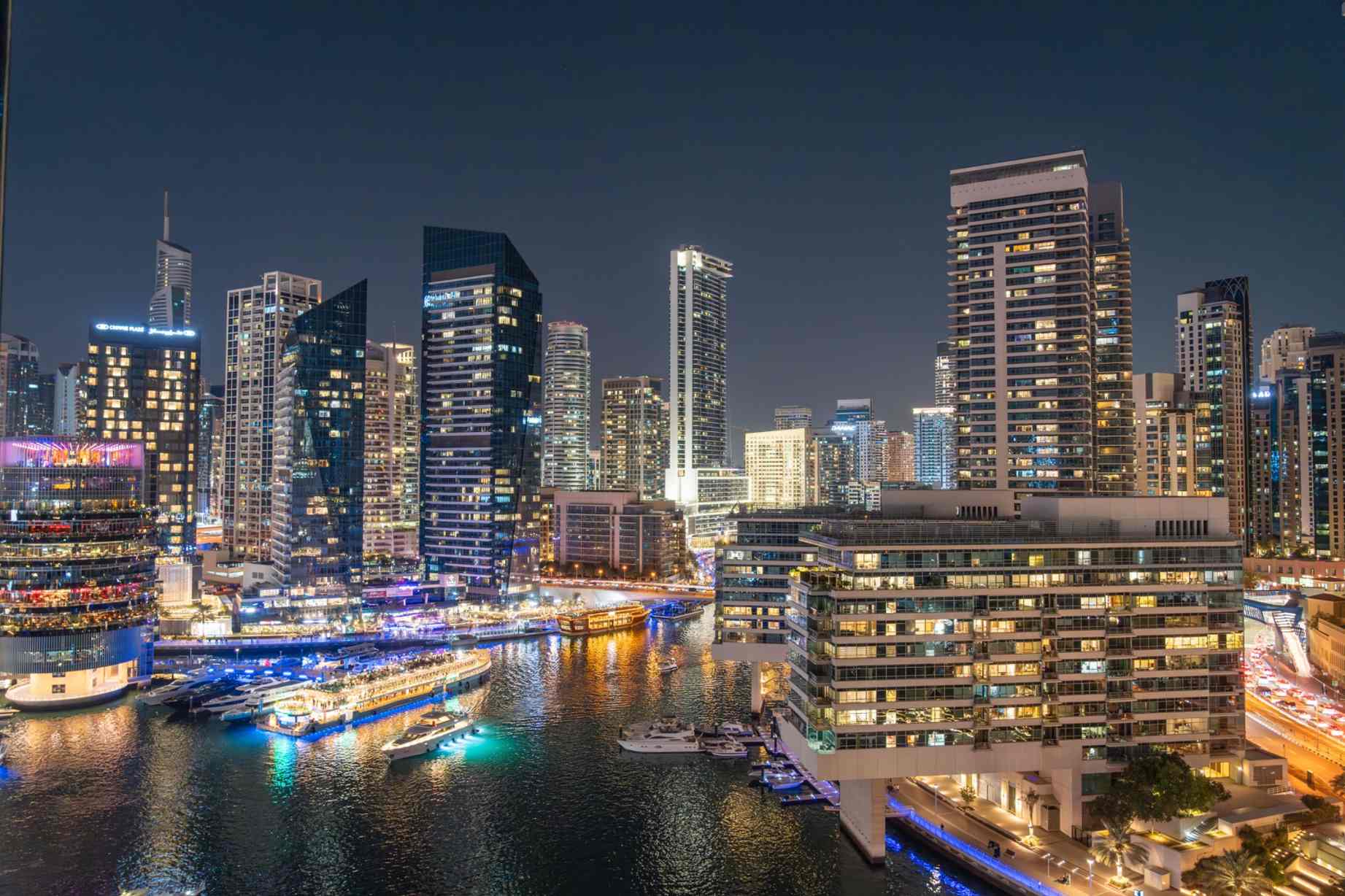
The Shangri-La Dubai is located on Sheikh Zayed Road, one of Dubai’s most recognisable and strategically important urban corridors. The property is a 43-storey tower, approximately 200 metres high, completed in the early 2000s during a decisive phase in the city’s hotel and real estate development.
This is the first reason why the transaction is particularly relevant for anyone involved in hotel investments.
One of the most common mistakes made by less experienced investors is to evaluate a hotel only as a business: rooms sold, revenue, occupancy, ADR, RevPAR, operating costs and EBITDA. These indicators are essential, but they are not sufficient.
A prime hotel must also be understood as a complex real estate asset. Its valuation depends on what it produces today, but also on what it may represent tomorrow: a long-term real estate holding in a global destination, a scarce asset, a repositioning platform and a vehicle for exposure to urban and tourism growth.
In the case of the Shangri-La Dubai, the scarcity of the location appears to be the real core of the deal.
Scarcity is a key component of hotel value
The best hotels are not valuable only because they perform well. They are valuable because, in many cases, they cannot be recreated.
A hotel located in a unique position, along a mature urban corridor, with international visibility and diversified demand, possesses a quality that no business plan can artificially generate: scarcity.
A building can be developed.
A brand can be changed.
Operations can be improved.
A product can be repositioned.
But a truly prime location in a mature market cannot always be recreated.
This is why, in the most sophisticated hotel valuations, the question is not only: “How much does this hotel generate today?”
The more important question becomes: “How rare is this asset, and what strategic position does it allow the owner to secure?”
The Investimenti Alberghieri blog explores precisely these topics: hotel value, hospitality real estate transactions, investors, prime assets, repositioning strategies and the dynamics of the hotel investment market.
Read more here: https://investimentialberghieri.it/blog
Price per key only tells part of the story
The indicative value of approximately US$991,000 per room or suite is a very significant figure, but it must be interpreted correctly.
In the hotel sector, price per key is a useful metric for comparing transactions, markets and segments. However, in prime hotel deals, it cannot be viewed in isolation.
A high price per key may reflect several factors:
the property’s location, especially when it is not replicable;
the value of the underlying land;
the architectural and technical quality of the building;
the strength of the destination;
the presence of stable international demand;
future repositioning potential;
the value of the brand or management agreement;
the future liquidity of the asset in the event of a sale.
In markets such as Dubai, London, Paris, New York, Rome, Milan or Venice, price per key does not measure hotel performance alone. It measures access to a market, a position and a scarce real estate opportunity.
That is why the Shangri-La Dubai transaction is so interesting: the value lies not only in the hotel’s income statement, but in the control of a landmark asset along one of the city’s most important corridors.
Dubai confirms the strength of hospitality real estate
The transaction takes place within a broader context of strong international capital flows into Dubai. According to figures reported in the original article, the emirate’s real estate sector recorded approximately US$68.6 billion in transactions in the first quarter of 2026, while foreign investment increased by 26% to approximately US$40.4 billion.
These figures highlight a clear trend: Dubai continues to be perceived as a global platform for real estate capital, private investors, developers, family offices and institutional operators.
In the hotel sector, this attractiveness is even more significant. Hotels allow investors to gain exposure to several dimensions at the same time:
tourism growth, as Dubai continues to attract international leisure and corporate demand;
prime real estate, as assets in the best locations become increasingly scarce;
global luxury, as high-end hospitality captures international high-spending demand;
operating income, because a hotel is an income-producing real estate asset;
long-term capital appreciation, because the location itself may increase in value over time.
The Shangri-La Dubai is therefore not simply a hotel acquired by a new owner. It is part of a broader strategy to secure a real estate position along one of the city’s most important corridors.
Ownership, operations and brand: three different layers of value
Another important aspect of the transaction is that the acquisition is not expected to affect the hotel’s day-to-day operations. Guests will continue to enjoy the property’s services, while the asset becomes part of AHS Properties’ broader portfolio on Sheikh Zayed Road.
This distinction is important because it highlights a fundamental principle in hotel investment: ownership, operations and brand are not the same thing.
In every hotel, at least three layers must be distinguished.
Real estate ownership
This refers to control of the building, the land, the spaces and the permitted use. It is the asset’s long-term real estate component.
Hotel operations
This is the day-to-day activity that generates revenue, margins, reputation and guest satisfaction.
Brand or management agreement
This is the commercial, distributional and reputational system that supports the performance of the property.
The value of a hotel is created through the balance of these elements. A major property in a unique location can have substantial value even when operations remain entrusted to a specialist operator. At the same time, strong management can increase the value of the asset by improving cash flows, profitability and investors’ perception of risk.
This is why hotel valuation requires multiple areas of expertise: real estate, finance, operations, urban planning and commercial strategy.
What an investor should analyse before acquiring a hotel
The Shangri-La Dubai transaction is a useful reminder that the acquisition of a hotel should never be assessed only on the basis of price or revenue.
An investor should analyse at least eight dimensions.
| Area of analysis | Why it matters |
|---|---|
| Location | It determines demand, visibility, real estate value and future liquidity |
| Scarcity of comparable supply | The harder the asset is to replicate, the greater its strategic value |
| Operating performance | Occupancy, ADR, RevPAR, GOP and EBITDA measure the quality of operations |
| Capex | A hotel may require significant investment to maintain or improve its positioning |
| Contracts | Lease, management contract, franchise or direct operation change the risk-return profile |
| Brand | The brand may increase distribution, reputation and pricing power |
| Repositioning potential | A change in product, target market or management can create new value |
| Exit strategy | A good investment must be saleable to buyers aligned with the asset profile |
This framework is also highly relevant to the Italian market, where many hotels are still valued through an overly simplified lens.
The lesson for the Italian hotel market
The Shangri-La Dubai case offers a useful lesson for Italy as well.
Italy has many hotels located in settings that are extremely difficult to replicate: historic city centres, art cities, mature seaside destinations, luxury locations, listed buildings, former convents, historic palazzi, waterfront properties and hotel assets in high-demand urban areas.
Yet many of these properties are still assessed using a traditional, almost exclusively operational approach. The focus often remains on current revenue, existing margins or recent operating results, without fully considering the real estate and strategic potential of the asset.
In reality, a hotel may be worth far more than its current income statement if it presents certain characteristics:
a non-replicable location;
repositioning potential;
structural tourism and corporate demand;
potential affiliation with international brands;
underused spaces;
improvable margins;
sustainable capex requirements;
a growing destination;
limited comparable new supply;
the ability to attract institutional capital.
The real question, therefore, is not simply “How much does the hotel generate today?” but how much value can be extracted from the asset through the right strategy.
Further insights on hotel transactions, investment analysis and opportunities in the hospitality sector are also available on the Investhotel blog:
https://www.investhotel.it/blog
Valuing a hotel means reading its potential, not just its past
The Shangri-La Dubai transaction confirms that hotel valuation cannot be reduced to a standard multiple.
Two hotels with the same EBITDA may have very different values if one is located in an ordinary position and the other in an irreplaceable location. Similarly, a hotel that is not currently performing at its full potential may still represent a highly attractive investment if there is room for repositioning, rate growth, operational improvement or a transformation of the business model.
To value a hotel investment correctly, at least eight areas must be analysed:
1. Quality of location
Not all locations are equal. Visibility, accessibility, urban context and potential demand directly affect value.
2. Scarcity of comparable supply
A hotel in an area where new development is no longer possible has a structural competitive advantage.
3. Strength of the destination
Tourism growth, business demand, events, transport connections and international reputation all influence asset value.
4. Operating performance
Occupancy, ADR, RevPAR, GOP, EBITDA and costs must be read not only as results, but as indicators of efficiency and potential.
5. Operating model
Direct management, lease, management contract, franchise or white-label operation produce different risk-return profiles.
6. Capex requirements
A hotel may appear profitable while still requiring substantial investment to maintain or improve its positioning.
7. Repositioning potential
Brand change, renovation, category upgrade, new distribution strategy and improved revenue management can significantly alter value.
8. Future liquidity of the asset
A good investment must also be analysed from an exit perspective: who will be able to buy it tomorrow, and under what conditions?
The hotel guides by Roberto Necci explore many of these themes, from management to valuation, from revenue management to strategy, offering practical tools for entrepreneurs, managers, investors and hotel owners.
The guides are available at: https://www.robertonecci.it
Why this transaction is a signal for the entire sector
The acquisition of the Shangri-La Dubai should not be seen as an isolated event. It is part of a broader trend: prime hotels are becoming increasingly important within international real estate portfolios.
There are several reasons for this.
Hotels allow investors to benefit from the growth of global tourism.
Prime assets offer long-term capital preservation in the most sought-after markets.
Scarce locations generate value beyond operational performance.
Luxury hospitality captures international demand with high spending power.
Hospitality real estate can be repositioned, refinanced, rebranded or sold to specialised investors.
In this environment, the ability to select, value and manage a hotel correctly becomes decisive.
Those who look only at historical numbers risk missing the potential.
Those who look only at the beauty of the building risk underestimating operational complexity.
Those who look only at the brand risk ignoring the value of ownership.
Hotel investment requires an integrated reading of the asset.
Conclusion: prime hotels are not just properties. They are platforms of value
The acquisition of the Shangri-La Dubai by AHS Properties demonstrates that high-end hotels in strategic locations are not acquired solely for their current income.
They are acquired for the strategic position they secure.
A real estate position.
A financial position.
An urban position.
A competitive position.
A long-term position.
This is the real lesson of the transaction: in the most evolved markets, hotel value is created through the intersection of scarcity, operations, capital and strategic vision.
For the Italian market, the message is clear. Many hotels should not be viewed merely as accommodation businesses, but as long-term real estate assets to be analysed, repositioned and enhanced with a structured methodology.
The future of hotel investment will reward those who can look beyond the income statement and understand the full value of the asset.
Are you looking to value, develop or reposition a hotel asset?
Hotel Management Group supports property owners, investors, entrepreneurs and operators in the analysis, advisory, enhancement, development and repositioning of hotel assets.
From preliminary valuation to management strategy, from commercial repositioning to the real estate reading of the asset, Hotel Management Group works alongside those who want to transform a hotel into a platform of value.
Discover the professional ecosystem and the business units dedicated to the hospitality sector:
https://www.hotelmanagementgroup.it
Roberto Necci - r.necci@robertonecci.it