In the Italian hotel market, the most attractive opportunities do not necessarily emerge when distress has already become obvious to everyone.
The real competitive advantage often arises earlier.
It emerges when a company begins to experience financial pressure, enters a restructuring process, seeks a new balance with its creditors and considers asset disposals as a means of preserving value.
The case of THG S.r.l. in Folgaria, involving Hotel Kube and B&B Francolini, provides a particularly interesting example of this dynamic.
The company has been involved in a negotiated crisis settlement process before the Court of Verona, within a broader framework aimed at restructuring its financial position and enhancing the value of its assets.
The transaction perimeter includes two hospitality properties located in Folgaria, Trentino:
-
Hotel Kube, in the Fondo Grande area;
-
B&B Francolini, in the locality of the same name.
An irrevocable offer totalling €1.7 million had been submitted for the two businesses, allocated as follows:
-
€1 million for Hotel Kube;
-
€700,000 for B&B Francolini.
Publicly available documentation also indicated an aggregate appraisal value of approximately €3.5 million.
But this is precisely where a superficial interpretation should be avoided.
The comparison between the appraisal value and the proposed acquisition price does not, on its own, determine the quality of the investment.
The real question is different:
what is the economic value of the asset once its long-term sustainability has been restored?
Why the THG case matters
The THG case is particularly interesting not simply because of the price, but because of the mechanism behind the transaction.
The company is not merely selling a hotel.
The disposal of the hotel businesses forms part of a broader financial restructuring process.
This fundamentally changes the investor's perspective.
The focus is no longer solely on the real estate.
It simultaneously encompasses:
-
debt;
-
capital structure;
-
profitability;
-
business value;
-
operational potential;
-
CAPEX requirements;
-
market positioning;
-
turnaround potential.
This is the fundamental difference between acquiring a building and understanding a corporate crisis.
The pre-distress hospitality model
The hotel sector has a distinctive characteristic: a property can retain significant economic potential even when the company owning or operating it is experiencing financial difficulties.
It is entirely possible to have, at the same time:
-
a strong destination;
-
a sound property;
-
stable market demand;
-
weak management;
-
excessive debt;
-
deferred CAPEX;
-
an unsustainable capital structure.
In such situations, the company's financial distress does not necessarily mean that the underlying hotel asset is fundamentally impaired.
And it is precisely this disconnect that may create value.
One of the most interesting segments of the market can therefore be described as:
pre-distressed hospitality
These are situations in which a business is already showing signs of financial pressure, yet there is still an opportunity to preserve the underlying value of the operation.
Stage one: financial pressure
The company continues to operate, but early warning signs begin to emerge, including:
-
insufficient cash generation;
-
rising financial debt;
-
deferred capital expenditure;
-
tax liabilities;
-
pressure from suppliers;
-
rents that are too high relative to operating profitability;
-
refinancing difficulties;
-
gradual deterioration of the balance sheet.
For a professional investor, this can often be the most interesting stage.
Because value has not yet been materially impaired.
Stage two: restructuring
As financial pressure increases, the company may turn to restructuring instruments.
The negotiated crisis settlement process falls precisely within this framework.
The objective is not necessarily liquidation.
It is to preserve business continuity, enterprise value and creditor recoveries wherever possible.
At this stage, the disposal of a business unit may become both an industrial and financial solution.
A new investor may be able to:
-
inject fresh equity;
-
acquire the operating business;
-
reposition the property;
-
redesign the cost structure;
-
fund the required CAPEX;
-
relaunch operations.
Stage three: progressive value erosion
If the restructuring process is unsuccessful, the principal risk is no longer purely financial.
It becomes operational and industrial.
Employees may leave.
Commercial relationships may weaken.
Reputation may deteriorate.
The property may lose operating continuity.
Enterprise value can decline rapidly.
For this reason, in the hotel sector, intervening earlier can be far more important than simply entering at a lower price.
The purchase price is not the true cost of the investment
This is one of the central issues in any distressed hospitality transaction.
An investor should never focus solely on the acquisition price.
The real investment cost is:
**entry price
-
transaction costs
-
CAPEX
-
working capital
-
relaunch costs
-
marketing
-
ramp-up period
-
any financial restructuring requirements**
Only after this calculation can the investor properly assess:
-
GOP;
-
EBITDA;
-
cash flow;
-
return on invested capital;
-
IRR;
-
equity multiple;
-
terminal value.
This is the principle underpinning the analysis developed by Investimenti Alberghieri: a hotel is not an attractive investment simply because it is inexpensive; it is attractive when it can generate value after accounting for all the capital required to make it competitive.
Folgaria: the value of the destination
Location is another critical factor.
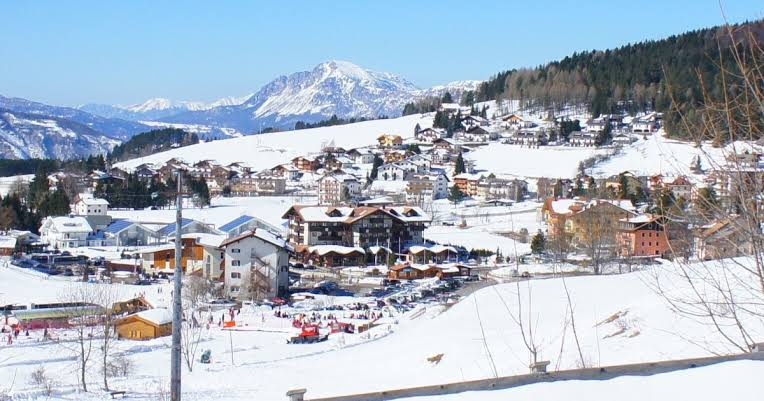
Folgaria is an established mountain destination with a strong leisure and winter tourism component.
A proper assessment of Hotel Kube and B&B Francolini therefore requires at least three distinct layers of value.
Real estate value
What is the physical property worth?
Operating value
What level of profitability could the hotels generate under efficient management?
Potential value
What could the properties be worth following investment in:
-
repositioning;
-
room upgrades;
-
food & beverage improvements;
-
wellness facilities;
-
digitalisation;
-
revenue management;
-
seasonality reduction;
-
commercial distribution.
It is at this third level that genuine value creation can emerge for a professional investor.
At Investhotel, we frequently examine precisely the relationship between CAPEX, repositioning and hotel asset value creation.
Real estate value versus business value
One of the recurring analytical mistakes in hospitality is to assess the property separately from the underlying business.
But a hotel is the combination of:
real estate + business + management + market + capital
Real estate value therefore represents only one part of the equation.
There is also business value, which may include:
-
goodwill;
-
organisational know-how;
-
employees;
-
contracts;
-
reputation;
-
distribution;
-
customer databases;
-
brand equity;
-
commercial capabilities;
-
operating procedures.
In distressed situations, these components can deteriorate very quickly.
That is why timing itself becomes an economic variable for the investor.
What an investor should assess in a case such as THG
Before entering a transaction of this nature, at least ten areas should be thoroughly analysed:
-
the underlying causes of the crisis;
-
net financial debt;
-
liabilities towards suppliers and tax authorities;
-
historical cash generation;
-
profitability of each individual property;
-
required CAPEX;
-
cost structure;
-
real estate value;
-
operating value;
-
post-restructuring financial sustainability.
This should be complemented by an assessment of:
-
seasonality;
-
reliance on intermediaries;
-
product quality;
-
future demand;
-
competitive positioning;
-
repositioning potential.
This is the real due diligence required for a distressed hospitality investment.
UTPs and hospitality: where value can emerge
The UTP – unlikely to pay segment is particularly relevant to the hotel industry.
A hotel may experience financial distress while still retaining strong industrial and operating potential.
The underlying problem may not be the product itself.
It may instead be:
-
excessive leverage;
-
an inappropriate capital structure;
-
insufficient investment;
-
inefficient management;
-
inadequate equity.
In these situations, a properly structured turnaround may create significant value.
An investor can recapitalise the business.
A lender may restructure the debt.
A new operator may take over management.
The capital structure can be redesigned.
The product can be repositioned.
And it is precisely at this stage that financial expertise and hotel operating expertise must converge.
Conclusions
The THG – Hotel Kube and B&B Francolini in Folgaria case is particularly significant because of what it represents.
It is not merely a disposal process.
It is a practical example of how opportunities in the distressed hospitality market can be identified while there is still scope to preserve value.
For a professional investor, the real opportunity does not simply lie in identifying a troubled hotel.
It lies in understanding:
why the asset entered distress, how much capital is required to restore it, and what value it can generate after the turnaround.
This is where distressed hospitality ceases to be merely a real estate transaction and becomes a genuine investment strategy.
And it is likely to be within this segment that some of the most interesting opportunities in the Italian hospitality market will emerge over the coming years.
Hotel investments and distressed opportunities
Investimenti Alberghieri analyses hotel investment, value creation, turnaround and repositioning opportunities through an integrated real estate, financial and operational approach.
For hotel asset analysis, pre-distress situations, UTP opportunities, value-add strategies and investment projects:
info@investimentialberghieri.it
Further insights:
InvestimentiAlberghieri.it
Investhotel.it
HotelManagementGroup.it
RobertoNecci.it