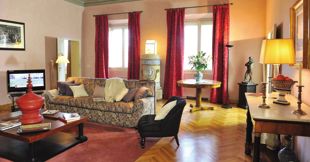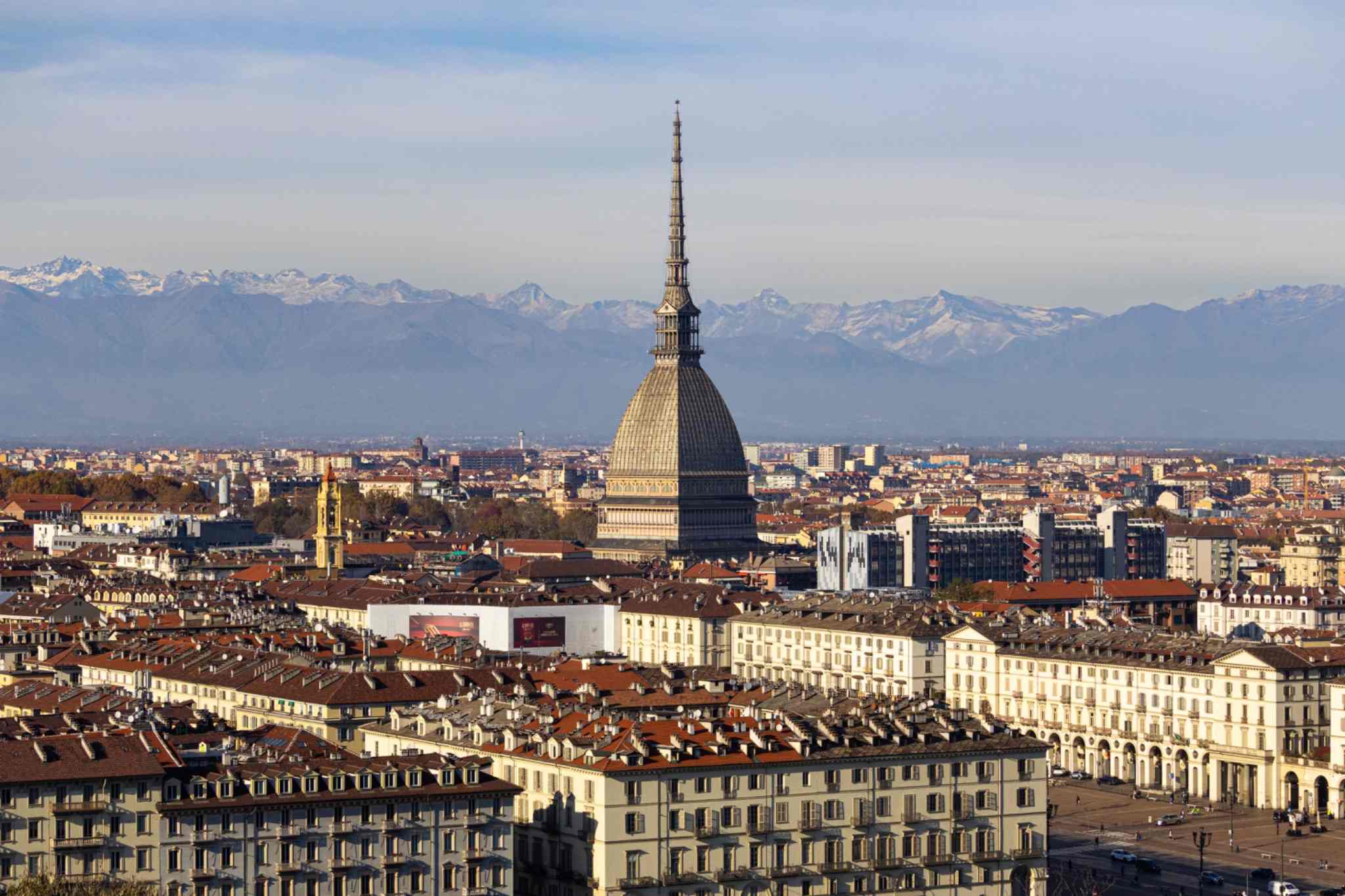
Villa Frescot should not be assessed solely as a private residence, however iconic it may be. The scale of the estate, its multiple buildings, extensive grounds, proximity to central Turin and exceptional historical identity make it a credible candidate for conversion into an ultra-luxury hospitality asset. Not a conventional 29-room hotel, but an exceptionally low-density destination combining suites, private villas, a members’ club, wellness facilities, corporate retreats and exclusive-use accommodation.
The decisive word, however, is candidate.
History is no substitute for due diligence. Twenty-nine residential bedrooms do not automatically translate into 29 hotel keys. The prestige of the property does not guarantee commercial viability, while an apparently attractive acquisition price may be overwhelmed by the capital expenditure required to turn a private residence into a compliant, efficient and financially sustainable hospitality operation.
The question, therefore, is not simply how much Villa Frescot is worth today.
The real question is:
What could Villa Frescot be worth after being transformed into a unique and virtually irreplicable hospitality product?
It is the same question raised by the case of Villa Certosa and the potential evolution of Silvio Berlusconi’s former residence into an ultra-exclusive hospitality estate.
The two properties differ significantly in scale, location and target market. Yet the underlying investment rationale is comparable: when an asset possesses identity, history, scale and global recognition, it is no longer acquired merely for what it is. It is acquired for what it could become.
Villa Frescot returns to the market
Villa Frescot is the historic Turin residence where Gianni and Marella Agnelli lived. Located on the San Vito hillside, approximately ten minutes from the city centre, the estate is currently being marketed by Italy Sotheby’s International Realty through a confidential sale process.
The property listing includes:
-
29 rooms;
-
15 bathrooms;
-
approximately 2,250 square metres of built area;
-
a 6.5-hectare estate;
-
more than 3.5 hectares of private parkland;
-
a swimming pool;
-
a spa, hammam and sauna;
-
a gym and cinema room;
-
cellars, garages and service areas;
-
several independent buildings.
The principal residence extends to approximately 1,260 square metres. It is complemented by a second residence of around 420 square metres, a third two-storey unit of 293 square metres with its own entrance and garage, a caretaker’s house, technical areas and a garage exceeding 400 square metres.
The park, designed by renowned English landscape architect Russell Page, includes a panoramic belvedere and historic greenhouses that could potentially be restored as a winter garden, botanical space, wellness area or venue for carefully curated events.
It is precisely this multi-building layout that makes Villa Frescot particularly interesting from a hospitality perspective. The physical separation of functions could allow accommodation, services, staff areas, wellness facilities and private residences to operate independently, without concentrating every activity within the main villa.
How much does Villa Frescot cost?
The official asking price has not been disclosed. Sotheby’s is marketing the estate through a confidential negotiation, while press reports have suggested a potential valuation of between €6 million and €10 million.
These figures remain unconfirmed and may not reflect the actual terms of any transaction.
For a hotel investor, however, the acquisition price would represent only the first component of the investment.
The correct question is not:
How much does it cost to buy Villa Frescot?
It is:
How much capital would be required to acquire, convert, authorise, furnish, open and stabilise Villa Frescot?
The property price would need to be considered alongside design fees, restoration costs, structural and MEP upgrades, fire-safety compliance, accessibility works, bedroom and bathroom conversions, kitchens, service areas, furniture, technology, landscaping, pre-opening expenses, recruitment, marketing, working capital, financing costs and contingency allowances.
The investment case must be assessed against the total cost to stabilisation, not merely the entry price.
Why Villa Frescot cannot be valued on a price-per-square-metre basis
Applying a conventional price-per-square-metre benchmark and comparing Villa Frescot with other prestigious homes on the Turin hills would produce an incomplete valuation.
The estate combines a series of features that are extremely difficult to replicate:
-
its association with the Agnelli family;
-
proximity to central Turin;
-
the privacy offered by the surrounding park;
-
multiple independent buildings;
-
formal reception and entertainment areas;
-
existing wellness facilities;
-
the possibility of separating guests, staff and operational services;
-
access to Milan, major airports, the Langhe and Monferrato.
According to the commercial listing, Turin Airport can be reached in approximately 30 minutes, Milan in around one hour and forty minutes, Milan Malpensa Airport in roughly 90 minutes, and the Langhe and Monferrato wine regions in just over an hour.
This makes the estate potentially relevant not only to leisure travellers, but also to corporate guests, prominent families, international delegations, audiovisual productions, discreet events and privacy-driven stays.
Villa Frescot can therefore be viewed as an urban trophy asset: a property whose value derives not only from its physical dimensions, but also from its uniqueness, reputation and ability to deliver an experience that cannot be compared with that of a conventional luxury hotel.
Twenty-nine bedrooms do not equal 29 hotel keys
This is the technical distinction between a proper hotel investment analysis and a purely real-estate narrative.
A residential bedroom may not have the dimensions, services, accessibility, en-suite facilities, acoustic insulation or circulation required for hotel use.
Before any conversion could be considered, investors would need to assess:
-
planning designation and the feasibility of a change of use;
-
architectural, heritage and landscape restrictions;
-
fire-escape routes and compartmentation;
-
lifts and accessible circulation;
-
the feasibility of adding private bathrooms;
-
electrical, plumbing and climate-control systems;
-
kitchens, storage areas and plant rooms;
-
housekeeping and linen facilities;
-
separate staff and guest circulation;
-
loading areas, parking and access;
-
security and privacy protection.
The final number of marketable units could therefore be significantly lower than the 29 rooms referenced in the sales listing.
That would not necessarily be a disadvantage.
At the highest end of the luxury market, the winner is not the property with the greatest number of rooms. It is the property that creates the highest value for every guest admitted to the estate.
The concept to test: 15–20 suites, independent villas and exclusive use
Without access to the technical documentation and a detailed business plan, any proposed configuration remains preliminary.
Nevertheless, the most coherent option to test through a feasibility study might include:
-
15–20 large rooms and suites;
-
two or three independent residences;
-
a private wellness component;
-
private dining;
-
a library, lounges and formal reception rooms;
-
the restoration of the greenhouses as a winter garden;
-
spaces for board meetings and corporate retreats;
-
the possibility of reserving the entire estate.
The priority should not be to maximise the number of keys.
It should be to maximise:
-
average daily rate;
-
length of stay;
-
total guest spend;
-
privacy;
-
ancillary revenue;
-
reputational value;
-
the long-term real-estate value of the asset.
Villa Frescot should compete on scarcity, not room count.
Scenario one: an ultra-luxury boutique hotel
The main villa could accommodate the principal suites, reception, dining facilities, lounges, library and shared spaces.
The secondary residences could be marketed as private villas for families, public figures, international delegations and ultra-high-net-worth guests seeking security, independence and complete privacy.
An international luxury brand could strengthen distribution, operating standards and global visibility. However, any operator should be selected only after the product concept has been defined.
The brand should amplify the character of Villa Frescot, not turn it into a standardised luxury hotel.
Scenario two: a private members’ club with accommodation
An even more distinctive option could involve creating a private members’ club with rooms and residences.
The estate could host:
-
meetings between business leaders and investors;
-
board meetings;
-
executive retreats;
-
private product launches;
-
cultural events;
-
private dinners;
-
diplomatic and representational stays;
-
programmes designed for prominent families and family offices.
The business model could combine membership fees, accommodation, dining, events, bespoke services and the private use of selected spaces.
Guests would not simply be paying for somewhere to sleep.
They would be paying for access to a place that is normally inaccessible.
Scenario three: an exclusive-use hospitality estate
The model most closely aligned with the private nature of Villa Frescot may be one centred on full or partial buyouts.
The entire estate, or individual residences within it, could be reserved for several days or weeks by a family, company, international production or official delegation.
This configuration would reduce guest density and support exceptionally high rates, but it would require a commercial network entirely different from that of a conventional hotel.
Traditional online distribution would not be enough.
The property would need to be positioned through:
-
family offices;
-
private banks;
-
international concierge firms;
-
luxury travel advisors;
-
specialist villa operators;
-
corporate and institutional relationships;
-
networks serving ultra-high-net-worth individuals.
Villa Frescot should not simply be bookable.
It should be carefully placed, selected and reserved through qualified relationships.
The Villa Certosa precedent
The comparison with Villa Certosa is relevant, provided it is not treated as a direct equivalence.
On 24 June 2026, Immobiliare Idra, a Fininvest group company, confirmed that it had accepted a binding offer from a foreign buyer for the acquisition of the Porto Rotondo estate. Press reports linked the transaction to Constellation Hotels Holding, associated with the Al Thani family. No future hotel use for the property has, however, been officially confirmed.
As examined in the InvestimentiAlberghieri.it report on Villa Certosa, the key issue is not whether the property becomes a conventional resort, but whether it evolves into a hospitality estate: an asset combining private residential use, accommodation, representation, reputation and international relationships.
The lesson is clear.
Iconic villas no longer belong exclusively to the market for major private residences. They can enter the hospitality investment market, provided the operating model remains consistent with their uniqueness.
The greatest risk: confusing fame with profitability
The Agnelli name guarantees media attention.
It does not guarantee occupancy, operating margins or a return on invested capital.
Any conversion would need to pass five fundamental tests.
Planning feasibility
Investors must determine whether hotel, hospitality, food-and-beverage or event-related uses are permitted, under what conditions and within what timeframe.
Technical feasibility
The required works must be quantified while preserving the property’s architecture, interiors and landscape.
Operational feasibility
The multi-building configuration supports privacy, but also increases the cost of housekeeping, maintenance, security, room service and staff circulation.
Commercial feasibility
The project must identify who would genuinely be prepared to pay the required rates and which channels could reach that clientele.
Financial feasibility
Returns must be calculated against the total project cost, including planning timelines, capital expenditure, pre-opening costs, working capital and the risk that the operation fails to reach stabilised performance.
Without these assessments, the hotel concept remains an attractive idea.
With them, Villa Frescot could become an investable hospitality proposition.
Could Villa Frescot really become a hotel?
Yes, its conversion deserves serious consideration. But Villa Frescot probably should not become a hotel in the conventional sense of the word.
The most coherent configuration would be an exceptionally low-density property combining large suites, independent villas, private wellness facilities, discreet dining, carefully selected events and exclusive-use options.
The objective should not be to fill the greatest possible number of rooms.
It should be to generate the highest possible economic and real-estate value from a deliberately limited number of guests.
Villa Frescot should not become a commercial stage set built around the Agnelli family.
It should remain a great Italian home, discreetly transformed into a contemporary hospitality destination.
The Investimenti Alberghieri view
Villa Frescot is a potential hospitality trophy asset, but today it remains an opportunity to be tested rather than a hotel project.
Its history creates attention.
Its layout creates options.
Its concept could create desirability.
Only feasibility can create value.
The first mistake would be to sell Villa Frescot as a conventional private villa without first assessing its hospitality potential.
The opposite mistake would be to acquire it on the assumption that the Agnelli name can make any project profitable.
The real opportunity lies in designing, before either acquisition or disposal, a transaction that is understandable and attractive to investors, lenders, operators and international brands.
For further analysis of hospitality valuations, conversions and investment strategies, visit RobertoNecci.it, InvestimentiAlberghieri.it, Investhotel.it and NecciHotels.it.
Do you own a villa, historic residence or property that could become a hotel?
Do not sell it before measuring its true hospitality potential.
A property can be sold for what it is today.
Or it can be developed into an investment proposition capable of attracting investors, operators, hotel brands and international capital.
Investimenti Alberghieri provides analysis of:
-
conversion feasibility;
-
concept development and positioning;
-
capital expenditure and financial sustainability;
-
operating models;
-
investor and operator searches;
-
value-enhancement and disposal strategies.
Contact us now at info@investimentialberghieri.it.
Do not wait for the buyer to identify value that you have not yet measured.
The best properties are not merely sold. They are structured as investment opportunities.
SEO FAQ
Is Villa Frescot for sale?
Yes. The historic Turin residence of Gianni and Marella Agnelli is being marketed by Italy Sotheby’s International Realty through a confidential sale process.
How much does Villa Frescot cost?
The official asking price has not been disclosed. Press reports have suggested a range of between €6 million and €10 million, but the actual figure remains confidential.
How many rooms does Villa Frescot have?
The commercial listing refers to 29 rooms, 15 bathrooms and approximately 2,250 square metres of built area.
Could Villa Frescot be converted into a hotel?
In principle, the estate has several features that could support a hospitality conversion. Its actual feasibility would depend on planning rules, heritage restrictions, authorisations, technical conditions, capital expenditure and financial viability. The most coherent model would probably be a low-density hospitality estate rather than a conventional hotel.
Roberto Necci - r.necci@robertonecci.it