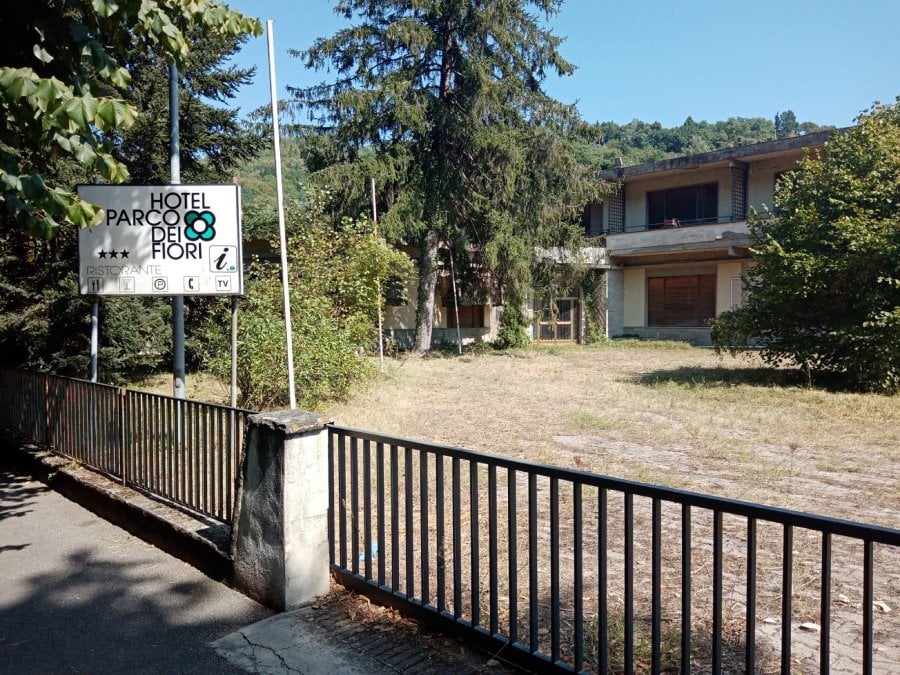
The real challenge is not determining what a hotel is worth. It is understanding whether that value truly exists.
In Italy’s hotel market, many asking prices are not valuations. They are expectations.
Expectations shaped by ownership.
Expectations built around the history of the property.
Expectations based on location, room count, official star rating or a vague idea of “potential”.
But investors do not buy expectations.
They buy cash flow, risk, operating capability, capital requirements and the realistic possibility of creating value.
That is why the question “what is a hotel worth?” is often the wrong starting point.
The right question is different:
What value can this hotel generate, with how much capital, at what level of risk and over what time horizon?
The difference between these two questions can be worth millions.
Price, value and potential are three different things
In hotel transactions, three concepts are often confused: price, value and potential.
The price is what is being asked.
The value is what the asset can justify based on income, risk and required capital.
The potential is what could happen if someone were able to improve management, product, positioning, distribution and investment strategy.
The problem is that many sellers price the asset on potential.
Investors, however, usually buy only if that potential has not already been fully priced in.
This is where the real negotiation begins.
A hotel may have significant potential and still be a poor investment if the asking price already captures all future upside.
It may look expensive and still be attractive if it produces solid income, requires limited additional investment and has a defensible market position.
It may look cheap and still be dangerous if the low price conceals high CAPEX, weak margins, unstable demand or inefficient management.
Hotel valuation exists to separate these three levels.
The formula for the real value of a hotel
A hotel valuation should never be reduced to a single isolated number. Real value comes from a more complex relationship:
Real hotel value = sustainable income - required CAPEX ± operating risk + achievable strategic upside
This is not a strict mathematical formula. It is a valuation framework.
It means that a hotel is not worth what it currently turns over, nor what the owner imagines it might be worth tomorrow.
It is worth what can be justified through five elements:
-
how much income it can generate sustainably;
-
how much investment it requires to remain competitive;
-
how much risk it carries;
-
how much it can be improved through better management;
-
how much of that improvement can realistically be converted into value.
The key word is achievable.
Potential that cannot be achieved is not value.
It is a story.
Valuing a hotel is not the same as valuing real estate
One of the most common mistakes is to treat a hotel as an ordinary property asset.
In traditional real estate, the starting points are location, size, permitted use, physical condition, comparable values and potential rent.
These factors matter in hotels too, but they are not enough.
A hotel is not just a building.
It is a business operating inside a building.
Its value is therefore created at the intersection of four dimensions:
-
real estate value;
-
business value;
-
quality of management;
-
future risk.
A hotel may sit in an excellent location and still destroy value.
It may have a large number of rooms and produce insufficient margins.
It may generate significant revenue and still fail to generate cash.
It may look cheap and still require so much investment that the acquisition becomes uneconomic.
Conversely, a seemingly secondary hotel may hold significant value if it has stable demand, solid margins, controlled costs and real repositioning potential.
Hotel valuation exists to separate perceived value from real value.
The asking price is not the value
In hotel transactions, the asking price is often the starting point of the negotiation. It is rarely the conclusion of the analysis.
A price may be high and still justified.
It may be low and still dangerous.
It may look attractive when compared with the real estate value, but weak when assessed against cash flow.
The real value of a hotel depends on the relationship between:
-
current profitability;
-
normalised profitability;
-
required investment;
-
market quality;
-
operating risk;
-
management capability;
-
value creation potential.
A hotel is not valuable simply because it has 80 rooms.
It is valuable if those 80 rooms can generate revenue, margin and capital sustainably.
It is not valuable simply because it is located in the city centre.
It is valuable if that location allows the hotel to defend ADR, occupancy, reputation, distribution and profitability.
It is not valuable simply because it is historic.
It is valuable if that history can be converted into positioning, pricing power and paying demand.
The hotel market rewards assets that turn location and product into income.
It penalises those that turn location and product into cost.
Revenue is not the first metric to look at
Revenue matters, but it can be misleading.
Two hotels may produce the same turnover and have completely different values.
One may generate strong margins, while the other may be burdened by labour costs, energy costs, maintenance, commissions, rent, organisational inefficiencies or weak commercial positioning.
That is why a serious hotel valuation never starts with revenue alone.
It starts with the quality of revenue.
The key questions are:
-
which segments generate the revenue;
-
how much revenue depends on intermediated demand;
-
how much OTA commissions affect profitability;
-
what share comes from corporate, leisure, groups, MICE or tour operators;
-
whether ADR is consistent with the hotel’s positioning;
-
whether RevPAR is competitive within the market;
-
whether revenue is stable or dependent on exceptional events;
-
whether margins grow with revenue or are absorbed by costs.
A hotel that increases revenue while reducing margins is not necessarily creating value.
It may simply be increasing operational complexity.
Normalised EBITDA is the core of hotel valuation
The central point in hotel valuation is not how much the hotel collects.
It is how much operating income it can produce under normal conditions.
This is where normalised EBITDA becomes essential.
Normalisation matters because many hotel accounts do not clearly reflect the true ability of the business to generate value.
There may be non-recurring costs, improperly allocated expenses, deferred maintenance, above-market or below-market rents, family-related management costs, under- or overstaffing, or one-off revenues.
Without normalisation, the risk is to capitalise the wrong number.
And if the starting number is wrong, the entire valuation will be wrong.
A sophisticated investor does not only look at reported EBITDA.
They look at sustainable EBITDA.
The question is not:
How much did the hotel make last year?
The question is:
How much can this hotel consistently make with disciplined management, a coherent product and adequate investment?
CAPEX is the hidden value factor that often reduces the real price
One of the most serious mistakes in hotel valuation is underestimating CAPEX.
A hotel may appear profitable because investment has been postponed for years.
Outdated rooms, obsolete systems, uncompetitive common areas, inadequate technology, poor energy efficiency and deferred maintenance can all create an illusion of profitability.
The issue is simple: those costs have not disappeared.
They have merely been pushed into the future.
And for the investor, the future means additional capital.
If a hotel produces €600,000 in EBITDA but requires €3 million in works to remain competitive, its real value changes dramatically.
CAPEX is not a technical detail.
It is part of the price.
Anyone buying a hotel is also buying everything that will need to be funded after the acquisition.
That is why every hotel valuation should distinguish between:
-
the value of the asset in its current condition;
-
the value after necessary investment;
-
the potential value after repositioning;
-
the capital required to reach that value.
Many hotel deals fail because the price is negotiated on the hotel as it is, while the business plan is built on the hotel as it should become.
The distance between these two images is the investor’s risk.
RevPAR, ADR and occupancy must be interpreted, not just read
Occupancy, ADR and RevPAR are essential indicators, but they are not enough when considered in isolation.
High occupancy may be a positive signal, but it may also indicate weak pricing.
High ADR may suggest commercial strength, but also limited demand.
Growing RevPAR may indicate real improvement, or simply a temporary market effect.
The data must always be assessed against:
-
the competitive set;
-
seasonality;
-
local demand;
-
reputation;
-
sales channels;
-
extraordinary events;
-
product quality;
-
pricing strategy;
-
the costs required to generate that revenue.
The value of a hotel is not measured only by how much it sells.
It is measured by how well it can defend its price over time.
A hotel that sells only by lowering rates has a value problem.
A hotel that can increase ADR without losing demand has far more interesting investment potential.
Income approach, DCF and multiples do not work if the assumptions are wrong
Hotel valuation uses several methods: income approach, discounted cash flow, EBITDA multiples, value per key, cap rate and market comparables.
They are useful tools.
But they are not shortcuts.
The income approach is central when the hotel is operating and has reliable historical data.
It estimates value based on the hotel’s ability to generate income.
DCF is useful when analysing forward-looking value, particularly in repositioning, refurbishment, change of management or development scenarios.
But a DCF is only as strong as the assumptions behind it.
Multiples help compare similar transactions, but in hospitality they can be dangerous when used without context.
Two hotels with the same EBITDA can have very different values depending on:
-
location;
-
depth and durability of demand;
-
physical condition;
-
operating risk;
-
quality of management;
-
CAPEX requirements;
-
existing contracts;
-
brand;
-
competitive pressure;
-
asset liquidity.
The multiple is not the value.
It is a clue.
Value is created through the industrial analysis of the hotel.
Current value and potential value must not be confused
In the hotel market, real opportunities are rarely found in perfect assets.
They are found in assets where there is a meaningful gap between current performance and potential performance.
A hotel may be underperforming not because the market is weak, but because:
-
management is inefficient;
-
revenue management is missing;
-
the product is poorly positioned;
-
the direct website does not convert;
-
distribution is excessively dependent on OTAs;
-
reputation is not actively managed;
-
costs are not controlled;
-
the brand does not communicate value;
-
layout and spaces are not properly monetised;
-
management does not read demand correctly.
In these cases, value is not only what the hotel produces today.
It is what it could produce under different management.
But potential is not automatic value.
Potential becomes value only if it can be achieved with capital, time, expertise and acceptable risk.
This is one of the most important distinctions in hotel investment.
The seller tends to value potential as if it had already been realised.
The investor must value it as an option, not as a certainty.
Current value is paid for.
Potential value is built.
The real question is who the best owner for this hotel is
An advanced hotel valuation does not merely estimate a price.
It must also answer a strategic question:
Who can create the most value from this asset?
The same hotel may have different values for different buyers.
For a family owner, it may be a business to preserve.
For a real estate investor, it may be an income-producing asset.
For a hotel operator, it may be a management platform.
For a fund, it may be part of a portfolio.
For a brand, it may be a strategic location.
For a distressed investor, it may be a value recovery opportunity.
Value is not always absolute.
It is often linked to the buyer’s strategy.
An operator capable of improving occupancy, ADR, costs and reputation may see value where others see only problems.
An investor without operating expertise may underestimate risk and overpay.
This is why hotel valuation should never be only real estate-driven.
It must also be industrial and operational.
When hotel valuation becomes essential
A professional valuation becomes critical when the objective is to:
-
acquire a hotel;
-
sell a hotel property;
-
negotiate with a bank;
-
attract investors;
-
restructure debt;
-
evaluate a business lease;
-
choose between direct management, a management contract or franchising;
-
estimate the value of a hotel portfolio;
-
analyse a distressed asset;
-
build a credible business plan;
-
decide whether to refurbish, reposition or dispose of an asset.
In all these cases, valuation is not a secondary document.
It is a decision-making tool.
It helps determine whether a transaction creates value or merely transfers risk.
Whether the asking price is sustainable or emotional.
Whether the expected return justifies the invested capital.
Whether the business plan is realistic or simply designed to support a decision that has already been made.
What a real hotel valuation report should include
A real hotel valuation report should not merely state a final value.
It should explain how that value was built.
A serious report should include:
-
analysis of the real estate asset;
-
local market analysis;
-
competitive set analysis;
-
historical and projected revenues;
-
occupancy, ADR and RevPAR;
-
GOP and normalised EBITDA;
-
cost structure;
-
distribution channel analysis;
-
reputation and positioning;
-
required CAPEX;
-
management scenario;
-
operating risk;
-
valuation methodology;
-
sensitivity analysis;
-
current value;
-
potential value;
-
conditions that may change the valuation.
The final number matters.
But understanding the assumptions behind that number matters even more.
Because in hotel valuation, the number is not the only thing that counts.
The quality of the reasoning behind it is what makes the valuation reliable.
A technical guide to hotel valuation
Hotel valuation requires a multidisciplinary approach: real estate, operations, finance and strategy.
For readers who want to explore the relationship between asset, profitability and risk in greater depth, a dedicated technical guide is available on RobertoNecci.it:
Hotel valuation: how much is a hotel really worth? A complete guide to assets, profitability and risk.
That guide is a useful complement for understanding the main valuation criteria, methodologies and variables that affect the value of a hotel asset.
Italy’s hotel market is full of contradictions
Italy’s hotel market is full of contradictions.
There are hotels with high asking prices and weak profitability.
There are properties with valuable real estate but outdated operating models.
There are assets in attractive locations with products that are no longer competitive.
There are undercapitalised hotels that need investment, branding, governance and a new commercial strategy.
But there are also real opportunities.
Poorly managed independent hotels.
Underutilised properties.
Assets with latent demand.
Hotels penalised by debt, ownership conflicts or lack of vision.
Properties with repositioning potential that has not yet been expressed.
Valuation is what allows investors to distinguish between these situations.
Not every distressed hotel is an opportunity.
Not every profitable hotel is a good investment.
Not every hotel for sale is worth the asking price.
Not every underperforming hotel should be dismissed.
Value lies in understanding the distance between what the hotel is today and what it can become tomorrow.
Valuation is also a negotiation tool
A well-structured hotel valuation is not only used to estimate a price.
It is used to negotiate.
It helps identify which elements support the value and which reduce it.
It helps distinguish between structural problems and correctable issues.
It separates real estate value from management value.
It measures how much capital is needed to make the business plan credible.
In a hotel transaction, whoever has the more accurate reading of value has an advantage.
Not because they know a magic number, but because they understand the levers that can change that number.
Unaccounted CAPEX can reduce the price.
Normalised EBITDA can reshape the negotiation.
A weak management contract can increase risk.
Latent demand can make a neglected asset attractive.
An underperforming hotel can become an opportunity if the price has not already absorbed all future upside.
Valuation is not the end of the transaction.
It is the tool that determines whether the transaction deserves to move forward.
A hotel is worth only if its income is defensible
A hotel is not worth what it promises.
It is worth what it can generate sustainably.
It is worth the quality of its cash flows.
Its ability to defend price.
The strength of its market.
The quality of its management.
The level of risk it carries.
The investment it requires.
The capital it absorbs and the capital it can return.
Those who value a hotel only as real estate see only part of the value.
Those who look only at revenue see only part of the story.
Those who look only at the asking price risk buying a narrative.
True hotel valuation brings together asset, income, risk and strategy.
That is where it becomes clear whether a hotel is an investment, a problem or a hidden opportunity.
If the asking price is not supported by profitability, CAPEX, risk and management strategy, it is not a valuation. It is a bet.
For more insights on hotel transactions, investors, hospitality assets, real estate portfolios, debt, NPLs and value creation strategies, visit the Investimenti Alberghieri blog.
Are you evaluating the acquisition, sale, turnaround or value enhancement of a hotel?
Before building a business plan, negotiating a price or approaching investors, the first step is to understand whether the value truly exists.
Hotel Management Group supports owners, investors and operators in the industrial analysis of hotel assets: valuation, management, repositioning, contracts, advisory and value creation strategies.
The first question is not how much the hotel costs.
The first question is whether that value can be defended, improved or converted into return.
Explore Hotel Management Group’s advisory approach at HotelManagementGroup.it.
Roberto Necci - r.necci@robertonecci.it
hotel valuation, hotel valuation report, hotel valuation methods, hospitality valuation, hotel appraisal, hotel investment, how to value a hotel, how to evaluate hotel investment, hotel asset value, hotel real estate investment.