InvestimentiAlberghieri.it reconstructs the history of this Rome hospitality asset: a former Roma Tre University building of approximately 2,200 sqm, a documented €7.1 million sale in 2011, an initial hotel conversion that never reached opening, and now a new 45-key repositioning led by Kokomo Capital. A compelling case study in how value can be created — or destroyed — through acquisition, capex, positioning and operations.
In hotel investment, the most interesting number is not always the latest transaction price.
Sometimes, understanding the entire history of an asset is what reveals where value is actually being created.
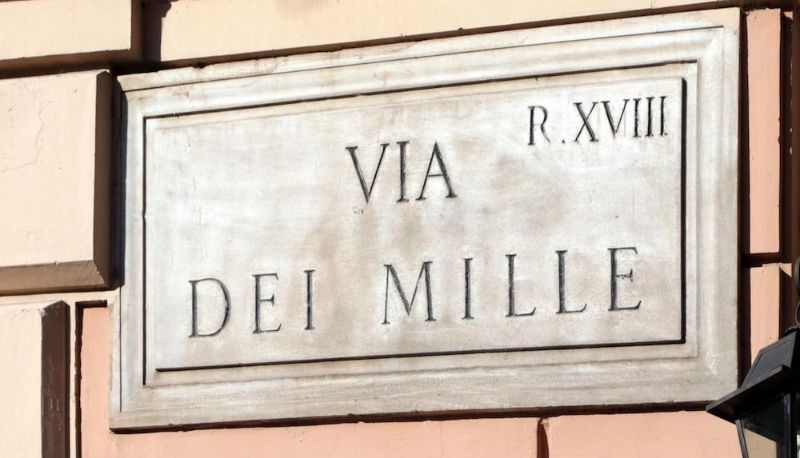
This is precisely the case of Via dei Mille 23 in Rome, close to Piazza Indipendenza and Termini Station, which is now set to become ANAGRAM Rome, a new boutique/lifestyle hotel developed by Kokomo Capital.
InvestimentiAlberghieri.it has reconstructed the key publicly documented stages of the transaction.
The sequence is particularly revealing:
university premises → office asset → sale to a private investor → hotel conversion → hotel never opened → Kokomo acquisition → new repositioning → ANAGRAM Rome.
This is therefore not simply the story of a building being converted into a hotel.
It is, above all, a case study in hotel value creation.
The dossier starts with a precise address: Via dei Mille 23
The property's former university use can be documented.
Academic material connected with Roma Tre University identifies Via dei Mille 23 as an address used by its Faculty of Education Sciences and by departments connected with educational studies.
University and academic documentation continued to reference the address at least into the early part of the following decade. (aipass.org)
The building therefore has a genuine history of university use.
But the investment story becomes considerably more interesting when the property's earlier real-estate transactions are examined.
2011: the property is sold for €7.1 million
The first significant financial figure comes from Prelios SGR.
In June 2011, Tecla Fondo Uffici completed the disposal of the property located at Via dei Mille 23.
Sale price: €7.1 million
Gross floor area: approximately 2,200 sqm
Use at the time: office/commercial
Vacancy at the time of sale: approximately 70%
Prelios described the purchaser simply as a “private investor.”
The transaction generated a gross capital gain of approximately €1.533 million for the fund, equivalent to 27.5% above book value. (prelios.com)
Based on the disclosed transaction price and area, the historical value equated to approximately:
€3,227 per sqm
Clearly, this figure cannot be used as an indication of the property's current value. Fifteen years have passed, while the asset, its use, its development programme and the wider Roman hospitality market have all changed substantially.
Nevertheless, it provides a documented starting point for reconstructing the asset's value chain.
Who was the private investor?
This is one of the areas where accuracy matters most.
Prelios did not disclose the identity of the 2011 buyer.
Many years later, when Kokomo Capital acquired the building, CEO Alexander Haas told Hotel Investment Today that the property had been purchased from a local family with a long-standing background in hospitality. (hotelinvestmenttoday.com)
The family itself was not identified by the source.
Given that several long-established Roman hotel families have historically operated around Termini and Piazza Indipendenza, it would be easy to speculate.
It would also be methodologically unsound.
Investimenti Alberghieri therefore does not attribute ownership of the asset to any specific family unless and until documentary evidence establishes the chain of title.
Identifying with certainty the owner between the private investor disclosed in 2011 and the subsequent disposal to Kokomo would require an examination of the relevant title deeds and property registry filings.
That distinction is precisely what separates market intelligence from market rumour.
The most interesting twist: it had already been converted into a hotel, but had never opened
The investment case changes significantly once the condition of the property at the time of Kokomo's acquisition is considered.
According to Haas, the building had already been converted into a hotel, but the property had never actually opened to guests. (hotelinvestmenttoday.com)
This is arguably the most financially relevant aspect of the entire transaction.
We are not looking merely at an:
office/university-to-hotel conversion.
The sequence is considerably more complex:
office asset → first hotel conversion investment → failure to reach opening → new investor → new concept → additional capex → new brand → future opening.
From an underwriting perspective, that distinction is crucial.
A building that has already been converted into a hotel does not automatically represent embedded value for the incoming investor.
The buyer must assess, among other things:
-
compliance of the previous development;
-
quality of completed works;
-
room layouts;
-
room sizes;
-
MEP systems;
-
fire and life-safety standards;
-
FF&E;
-
public areas;
-
back-of-house configuration;
-
operational efficiency;
-
alignment with the new market positioning;
-
works that may need to be demolished and rebuilt.
Part of the capital invested by the previous owner may therefore become a sunk cost.
This is precisely the type of situation in which analysing the building alone is insufficient. A genuine hotel investment assessment becomes necessary — an approach that also lies at the heart of the work carried out by Investhotel.it.
Kokomo Capital: real estate and operations within the same investment model
The new investor's strategy is particularly relevant.
Kokomo presents itself as a vertically integrated European hospitality investment platform.
Its stated model revolves around three principal activities:
Acquisition → Repositioning → Asset Management
The company targets medium-sized hotels in major European gateway cities, focusing on properties where repositioning, investment and operational improvement can unlock latent value.
Operations are subsequently developed through its proprietary ANAGRAM brand. (kokomo-capital.com)
This means Kokomo is not simply acquiring the real estate and subsequently handing the hotel over to a third-party operator.
It controls a much broader section of the value chain:
acquisition, underwriting, concept, capex, branding, positioning and operations.
That distinction matters.
As frequently analysed by RobertoNecci.it, hotel value results from the interaction between:
real estate + operating business + management + positioning + distribution + capital.
A prime property with mediocre operations can generate disappointing returns.
Conversely, an imperfect asset that is properly repositioned can create substantial value.
ANAGRAM Rome: the project now calls for 45 rooms
Kokomo's official portfolio currently provides a clear indication of the project's scale.
ANAGRAM Rome: 45 rooms
with opening currently scheduled for:
2027
Kokomo describes the project as a “converted palazzo” in central Rome. (kokomo-capital.com)
The timeline is also noteworthy because earlier information surrounding the transaction suggested a more accelerated opening schedule.
The investor's own website should therefore currently be regarded as the most up-to-date reference.
ANAGRAM Rome | Key figures from the dossier
| Metric | Available information |
|---|---|
| Historic asset address | Via dei Mille 23, Rome |
| Area | Termini – Piazza Indipendenza |
| Historically reported gross floor area | approx. 2,200 sqm |
| Documented 2011 sale price | €7.1 million |
| 2011 buyer | Undisclosed private investor |
| Seller prior to Kokomo | Rome-based hospitality family, identity undisclosed |
| Current investor | Kokomo Capital |
| Brand | ANAGRAM |
| Planned room count | 45 |
| Announced opening | 2027 |
| Kokomo acquisition price | Undisclosed |
| Announced renovation investment | Low double-digit € millions |
| Initially stated ADR target | Approx. €250 |
| Model | Ownership + repositioning + in-house operations |
Capex is the figure to watch
Kokomo has provided an important indication regarding the new investment programme.
Haas stated that the company intended to invest a “low double-digit million euro” amount in the renovation and repositioning of the property. (hotelinvestmenttoday.com)
Without a detailed development budget, it would be inappropriate to translate that statement into a precise capex figure.
However, even if €10 million were used solely as an indicative lower threshold, the implied investment relative to the current 45-room configuration would already exceed:
€222,000 per key
for that component of the renovation programme alone.
And it remains unclear exactly which cost items are included within the figure disclosed.
A full investment underwriting would need to separate at least:
Purchase Price
-
Transaction Costs
-
Taxes
-
Professional Fees
-
Construction Costs
-
FF&E
-
OS&E
-
Financing Costs
-
Contingency
-
Pre-opening Costs
-
Working Capital
= Total Investment Cost
It is this figure — rather than the property acquisition price alone — that must ultimately be tested against the hotel's future earnings.
This is one of the core principles underlying the analysis published by InvestimentiAlberghieri.it.
Approximately 49 gross sqm per room: a figure that says something about the product
There is another potentially revealing metric.
Using, purely for analytical purposes, the approximately 2,200 sqm historically reported by Prelios and dividing it by the 45 rooms currently planned produces a ratio of approximately:
49 gross sqm per key
This obviously does not mean that the guestrooms themselves will average 49 sqm.
The figure includes all areas of the building: guestrooms, corridors, lobby, technical spaces, F&B areas, back of house and common areas.
But the ratio is still informative.
ANAGRAM Rome does not appear to be a project driven solely by key maximisation.
A lifestyle hotel requires spaces capable of supporting experience, social interaction, F&B and engagement with customers who may not necessarily be staying at the property.
In a boutique hotel, sacrificing a small number of rooms can make economic sense if alternative spaces allow the property to:
-
increase ADR;
-
generate additional ancillary revenue;
-
strengthen reputation;
-
differentiate the product;
-
attract local demand;
-
build brand equity.
Hotel design therefore becomes a question of capital allocation as much as architecture.
An ADR target of approximately €250: filling the hotel is not the real challenge
During the initial presentation of the project, Kokomo referred to an ADR target of approximately €250 for Rome. (hotelinvestmenttoday.com)
With 45 rooms, the property would offer a theoretical annual inventory of 16,425 available room nights.
At a constant €250 ADR, the resulting room revenue would be approximately:
| Occupancy | RevPAR | Annual Room Revenue |
|---|---|---|
| 65% | €162.50 | approx. €2.67m |
| 70% | €175.00 | approx. €2.87m |
| 75% | €187.50 | approx. €3.08m |
| 80% | €200.00 | approx. €3.29m |
These figures are not forecasts for ANAGRAM Rome. They are simply mathematical scenarios intended to illustrate the economic scale of the project.
The investment question is nevertheless clear.
With just 45 rooms and a substantial capital commitment, the challenge will not simply be achieving healthy occupancy.
The real test will be producing the right combination of:
ADR + Occupancy + F&B + Ancillary Revenue + Cost Control + GOP
to generate an adequate return on the Total Investment Cost.
The key metric will be Stabilised Yield on Cost
Hospitality market commentary often stops at ADR and RevPAR.
For an investor, that is not enough.
Once ANAGRAM Rome reaches stabilised operations, its performance will need to be assessed through metrics such as:
TRevPAR
GOP
GOPPAR
EBITDA
Payroll Ratio
Flow-through
Capex per Key
Yield on Cost
Stabilised Asset Value
Ultimately, the issue is whether the hotel's cash flow adequately remunerates the total amount of capital invested.
For the same reason, HotelManagementGroup.it treats operating performance, management structure and financial control as integral components of hotel asset valuation.
A beautiful hotel is not automatically a good investment.
It becomes a successful investment when product and management convert capital into cash flow — and cash flow into capital value.
The economic paradox of Via dei Mille
The history of Via dei Mille 23 provides a broader lesson.
In 2011, the asset consisted of approximately:
2,200 sqm of office space, around 70% of which was vacant.
It was sold for €7.1 million.
A hotel conversion followed.
Works were carried out.
But the hotel never opened.
The capital committed to the asset therefore failed to complete the most important transition in hospitality investment:
from CAPEX to CASH FLOW.
A new investor subsequently entered.
Kokomo must now invest again, reposition the property and bring the product to market.
The asset is therefore an almost textbook illustration of the difference between:
theoretical real-estate value and realised hotel value.
Termini and Piazza Indipendenza are becoming a value-add market
The transaction should also be considered within the broader context of Rome.
For decades, the Termini district was primarily associated with independent hotels, family-owned businesses and demand generated by the railway station.
That market is changing.
The area enjoys fundamentals that are difficult to replicate:
-
Italy's principal railway hub;
-
direct rail links to Fiumicino Airport;
-
Metro Lines A and B;
-
proximity to Rome's historic centre;
-
access to Via Nazionale and Repubblica;
-
historic building stock;
-
structurally strong international demand;
-
a still highly fragmented hotel supply.
These factors create fertile ground for hotel repositioning strategies.
An investor does not necessarily need to acquire an established luxury location.
Instead, it can acquire an asset where it believes the hotel product itself can create destination value.
That is an entirely different investment paradigm.
Rome: from prime real estate to product-creation capability
The transformation of Rome's hotel investment market is increasingly evident.
Capital is no longer focused exclusively on trophy assets in the city's traditionally prime micro-locations.
Investors are also seeking:
underperforming hotels, convertible buildings, historic palazzi, incomplete developments, distressed assets, family-owned hotels and value-add opportunities.
This evolution favours investors capable of combining:
capital + execution capability + operating expertise.
That is precisely the model Kokomo appears to be building.
The company states that it targets properties with untapped potential, applying brand-led repositioning, design-forward capex and technology integration, before operating them through ANAGRAM. (kokomo-capital.com)
From acquisition price to stabilised value: the real hotel investment equation
The ANAGRAM Rome transaction helps illustrate a fundamental principle.
The return on a hotel investment cannot simply be calculated as:
future sale price − acquisition price.
The equation is considerably more sophisticated:
Acquisition Price
-
Transaction Costs
-
Capex
-
Financing Costs
-
Pre-opening Costs
-
Working Capital
= Total Investment Cost
against which the operating business must deliver:
Revenue
− Operating Costs
= GOP / EBITDA
which ultimately determines:
Stabilised Yield
Exit Value
Equity IRR
This is the point at which a real-estate transaction becomes a genuine hotel investment.
The Investimenti Alberghieri perspective
The history of ANAGRAM Rome highlights at least five important lessons.
First: a property that has already been converted into a hotel is not necessarily an economically viable hotel.
Second: capital invested by a previous owner does not automatically represent value for the incoming investor.
Third: the acquisition price is only one component of Total Investment Cost.
Fourth: in a boutique hotel, maximising the number of rooms does not necessarily mean maximising asset value.
Fifth: stabilised value will ultimately depend on management's ability to convert concept, design and capex into GOP.
This is precisely why transactions such as Via dei Mille 23 are considerably more interesting than a simple new-opening announcement.
They allow us to understand how hotel value is actually created.
INVESTIMENTI ALBERGHIERI EXCLUSIVE | The ANAGRAM Rome dossier
InvestimentiAlberghieri.it is making available an in-depth dossier on the Via dei Mille transaction, based on a reconstruction of the principal publicly documented elements relating to the asset, combined with an investment and hotel-operating analysis of the project.
The dossier can be further developed to include:
-
reconstruction of the ownership chain;
-
title deeds and ownership records;
-
planning and zoning analysis;
-
floor areas and permitted uses;
-
analysis of the previous hotel development;
-
Rome market benchmarks;
-
ADR and RevPAR comparables;
-
Total Investment Cost;
-
sensitivity analysis;
-
stabilised GOP;
-
yield on cost;
-
valuation per key;
-
exit value;
-
return scenarios.
The same methodology can be applied not only to ANAGRAM Rome but to conversion, repositioning, adaptive reuse, special situations and distressed hospitality investments.
For investors, property owners, family offices, banks, servicers and hotel operators seeking further information or wishing to assess hotel investment opportunities:
info@investimentialberghieri.it
Further insights and advisory:
InvestimentiAlberghieri.it – hotel investments, transactions and market analysis
Investhotel.it – investment advisory, turnaround and special situations
RobertoNecci.it – hotel strategy, analysis and market intelligence
HotelManagementGroup.it – hotel management, performance and advisory