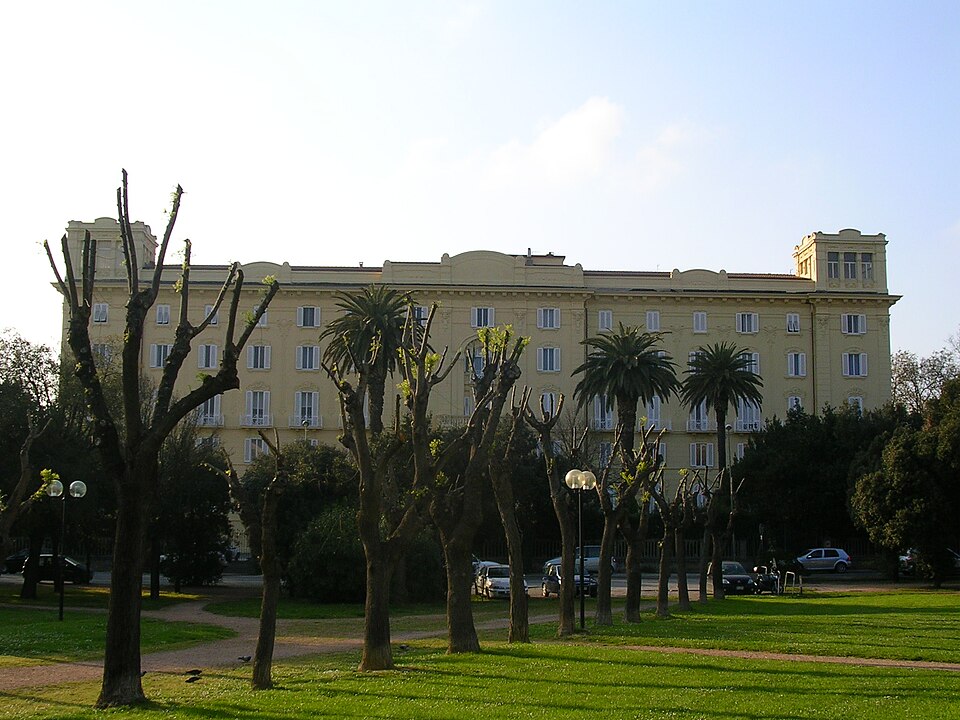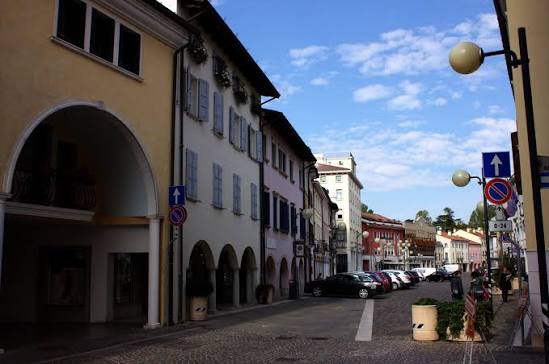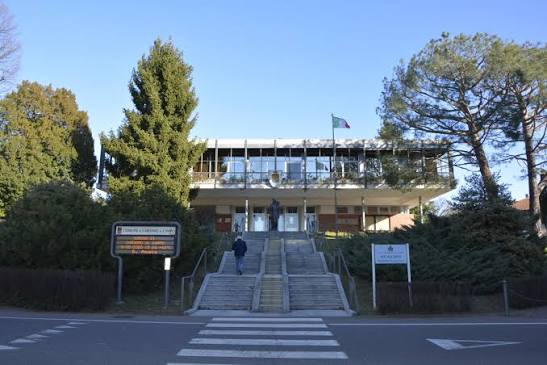
The former Ascot Lodging Hotel in Cardano al Campo, just a few kilometres from Milan Malpensa Airport, is returning to the market through a competitive online sale scheduled for 21 September 2026. The asset comprises a standalone hospitality property with 21 rooms, reception, breakfast room, bar, caretaker’s accommodation, lift and an underground garage with 21 parking spaces. The €680,000 base price corresponds to an offer already received by the seller, while competing bids must start at a minimum of €681,000. The headline metric looks immediately compelling: approximately €32,400 per room. But the hotel is currently non-operational, and the sale documentation specifies that any required regularisation works and the removal of materials from the property will be the buyer’s responsibility. The real underwriting question, therefore, is not whether €681,000 looks cheap. It is how much additional capital will be required to convert an empty hotel building back into an airport hotel capable of profitably capturing Malpensa-generated demand — and what minimum occupancy the property must achieve to cover its fixed operating costs and adequately remunerate the capital invested.
In the hotel investment market, there is a fundamental difference between:
Low Acquisition Price
and
Low Total Investment.
They are not the same thing.
Ascot Lodging Hotel is a particularly good case through which to understand that distinction.
Because:
€32,400 per Key
may appear extremely attractive.
But:
Inactive Hotel ≠ Operating Hotel.
And, above all:
Purchase Price ≠ Total Invested Capital.
First Distinction: This Is Not a Judicial Liquidation
The legal classification of the process matters.
The sale documentation indicates that the disposal of the property was authorised in the context of a:
voluntary liquidation.
It is therefore a:
Competitive Online Sale
rather than a judicial liquidation.
This is a substantive distinction.
The market often uses the generic word:
auction.
But:
Auction Mechanics ≠ Judicial Auction.
The Structure of the Transaction Also Deserves Attention
The transaction sits within an:
asset recovery
context.
That makes the opportunity particularly interesting from a financial perspective.
But this fact alone does not allow the specific Ascot Lodging exposure to be automatically classified as an:
NPL.
Doing so would require documentary reconstruction of the original credit relationship connected with the asset.
The more prudent classification therefore remains:
Hospitality Asset Recovery / Competitive Sale.
The Sale Already Starts With an Offer
The base price is:
€680,000.
But that figure was not selected in the abstract.
The sale documentation states that the amount corresponds to:
an offer already received by the seller.
Any competing bidder must therefore submit at least:
€681,000.
This is not:
Buyer Search from Zero.
It is:
Existing Offer + Competitive Market Test.
€680,000 Is a Floor, Not Necessarily Value
The sequence is:
Existing Offer €680k
→
Minimum Competing Offer €681k
→
Competitive Bidding
→
Highest Offer
→
Seller Approval
→
Closing.
The base price therefore represents:
a market floor established by an existing offer.
It does not necessarily represent:
Fair Market Value.
Highest Bid ≠ Automatic Award
This is another important point.
Being the highest bidder does not automatically mean:
the asset has been acquired.
After the competitive process, the transaction may still depend on:
AML checks;
additional documentation;
internal approvals;
seller resolutions;
closing capability.
The equation becomes:
Price
Certainty of Funds
Documentation Readiness
Execution Capability
=
Offer Quality.
Not simply:
Highest Number.
What Is Actually Being Acquired?
The lot concerns a building:
designated for hospitality use
at:
Via dell’Ongaro 48, Cardano al Campo.
The property is registered in:
D/2 cadastral category.
It previously operated under the:
Ascot Lodging Hotel
brand.
It is currently described as:
no longer operational.
That is the second major feature of the transaction.
Twenty-One Rooms
The documentation describes the following layout.
Ground Floor
Entrance.
Reception.
Caretaker’s accommodation.
Telephone exchange room.
Breakfast room.
Bar.
Guest WC.
3 ensuite rooms.
First Floor
6 ensuite rooms.
Second Floor
6 ensuite rooms.
Third Floor
6 ensuite rooms.
Total:
21 rooms.
Twenty-One Rooms. And Twenty-One Covered Parking Spaces
The basement includes:
storage;
lift plant room;
pump room;
garage.
And, importantly:
21 parking spaces.
The ratio is therefore:
21 Rooms
:
21 Garage Spaces
=
1 Covered Parking Space per Key.
For an airport hotel, this is not a secondary feature.
It could become:
a second revenue engine.
The Price per Room Appears Extremely Low
With a minimum competitive offer of:
€681,000
and:
21 rooms,
the theoretical acquisition price is approximately:
€32,400 per key.
At first glance, that looks exceptionally low.
But this metric can be misleading.
Because:
Low Price per Key
does not automatically mean:
Low All-in Cost per Operating Key.
The Relevant Price Is the Cost of a Reopened Room
The more useful equation is:
Acquisition Price
Technical CAPEX
FF&E
OS&E
Compliance
Technology
Pre-opening
Working Capital
=
Total Reopening Investment.
Only then can the investor calculate:
All-in Cost per Reopened Key.
That is the real number.
Not €32,400.
Vacant Property ≠ Turnkey Hotel
The property is reported as vacant.
But that only eliminates:
occupancy risk.
It does not eliminate:
reopening risk;
technical risk;
licensing risk;
commercial risk;
operator risk.
Therefore:
Vacant Property ≠ Turnkey Hotel.
Malpensa Is the Real Demand Generator
The primary strategic driver for Ascot Lodging is not Cardano al Campo itself.
It is:
Milan Malpensa Airport.
The airport ecosystem generates demand from:
leisure travellers;
business travellers;
airline-related traffic;
cargo;
logistics;
airport employees;
transit passengers;
early departures;
late arrivals.
But this does not mean all of that demand is automatically accessible to Ascot.
Airport Proximity ≠ Airport Demand Capture
The correct equation is:
Airport Traffic
×
Hotel-Relevant Passenger Share
×
Catchable Demand
×
Competitive Share
=
Addressable Room Demand.
In other words:
being close to Malpensa
does not mean:
automatically filling 21 rooms.
Competition Is Real
The local market already includes established operators and hotels positioned specifically around airport demand.
Ascot is therefore not entering:
an uncontested market.
It is entering:
an established airport hotel competitive set.
The real question is:
what value proposition can allow it to win market share?
Small Scale Can Be a Constraint
Twenty-one rooms generate a relatively small revenue base.
If the business model requires:
24-hour reception;
dedicated shuttle;
night staffing;
breakfast staff;
maintenance;
standalone administration,
the risk becomes:
Small Hotel Revenue
Airport Hotel Service Expectations
=
Margin Compression.
This is probably the key operating risk.
But Small Scale Can Also Be an Advantage
Twenty-one rooms can support:
lean staffing;
entrepreneurial management;
digital reception;
self check-in;
outsourcing;
centralised revenue management;
variable housekeeping;
on-demand shuttle;
limited F&B focused on breakfast and bar service.
Therefore:
Small Scale
can become:
Low Operating Complexity
if the model is designed correctly.
Ascot Should Not Copy Larger Airport Hotels
Ascot should not attempt to become:
a smaller full-service airport hotel.
That would probably be the wrong strategy.
Instead, it should develop a proposition consistent with its scale:
Select-Service Airport Hotel.
The product could be built around:
Sleep
Park
Transfer
Fast Check-in
Early Breakfast.
The 21 Garage Spaces Could Transform the Economics
This is one of the asset’s most interesting features.
At an airport hotel, the customer does not always buy only:
a room.
The customer may instead be buying:
a simpler travel journey.
That creates the potential for a:
Park, Sleep & Fly
product.
For example:
drive to the hotel;
stay overnight;
leave the car;
transfer to Malpensa;
return from the trip;
collect the vehicle.
The revenue model becomes:
Room Revenue
Parking Revenue
Transfer Economics
Ancillary Revenue.
Room Night ≠ Parking Space-Night
A guest may use a room for:
1 night
but leave the vehicle for:
7 days.
Therefore:
Room Night ≠ Parking Space-Night.
If Park & Fly performs strongly, the 21 parking spaces could reach capacity long before the 21 rooms do.
The relevant metric becomes:
Parking Revenue per Available Space Day.
The Garage Must Be Underwritten as a Business
At minimum, the investor should model:
Average Parking Stay;
Parking ADR;
Occupancy per Space;
Revenue per Space;
Transfer Cost;
Security Cost;
Insurance;
Booking Channel Cost.
The equation is:
Parking Revenue
−
Parking Operating Cost
−
Transfer Cost
=
Parking Contribution Margin.
Only then can the investor determine whether the garage is:
an amenity
or:
a profit centre.
The Shuttle Must Also Be Underwritten
With just 21 rooms, a dedicated shuttle can become:
fixed-cost heavy.
The investor should compare:
Dedicated Shuttle
Greater control.
Potentially stronger guest experience.
Higher fixed cost.
Outsourced / On-Demand Shuttle
Variable cost structure.
Lower capital requirement.
Greater flexibility.
The metric is:
Shuttle Cost per Occupied Room.
Not:
“we offer a shuttle.”
Airport Hospitality Also Means Different Operating Hours
Airport demand may require:
arrivals after midnight;
4:30 a.m. departures;
breakfast boxes;
self check-in;
late check-in;
24/7 remote assistance;
early-morning transfers.
This means:
Guest Journey Design
must be part of the business plan.
The Decisive Question: What Is the Break-Even Occupancy?
This is the question that completes the underwriting.
It is not enough to know:
what ADR might be achievable.
It is not enough to know:
how much demand Malpensa generates.
The investor must know:
how many rooms need to be sold each night simply to cover the fixed operating cost base.
The Break-Even Formula
The relationship is:
Total Fixed Operating Costs
÷
Contribution per Occupied Room
=
Break-even Occupied Room Nights.
Then:
Break-even Occupied Room Nights
÷
Available Room Nights
=
Break-even Occupancy.
With 21 rooms:
Annual Available Room Nights = 21 × 365 = 7,665.
From there, the minimum required occupancy can be calculated.
Why This Metric Is Critical for a 21-Room Hotel
In a small property:
every unsold room matters more.
If a 200-room hotel loses five room nights, the impact is marginal.
If a 21-room hotel loses five room nights:
it has lost almost:
24% of its daily inventory.
Small scale amplifies:
Occupancy Volatility.
A Purely Illustrative Example
Assume, solely for underwriting purposes:
Annual Fixed Operating Costs: €300,000
and:
Contribution per Occupied Room: €70.
Break-even occupied room nights would be:
€300,000 ÷ €70 = approximately 4,286 room nights.
Against:
7,665 available room nights
this implies approximately:
56% Break-even Occupancy.
Below that level:
the hotel fails to cover its operating cost structure.
Above that level:
additional contribution begins to support:
capital costs;
FF&E reserve;
owner return.
This is not a forecast for Ascot.
It is the correct analytical method.
ADR and Occupancy Must Be Analysed Together
Another mistake would be to say:
“We only need to achieve a €120 ADR.”
Not necessarily.
If occupancy is too low:
even a strong ADR may not be enough.
The relationship is:
ADR
×
Occupancy
=
RevPAR.
But investors need to go further:
RevPAR
−
Variable Costs
−
Fixed Costs
=
GOP.
And GOP is what ultimately remunerates:
capital.
There Is Also a Break-Even ADR
If achievable occupancy can be estimated with reasonable confidence, the problem can be reversed.
The question becomes:
what minimum ADR is required to cover the cost base at that occupancy?
Conceptually:
Required Room Revenue
÷
Expected Occupied Room Nights
=
Break-even ADR.
This allows two variables to be stress-tested together:
Occupancy
and
ADR.
An ADR / Occupancy Matrix Is Essential
The business plan should therefore include at least:
Downside
Low ADR.
Low Occupancy.
Base Case
Market ADR.
Sustainable Occupancy.
Upside
Premium ADR.
Strong Occupancy.
For each combination:
Revenue;
RevPAR;
GOP;
GOP Margin;
ROIC.
The question is not:
“How much revenue could the hotel generate?”
It is:
“Across how many realistic operating scenarios does the invested capital still earn an adequate return?”
Parking Can Reduce the Rooms Break-Even Occupancy
This is where the 21 garage spaces become particularly important.
If parking generates a:
positive contribution margin
it can absorb part of the fixed cost base.
That means the hotel may achieve a:
lower Rooms Break-even Occupancy
than an otherwise identical property without parking income.
The formula becomes:
Fixed Costs
−
Parking Contribution
−
Other Ancillary Contribution
=
Fixed Costs to Be Covered by Rooms.
Therefore:
Ancillary Revenue Can De-risk Room Occupancy.
This is a critical point.
Park, Sleep & Fly Is Not Only a Commercial Product
It can also function as:
a risk diversification mechanism.
If the garage generates income while the corresponding guest room is no longer occupied:
the investor has a second contribution engine.
This is why the:
21 Rooms / 21 Garage Spaces
ratio may become strategically valuable.
But Parking Needs to Be Yield-Managed
The garage cannot be managed without discipline.
Capacity needs to be segmented among:
Hotel Guest Parking;
Park & Fly;
Long Stay;
Staff;
Operational Capacity.
The key question is:
which segment produces the highest:
Revenue per Space Day.
The garage should be:
yield managed
in much the same way as the rooms.
The Market Extends Beyond Leisure Airport Travellers
Potential demand may include:
pre-flight guests;
post-flight guests;
corporate travellers;
cargo & logistics;
contractors;
airline-related demand;
flight disruptions;
small groups.
These segments need to be:
analysed individually.
Not aggregated under a generic:
“Malpensa demand”
assumption.
Registry Presence ≠ Operational Readiness
Historic presence in hospitality registers does not automatically demonstrate:
an active licence;
transferability;
a usable SCIA;
immediate reopening capability;
the identity of the future operator.
The investor needs to verify:
authorisation ownership;
SCIA status;
classification;
CIN;
fire-safety compliance;
potential transfers;
whether new filings are required.
Therefore:
Registered Hotel
≠
Hotel Ready to Reopen.
Digital Footprint ≠ Transferable Digital Asset
Ascot still retains a historic digital footprint.
But before reopening, the investor needs to establish who controls:
domain;
website;
Google Business Profile;
telephone number;
email addresses;
OTA accounts;
Booking.com;
Expedia;
social accounts;
customer database;
brand.
Therefore:
Online Visibility
≠
Digital Ownership.
Rebrand or Legacy Relaunch?
Legacy Relaunch
Advantages:
brand recognition;
search history;
legacy reviews;
existing awareness.
Risks:
historic reputation;
digital ownership issues;
legacy positioning.
New Brand
Advantages:
clean positioning;
new reputation;
new product promise.
Risks:
zero awareness;
customer acquisition cost;
new SEO;
new OTA listings.
The choice should follow:
Brand Due Diligence.
CAPEX Comes Before the Bid
The investor needs to verify:
rooms;
bathrooms;
HVAC;
lift;
fire safety;
electrical systems;
plumbing;
sound insulation;
windows;
Wi-Fi;
TV;
access control;
CCTV;
garage;
reception;
breakfast area;
bar.
And then:
FF&E;
OS&E;
technology.
Airport Hotels Have Specific CAPEX Requirements
Soundproofing
Acoustic comfort is critical.
Climate Control
International travellers expect reliable individual control.
Connectivity
Stable Wi-Fi is:
basic infrastructure.
Access Automation
Digital check-in;
keyless access;
remote assistance.
Parking Security
CCTV;
access control;
insurance;
secure procedures.
CAPEX must support the future:
Product Promise.
The Entry Price Is Not €681,000
The real equation is:
Acquisition Price
Brokerage Fee
VAT / Taxes Where Applicable
Legal Costs
Technical Due Diligence
Regularisation Costs
Clearance / Disposal
Technical CAPEX
FF&E
OS&E
Technology
Pre-opening
Working Capital
=
Total Invested Capital.
Returns must be measured against:
Total Invested Capital.
Maximum Bid Should Be the Last Number
The correct sequence is:
Technical Due Diligence
→
Licence Due Diligence
→
Airport Market Analysis
→
Competitive Set
→
Product Strategy
→
Parking Strategy
→
Shuttle Strategy
→
CAPEX
→
Operating Model
→
Break-even Occupancy
→
Stabilised ADR
→
Stabilised Occupancy
→
Stabilised GOP
→
Total Invested Capital
→
Maximum Bid.
Not:
€681k Looks Cheap
→
Let's Find a Business Plan.
A Small Airport Hotel Needs an Almost Surgical Cost Structure
With only 21 rooms, a few percentage points of additional cost can materially impair profitability.
The investor needs to control:
Payroll per Occupied Room;
Housekeeping Cost per Room;
OTA Acquisition Cost;
Breakfast Cost per Cover;
Energy Cost per Room;
Shuttle Cost per Transfer;
Parking Contribution;
Maintenance per Key.
The objective is not:
to maximise services.
It is:
to maximise GOP per available room.
Three Potential Investment Theses
Scenario 1 — Lean Airport Hotel
21 rooms.
Highly automated reception.
Essential breakfast offer.
Outsourcing.
On-demand shuttle.
Driver:
Rooms GOP.
Scenario 2 — Park, Sleep & Fly
Hotel and garage become one integrated product.
The guest buys:
room;
parking;
transfer.
Driver:
Revenue per Travel Journey.
Scenario 3 — Airport + Corporate Micro-Hotel
The hotel targets:
Malpensa;
local companies;
cargo;
logistics;
business travellers.
Driver:
Diversified Weekday Demand + Airport Demand.
Three Economic Scenarios
Downside Case
High CAPEX.
Authorisation issues.
Digital assets unavailable.
Expensive shuttle.
Strong competition.
Break-even Occupancy too high.
Insufficient ADR.
Result:
Low Purchase Price + High Reopening Cost + High Break-even + Weak GOP.
The apparently cheap price becomes a:
Value Trap.
Base Case
Manageable CAPEX.
All 21 rooms fully saleable.
Lean staffing.
Professional distribution.
Variable shuttle cost.
Parking monetised.
Achievable Break-even Occupancy.
Result:
Sustainable Independent Airport Hotel.
Upside Case
Rapid reopening.
Strong Park, Sleep & Fly proposition.
Excellent digital distribution.
Parking yield management.
Lower Break-even Occupancy supported by ancillary revenues.
Strong RevPAR.
Result:
Low Entry Basis + Multi-Revenue Model + Asset Re-rating.
The Real Upside Lies in the Gap Between Acquisition Basis and Stabilised Value
If an investor acquires the property at a low basis
and successfully builds:
the right product;
a lean operating model;
strong RevPAR;
a profitable parking business;
a manageable Break-even Occupancy;
sustainable GOP,
a meaningful gap can emerge between:
Acquisition Basis
and
Stabilised Hospitality Value.
That gap is:
Value Creation.
Not the headline discount.
The Ten Questions to Answer Before Bidding
What is the true technical condition of the building?
What CAPEX is required to reopen all 21 rooms?
What is the actual status of the hotel authorisations?
Which historic digital and commercial assets are transferable?
What ADR can realistically be achieved?
What Occupancy can realistically be achieved?
What is the Break-even Occupancy?
How much Contribution Margin can the 21 parking spaces generate?
What Stabilised GOP can the property produce?
What is the Maximum Bid after CAPEX, working capital and reopening costs?
These questions need to be answered:
before bidding.
Not after acquiring the property.
Conclusion: €681,000 Does Not Automatically Buy an Airport Hotel. It Buys the Opportunity to Rebuild One
Ascot Lodging in Cardano al Campo presents an unusual combination.
21 rooms.
21 covered parking spaces.
Standalone D/2 hospitality building.
Reception.
Breakfast room.
Bar.
Lift.
Position within the Malpensa market.
Vacant property.
Minimum competitive offer of €681,000.
But the most important fact remains:
the hotel is not currently operational.
The real path is:
Acquire Real Estate
→
Verify Licences
→
Technical Recommissioning
→
CAPEX
→
FF&E / OS&E
→
Operator Model
→
Digital Relaunch
→
Airport Distribution
→
Reopening
→
Break-even Occupancy
→
Stabilised GOP
→
Asset Re-rating.
The approximately:
€32,400 per key
entry basis makes the opportunity immediately visible.
But the real number is:
All-in Cost per Reopened Key.
And the real operating test is:
Break-even Occupancy.
Because it is not enough for Malpensa to generate demand.
The investor needs to know:
how much of that demand Ascot must capture every day simply to avoid destroying capital.
Therefore:
Airport Proximity ≠ Airport Demand Capture.
Registered Hotel ≠ Hotel Ready to Reopen.
Highest Bid ≠ Automatic Award.
Purchase Price ≠ Total Invested Capital.
Low Price per Key ≠ Low Break-even Risk.
And, above all:
Low Entry Basis
Correct CAPEX
Lean Operations
Parking Contribution
Sustainable Break-even Occupancy
=
Potential Value Creation.
That is the real investment thesis.
Not buying:
21 rooms for €681,000.
But establishing whether those 21 rooms, together with 21 parking spaces, can produce enough contribution margin to exceed break-even and become:
sustainable airport hospitality cash flow.
InvestimentiAlberghieri.it Advisory
InvestimentiAlberghieri.it analyses inactive hotels, asset recovery situations, competitive sales, hotel auctions, turnarounds and special situations, from origination through the development of the future operating model.
For pre-auction underwriting, hotel valuation, due diligence, CAPEX analysis, airport hotel feasibility, Break-even Occupancy analysis, business planning, operator search, Park & Fly strategy, reopening planning and hospitality asset recovery:
info@investimentialberghieri.it
Complementary expertise and insights:
Robertonecci.it — hospitality advisory, valuations and specialist guides on hotel investments, distressed hotels, contracts and asset management
Investhotel.it — hotel acquisitions, disposals, conversions and turnaround transactions
HotelManagementGroup.it — hotel management, temporary management, revenue management, asset management and repositioning