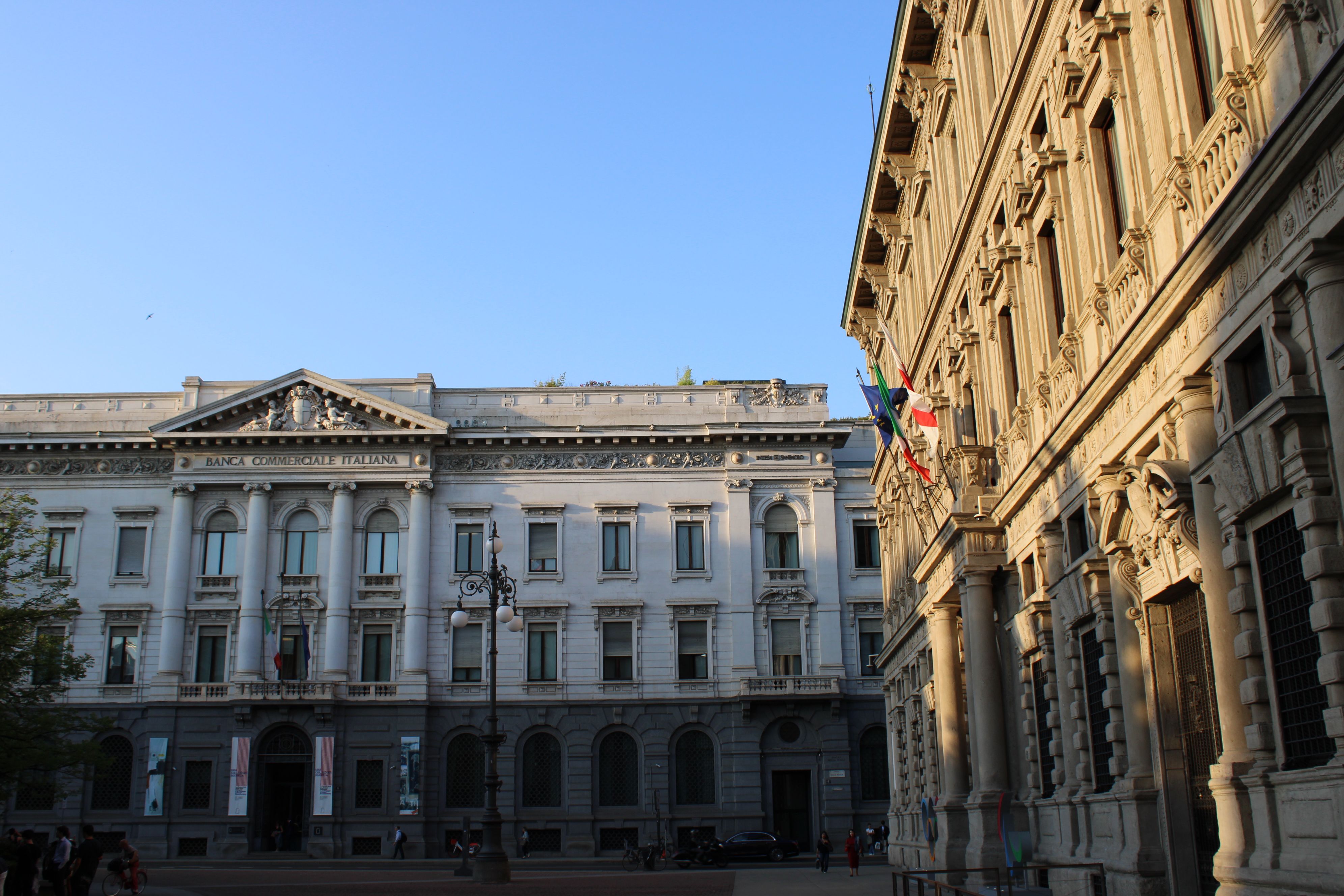
Four buildings for sale, but not four hotel opportunities
On 24 April 2026, the Bank of Italy published four sale notices, each with a reserve price, concerning former branches located in:
-
Alessandria, Piazza della Libertà 18/19;
-
Lucca, Via Civitali 191;
-
Nuoro, Viale Europa 1;
-
Oristano, Via Donizetti 1.
The deadline for submitting expressions of interest is 8 September 2026, and is expressly stated to be non-extendable.
At first sight, the disposal could be presented as the release of four buildings with potential for hospitality conversion. That would be a misleading interpretation.
The Italian hotel investment market is increasingly focused on properties being disposed of by banks, public authorities, foundations and institutional owners. However, the availability of a centrally located, architecturally prominent or apparently inexpensive building does not automatically make it suitable for conversion into a hotel.
A viable hospitality investment only exists when at least five elements can be aligned:
-
hotel demand in the destination;
-
acquisition price;
-
actual conversion cost;
-
achievable room count;
-
prospective revenues and operating margins.
Applying these criteria to the four former branches leads to a clear conclusion: based on the information currently available, Lucca is the only asset that warrants a structured hospitality feasibility assessment.
The other three properties may retain value for residential, office, public-sector or mixed-use redevelopment. That does not make them sustainable hotel investments.
This is not a judicial auction: the project may matter as much as the price
The Bank of Italy’s disposal procedure is not a judicial auction and should not be treated as a straightforward highest-bid-wins process.
The procedure comprises two mandatory stages and a possible third stage:
-
submission of an expression of interest;
-
assessment of applicants and admission to the next stage;
-
possible invitation to submit an irrevocable purchase offer.
The Bank of Italy also states that it does not use intermediaries in connection with its property disposals. The selected purchaser will be required to pay a deposit equal to 20% of the agreed purchase price.
There is, however, a further point that prospective investors may underestimate.
The selection process does not appear to be based solely on price. The notices also place importance on the quality of the prospective buyer and on the project’s potential contribution to local development.
An expression of interest supported by:
-
a feasibility study;
-
an urban regeneration strategy;
-
a detailed business plan;
-
an identified hotel operator;
-
an employment plan;
-
an assessment of the project’s local economic impact;
may therefore be considerably more persuasive than a purely financial submission.
In the context of hotel transaction advisory, this distinction is critical. The documentation must not merely demonstrate access to capital. It must make the entire value-creation process credible.
The four assets
| City | Address | Indicative commercial area | Energy rating |
|---|---|---|---|
| Alessandria | Piazza della Libertà 18/19 | approximately 853 sq m | D |
| Lucca | Via Civitali 191 | approximately 2,819 sq m | G |
| Nuoro | Viale Europa 1 | approximately 2,687 sq m | G |
| Oristano | Via Donizetti 1 | approximately 2,007 sq m | E |
The floor areas stated in the summary advertisements do not always correspond precisely with those contained in the full sale documents.
In the case of Lucca, for example, there is a discrepancy of more than 300 sq m between some publicly circulated figures and the information contained in the official documentation.
Any assessment must therefore be based on the complete sale notice, floor plans, cadastral records, planning status and the actual physical condition of the property.
The only reserve price to have been widely disclosed is that of Lucca: €2.8 million.
Lucca: the only asset with a defensible hospitality thesis
The former Lucca branch extends over three above-ground floors and one basement level, with an indicative total commercial area of approximately 2,819 sq m.
According to the available information, around 686 sq m is already designated for residential use, while the remaining area is registered as banking premises.
The principal entrance is located at Via Civitali 191. The property also has secondary access from Borgo Giannotti and vehicular entrances from both streets.
At a reserve price of €2.8 million, the initial acquisition value is approximately €990 per sq m.
That figure is potentially attractive. It is not, however, sufficient on its own to support the investment case.
Why the property deserves further assessment
The building is detached on all four sides and is surrounded by external grounds incorporating landscaped areas and organised parking.
These features have direct economic value.
A detached building may facilitate:
-
natural light within the guestrooms;
-
the design of escape routes;
-
fire compartmentation;
-
the installation of vertical service risers;
-
the organisation of vertical circulation;
-
the separation of guest, staff and supplier flows.
The availability of parking also represents a meaningful commercial advantage for a property located outside Lucca’s historic centre.
Many hotel conversions fail at the preliminary design stage because, although guestrooms can theoretically be inserted into the building, the property cannot properly accommodate building services, circulation, fire safety, logistics and back-of-house functions.
In Lucca, these constraints may be more manageable than in a building set within a continuous, densely developed urban block.
The limitation: a location outside the city walls
The property is located in the Borgo Giannotti area, north of Lucca’s historic walls.
It is not an isolated location, but nor can it be treated as equivalent to a property within the walled city centre.
This difference is likely to affect:
-
average daily rate;
-
destination perception;
-
the ability to attract international leisure demand;
-
reliance on private transport;
-
the overall marketability of the product.
The strategic mistake would be to develop a boutique hotel on the assumption that it could automatically achieve the same rates as a property inside the historic centre.
The location instead points towards formats such as:
-
upper-midscale hospitality;
-
accessible lifestyle accommodation;
-
extended stay;
-
aparthotel;
-
serviced apartments.
An aparthotel concept may be particularly compelling, as it could absorb seasonal demand more effectively and make use of the areas already designated for residential purposes, without forcing every square metre into a traditional hotel-room model.
The final concept must nevertheless be informed by a detailed analysis of demand, the competitive set and customer segments. This is precisely where real estate analysis must be integrated with a robust positioning, distribution and revenue strategy.
How many units could be developed?
Based on the property’s total floor area, an initial scenario could suggest between 55 and 70 units, depending on the chosen concept and the proportion of non-revenue-generating space.
The room count cannot be calculated simply by dividing the total area by an assumed average guestroom size.
The design must account for:
-
corridors;
-
staircases;
-
lifts;
-
plant rooms;
-
storage areas;
-
housekeeping facilities;
-
staff areas;
-
reception;
-
common spaces;
-
any food and beverage facilities;
-
car parking;
-
areas that cannot be converted;
-
vaults and reinforced structures.
The efficient net area available for accommodation units may therefore be significantly lower than the building’s total commercial area.
A credible key count can only emerge from an architectural test fit, not from a basic floor-area ratio.
The true cost of the investment
The property’s G energy rating and former banking use indicate that this would not be a conventional refurbishment. It would be a substantial transformation.
A prudent preliminary estimate for conversion costs may range between €1,500 and €2,200 per sq m, without excluding higher figures if structural, engineering or planning issues are identified.
Applied to approximately 2,819 sq m, construction expenditure alone could range from:
-
approximately €4.2 million at the lower end;
-
approximately €6.2 million at the upper end.
These figures do not include:
-
the €2.8 million acquisition price;
-
transfer taxes and notarial costs;
-
design and project-management fees;
-
technical advisory costs;
-
planning charges;
-
financing costs;
-
contingencies;
-
furniture, fixtures and equipment;
-
technology systems;
-
pre-opening expenditure;
-
initial working capital.
The realistic all-in investment could therefore fall within a range of approximately €8 million to €11 million, with more conservative scenarios required if significant structural works are identified.
For a scheme comprising 60 to 70 units, the all-in investment could amount to roughly €120,000 to €170,000 per key.
These are the figures that should be presented to an investment committee—not calculations based solely on the purchase price.
What level of performance would the investment require?
To support an investment of this size, the project must demonstrate that it can generate a RevPAR consistent with:
-
the investment per key;
-
the financing structure;
-
any sustainable lease payment;
-
the expected GOP;
-
the return required by the equity investor.
An initial benchmark might be an average annual RevPAR above €80–€90, but this figure must be tested through a monthly business plan.
It is not sufficient to rely on ADR achieved during the destination’s strongest trading periods.
The analysis must include:
-
annual occupancy;
-
seasonality;
-
weekday demand;
-
events;
-
corporate business;
-
group demand;
-
international demand;
-
average length of stay;
-
distribution costs;
-
OTA dependency;
-
operating profit per available room.
A seemingly attractive RevPAR may still fail to produce an adequate return if it is generated through an expensive distribution mix or an inefficient operating structure.
A hospitality due diligence process cannot therefore end with the property assessment. It must integrate market demand, operations, staffing, distribution, contractual structure and financial sustainability.
Alessandria: insufficient scale and limited demand
According to the sale notice, the Alessandria property includes:
-
former banking premises;
-
three offices;
-
five apartments;
-
four storage units;
-
a staff recreation facility;
-
an electrical substation.
The property has entrances from Piazza della Libertà, Via Dante and Via Pontida. A covered area on Via Dante is also subject to a public right of way in favour of the municipality.
The combination of several units and existing uses may support a mixed-use property strategy. The total area, however, appears limited for a hotel conversion capable of achieving meaningful operating economies of scale.
The primary issue is not the building itself.
It is demand.
Based on current market conditions, Alessandria does not appear to offer sufficient hotel demand to justify a substantial conversion investment, particularly in the absence of a highly specialised concept or a pre-agreed arrangement with a specific occupier.
Managed residential accommodation, a mixed-use scheme or conventional residential redevelopment may offer a more coherent investment case.
Nuoro: a strong urban location does not create a hotel market
The Nuoro building dates from the 1960s and has reportedly been vacant since 2009.
It overlooks Piazza Italia and occupies a central position within the city.
Its urban centrality is clear. Centrality, however, is not the same as hotel demand.
Nuoro is an inland Sardinian destination and does not automatically benefit from the visitor flows generated by the island’s coastal resorts.
A hotel project would need to demonstrate adequate year-round demand from segments such as:
-
corporate travellers;
-
institutional demand;
-
healthcare-related stays;
-
events;
-
cultural tourism;
-
experiential tourism;
-
organised groups.
Without such evidence, the risk is that substantial capital would be invested in an important building within a market unable to deliver the ADR and occupancy required to justify its conversion.
The location is strong within Nuoro. The real question is whether Nuoro can generate sufficient demand to remunerate a new hotel product of this scale.
Oristano: regional tourism is not the same as urban accommodation demand
Oristano presents a similar challenge.
The surrounding area has significant tourism assets, particularly around the Sinis Peninsula and the coastline. These flows do not automatically translate into hotel demand within the urban centre.
The distinction between the location of a tourism attraction and the location in which visitors choose to stay is one of the most frequently overlooked factors in conversion projects.
Being located within a tourism-oriented province is not enough. Investors must demonstrate that guests have a clear reason to stay in that specific area, at the required rate, and for a sufficient number of nights throughout the year.
For Oristano, as for Nuoro, the property’s highest and best use may therefore lie in alternative functions such as:
-
residential accommodation;
-
senior living;
-
office use;
-
healthcare;
-
student housing;
-
public services;
-
mixed-use redevelopment.
This does not diminish the property’s underlying real estate value. It simply distinguishes property redevelopment from hotel feasibility.
That distinction is central to the work of a specialist hospitality adviser.
The six technical risks associated with former bank buildings
Former bank properties tend to share a number of characteristics capable of materially changing the business plan.
1. Vaults and reinforced structures
Bank vaults are often constructed using heavily reinforced concrete with thicknesses far beyond ordinary building standards.
Their removal may be:
-
expensive;
-
slow;
-
disruptive;
-
technically complex;
-
incompatible with the structural integrity of the floors above.
In some cases, the optimal solution is not to demolish the vault, but to incorporate it into the final concept through an appropriate alternative use.
2. Structural and seismic upgrading
A change of use, increased loads or higher occupancy levels may trigger the need for extensive structural assessments.
The cost can be substantial and must be determined through material testing, surveys and structural modelling.
A preliminary allowance cannot replace a full structural assessment.
3. Change of use
The transition from office or banking use to tourist accommodation constitutes a change between different functional categories.
Its feasibility, the required planning procedure, parking standards, development contributions and any permitted financial settlements must be assessed in accordance with:
-
national legislation;
-
regional legislation;
-
municipal planning instruments;
-
property-specific restrictions.
Recent regulatory simplifications do not remove the need for a detailed planning due diligence.
4. Heritage protection
The possible existence of cultural or historic protection under Italy’s Cultural Heritage Code must always be verified.
A protected status does not necessarily prevent conversion, but may affect:
-
façades;
-
windows;
-
internal layouts;
-
structural works;
-
materials;
-
approval times;
-
costs.
5. Building-services density
A bank building requires far less hot water, fewer bathrooms and a much lower density of heating, cooling and ventilation systems than a hotel.
Existing systems, even when operational, are rarely capable of being adapted without major intervention.
In most cases, they must be redesigned and replaced.
6. Fire safety
Accommodation facilities with more than 25 beds fall within Activity 66 of Annex I to Presidential Decree 151/2011.
Fire compartmentation, structural fire resistance, escape routes, building services, emergency access and the overall fire-safety strategy must be addressed during the preliminary feasibility phase.
Discovering that the layout is incompatible with fire-safety requirements after acquisition can destroy the investment case.
Institutional disposals are creating a new real estate pipeline
These four former branches are not an isolated case.
The Bank of Italy has launched or completed disposal processes involving properties in cities including Novara, Asti, Enna, Imperia, Varese and Caltanissetta, as well as projects of a different scale and profile, such as the Salone Margherita property in Via Due Macelli, Rome.
This pipeline is supplemented by disposals from:
-
the State Property Agency;
-
INAIL;
-
pension and social-security institutions;
-
public authorities;
-
banking foundations;
-
large corporate groups.
For hotel investors, these assets can be attractive because many offer:
-
central locations;
-
robust structures;
-
substantial floor areas;
-
architectural significance;
-
strong urban visibility;
-
limited market availability.
The institutional origin of the property does not, however, guarantee the feasibility of a hospitality conversion.
On the contrary, the technical, planning and engineering complexity may exceed that of an ordinary office property.
These assets do not come to market labelled as hotels. They are offered as former offices, banks, barracks, public-sector headquarters or redundant institutional buildings.
Value is created by determining:
-
which buildings can realistically become hotels;
-
which format is commercially sustainable;
-
how much capital is required;
-
which operator is capable of running the property;
-
which contract can protect the investment;
-
which return can realistically be generated.
This is the screening and analytical work carried out by InvestimentiAlberghieri.it, which may subsequently be integrated with investment structuring through Investhotel Capital Partners, the operational capabilities of Necci Hotels and the multidisciplinary coordination of Hotel Management Group.
The project only creates value if the operation is sustainable
A conversion project does not end when construction is completed.
The development must be designed around the future operating model, including:
-
staffing;
-
productivity;
-
outsourcing;
-
energy costs;
-
maintenance;
-
housekeeping;
-
food and beverage;
-
distribution;
-
technology systems;
-
reputation management;
-
management control.
The quality of the management team is itself a component of the asset’s value.
For this reason, the appointment of senior executives—potentially supported by Vertex Executive Search—and the training of operating personnel through Roberto Necci Academy should not be postponed until the weeks immediately before opening.
They should be incorporated into the original business plan.
Conclusion: Lucca deserves a full investment dossier, not premature enthusiasm
Of the four former branches being offered for sale, Lucca is the only asset that currently supports a preliminary hospitality investment thesis.
That does not mean it is automatically a good investment.
It means that it is the only property for which the following factors appear capable of being aligned:
-
a destination with measurable tourism demand;
-
sufficient floor area;
-
an potentially attractive entry price;
-
a plausible room count;
-
useful external space;
-
a building configuration that may support conversion.
Its location outside the city walls, however, makes a generic luxury boutique-hotel strategy difficult to justify.
The project will require a clearly defined format—most likely upper-midscale, extended stay or aparthotel—with parking and services designed around a customer profile different from that of a traditional historic-centre hotel.
The total investment may exceed €8 million and could approach or surpass €11 million under more complex scenarios.
Before submitting an expression of interest, an investor should therefore complete:
-
a planning review;
-
a technical survey;
-
an architectural test fit;
-
a structural assessment;
-
a CAPEX estimate;
-
a demand study;
-
a competitive-set analysis;
-
a business plan;
-
an operating strategy;
-
an operator-selection process.
The other three former branches may represent legitimate real estate opportunities. Based on the information currently available, however, they should not be forced into a hospitality thesis unsupported by their underlying market fundamentals.
A specialist adviser does not create excitement around every available property.
The adviser identifies the assets capable of creating value—and rejects those that risk destroying it.
Are you assessing a hotel conversion opportunity?
Hotel Management Group supports investors, family offices, funds and property owners in the assessment and structuring of complex hospitality investments.
Its work may include:
-
technical and financial due diligence;
-
demand analysis;
-
feasibility studies;
-
architectural test fits and room-count assessments;
-
business planning;
-
CAPEX assessment;
-
operator selection;
-
operating-model design;
-
negotiation of leases, hotel management agreements and franchise agreements;
-
investment monitoring and performance control.
Before acquiring a building for conversion into a hotel, investors must establish whether the market will genuinely be capable of remunerating the capital deployed.
For a confidential assessment:
Sources: sale notices published by the Bank of Italy in the section dedicated to property disposals on 24 April 2026; official documentation and local press available as of the publication date. Floor areas, property configurations, permitted uses, planning conditions and values must be verified exclusively through the official documentation and a dedicated due diligence process. This article is intended solely for information and market-analysis purposes and does not constitute an invitation or solicitation to invest.