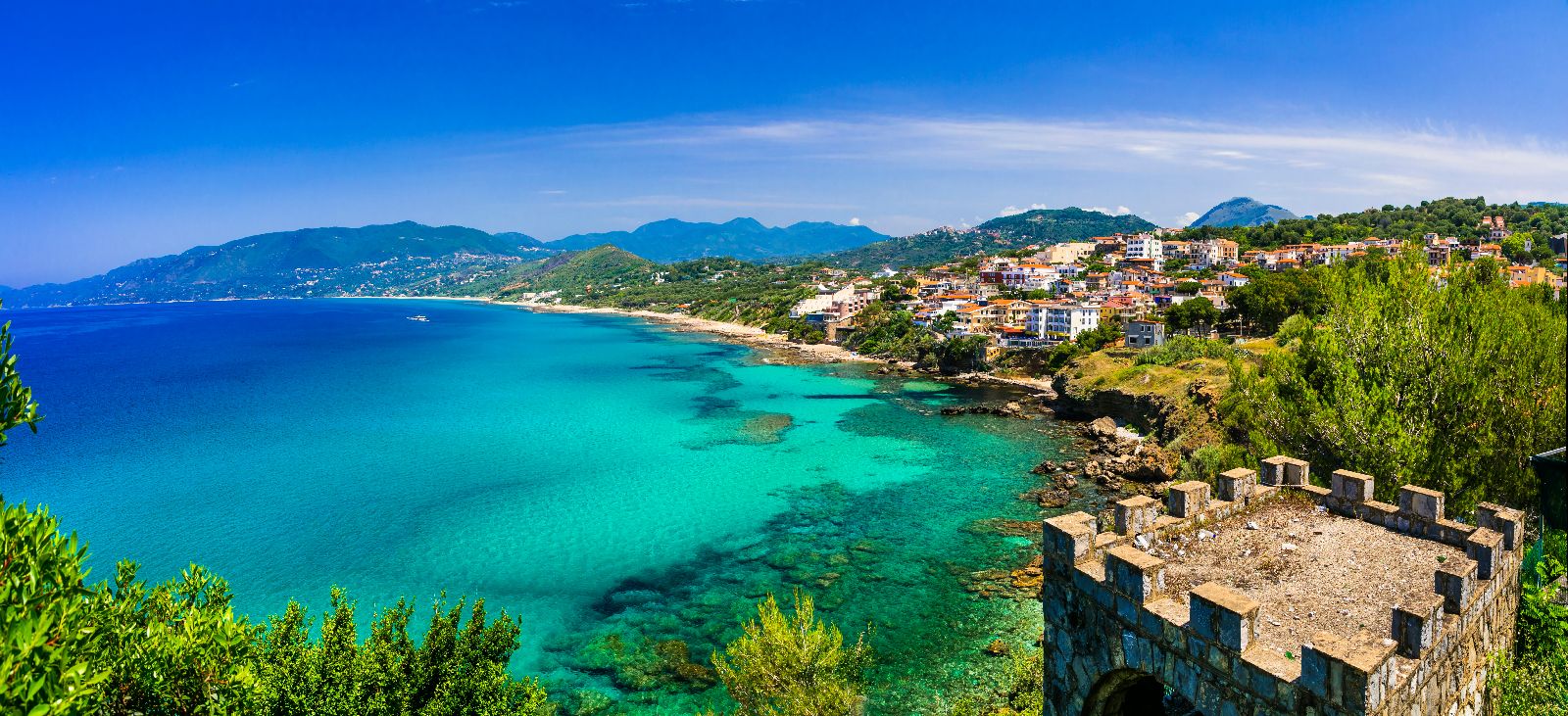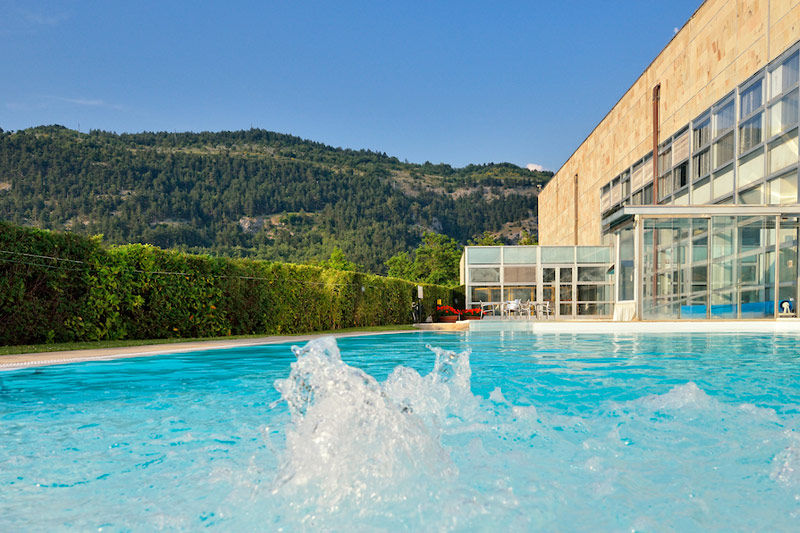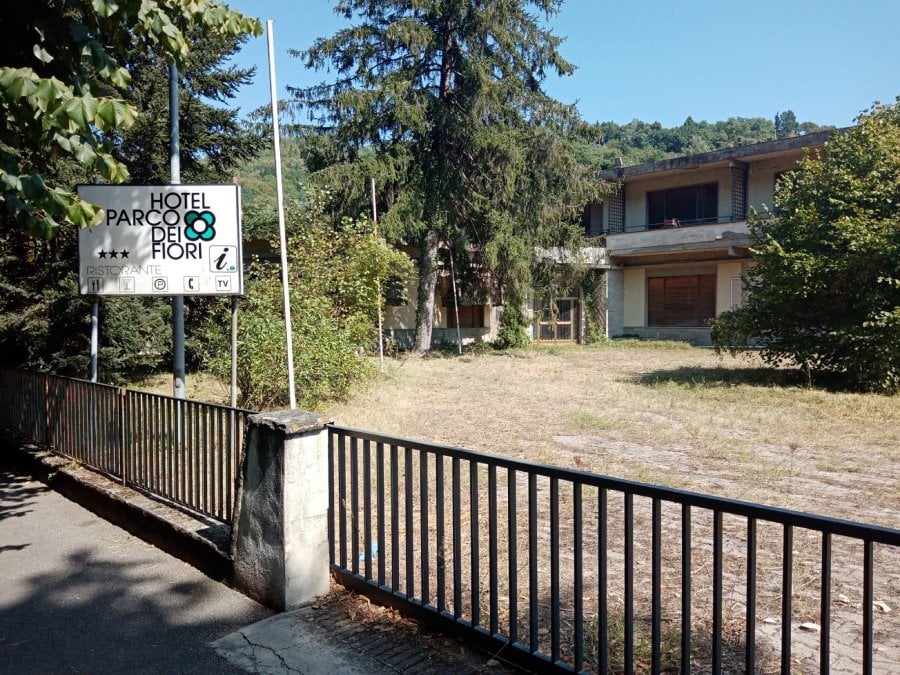
A former 2-star hotel directly on the seafront, approximately 1,700 sqm of hotel space, direct access from the property to the beach, two residential units included in the lot, and a minimum bid of €759,375 against an indicated appraisal value of €1.584 million. In Bellaria-Igea Marina, a hospitality asset in a location that is difficult to replicate on the Adriatic Riviera is heading to auction. But the critical issue is not the 52% discount to appraisal: hotel operations ceased in January 2020, building irregularities have been identified, and the former operating authorisation cannot simply be reinstated. Any new hospitality project will have to be authorised under the regulations currently in force. The underwriting must therefore start not from the historical room count, but from the number of rooms that can actually be authorised in the future — and the GOP those rooms will be capable of generating.
The auction is scheduled for 30 September 2026 at 3:00 p.m.
The main figures are:
appraised value: €1,584,580
reserve price: €1,012,500
minimum bid: €759,375
minimum bid increment: €15,000.
At first sight, a beachfront hotel available for less than €800,000 might appear relatively straightforward to assess.
In reality, the opposite is true.
In this transaction, even the number of rooms used as the denominator in a price-per-key calculation still has to be rebuilt.
The Asset’s First Source of Value Cannot Be Recreated: Its Beachfront Location
The property is located at Via Spalato 12, Bellaria-Igea Marina, directly on the seafront.
This is not merely a hotel described as being “close to the beach”.
The hotel grounds connect directly to the seafront and provide access to the beach.
That characteristic carries significant strategic value.
Almost every component of a hotel can be changed:
guestrooms;
bathrooms;
building systems;
food & beverage;
design;
brand;
services;
positioning.
Location cannot.
The genuinely scarce element in this transaction is therefore not the square metres. It is the hotel’s direct relationship with the sea.
That characteristic alone may justify evaluating a substantially more ambitious repositioning strategy than simply reinstating the former 2-star product.
Approximately 1,700 sqm of Hotel Space, Plus Two Residential Units
The hotel building comprises approximately:
1,700 sqm of equivalent commercial area
and extends over five above-ground floors plus a basement.
The layout includes:
-
service areas;
-
entrance and lounge;
-
offices;
-
dining room;
-
kitchen;
-
guestrooms on the upper floors;
-
lift;
-
courtyard with direct connection towards the seafront.
The lot also includes two residential units, one measuring approximately 160 sqm and the other approximately 125 sqm, together with a small additional urban parcel.
The overall investment perimeter therefore extends beyond the hotel building itself.
And that detail could prove economically significant.
The Two Residential Units Could Become Part of the Operating Strategy
Subject to technical and regulatory verification, the residential units could potentially be used as:
staff accommodation;
general manager or operator accommodation;
offices;
ancillary service areas;
or alternatively retained as independent residential assets.
The decision should be based on the most economically efficient use.
Not every square metre within a hotel investment has to produce room revenue directly.
Some areas can create value by reducing costs or solving operational constraints.
Staff accommodation is a clear example.
€759,375 Versus €1.584 Million: Approximately 52% Below Appraisal
The headline comparison is immediate.
The minimum bid of:
€759,375
is approximately:
52% below
the indicated appraisal value of:
€1,584,580.
That is a significant discount.
But, as consistently emphasised in the investment analysis published by InvestimentiAlberghieri.it:
a discount to appraisal is not an investment return.
To determine whether €759,375 is cheap or expensive, an investor first needs to calculate how much additional capital will be required after acquisition.
And that is where the nature of the transaction changes.
Hotel Operations Ceased in January 2020
The procedural documentation indicates that hotel operations ceased with effect from:
January 2020.
By September 2026, the property will therefore have been without continuous hotel operations for more than six years.
This is not:
an operating hotel available at a discount.
It is:
a beachfront hotel property that has to be brought back to market.
The distinction is fundamental.
After such a prolonged period of inactivity, an investor should assess at least:
-
guestroom condition;
-
bathrooms;
-
electrical systems;
-
air conditioning;
-
hot-water production;
-
lift;
-
kitchen;
-
fire safety;
-
windows and doors;
-
façades;
-
building envelope;
-
energy efficiency;
-
potential water ingress;
-
technology infrastructure.
The relevant question is therefore not:
“How much does it cost to buy?”
But:
“How much will it cost to get from completion of the acquisition to the first paying guest?”
The Critical Issue: The Previous Hotel Authorisation Cannot Simply Be Reactivated
This is the core of the investment case.
Following the cessation of operations, the future operator will need to go through a new authorisation process, with the property and its accommodation capacity assessed under the regulations currently in force.
This means the historical hotel configuration cannot automatically be assumed to be the future configuration.
And that is precisely where the traditional price per key becomes potentially misleading.
Historical Rooms Are Not Necessarily Future Rooms
Sources relating to the sale describe a historical configuration of approximately:
40 rooms.
Using that figure mechanically:
€759,375 / 40 = approximately €18,984 per historical key.
For a beachfront hotel, that appears exceptionally low.
But it is not yet the economically relevant figure.
The future accommodation capacity will depend on the new design and the regulatory standards applicable to the redevelopment.
The correct figure today is therefore not:
€18,984 per future key.
It is:
€18,984 per historical key.
That distinction can materially alter the underwriting.
The Real Denominator Has Yet to Be Determined
For illustration only, assume that the redevelopment reduces the room count.
With:
32 rooms
the real estate acquisition price alone would become approximately:
€23,730 per key.
With:
30 rooms
approximately:
€25,313 per key.
But neither figure would represent the true investment cost.
Capex would still have to be added.
The correct metric therefore becomes:
Total Investment Cost / future authorised keys.
That is the figure that matters.
Fewer Rooms Could Actually Create More Value
At first sight, this may appear counterintuitive.
More rooms should mean more revenue.
But in hotel repositioning, that is not necessarily the case.
Reducing density could allow the investor to create:
-
larger guestrooms;
-
contemporary bathrooms;
-
junior suites;
-
family rooms;
-
improved circulation;
-
premium amenities;
-
more efficient back-of-house areas;
-
higher product standards.
The result could be:
fewer keys
but:
higher ADR
higher RevPAR
and potentially:
higher EBITDA per available room.
The objective should therefore not be to maximise room count.
It should be to maximise the economic value generated by the asset as a whole.
The Former 2-Star Classification Should Not Dictate the Future Product
Historically, the property operated as a:
2-star hotel.
There is no economic reason, however, to assume that the future product should replicate its former positioning.
Direct beachfront access is a premium attribute.
A comprehensive refurbishment could therefore test scenarios such as:
3-star superior;
or, where technically and commercially feasible:
4-star leisure/lifestyle.
That does not mean that moving upmarket is automatically the best strategy.
It means that the option should be underwritten.
The decision should follow:
market feasibility
→ room programme
→ product positioning
→ Capex
→ business plan.
The Beachfront Can Support Higher ADR — but Only If It Is Properly Monetised
A true beachfront location creates tangible opportunities:
sea-view rooms;
balconies and terraces;
direct beach access;
breakfast overlooking the sea;
outdoor dining;
family leisure;
weekend demand;
events;
beach-related guest experiences.
But a premium location creates value only when it translates into pricing power.
The business plan must therefore demonstrate that the asset can generate:
ADR
and:
RevPAR
high enough to remunerate the required Capex.
This is the logic underlying the positioning, valuation and business-planning work developed by HotelManagementGroup.it.
Building Irregularities Become Part of the Business Plan
The documentation identifies building irregularities affecting the property.
This should not simply be classified as a generic problem.
It has to be converted into numbers.
Due diligence should establish:
what the irregularities are;
which can be regularised;
which require reinstatement;
what they will cost;
how long they will take to resolve;
how they affect the future hotel configuration.
This is especially important because:
building regularisation
and:
new hotel authorisation
are closely interconnected.
Compliance Comes First. Room Count Comes Second
In an operating hotel, an investor might begin by asking:
how many rooms do we want?
Here, the sequence should be reversed:
planning compliance
→ building compliance
→ authorisation requirements
→ genuinely usable area
→ room programme
→ classification
→ Capex
→ business plan.
Only then will it be possible to identify the true number of rooms that are:
legally authorisable
and:
economically optimal.
Those two numbers may not even be the same.
The Lack of Dedicated Hotel Parking Is an Operational Issue to Manage
The property does not appear to include dedicated private hotel parking.
For a seaside destination, this is not necessarily a deal-breaker.
But it does affect the product.
A future operator should assess solutions including:
-
agreements with nearby car parks;
-
valet parking;
-
shuttle services;
-
arrangements with neighbouring operators;
-
rail accessibility;
-
bike services;
-
potential compatible use of available areas.
A beachfront hotel may compensate for certain logistical weaknesses.
But they should not be ignored.
The Market Has Already Rejected the Previous Price Level
In the previous sale attempt, the procedure was marketed with:
reserve price: €1,350,000
and:
minimum bid: €1,012,500.
The property was not sold.
The new attempt uses:
€1,012,500 as the reserve price
and:
€759,375 as the minimum bid.
That is meaningful market information.
Investors have already had the opportunity to acquire the asset at a higher entry price and chose not to do so.
The relevant question should therefore not simply be:
“How far has the price fallen?”
But:
“What risks is the lower price now being asked to compensate for?”
The Market Is Probably Not Discounting the Sea. It Is Discounting Execution
The beachfront location is obvious.
That is unlikely to be the problem.
The factors weighing on pricing are more likely to include:
more than six years of inactivity;
new operating authorisation required;
uncertain future room count;
building irregularities;
Capex requirements;
lack of dedicated parking;
pre-opening costs;
commercial repositioning.
In other words:
execution risk.
The successive reduction in price may therefore reflect the need to offer investors a sufficiently low entry point to compensate for transformation risk.
€759,375 Is Only the Acquisition Price
The true investment must also include at least:
-
taxes;
-
transfer costs;
-
legal due diligence;
-
planning due diligence;
-
technical due diligence;
-
regularisation costs;
-
design;
-
new operating authorisation;
-
guestrooms;
-
bathrooms;
-
building services;
-
lift;
-
kitchen;
-
F&B areas;
-
fire safety;
-
air conditioning;
-
windows and doors;
-
façades;
-
common areas;
-
beach access;
-
energy efficiency;
-
FF&E;
-
technology;
-
PMS;
-
booking engine;
-
website;
-
branding;
-
distribution;
-
recruitment;
-
training;
-
pre-opening expenses;
-
marketing;
-
working capital;
-
contingency;
-
financing costs.
Together these produce:
Total Investment Cost.
That is the figure that must be compared with:
GOP
EBITDA
cash flow
exit value.
A Beachfront Location Can Support More Capex — Not Unlimited Capex
A premium location may justify a larger investment programme than a secondary location.
Because it may generate:
greater pricing power
and:
higher RevPAR.
But every euro of Capex still has to earn a return.
The maximum sustainable investment should therefore be determined by:
stabilised EBITDA
and:
the required return on total invested capital.
This principle also features prominently in the investment and valuation analysis published on RobertoNecci.it.
Beachfront F&B Could Become a Standalone Business Unit
The presence of a dining room, kitchen and courtyard connected directly towards the sea creates an additional opportunity.
The restaurant does not necessarily have to be treated solely as:
a meal service for hotel guests.
It could potentially become:
a breakfast destination
a beachfront restaurant
an aperitivo venue
an event space
an outlet targeting external customers.
But F&B must be underwritten with discipline.
The equation remains:
covers
× average check
× frequency
– food cost
– payroll
– operating expenses
= contribution margin.
A sea view can create demand.
It does not automatically create profit.
The Two Residential Units Could Have Greater Operational Value Than Their Standalone Real Estate Value
In a seasonal tourism destination, accommodation for employees can become a significant operating constraint.
The two residential units included in the lot could therefore prove more strategically valuable than they initially appear.
If suitable for staff housing, they could:
support recruitment;
reduce seasonal accommodation costs;
improve staff retention;
simplify hotel operations.
This illustrates a broader point:
the value of a hotel complex does not necessarily equal the sum of the standalone property values of its individual components.
The Highest and Best Use Is Probably Not the Former 2-Star Hotel
The ultimate strategic question is:
what product maximises the economic value of approximately 1,700 sqm directly on the beach in Bellaria?
At least three scenarios deserve to be tested.
Refurbished Leisure Hotel
Relatively controlled Capex, pragmatic positioning and continued focus on traditional seaside demand.
Upscale Family Beachfront Hotel
Lower density, larger rooms, stronger family positioning, higher quality and enhanced F&B.
Boutique / Lifestyle Seafront Hotel
Fewer rooms, higher ADR, greater emphasis on design, food, experience and the relationship with the sea.
The optimum solution will not necessarily be the one with the greatest number of rooms.
It may instead be the one producing:
the highest EBITDA per sqm
or:
the strongest return on invested capital.
The Investor Should Start with EBITDA and Work Backwards to the Price
The correct underwriting sequence is:
market
→ concept
→ future authorised keys
→ ADR
→ occupancy
→ RevPAR
→ Total Revenue
→ GOP
→ EBITDA
→ Capex
→ Total Investment Cost
→ required return
→ maximum acquisition price.
Only at the end do we arrive at price.
Not the other way around.
This is the same framework applied to the hospitality special situations analysed by Investhotel.it.
Bellaria: We Know the Price of the Real Estate. We Do Not Yet Know the Cost of the Future Hotel
That is the paradox at the centre of this transaction.
We already know:
the €759,375 minimum bid;
approximately 1,700 sqm of hotel space;
the beachfront position;
the direct access to the beach.
But we do not yet know one of the most important figures:
how many legally authorisable and economically optimal guestrooms the future hotel will actually contain.
That is precisely why the traditional price per key loses much of its usefulness.
The Real Asset Is the Sea. The Real Risk Is Transforming the Building Correctly
The property benefits from several characteristics that are difficult to replicate:
true beachfront position;
direct beach access;
substantial floor area;
a complete real estate complex;
two complementary residential units;
a historical hotel use.
At the same time, it represents a significant execution story:
inactive since 2020;
new authorisation required;
future key count still to be determined;
building irregularities;
Capex;
pre-opening;
commercial repositioning.
The opportunity exists only if the value created by the first group is sufficiently greater than the cost and risk represented by the second.
The 40 Historical Rooms Are a Data Point. The Future Rooms That Produce EBITDA Are the Value
This is the central investment takeaway.
The headline can read:
beachfront hotel up for auction from €759,375 against a €1.584 million appraisal.
But an investor must answer a different question:
“Once the property has been redeveloped and brought into compliance with current regulations, how many rooms can actually be sold, at what ADR, at what RevPAR and with what EBITDA?”
The answer determines the maximum sustainable purchase price.
Not the historical room count.
Not the former classification.
Not the nominal discount to appraisal.
Purchase price per historical key is a real estate metric.
All-in investment cost per future authorised key is an investment metric.
And, more importantly:
the EBITDA generated by those future keys will determine whether the capital has been allocated successfully.
The sea is already there.
The building is already there.
The rooms that will create value, however, still have to be designed.
And it is precisely in the gap between the historical hotel and the future hotel that both the opportunity — and the execution risk — of the Bellaria-Igea Marina transaction lie.
Disclaimer
The information contained in this article is provided solely for informational purposes and is based on publicly available documentation relating to the relevant procedure.
The available documentation indicates that hotel operations ceased in January 2020 and that a new operating authorisation will be required, with the future configuration and accommodation capacity assessed under the regulations currently in force.
The room count reported by sources describing the former configuration should therefore be regarded as historical information and not as a guarantee of the future authorised capacity.
This content does not constitute an offer, investment solicitation, independent valuation, or legal, tax, planning, technical or financial advice.
Comprehensive independent due diligence on the latest official documentation should be undertaken before any investment decision.
Hotel Investment Analysis and Special Situations
InvestimentiAlberghieri.it analyses hotel properties, operating businesses, judicial auctions, distressed hospitality opportunities and special situations, assessing economic sustainability, Capex, positioning and Total Investment Cost.
Hotel distress, turnarounds and special situations: Investhotel.it
Hotel valuations, business plans and advisory: HotelManagementGroup.it
Professional hospitality analysis and insights: RobertoNecci.it
For confidential hotel investment opportunity analysis: info@investimentialberghieri.it