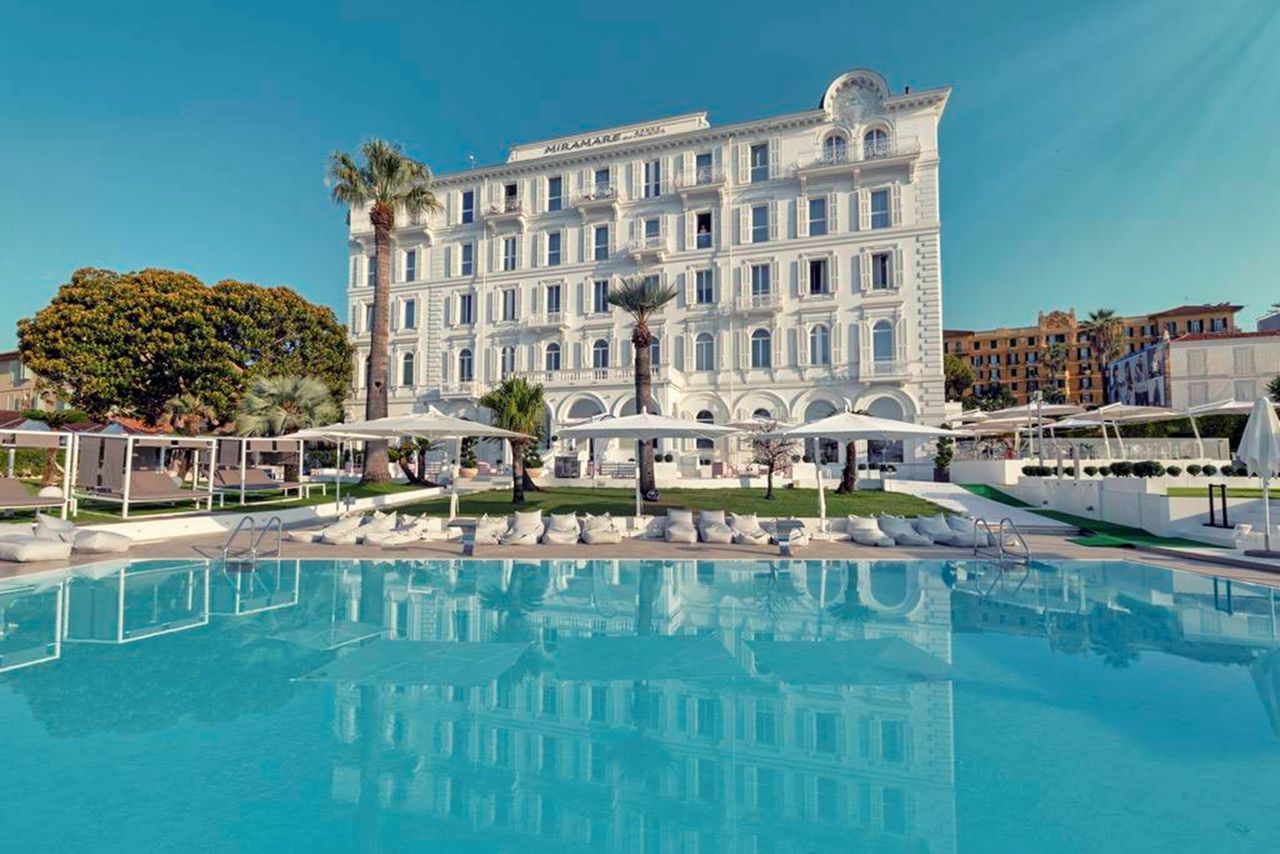
Court-supervised liquidation in the heart of Rome: the hospitality business operating as Casa Mia in Trastevere is being offered for sale with a reserve price of €622,000 and a minimum admissible bid of €466,500. An investment advisory analysis of operating profitability, lease exposure, capital requirements and acquisition risk.
Rome, 12 November 2026 | Investment Analysis by Roberto Necci — Investimenti Alberghieri
In the heart of Trastevere, one of Rome's most internationally recognised neighbourhoods, a hospitality business comprising 12 guest rooms, a restaurant and a bar is being offered for sale through court-supervised liquidation proceedings.
The reserve price is €622,000, while the minimum admissible bid stands at €466,500.
At first glance, the combination of a central Rome location, an established hospitality operation and complementary food and beverage activities may appear attractive to investors and hotel operators.
Yet the defining feature of this transaction lies elsewhere.
The underlying real estate is not being acquired. What is being sold is a business undertaking whose value depends on its ability to generate sustainable earnings and preserve the contractual rights required to continue operating.
That distinction fundamentally changes the investment analysis.
The relevant question is not whether €622,000 is expensive or inexpensive for a small hospitality property in Trastevere.
The question is:
What level of sustainable cash flow must this business generate to justify an investment of between €466,500 and €622,000, once acquisition costs, lease obligations, additional capital expenditure and operating risks are taken into account?
This is the central question examined by InvestimentiAlberghieri.it, through an advisory methodology combining business valuation, cash flow analysis, financial due diligence and investment feasibility assessment.
1. Casa Mia in Trastevere: Transaction Overview
The transaction concerns the business undertaking associated with Casa Mia in Trastevere S.r.l., located at Via della Renella 88/89/90, Rome.
The proceedings are identified as Judicial Liquidation No. 749/2026 before the Court of Rome.
According to the published sale particulars, the business comprises:
-
A hospitality operation with 12 guest rooms.
-
Reception facilities and technical areas.
-
A restaurant with two outdoor areas.
-
An entrance area incorporating a bar counter.
-
Equipment, furniture and movable assets used in the business.
-
Inventory and stock.
-
Contracts entered into in the ordinary course of business.
-
The lease agreement relating to the premises.
-
Employment relationships.
-
Intangible assets and business goodwill.
-
Operating licences and authorisations, subject to the terms of the sale documents and applicable law.
The valuation report is attributed to Dr Riccardo Zocca. Access to the complete documentation is subject to the confidentiality requirements established by the appointed sale administrator.
Key Transaction Details
| Parameter | Details |
|---|---|
| Business | Casa Mia in Trastevere S.r.l. |
| Location | Via della Renella 88/89/90, Rome |
| Proceedings | Judicial Liquidation No. 749/2026 |
| Transaction | Sale of a business undertaking |
| Guest rooms | 12 |
| Additional operations | Restaurant and bar |
| Reserve price | €622,000 |
| Minimum admissible bid | €466,500 |
| Minimum bid increment | €10,000 |
| Stated bid deposit | €93,300 |
| Stated auction fees | 5% plus VAT |
| Auction date indicated by PBG | 24 November 2026 |
The notice published by PBG indicates a bid submission deadline of 23 November 2026 at 12:00 noon, with the auction scheduled for 24 November.
However, another indexed listing on Italy's official Judicial Sales Portal refers to 19 November as the submission deadline and 20 November as the auction date.
Prospective bidders must therefore confirm the currently applicable sale notice directly with the appointed administrator and the official Judicial Sales Portal before taking any action.
Source: PBG / Fallco Aste — Casa Mia in Trastevere
2. Acquiring a Hospitality Business Is Not the Same as Acquiring a Hotel Property
The hospitality market frequently uses expressions such as hotel for sale, hospitality property at auction and hotel acquisition.
From a financial and legal perspective, however, these descriptions can refer to fundamentally different transactions.
An investor may acquire the underlying real estate, the operating business, a business division or the shares of a company.
In the Casa Mia in Trastevere transaction, the asset being offered is the business undertaking.
Consequently, its value cannot be established by mechanically applying the valuation metrics normally associated with hotel real estate investments.
A property may retain substantial underlying asset value even when its hospitality operations cease.
A hotel business operating from leased premises, by contrast, derives much of its value from its ability to continue trading and generate earnings while occupying real estate owned by a third party.
Four factors therefore become particularly important:
-
The sustainable profitability of the rooms, restaurant and bar operations.
-
The financial and legal terms of the lease agreement.
-
The transferability and continuity of the contractual relationships required to operate the business.
-
The additional capital needed to maintain, stabilise or reposition the operation.
A strong location may support commercial performance, but location alone does not establish the value of a business.
Understanding the distinction between real estate value and operating business value is central to the investment and asset enhancement analyses developed by Investhotel.it.
3. Price per Room: A Simple Metric That Can Produce Misleading Conclusions
The first calculation is straightforward: divide the acquisition price by the number of guest rooms.
At the reserve price:
€622,000 / 12 rooms = €51,833 per room.
At the minimum admissible bid:
€466,500 / 12 rooms = €38,875 per room.
For a location in central Rome, these figures may appear attractive.
However, taken in isolation, they can be highly misleading.
The purchase price relates to an operating business, not ownership of the building.
Furthermore, the transaction encompasses restaurant and bar operations, equipment, contractual relationships and other business components that cannot reasonably be attributed solely to the guest rooms.
Comparing these figures with the price per room achieved in a transaction involving both a hotel business and its underlying freehold would therefore be methodologically incorrect.
Price per room can provide a preliminary descriptive indicator.
The relevant investment metric is the return generated on the total capital committed, assessed against the economic life of the acquired rights and the risks associated with the transaction.
4. How Much Revenue Could a 12-Room Hospitality Business Generate?
To establish the potential order of magnitude, we can construct three illustrative operating scenarios.
These are not forecasts for Casa Mia in Trastevere. The publicly available documentation reviewed does not provide sufficiently detailed and current operating data to support a reliable property-specific budget.
The scenarios assume 12 rooms available throughout the year, with different occupancy and average daily rate assumptions.
| Metric | Conservative | Base Case | Upside Case |
|---|---|---|---|
| Available room nights | 4,380 | 4,380 | 4,380 |
| Assumed occupancy | 60% | 70% | 80% |
| Assumed ADR | €130 | €170 | €210 |
| Theoretical annual room revenue | €341,640 | €521,220 | €735,840 |
Illustrative calculations based on ADR excluding VAT, with no operating interruptions or additional restrictions on room availability. These figures are neither observed market benchmarks nor actual operating results attributable to Casa Mia in Trastevere.
The difference between the conservative and upside scenarios exceeds €394,000 in annual room revenue.
It would, however, be incorrect to interpret this difference as an equivalent increase in operating profit.
Incremental revenue must be adjusted for distribution commissions, variable operating expenses, staffing, maintenance, taxes and other costs.
Potential restaurant and bar revenue would then need to be incorporated through separate departmental analyses, rather than assuming that these activities automatically improve overall profitability.
The combination of accommodation and food and beverage operations may create valuable commercial synergies.
It may also introduce significant operating complexity.
Without a properly reconstructed departmental profit and loss account, it is impossible to establish which revenue scenario could translate into sustainable earnings.
5. The Real Investment Is Not €466,500: Total Capital Requirements May Be Significantly Higher
One of the most common mistakes in distressed acquisitions is treating the auction price as the total amount of capital required.
In practice, an investor must also consider:
-
The business acquisition price.
-
Auction fees and transaction expenses.
-
Legal, financial and administrative advisory costs.
-
Immediate investment in equipment and premises.
-
Working capital and liquidity reserves.
-
Any additional applicable taxes and contractual obligations.
We can illustrate the distinction by applying the same assumptions to the minimum bid and the reserve price.
Illustrative Total Capital Requirement
| Component | Minimum Bid | Reserve Price |
|---|---|---|
| Business acquisition price | €466,500 | €622,000 |
| 5% auction fee plus assumed 22% VAT on the fee | €28,457 | €37,942 |
| Assumed professional fees | €20,000 | €20,000 |
| Assumed initial CAPEX | €100,000 | €100,000 |
| Working capital and liquidity reserve | €75,000 | €75,000 |
| Illustrative total capital requirement | €689,957 | €854,942 |
Professional fees, CAPEX and liquidity requirements are illustrative assumptions, not reported facts concerning the business. The model conservatively treats VAT on auction fees as a non-recoverable cash outflow. It excludes any additional transaction-specific tax treatment, which must be assessed separately. The acquisition is assumed to be financed entirely with equity.
The €93,300 bid deposit is treated as an advance payment towards the acquisition price, subject to the applicable sale conditions, and is therefore not added to the capital requirement a second time.
The implications are significant.
An acquisition completed at €466,500 could, under these assumptions, require approximately €690,000 in total funding.
That is the capital base investors should evaluate against expected future cash flows—not merely the auction price.
6. The Key Investment Question: What EBITDA Would Justify the Acquisition?
This is where the analysis moves beyond reporting an auction and becomes a genuine investment appraisal.
The maximum economically sustainable acquisition price depends on:
-
Cash flow available to investors.
-
The effective investment horizon.
-
The required rate of return.
-
Operating continuity and turnaround risks.
-
Any residual value that may reasonably be realised.
For illustrative purposes, let us assume a target annual return of 15%.
This is a modelling assumption, not a verified market-derived required return for Casa Mia in Trastevere.
Two Alternative Investment Horizons
Assume that the investor must recover the entire committed capital through future cash flows and, conservatively, that no residual value is attributed at the end of the investment period.
The required constant annual cash flow, received at each year-end, would be:
| Metric | Minimum Bid | Reserve Price |
|---|---|---|
| Illustrative total capital | €689,957 | €854,942 |
| Assumed target return | 15% | 15% |
| Annual cash flow required: 10 years | €137,475 | €170,349 |
| Annual cash flow required: 5 years | €205,825 | €255,042 |
Calculated using a level annual cash flow discounted at 15%, with no terminal value, no financial leverage and full recovery of invested capital within the selected horizon. The five- and ten-year periods are hypothetical and do not represent the verified remaining term of the lease. For prudence, the liquidity reserve is treated as capital at risk, with no terminal recovery.
The difference is particularly revealing.
If the total investment were approximately €690,000, a ten-year horizon would require around €137,500 in annual cash flow to meet the assumed target return.
With only five years of economic visibility, the required annual cash flow would increase to approximately €206,000.
The investment horizon is therefore a fundamental determinant of business value.
Translating Cash Flow Requirements into EBITDA
For a further simplified illustration, assume the following annual requirements:
-
€25,000 in recurring maintenance CAPEX.
-
€20,000 in cash taxes.
-
€5,000 in net working capital absorption.
These assumptions create an annual cash requirement of €50,000 over and above the cash flow available to investors.
The indicative normalised EBITDA requirement, calculated after recognising rent as an operating expense, would therefore be:
| Investment Horizon | Minimum Bid | Reserve Price |
|---|---|---|
| 10 years | €187,500 | €220,300 |
| 5 years | €255,800 | €305,000 |
These figures are sensitivity calculations, not estimates of Casa Mia in Trastevere's actual EBITDA. No interest expense or debt service is included. Taxes are held constant solely for modelling simplicity; a proper financial model would calculate taxation annually. Additional turnaround expenditure or operating downtime could increase the required earnings.
For a hospitality business comprising 12 rooms, a restaurant and a bar, achieving these earnings would require sufficiently strong and consistent operating performance.
The relationship between required profitability, actual revenue and local market demand must be demonstrated through verified financial information rather than optimistic assumptions.
The model does not establish that the business is worth €466,500 or €622,000. It identifies the economic conditions that would need to be satisfied for those prices to be financially supportable.
7. The Lease Agreement Could Fundamentally Change the Business Valuation
Because the business operates from leased premises, the lease agreement is one of the most important components of the investment analysis.
The value of a hospitality business without real estate ownership is closely linked to the right to occupy its premises and the cost of maintaining that right.
An excessive rental obligation can absorb a substantial portion of operating earnings.
Conversely, commercially attractive lease terms, supported by adequate legal certainty, can enhance a business's ability to generate sustainable returns.
Sensitivity Analysis: How Rent Affects Available Cash Flow
For illustrative purposes, assume that the business generates €200,000 in annual operating contribution before rent and recurring capital expenditure.
We also assume €25,000 in annual maintenance CAPEX, excluding taxes and working capital movements at this stage.
| Metric | Scenario A | Scenario B | Scenario C |
|---|---|---|---|
| Operating contribution before rent | €200,000 | €200,000 | €200,000 |
| Assumed annual rent | €50,000 | €100,000 | €150,000 |
| Maintenance CAPEX | €25,000 | €25,000 | €25,000 |
| Cash before taxes and working capital | €125,000 | €75,000 | €25,000 |
With identical operations and revenues, a €100,000 difference in annual rent creates an equivalent difference in pre-tax cash generation.
To offset an additional €50,000 in rental expense, a business achieving a 30% incremental contribution margin would need to generate approximately €167,000 in additional annual revenue.
The 30% contribution margin is itself hypothetical. Actual incremental margins depend on departmental economics and operating cost structures.
For a business of this size, the impact could be substantial.
The lease agreement is therefore not simply a legal attachment to the sale. It is one of the principal determinants of the business's economic value.
A proper review should address lease duration, renewal rights, indexation, outstanding rental obligations, guarantees, maintenance responsibilities, assignment provisions and the legal ability to continue operating.
8. Determining the Maximum Sustainable Acquisition Price: Start with Earnings, Not the Auction
A sound investment appraisal works backwards from expected cash flow.
The first step is to establish the normalised cash-generating capacity of the business.
The next step is to determine the economic horizon, required return and additional investment commitments.
Only then can an investor calculate a maximum acquisition price consistent with those assumptions.
In simplified terms:
Maximum sustainable acquisition price = present value of future cash flows + supportable residual value − additional transaction costs and required investment.
The result must also reflect transaction-specific liabilities, working capital requirements, contractual uncertainty and the risks inherent in court-supervised liquidation proceedings.
This explains why two investors may assign different values to the same business, even when working from identical historical information.
An established hotel operator in Rome might benefit from economies of scale in staffing, reservations, distribution systems, procurement and administration.
An investor without an existing operating platform might face higher costs and require a greater return.
The valuation should therefore distinguish between the stand-alone value of the business and the additional value potentially available to a specific buyer through demonstrable synergies.
Synergies should be quantified and substantiated, not assumed.
9. Why EBITDA Multiples Are Not Enough
In corporate acquisitions, the Enterprise Value-to-EBITDA multiple is widely used as a valuation reference.
The methodology can be useful, but only when applied to normalised earnings and genuinely comparable businesses.
For a hospitality company operating under a lease agreement, particular attention must be paid to rent accounting, differences in reporting standards and the actual economic obligations borne by the operator.
It is methodologically incorrect to compare one operator's EBITDA before rent with another operator's EBITDA after rent.
Furthermore, a business with a limited remaining lease term cannot necessarily be valued using multiples derived from businesses with an effectively indefinite operating horizon.
In the case of Casa Mia in Trastevere, verified normalised EBITDA and directly comparable transaction evidence are not currently available in the documentation reviewed.
Applying an arbitrary market multiple would therefore create the appearance of analytical precision without providing a defensible valuation.
For this reason, a Discounted Cash Flow analysis aligned with the economic duration of the acquired rights is particularly important, complemented by appropriate comparable evidence, contractual due diligence and scenario analysis.
10. Restaurant and Bar Operations: Additional Profit Potential or Greater Complexity?
The food and beverage component is one of the distinguishing features of the transaction.
A 12-room hospitality business cannot be analysed using the same operating assumptions as a large full-service hotel.
Restaurant and bar operations could make a meaningful contribution to revenue and goodwill.
However, their presence does not automatically translate into additional profitability.
A proper due diligence process should review the operating departments separately.
Rooms Division
Room revenue, occupancy, ADR, RevPAR, distribution commissions, payroll, housekeeping, laundry and maintenance.
Food & Beverage
Restaurant and bar revenue, food cost, beverage cost, staffing, wastage, utilities, equipment and permissions relating to outdoor areas.
Undistributed Operating Expenses
Administration, IT systems, insurance, marketing, management, general maintenance and other shared expenses.
Overall profitability depends on how these departments interact.
A restaurant may enhance the commercial appeal of the business while simultaneously consuming substantial staffing resources, working capital and management attention.
Revenue growth does not necessarily translate into business value creation.
The ability to structure, monitor and improve departmental performance is central to the governance and hospitality management activities explored by HotelManagementGroup.it.
11. Due Diligence: Ten Essential Checks Before Submitting a Bid
Before committing capital, investors should undertake at least ten areas of review.
1. Valuation report and transaction perimeter
Establish precisely which assets, contractual rights, obligations and potential liabilities are included in the sale.
2. Lease agreement
Review the remaining term, rental obligations, renewal provisions, guarantees, maintenance responsibilities and legal continuity of occupancy.
3. Financial statements and accounting records
Reconstruct the latest available financial years, interim management accounts and any anomalies preceding the liquidation.
4. Departmental profitability
Separate rooms, restaurant and bar operations to establish a reliable assessment of GOP, EBITDA and operating cash flow.
5. Licences and authorisations
Confirm hospitality licences, food and beverage permissions, outdoor space authorisations and all other regulatory requirements.
6. Employment obligations
Review employment contracts, seniority, compensation, potential liabilities and the legal implications of transferring employment relationships.
7. Asset condition
Assess the physical condition of equipment, furnishings, installations and premises, including deferred maintenance and required reinvestment.
8. Reputation and distribution channels
Establish whether business names, domains, commercial relationships and digital accounts are available and transferable under the relevant contractual arrangements.
9. Tax and legal exposure
Identify potential liabilities, disputes, contractual obligations and the specific protections or limitations applicable to the liquidation proceedings.
10. Business plan
Develop conservative, base-case and upside scenarios, incorporating stress tests for pricing, occupancy, rent, payroll, investment requirements and business continuity.
Only after these checks can a reliable investment assessment be prepared.
Court sale documentation is an essential starting point, but it cannot replace comprehensive financial, operational and legal due diligence.
12. Strategic Options for a Potential Acquirer
If preliminary analysis establishes a credible basis for sustainable profitability, several business strategies could be considered.
Operational Continuity
Maintain the existing business model while improving cost control, revenue management and operating discipline.
Commercial Repositioning
Review pricing strategy, distribution channels and guest positioning, taking account of market demand and the physical characteristics of the property.
Food & Beverage Restructuring
Assess the standalone profitability of restaurant and bar operations, alongside possible operational synergies.
Third-Party Hotel Management
Evaluate whether direct operation or an alternative management arrangement could deliver a superior risk-adjusted outcome, subject to lease provisions and contractual restrictions.
Operational Turnaround
Implement a measurable profitability recovery plan, supported by realistic financial resources and performance monitoring.
None of these strategies should be regarded as automatically feasible.
Each requires a careful assessment of the acquired business perimeter, existing contracts and applicable authorisations.
13. The Investment Advisor's Conclusion: How Much Should an Investor Bid for Casa Mia in Trastevere?
Without verified EBITDA, cash flow, lease terms and capital expenditure requirements, there is no defensible basis for recommending a specific acquisition price.
Nevertheless, the analysis already highlights the central economic issue.
Under the illustrative assumptions presented, an auction purchase price of €466,500 could require approximately €690,000 in total capital.
At the €622,000 reserve price, the indicative capital requirement could rise to approximately €855,000.
The sustainability of either investment depends on the operating cash flow the business can generate and the period over which those cash flows can reasonably be expected to continue.
A stable lease and documented sustainable operating margins may support a materially different valuation from a business generating similar revenue but facing greater contractual uncertainty.
The question is not how low the auction price appears. The question is how much capital future earnings can justify once the risk of losing, renegotiating or otherwise changing the conditions of operation has been properly assessed.
Casa Mia in Trastevere therefore represents a potentially interesting special situation, but it cannot be described as an attractive investment on the basis of the sale notice alone.
Its true economic value remains to be demonstrated.
That is the difference between pursuing an apparent bargain and structuring a sustainable investment.
Investment Analysis Must Come Before Capital Deployment
An investor should not begin with the price they would like to pay.
The process should begin with realistically achievable cash flows, documented risks and the minimum acceptable return.
Only then should the maximum sustainable purchase price be established.
This is the analytical philosophy underpinning the financial advisory and hospitality valuation work developed by RobertoNecci.it and the Investimenti Alberghieri professional ecosystem.
Investimenti Alberghieri — Independent Advisory for Hospitality Investors and Owners
Distressed transactions, hospitality business disposals and acquisitions involving leased premises require an integrated understanding of financial performance, contractual risk, operational management and investment strategy.
Investimenti Alberghieri advises investors, property owners and hospitality operators on the preliminary assessment of investment opportunities and the preparation of structured investment dossiers.
Our advisory work may include:
-
Business and financial valuation.
-
GOP, EBITDA and cash flow analysis.
-
Assessment of lease affordability and sustainability.
-
Evaluation of total capital requirements.
-
Feasibility studies and business planning.
-
Capital expenditure analysis.
-
Financial stress testing and risk assessment.
-
Comparison of alternative value creation strategies.
-
Preparation of valuation reports and investment memoranda.
We do not act as real estate or business brokers. Our role is to provide independent advisory services, transaction analysis and strategic support for investment and value creation decisions.
Considering the Acquisition of a Hotel Business, a Distressed Hospitality Asset or an Opportunity at Auction?
Before submitting an offer, obtain an independent financial and operational assessment.
Direct enquiries: info@investimentialberghieri.it
Explore our professional ecosystem:
-
InvestimentiAlberghieri.it — Hospitality investment analysis, market intelligence and opportunities.
-
Investhotel.it — Hotel investment strategies, valuation and asset enhancement.
-
HotelManagementGroup.it — Hospitality governance, management and operating performance.
-
RobertoNecci.it — Hotel advisory, business valuation and strategic consulting.
Sources and Methodology
Primary sources
Methodological Note
Transaction details are based on the publicly accessible sale announcements and available procedural documentation.
The full valuation report, current financial statements and underlying lease agreement have not been comprehensively reviewed.
All financial models are illustrative scenarios designed to explain investment valuation methodologies. They do not represent actual historical results, forecasts or a formal valuation of Casa Mia in Trastevere.
This article does not constitute a personalised investment recommendation, a certified valuation, legal advice or an offer of brokerage services.
FAQ
What is the auction price for Casa Mia in Trastevere?
The published sale particulars indicate a reserve price of €622,000 and a minimum admissible bid of €466,500, excluding applicable additional fees and charges.
Does the acquisition include ownership of the building?
No. The transaction concerns the business undertaking, including the lease agreement and other assets and contractual relationships identified in the sale notice. The underlying real estate is not part of the stated sale perimeter.
How many guest rooms does Casa Mia in Trastevere have?
The sale documentation describes a hospitality operation with 12 guest rooms, alongside restaurant and bar facilities.
How much EBITDA would the business need to generate to justify the acquisition?
The required EBITDA depends on total investment costs, lease conditions, investment duration, capital expenditure, risk and the investor's required return. Without verified financial statements and operating data, an exact amount cannot be determined.
How do you value a hospitality business without ownership of the property?
The valuation should consider normalised operating earnings, future cash flows, lease duration, capital expenditure, contractual risk and any supportable residual business value. Discounted Cash Flow analysis can be particularly important when operating rights have a limited economic duration.
What are the main risks when acquiring a business through judicial liquidation?
Key risks include the precise scope of the acquired assets, contractual continuity, employee obligations, regulatory authorisations, potential liabilities, investment requirements and the business's ability to generate sustainable earnings.
Is buying a distressed hotel business necessarily a good investment?
No. An apparently attractive acquisition price does not establish economic value. A sound investment requires a supportable relationship between the total capital committed, future cash generation and the risks assumed.