A hospitality complex of more than 5,300 sqm of adjusted floor area, comprising 72 rooms, a wellness area, thermal pool, restaurant and parking facilities, is coming to auction in Chianciano Terme with a base price of just €195,000 and a minimum admissible bid of €147,000. The appraisal had valued the property at €1.449 million even after substantial adjustments for its condition and required works. The discount is extraordinary. But the real investment is not the auction price: it is the capital required to bring the hotel back to market and generate sustainable EBITDA.
At first glance, the figures appear almost incompatible with the scale of the asset.
€195,000 base price.
€147,000 minimum admissible bid.
For an entire hotel property in Chianciano Terme, Tuscany.
The sale concerns the hospitality complex at 35 Via Le Piane, as part of Real Estate Enforcement Proceeding No. 90/2022 before the Court of Siena.
The online auction is scheduled for 16 September 2026 at 9:30 a.m., while bids must be submitted by 11:59 p.m. on 15 September 2026.
The minimum bidding increment is €2,000.
The judicial figures are therefore remarkably straightforward.
The investment question is far more complex:
How much capital will it actually take to turn this property back into a competitive hotel?
This is the point at which the case stops being merely an auction and becomes a genuine hospitality special situation.
72 Rooms, More Than 5,300 sqm and a Much More Complex Asset Than a Conventional Hotel
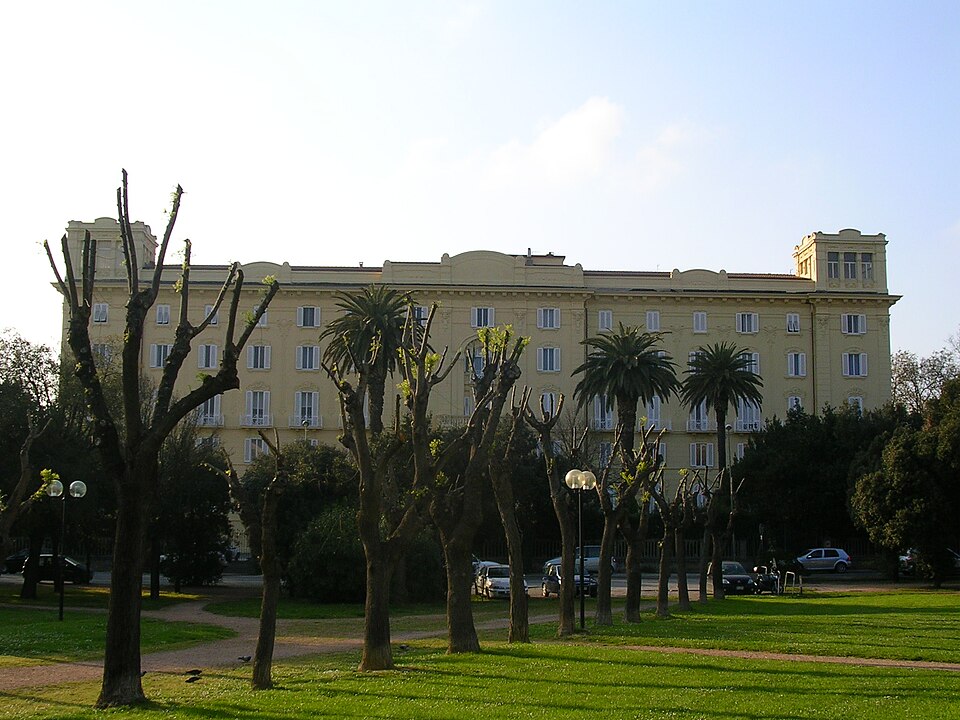
The appraisal describes a property originally developed in the 1970s and comprising two interconnected buildings, arranged across multiple levels.
The hotel has a total of 72 guestrooms.
But its potential value does not depend solely on the number of keys.
The complex also includes:
-
a wellness area;
-
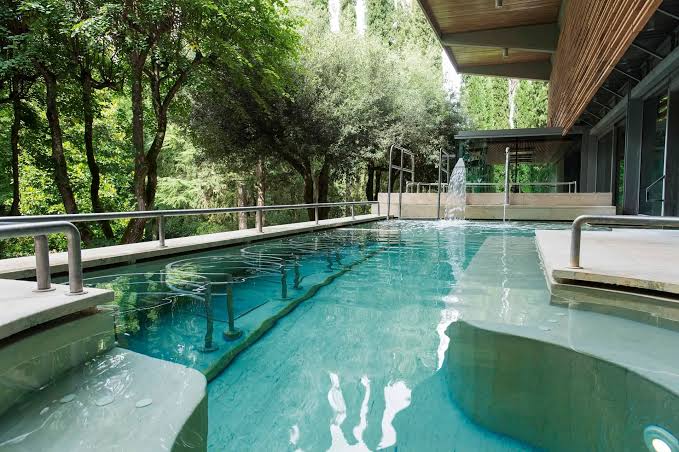
a swimming pool described in the documentation as thermal;
-
relaxation rooms;
-
a gym;
-
kitchen facilities;
-
a restaurant;
-
a bar;
-
a lobby;
-
common areas;
-
offices;
-
terraces;
-
a solarium;
-
laundry facilities;
-
technical areas;
-
outdoor parking.
The parking area is reported to provide approximately 22 spaces.
Historically, the property appears in the documentation first as Hotel Touring and subsequently as Hotel Spa Deus / Albergo Centro Benessere Spa Deus.
This matters.
We are not simply analysing an obsolete hotel building requiring refurbishment.
We are looking at an asset that could, at least theoretically, be repositioned around a hospitality + wellness + thermal experience proposition.
More Than 5,300 sqm: The Price per Square Metre Is Almost Irrelevant
The appraisal calculates a total adjusted floor area of approximately 5,367 sqm.
If the current base price were divided mechanically by that area:
€195,000 / 5,367 sqm ≈ €36/sqm
At the minimum admissible bid:
€147,000 / 5,367 sqm ≈ €27/sqm
These numbers appear extraordinary.
But this is precisely where the greatest risk lies.
A hotel acquired for €27 per square metre can still be an expensive investment.
Because real estate acquisition cost is not the same as the industrial cost of the transaction.
At InvestimentiAlberghieri.it, we repeatedly emphasise this distinction:
Acquisition Price ≠ Total Investment Cost
In distressed hospitality, the purchase price is only the entry point.
The Appraisal Valued the Property at €1.449 Million
The case becomes even more interesting when the expert valuation is considered.
The appraisal determined an auction value of approximately:
€1,449,103
But this figure did not assume a property in ordinary operating condition.
On the contrary, the valuation already incorporated substantial adjustments.
Among other factors, the appraisal reflected significant deductions related to the need for:
-
refurbishment;
-
replacement and reinstatement of building systems;
-
internal and external finishing works;
-
upgrading of outdoor areas;
-
fire-safety compliance;
-
the particular conditions associated with a judicial sale.
The comparison is therefore striking:
| Metric | Value |
|---|---|
| Appraised value | €1,449,103 |
| Current base price | €195,000 |
| Minimum admissible bid | €147,000 |
The current base price is approximately:
86.5% below the appraised value
The minimum admissible bid pushes the theoretical discount close to:
90%
The previous auction round had a base price of €259,000.
The forthcoming sale therefore incorporates a further reduction.
This is exactly the type of repricing that attracts opportunistic investors.
But the relevant question is not how far the price has fallen.
It is how much capital must be invested after acquisition.
The Real Issue Is the Condition of the Property
The appraisal describes a complex that had been unused for several years, with significant deterioration.
Among the issues referred to are:
-
vegetation affecting parts of the property;
-
deteriorated or collapsed suspended ceilings;
-
difficulty accessing and inspecting certain areas;
-
tampered-with building systems;
-
water, electrical, heating and cooling systems that had largely been removed or compromised.
This fundamentally changes the nature of the transaction.
It is not a matter of:
acquiring a hotel for €147,000 and refurbishing it.
It is closer to:
acquiring a deeply distressed hospitality asset and rebuilding a substantial part of its operating capability.
That distinction is critical.
CAPEX Could Be Many Times the Acquisition Price
Once acquisition cost falls to such a low level, the judicial price almost ceases to be the principal financial variable.
The real investment becomes CAPEX.
A professional underwriting process should quantify at least:
-
structural works;
-
roofs;
-
façades;
-
windows and external doors;
-
guestrooms;
-
bathrooms;
-
electrical systems;
-
plumbing;
-
HVAC;
-
boiler and plant rooms;
-
lifts;
-
fire-safety systems;
-
kitchens;
-
swimming pool;
-
wellness facilities;
-
water-treatment systems;
-
FF&E;
-
IT systems;
-
external areas;
-
permitting and compliance-related works.
In addition, the investor would need to include:
professional fees + pre-opening + recruitment + marketing + working capital + financing costs
The real equation therefore becomes:
Total Investment Cost = Acquisition + CAPEX + FF&E + Soft Costs + Pre-opening + Working Capital + Financing Costs
Returns must be calculated on this number.
Not on €147,000.
This is the same framework applied to distressed and turnaround situations analysed by Investhotel.it.
The Real Cost per Key
With 72 guestrooms, the judicial purchase price produces almost symbolic metrics.
The base price equates to approximately:
€2,708 per key
The minimum admissible bid equates to approximately:
€2,042 per key
Taken in isolation, these figures have virtually no investment relevance.
The meaningful metric is:
Total Investment Cost / Key
Consider three purely methodological scenarios:
| Scenario | Total Investment Cost | Cost per Key |
|---|---|---|
| Conservative | €3.0M | €41,700 |
| Repositioning | €5.0M | €69,400 |
| Full Redevelopment | €7.0M | €97,200 |
These are not estimates of the actual refurbishment cost.
They illustrate the investment mechanics.
A hotel apparently acquired for €2,000 per key can easily become a project requiring €40,000, €70,000 or €100,000 per key.
Those are the figures that should then be benchmarked against:
-
ADR;
-
RevPAR;
-
GOP;
-
EBITDA;
-
stabilized value;
-
exit value.
The Number That Really Matters Is Maximum Sustainable CAPEX
This is probably the most important point in the entire analysis.
An investor should not ask:
“How much can I afford to bid?”
The better question is:
“How much CAPEX can I invest while still achieving a return commensurate with the risk?”
That figure is the Maximum Sustainable CAPEX.
The analysis should effectively work backwards from the market.
First estimate:
-
stabilized ADR;
-
occupancy;
-
RevPAR;
-
rooms revenue;
-
F&B revenue;
-
wellness revenue;
-
other revenue;
-
GOP;
-
normalized EBITDA;
-
stabilized value.
Then work backwards.
Stabilized Value
less Acquisition Cost
less Transaction Costs
less Financing Costs
less Required Investor Return
Maximum Sustainable CAPEX
This is where a property auction becomes a genuine hospitality investment transaction.
The Thermal Pool Could Be an Asset — But Only After Due Diligence
The documentation describes a wellness area with a thermal pool, changing rooms, showers, relaxation areas and technical spaces.
This could potentially represent a differentiating feature.
But the word “thermal” cannot automatically be translated into economic value.
An investor would need to establish:
-
the source of the water;
-
usage rights;
-
any concessions;
-
regulatory approvals;
-
the condition of the systems;
-
reinstatement costs;
-
technical characteristics;
-
any applicable restrictions;
-
operating sustainability.
The documentation also refers to restrictions associated with the protection of thermal resources, as well as landscape and hydrogeological constraints.
These matters require dedicated due diligence.
They are not necessarily deal breakers.
But they are unquestionably underwriting variables.
Fire-Safety Compliance Must Also Be Included in CAPEX
The documentation also refers to fire-prevention matters and previous compliance requirements.
This means the technical assessment cannot simply rely on a generic refurbishment allowance.
A detailed technical CAPEX plan needs to be prepared line by line.
For a property of this scale, upgrades to fire protection, building systems and technology could represent a material component of the total capital requirement.
Once again:
the auction price is not the true cost of the transaction.
In Chianciano, the Challenge Is Not Just the Building
There is another level of analysis.
The market.
Chianciano Terme is one of Italy’s best-known historic spa destinations, but the traditional thermal tourism model has undergone a profound structural transformation.
Demand can no longer be treated as automatic.
That means the risk is not only technical.
It is strategic.
Refurbishing an old hotel without fundamentally reconsidering its positioning could be the most expensive mistake of all.
The property should not be assessed according to what it once was.
It should be assessed according to what it could become.
At RobertoNecci.it, hotel valuation is approached precisely from this perspective: value depends on an asset’s future ability to generate income, not merely on floor area or historical construction cost.
Three Potential Strategies
1. Low-Cost Reopening
Reopen the property with selective investment, a relatively simple product and a predominantly price-led market positioning.
Advantage: lower initial capital requirement.
Risk: price competition and limited ability to sustain higher ADR.
2. Full Repositioning
A comprehensive refurbishment of guestrooms, public areas and wellness facilities.
Under this scenario, it may also be worth asking whether 72 rooms genuinely represent the optimal configuration.
Reducing the number of keys, increasing average room size, creating additional suites and materially upgrading the product could potentially create greater value.
3. Wellness Destination
This is the most ambitious scenario.
The property would be repositioned around:
wellness + longevity + thermal experience + food + territory + medical services + retreat
Under this model, the guestroom is no longer the sole revenue engine.
It becomes one component of a broader platform capable of generating revenue through treatments, wellness programmes, F&B, day-use customers and external clientele.
CAPEX would increase.
But so could the potential for differentiation.
The Risk of the Low-Price Illusion
A minimum admissible bid of €147,000 inevitably creates a strong psychological attraction.
But the cheapest assets often demand the greatest investment discipline.
Risk may arise from:
-
unforeseen technical issues;
-
construction-cost inflation;
-
additional works;
-
permitting delays;
-
extended reopening timelines;
-
higher financing costs;
-
pre-opening expenses;
-
slower commercial ramp-up;
-
operating performance below expectations.
The real trap is focusing on the €147,000 required to enter the transaction, rather than the millions potentially required to reach stabilization.
That is why:
Low Acquisition Price ≠ Low Investment Cost
and, more importantly:
Deep Discount ≠ High Return
Acquiring the Property Does Not Mean Owning an Operating Hotel
Once refurbishment has been completed, the investor still needs to build a hospitality business.
That requires:
-
management;
-
staff;
-
organizational structure;
-
operating procedures;
-
PMS;
-
revenue management;
-
distribution;
-
digital marketing;
-
sales;
-
management control;
-
F&B operations;
-
wellness operations;
-
pre-opening execution;
-
positioning.
The investor must therefore decide between:
direct management,
management agreement,
lease,
independent operator,
or potentially a brand affiliation.
The operational phase becomes just as important as the real estate acquisition.
HotelManagementGroup.it focuses precisely on hotel management, turnaround, repositioning and operational performance.
The Due Diligence Required Before Calling €147,000 “A Bargain”
Before treating €147,000 as an attractive price, at least seven workstreams should be completed.
Technical Due Diligence
Structure, roofs, building systems, lifts, swimming pool, wellness facilities, fire safety and CAPEX.
Urban Planning & Cadastral Due Diligence
Permits, compliance, potential regularization requirements and restrictions.
Thermal & Environmental Due Diligence
Thermal resource, authorizations, environmental restrictions and permitted use.
Hotel Market Due Diligence
Demand, competitors, ADR, occupancy, target segments and seasonality.
Concept Study
Definition of the future product before the design phase begins.
Financial Underwriting
Total Investment Cost, EBITDA, cash flow, IRR, DSCR and stabilized value.
Operational Due Diligence
Management model, staffing, distribution, cost structure and opening plan.
Only after completing these analyses is it possible to determine whether €147,000 is cheap or expensive.
Conclusions
The Chianciano Terme case takes one of the fundamental principles of hotel investment to an extreme.
The headline figures are difficult to ignore:
72 rooms
approximately 5,367 sqm of adjusted floor area
wellness area and thermal pool
22 parking spaces
appraised value of €1.449 million
base price of €195,000
minimum admissible bid of €147,000
auction on 16 September 2026
But the documentation also describes a deeply distressed asset, unused for years, requiring substantial refurbishment, with many of its building systems significantly compromised.
So the hotel only costs €147,000 on paper.
The real investment is:
€147,000 + everything required to create a competitive hotel again.
It is the difference between those two figures that will determine whether the transaction represents:
an opportunity,
a value-add special situation,
or
a CAPEX trap.
In distressed hospitality, the advantage does not necessarily belong to the investor who buys at the lowest price.
It belongs to the investor who can determine most accurately:
how much capital can be invested after acquisition and what the asset can ultimately be worth once stabilized.
InvestimentiAlberghieri.it monitors and analyses hotel auctions, special situations and hospitality investment opportunities; Investhotel.it focuses on turnarounds and extraordinary transactions; RobertoNecci.it covers hotel valuation, strategy and governance; while HotelManagementGroup.it focuses on management, repositioning and operational performance.
Are You Assessing a Hotel Auction or a Distressed Hospitality Asset?
Before submitting an offer, it is essential to determine:
Total Investment Cost, Maximum Sustainable CAPEX, prospective EBITDA and Stabilized Value.
For preliminary investment analysis, hotel valuations and due diligence:
info@investimentialberghieri.it