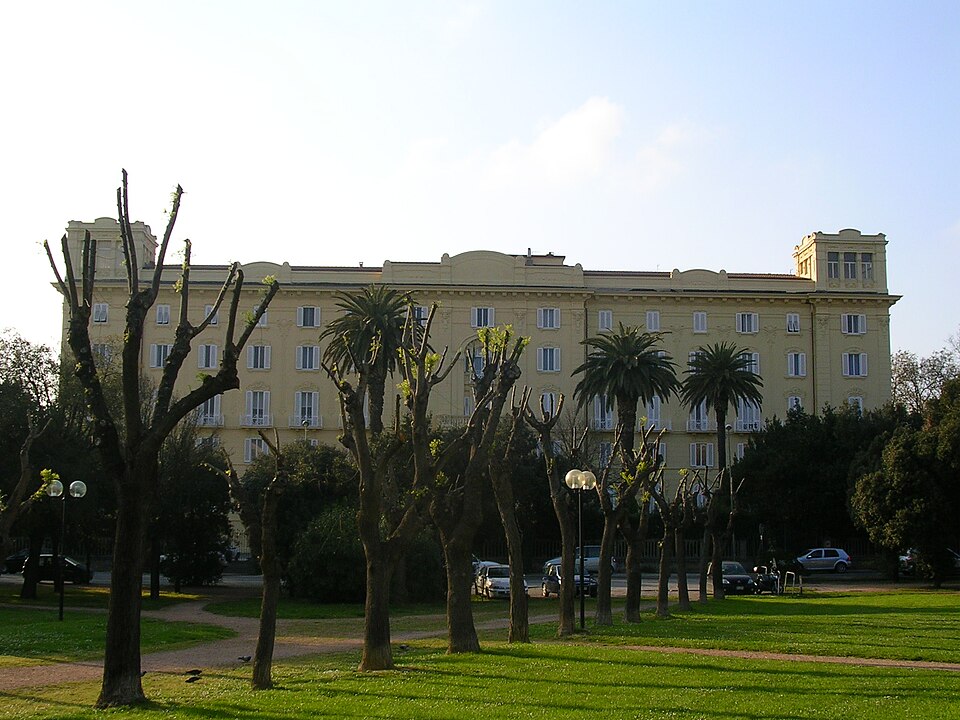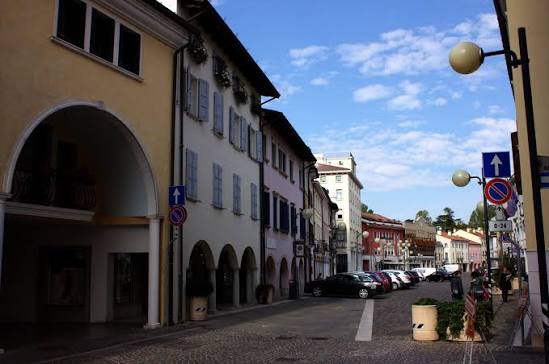
Acquired at auction in 2024 after several unsuccessful sale attempts, the former Balcone delle Marche hotel is set to be redeveloped into a four-star superior property featuring 26 rooms, a restaurant, a panoramic rooftop terrace and an approximately 300-square-metre spa. The project could restore a landmark hospitality asset to Cingoli, but it also presents a clear financial challenge: a relatively small room inventory will need to support a capital-intensive development and the operating costs of a much more complex hospitality product. Its success will depend on turning the hotel into a destination in its own right, capable of attracting non-resident customers as well as overnight guests.
From Its 1992 Closure to a New Hospitality Project
After more than three decades of inactivity, the former Balcone delle Marche hotel in Cingoli, in the province of Macerata, may finally be preparing to return to the market.
The property ceased trading in 1992 and remained under municipal ownership until 2000. Several redevelopment attempts followed, but none succeeded in bringing the refurbishment programme to completion.
After a series of auctions failed to attract any bids, the asset was acquired in 2024 by local entrepreneur Luciano Rosetti, owner of the Centro Vacanze Verde Azzurro resort in San Faustino.
According to Picchio News, the approval process has now been completed and construction is expected to begin in early October 2026. The refurbishment programme is estimated to take between two and three years.
The plans include:
-
a four-star superior hotel;
-
26 guest rooms;
-
a restaurant;
-
a bar;
-
a panoramic terrace with its own restaurant;
-
two lifts, one providing access to the terrace;
-
the redevelopment of the garden in front of the property;
-
an approximately 300-square-metre spa and wellness centre.
This is not simply the reopening of a closed hotel. It is the development of an entirely new hospitality proposition within an existing building.
A Real Estate Redevelopment with Genuine Operational Complexity
The project has clear strategic value for the destination. Cingoli could recover a property that has stood vacant for more than three decades while adding an upper-tier hotel capable of attracting leisure, wellness, gastronomic and event-driven demand.
From an investor’s perspective, however, neither the appeal of the setting nor the quality of the architecture will be sufficient.
A hotel that has been out of operation since 1992 must be assessed almost as a new development. In addition to the visible refurbishment works, the investment is likely to involve:
-
structural and seismic upgrading;
-
planning and cadastral compliance;
-
fire-safety requirements;
-
accessibility;
-
energy efficiency;
-
mechanical, electrical and plumbing systems;
-
acoustic insulation;
-
kitchens, storage facilities and back-of-house circulation;
-
staff facilities;
-
IT and security systems;
-
furniture, fixtures and operating equipment;
-
pre-opening costs and initial working capital.
The most common mistake in projects of this kind is to focus heavily on the construction programme while postponing decisions about the operating model. In hospitality, however, every design choice creates long-term operational and financial consequences.
The architectural plans must therefore be tested not only for aesthetics, but also against the movement of guests, staff, goods, waste, housekeeping teams, restaurant operations and maintenance personnel.
The Core Challenge: Only 26 Rooms
A limited room count can support an intimate and highly personalised guest experience, consistent with an upper-upscale boutique hotel. Financially, however, 26 rooms provide a narrow revenue base over which to spread the fixed costs of a four-star superior property featuring:
-
reception and full hotel services;
-
a restaurant;
-
a bar;
-
a professional kitchen;
-
a spa;
-
a panoramic terrace;
-
landscaped outdoor space;
-
two lifts;
-
specialist personnel;
-
energy-intensive facilities.
The hotel would have a theoretical annual inventory of just 9,490 available room nights. Even with strong occupancy and average daily rates, rooms revenue alone is unlikely to support the entire project.
The future Balcone delle Marche should therefore be treated as a platform comprising several distinct profit centres:
| Business unit | Primary customer base | Economic function |
|---|---|---|
| Rooms | Leisure, couples, international and corporate guests | Core hotel revenue and occupancy |
| Restaurant | Hotel guests and local customers | Standalone turnover and brand awareness |
| Panoramic terrace | Events, celebrations and external customers | Premium pricing and differentiation |
| Spa | Hotel guests, day visitors and members | Ancillary revenue and seasonality reduction |
| Private events | Weddings, celebrations and small groups | Space utilisation and contribution margins |
| Corporate retreats | Companies and professional groups | Midweek demand generation |
| Bar and aperitivo service | Local residents and visitors | Integration with the surrounding market |
Profitability will therefore need to be generated not only from the rooms but, potentially, predominantly beyond them.
The View Is the Project’s Primary Competitive Advantage
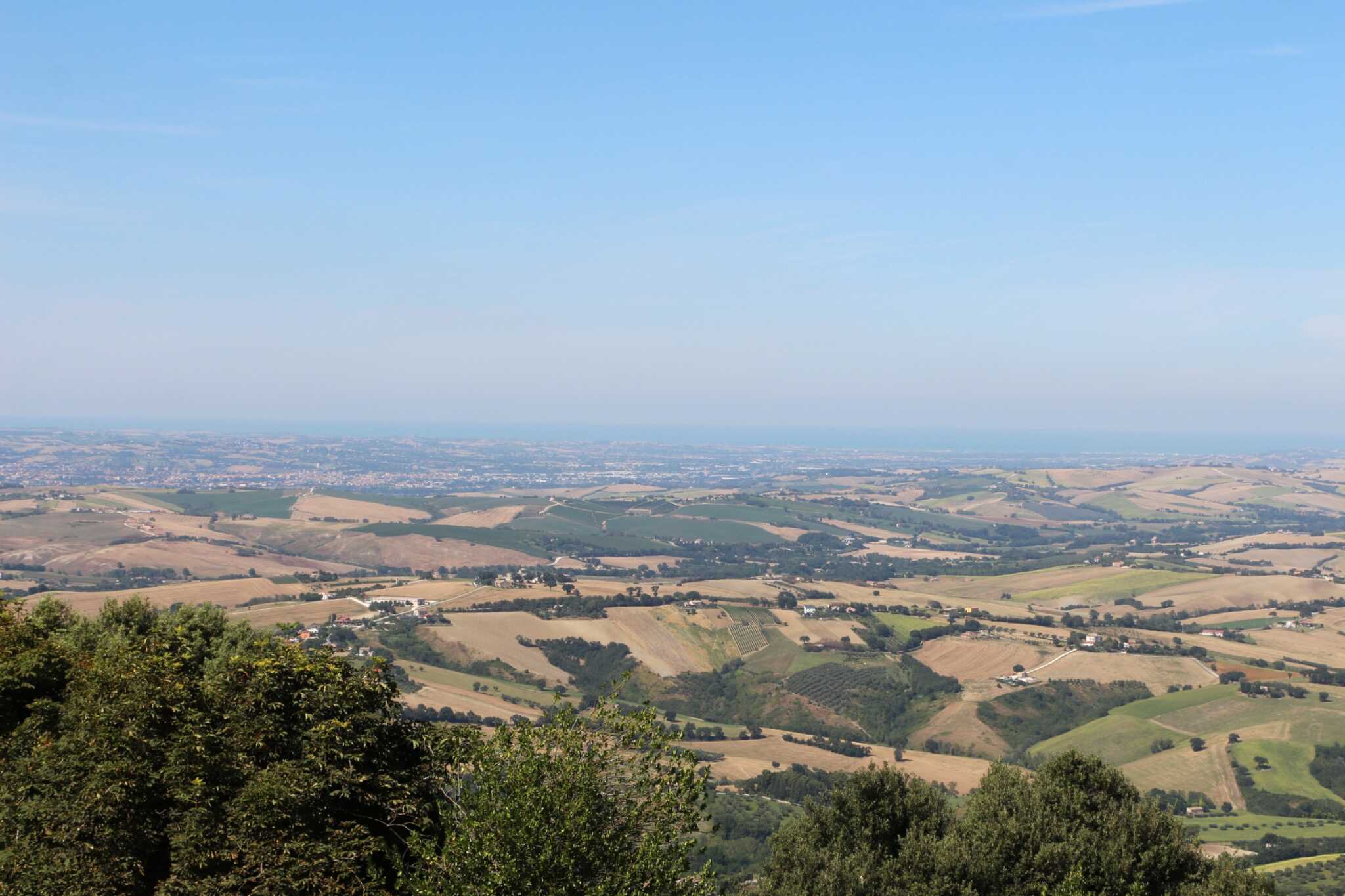
Cingoli is known as the “Balcony of the Marche” because of its elevated position and sweeping views across the region. The hotel’s historic name therefore has immediate commercial value: it connects the property directly to the destination and promises a clearly identifiable experience.
The panoramic terrace could become the development’s most powerful differentiating feature, provided that it is managed as a genuine business unit rather than as an architectural amenity.
To generate value, it will require:
-
a distinctive culinary identity;
-
convenient access for non-resident customers;
-
circulation routes separated from the guest-room areas;
-
a structured events calendar;
-
a dedicated commercial strategy;
-
opening patterns aligned with market demand;
-
weatherproofing solutions capable of extending its use beyond the summer;
-
operational arrangements that protect the experience of resident guests.
A well-managed rooftop venue can increase the hotel’s visibility, support room rates and generate its own demand. An underused terrace, by contrast, risks becoming little more than capital expenditure embedded in the building.
A 300-Square-Metre Spa Serving Just 26 Rooms
The ratio between the size of the proposed wellness centre and the hotel’s room count deserves close scrutiny.
An approximately 300-square-metre spa is unlikely to achieve sufficient utilisation if it relies exclusively on overnight guests. Its business model will probably need to include:
-
day-spa admission;
-
treatments and massages;
-
couples’ packages;
-
local memberships and subscriptions;
-
wellness and dining packages;
-
private wellness events;
-
low-season accommodation packages.
The spa could become an effective tool for reducing seasonality, but it will also create significant expenditure relating to energy, water, maintenance, cleaning, qualified staff and consumable products.
Before construction begins, the operator should estimate the minimum number of visits, average customer spend and contribution margin required for the facility to cover its direct costs and contribute towards the hotel’s overheads.
The correct question is not: “Does the spa make the product more attractive?”
The correct question is: “How many paying customers can it realistically attract throughout the year?”
The Hotel Must Reach Beyond Cingoli’s Existing Demand
The project cannot rely solely on tourism flows that already reach Cingoli. It will need to create new reasons to travel and position itself within wider regional itineraries.
Potentially compatible customer segments include:
-
Leisure and wellness couples seeking short breaks combining scenery, spa experiences and dining.
-
Cultural and nature-based travellers visiting Cingoli and the inland areas of the Marche.
-
Food and wine customers from the surrounding provinces.
-
Weddings and private celebrations, supported by the terrace, restaurant and garden.
-
Small groups and private events compatible with the hotel’s limited room inventory.
-
Corporate retreats and incentive travel, capable of generating valuable midweek demand.
-
Independent international travellers interested in less congested Italian towns and villages.
-
Touring guests visiting several destinations in the Marche during the same trip.
The broader national environment is encouraging. According to Italy’s National Institute of Statistics, Istat, total overnight stays in Italy increased by 7.5% year on year during the first quarter of 2026, while international overnight stays rose by 12.3%.
These figures are not a forecast for Cingoli, but they reinforce the importance of developing a product capable of reaching international markets.
The future hotel should therefore be marketed not merely as somewhere to stay, but as a reason to visit the destination.
Three Rooms-Revenue Scenarios
Because the project’s business plan, acquisition price, capital expenditure and proposed room rates have not been disclosed, any financial scenario must be treated as illustrative only.
With 26 rooms operating for 365 days, the property would have 9,490 available room nights each year.
| Scenario | Occupancy | ADR | RevPAR | Indicative rooms revenue |
|---|---|---|---|---|
| Conservative | 45% | €130 | €58.50 | approximately €555,000 |
| Base case | 55% | €155 | €85.25 | approximately €809,000 |
| Upside | 65% | €180 | €117.00 | approximately €1,110,000 |
These figures are hypothetical, exclude VAT and do not represent forecasts for the future hotel.
The upside scenario would require a fully established product, excellent online reputation, year-round demand and a strong direct-booking strategy to avoid excessive dependence on online travel agencies.
An Integrated Revenue Scenario
Assessing the project solely on rooms revenue would provide an incomplete picture. The potential contribution of the complementary business units must also be considered.
Under a purely illustrative base-case scenario:
| Revenue stream | Illustrative annual revenue |
|---|---|
| Rooms | €809,000 |
| Restaurant, breakfast and bar | €500,000–€650,000 |
| Spa and treatments | €150,000–€250,000 |
| Events and weddings | €150,000–€250,000 |
| Other revenue | €30,000–€60,000 |
| Indicative total revenue | €1,639,000–€2,019,000 |
This is not a valuation or financial forecast for the future hotel. It is an illustrative model showing the economic structure the project may need to achieve.
Ultimately, sustainability will depend on the EBITDA generated from this revenue.
It would not be prudent to apply the operating margins of a large, rooms-led city hotel to a small independent property with substantial food-and-beverage and wellness operations. Payroll, energy, food costs, maintenance and distribution could absorb a significant proportion of turnover.
The fundamental investment question is therefore:
What level of stabilised revenue and EBITDA will be required to provide an appropriate return on the total capital invested?
Why a Simple Cost-per-Key Calculation Could Be Misleading
With only 26 rooms, every increase in total development cost produces a sharp rise in capital expenditure per key. Dividing the entire investment by the room count, however, could generate a misleading conclusion.
A meaningful share of the capital will be allocated to facilities designed to generate standalone revenue, including the restaurant, terrace, spa, bar and event spaces.
The investment analysis should therefore distinguish between:
-
guest-room capital expenditure;
-
public-area capital expenditure;
-
restaurant and kitchen investment;
-
spa investment;
-
structural and building-services works;
-
furniture, fixtures and operating equipment;
-
technical, professional and approval-related costs;
-
financing costs during construction;
-
pre-opening expenditure;
-
initial working capital;
-
contingency allowances.
The total investment must ultimately be assessed against the stabilised value of both the operating business and the real estate—not simply against the number of rooms.
Further analysis of hotel acquisitions, redevelopments, special situations and transaction structures is available through Investhotel.
The Risk Embedded in a Two-to-Three-Year Construction Programme
Time is itself a financial variable.
A construction period estimated at between two and three years exposes the project to:
-
fluctuations in material and labour costs;
-
supply-chain delays;
-
unforeseen construction issues;
-
higher financing costs;
-
deferred revenue generation;
-
additional equity requirements;
-
regulatory changes;
-
shifts in market demand;
-
the obsolescence of certain design decisions.
The project will require an integrated timetable linking construction progress, funding requirements, procurement, recruitment, commercial preparation and the planned opening date.
Marketing cannot begin only when construction is complete. The hotel’s name, identity, website, positioning, distribution channels, content strategy and commercial partnerships should be developed well in advance.
The Capital Structure Must Also Fund the Ramp-Up Period
The project’s funding requirement will not end with the acquisition and construction costs.
Once the works have been completed:
-
employees will already need to be on the payroll;
-
utilities and building systems will be operational;
-
marketing expenditure will need to be funded;
-
opening inventories will have to be purchased;
-
room occupancy will not yet have reached stabilised levels;
-
the restaurant and spa will still need to build their customer bases;
-
the property’s online reputation will effectively start from zero.
An overly rigid financing structure could therefore come under pressure immediately after the opening, precisely when the property is most vulnerable.
The financial plan should include:
-
an adequate construction contingency;
-
a dedicated pre-opening budget;
-
working capital for the opening months;
-
a realistic ramp-up period;
-
sustainable financing covenants;
-
delayed-opening scenarios;
-
stress tests covering occupancy, ADR and energy costs.
Property Ownership and Hotel Operations Require Different Capabilities
The buyer’s existing experience in the tourism industry is a positive factor, as is its knowledge of the local market and business environment.
The future Balcone delle Marche will, however, operate under a different model from a holiday resort. A four-star superior hotel with a spa and panoramic dining requires specialist expertise in:
-
revenue management;
-
digital distribution;
-
direct sales;
-
food-and-beverage management;
-
cost control;
-
wellness operations;
-
online reputation management;
-
workforce planning;
-
event development;
-
international marketing.
The ownership will need to determine whether the hotel should be operated directly, through a dedicated operating company, under a management agreement or with the support of specialist external advisers.
For operating-model design, performance control and hotel asset management, further information is available through Hotel Management Group.
Which Branding Strategy for the New Balcone delle Marche?
A 26-room property may not require affiliation with a major international brand. The historic Balcone delle Marche name already has a strong connection to Cingoli and significant storytelling potential.
Operating independently could provide:
-
greater positioning freedom;
-
stronger local identity;
-
lower affiliation costs;
-
greater commercial flexibility;
-
the ability to create a more authentic product.
Conversely, a soft brand or commercial network could offer international distribution, loyalty-programme access and established operating standards.
The decision should be based on a comparison of:
-
affiliation costs;
-
expected demand contribution;
-
potential ADR uplift;
-
brand-mandated technical requirements;
-
contractual restrictions;
-
the owner’s ability to market the hotel independently.
Any brand selected should increase the investment’s economic value. It should not be adopted purely for reputational purposes.
The Wider Value for Cingoli
The reopening could have an impact extending well beyond the property itself.
The hotel could:
-
attract visitors with greater spending power;
-
increase average length of stay in the area;
-
support local producers and suppliers;
-
create direct and indirect employment;
-
provide infrastructure for events and local initiatives;
-
strengthen the destination’s food, wine and wellness offering;
-
return a long-vacant building to productive use;
-
improve the tourism positioning of the inland Marche.
As explored in the hospitality investment analysis published by Roberto Necci, a hotel’s value cannot be reduced to the value of its building. It results from the interaction between the real estate, the operating business, market positioning, management capability and future cash flows.
The project’s contribution to the local economy will be sustainable only if the hotel itself becomes a financially viable business.
Investment Matrix
| Strengths | Key risks |
|---|---|
| Distinctive panoramic location | Only 26 rooms |
| Name closely connected to the destination | Potentially high fixed-cost incidence |
| Four-star superior positioning | Total capital expenditure has not been disclosed |
| Restaurant and terrace accessible to local customers | Food-and-beverage operating complexity |
| Spa capable of supporting year-round demand | A 300-square-metre facility must be made financially productive |
| Owner with existing tourism experience | Ramp-up following more than 30 years of closure |
| Potential for weddings and events | Two-to-three-year development timeline |
| Recovery of a locally significant property | Need to create demand, not merely capture existing flows |
Overall Investment Assessment
The redevelopment of the former Balcone delle Marche is strategically compelling because it combines real estate regeneration, a strong sense of place, panoramic views, wellness and destination dining.
It cannot, however, be assessed solely on the attractiveness of the design.
With just 26 rooms, financial sustainability will depend on the project’s ability to:
-
achieve an ADR consistent with four-star superior positioning;
-
control operating costs without diluting the service proposition;
-
make the restaurant, terrace and spa commercially accessible to external customers;
-
generate events and ancillary revenue during periods of weaker room demand;
-
attract customers from beyond the immediate local market;
-
keep total capital expenditure aligned with stabilised EBITDA;
-
adequately fund the pre-opening and ramp-up phases.
The project therefore combines significant tourism potential with a level of operational and financial complexity far greater than its room count might suggest.
Conclusion: The Real Product Will Not Be the Hotel, but the Destination
The former Balcone delle Marche has the potential to become a flagship property for Cingoli and the inland Marche.
To succeed, it cannot be conceived as a small hotel with a collection of ancillary facilities. It must become an integrated destination in which accommodation, views, dining, wellness and events collectively contribute to financial performance.
A high-quality redevelopment will be necessary, but it will not be sufficient.
Success will ultimately be measured through:
-
average daily rate;
-
annual occupancy;
-
restaurant profitability;
-
spa utilisation;
-
event volume and contribution margins;
-
the ability to attract non-resident customers;
-
total EBITDA;
-
return on invested capital.
The final question is therefore not whether the Balcone delle Marche can once again become an attractive hotel.
The real question is whether it can become a profitable hospitality business capable of converting the beauty of its location into recurring cash flows and long-term value.
Advisory Services for Hotel Investments and Redevelopments
For feasibility studies, business planning, hotel valuations, capital-expenditure reviews, operating-model analysis, concept development and hospitality investment structuring:
Investimenti Alberghieri
www.investimentialberghieri.it
Email: info@investimentialberghieri.it