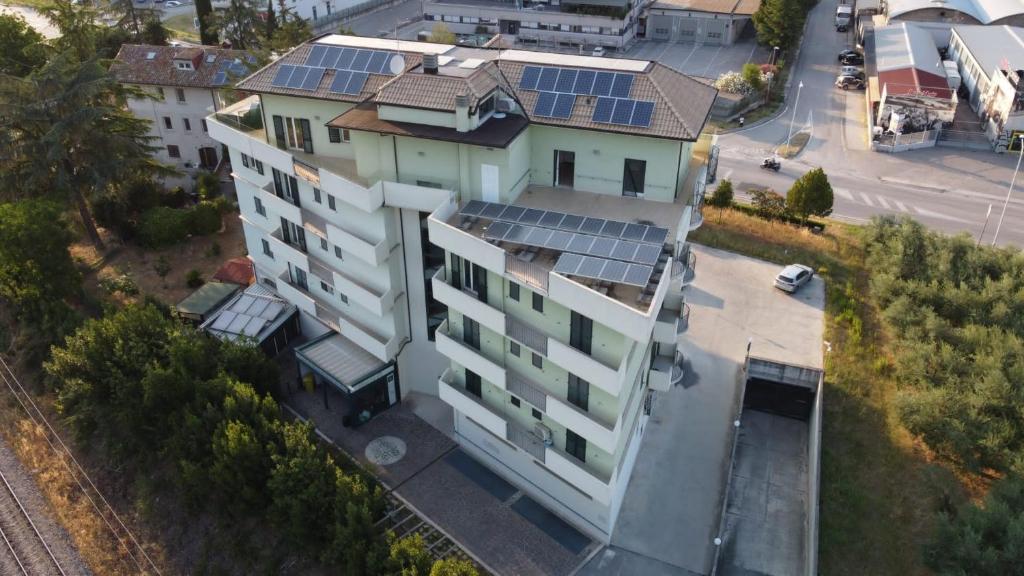
The most important decision facing a hotel owner is not what the property is worth today, but which strategy can generate the greatest economic value over the coming years.
Profitability, real estate value, financial sustainability and strategic alternatives: a structured framework for determining whether to reinvest in, divest or reposition an independent hotel.
Executive Summary
The future of a hotel should never be determined solely by its real estate value, historical profitability or the owner's expectations.
Five fundamental principles provide the foundation for a disciplined investment decision:
-
A valuable property is not necessarily a profitable business. Real estate value and cash-generating capacity must be assessed independently.
-
A turnaround is justified only when it creates value. Additional investment must generate risk-adjusted returns that compare favourably with the available alternatives.
-
Selling a hotel can be a sound capital allocation decision, not an admission of business failure. Continuing to operate an economically inefficient asset may progressively erode shareholder wealth.
-
Repurposing must be both technically feasible and financially viable. A theoretical alternative-use valuation is not equivalent to value that can actually be realised.
-
Strategic decisions require comparable scenarios. Turnaround, disposal, conversion and third-party management should be assessed using consistent financial assumptions.
The central question is therefore not whether a hotel can remain operational.
It is whether retaining the property in hotel use represents the most economically efficient deployment of capital.
1. The Independent Hotel Dilemma: Significant Property Wealth, Limited Profitability
Independent hotels constitute an important component of Italy's hospitality landscape, particularly across regional destinations and secondary markets.
Many of these businesses have evolved through family ownership structures in which real estate ownership, hotel operations and day-to-day management remain closely integrated.
This model can provide continuity, deep local knowledge and direct operational control.
However, it can also create a fundamental challenge: distinguishing the value of the underlying property from the financial performance of the hotel business.
A hotel may have 30, 40 or 60 rooms, occupy a centrally located building and possess decades of operating history, yet fail to generate sufficient cash flow to finance essential capital expenditure.
In other cases, the hotel may report positive operating earnings without generating an adequate return on the substantial capital tied up in the asset.
The analytical approach developed by Investimenti Alberghieri begins with this distinction: hotel value cannot be assessed solely through floor area, room count or historical revenue.
The analysis must establish whether the asset can generate sustainable, risk-adjusted cash flows.
The Three Dimensions of Hotel Value
Real Estate Value: Determined by location, physical characteristics, building condition, permitted use, planning restrictions and market fundamentals.
Operating Business Value: Driven by profitability, customer relationships, brand positioning, reputation, operational efficiency and cash-generating capacity.
Strategic Upside Potential: The incremental value that may be unlocked through capital investment, operational restructuring, repositioning or alternative uses.
These dimensions should be examined separately. Simply adding them together may result in double counting.
A property can have substantial underlying real estate value while supporting a financially underperforming hotel operation.
The critical question is not how much property wealth the owner controls. It is how effectively that capital performs, how much additional investment it requires and whether better alternatives exist.
2. The Initial Diagnosis: Is the Problem the Market, the Management or the Property?
Before deciding whether to turn around, sell or repurpose a hotel, investors must identify the underlying causes of its underperformance.
Most situations can be classified into three broad categories.
Operational Underperformance
The destination generates sufficient demand, but the hotel fails to capture or monetise it effectively.
Potential causes include:
-
Ineffective pricing and revenue management.
-
Excessive reliance on online travel agencies.
-
Inefficient staffing and organisational structures.
-
Weak cost control.
-
An underdeveloped commercial strategy.
-
Limited adoption of digital operating systems.
-
Insufficient managerial expertise.
Under these circumstances, an operational turnaround may create meaningful value without requiring extensive property redevelopment.
Performance analysis and management reporting frameworks, such as those explored by Hotel Control, can help identify the gap between actual results and attainable operating performance.
Product Obsolescence
The hotel operates in a potentially attractive market but no longer offers a competitive product.
Guestrooms may be outdated, public areas may lack functionality, building systems may be inefficient, or the overall positioning may no longer reflect guest expectations.
In this situation, the central issue becomes the capital expenditure required to restore competitiveness.
Estimating renovation costs is only the beginning.
The real question is whether those investments can generate sufficient incremental operating earnings and cash flow.
Structural Market Weakness
Some destinations face persistent challenges that fundamentally constrain hotel demand.
These may include excessive seasonality, declining destination appeal, insufficient transport connectivity, structural changes in demand or supply growth that outpaces market absorption.
Where the underlying problem is structural, refurbishment alone may not provide a viable solution.
A poorly managed hotel may be turned around. A hotel operating in a structurally inadequate market requires a much broader strategic reassessment.
3. The Hotel Strategic Decision Index: Five Dimensions for Evaluating Strategic Alternatives
To support a more systematic assessment, we propose the Hotel Strategic Decision Index (HSDI).
The HSDI is a conceptual diagnostic framework designed to structure investment analysis. It is not presented as a statistically validated index or an industry-standard scoring system.
The framework considers five dimensions:
| Assessment Dimension | Indicative Weight | Key Variables |
|---|---|---|
| Profitability and cash generation | 30% | Normalised EBITDA, free cash flow, margins, debt service capacity |
| Market potential | 25% | Demand, competition, ADR, RevPAR, destination outlook |
| Capital expenditure requirements | 20% | Refurbishment costs, deferred maintenance, compliance, implementation timeline |
| Real estate value and alternatives | 15% | Current asset value, investor demand, legally permitted alternative uses |
| Management and organisational capabilities | 10% | Leadership, expertise, productivity, operating processes and continuity |
Each dimension may be assigned a score from 1 to 5.
A weighted assessment provides an initial overview of the hotel's strategic position.
However, the overall score must never be used as an automatic recommendation to sell, reinvest or convert.
A property with substantial real estate value but weak operating profitability may require a fundamentally different strategy from a less valuable property with strong cash generation.
Certain constraints must also override the numerical score.
For example, an alternative-use conversion may be economically attractive in theory but legally impossible under applicable planning regulations.
Similarly, a turnaround may appear commercially viable but remain unfeasible because the required financing cannot be secured.
The HSDI should therefore be used as an initial diagnostic tool.
Final investment decisions require a detailed financial comparison of the available options.
4. When a Hotel Turnaround Creates Genuine Economic Value
A turnaround is justified when the property has demonstrable commercial potential and the required investment is supported by prospective cash flows.
The key question is:
How much additional economic value can be generated for every euro invested?
Conditions Supporting a Turnaround Strategy
A credible hotel turnaround plan should demonstrate:
-
Recoverable or underserved market demand.
-
Realistic opportunities to improve ADR and RevPAR.
-
Potential operating cost efficiencies.
-
Sustainable margin improvement.
-
Capital expenditure consistent with projected returns.
-
Access to the necessary management capabilities.
-
A financeable business plan.
Commercial strategy can play a particularly important role.
Search engine optimisation, editorial content, direct booking development and digital marketing initiatives, including the approaches explored by Hotel Marketing Lab, can contribute to improving commercial performance.
However, increasing the share of direct bookings is not an end in itself.
The relevant objective is to increase net revenue contribution after accounting for distribution, acquisition and marketing costs.
Management capability is equally important.
A hotel may benefit from a strong location and competitive physical product yet consistently underperform because of weaknesses in leadership, operational processes or commercial execution.
Recruiting experienced executives through specialist search and assessment services, such as those provided by Vertex Executive Search, can form part of a broader transformation plan.
The Financial Test
Turnaround viability should ultimately be assessed using the net present value of incremental cash flows.
In simplified terms:
Incremental NPV = Present value of additional cash flows generated by the turnaround − Initial investment.
A positive NPV, calculated using a discount rate consistent with the project's risk, indicates potential value creation relative to the chosen baseline.
The analysis should also consider internal rate of return (IRR), payback period, financing requirements, leverage and sensitivity to changes in occupancy, average daily rate and operating costs.
A hotel turnaround should be financially justified before capital is committed, not rationalised after the investment has been made.
5. When Selling a Hotel Is the Most Rational Decision
Hotel disposals are sometimes perceived as evidence of commercial failure.
In reality, divestment may represent a disciplined capital allocation strategy.
An owner may control a valuable asset but no longer wish to fund additional capital expenditure or accept the risks associated with hotel operations.
A sale may be preferable where:
-
Required capital expenditure is disproportionately high.
-
Potential operating returns are inadequate relative to the asset's market value.
-
Operating risk is inconsistent with the owner's objectives.
-
The business requires management capabilities that are not readily available.
-
Other investors can unlock greater value from the property.
-
Net disposal proceeds exceed the risk-adjusted value of continuing ownership.
It is also essential to distinguish between the sale of the real estate, the transfer of the hotel operating business and a combined asset-and-business transaction.
Each involves different legal, financial, contractual and tax considerations.
Asking Price Is Not Economic Value
One of the most common valuation mistakes is setting an asking price based on personal expectations or unsuitable property comparables.
Professional hotel investors assess whether projected operating cash flows can support their required returns.
Price per key and room count may be useful comparative indicators, but they cannot replace an assessment of earnings, capital expenditure, risk and cash generation.
The investment analysis developed by Investhotel reflects this principle by connecting hotel value to financing capacity, capital structure and underlying cash flow performance.
A properly prepared investment dossier can establish the transaction perimeter, identify value drivers and assess the conditions under which an asset may appeal to prospective investors.
This does not automatically mean initiating a brokerage process.
It means understanding the asset's economic position before deciding how to proceed.
6. When Repurposing Can Generate More Value Than Continued Hotel Use
Certain hotel properties may have greater economic potential under a different permitted use.
This can occur where refurbishment costs are unusually high, hotel demand is structurally weak or the property's physical characteristics support other functions.
Potential alternatives may include residential development, student accommodation, senior living, serviced apartments or other uses, subject to the relevant regulatory framework.
However, conversion must never be treated as an automatic solution.
Four Essential Feasibility Tests
Planning and Regulatory Feasibility
Can the building legally be converted, and what approvals, restrictions or obligations apply?
Technical Feasibility
Does the existing structure support the proposed use in terms of layout, accessibility, building systems, safety and construction requirements?
Commercial Feasibility
Is there sufficient demonstrable demand for the alternative product?
Financial Feasibility
Does the expected end value justify development expenditure, financing costs, taxes, execution risk and the required return on capital?
A residual valuation approach can provide a useful starting point:
Residual Property Value = Expected Realisable End Value − Total Conversion Costs − Required Compensation for Capital and Risk.
The outcome must then be compared with the value of retaining the existing hotel use.
Market intelligence and competitive analysis, including methodologies associated with Hotel Intelligence, can support the development of evidence-based demand and positioning assumptions.
Repurposing creates value only when the expected net return from the alternative use exceeds the return available from feasible competing strategies, after appropriately accounting for risk.
7. Illustrative Case Study: A 35-Room Independent Hotel Facing Three Strategic Options
Consider a 35-room independent hotel located in an Italian leisure destination.
The following figures are entirely hypothetical and are intended solely to demonstrate the analytical approach.
Current Position
| Metric | Value |
|---|---|
| Number of rooms | 35 |
| Annual total revenue | €850,000 |
| Normalised EBITDA | €85,000 |
| EBITDA margin | 10% |
| Required turnaround CAPEX | €1,200,000 |
| Potential EBITDA following turnaround | €210,000 |
| Indicative disposal offer | €2,400,000 |
| Hypothetical end value after conversion | €4,000,000 |
| Estimated total conversion costs | €1,500,000 |
Under the assumptions, a turnaround would increase annual EBITDA by €125,000 once the hotel reaches stabilised performance.
The ratio of incremental EBITDA to initial capital expenditure would therefore be approximately 10.4%.
However, this is not an investment IRR or a net financial return.
It excludes the timing of cash flows, financing costs, taxes, additional capital requirements and potential changes in terminal asset value.
Scenario A — Operational Turnaround
The owner invests €1.2 million to reposition the property and improve operating profitability.
The investment case depends on the pace of earnings recovery, the credibility of the €210,000 EBITDA target and the future market value of the improved hotel.
Scenario B — Asset Disposal
The owner considers an indicative offer of €2.4 million.
Net proceeds would depend on outstanding debt, transaction costs, tax implications and other obligations.
The decision must also consider the opportunity cost of retaining ownership.
Scenario C — Alternative-Use Conversion
The property could hypothetically achieve an end value of €4 million following a conversion costing €1.5 million.
The resulting arithmetic difference of €2.5 million is not development profit.
The economic value of the existing property, cost of capital, execution risks, project duration and any additional expenditure must be incorporated into the appraisal.
Comparing the Financial Outcomes
A meaningful comparison requires the same valuation date and a consistent analytical time horizon.
Each scenario should be modelled through the net cash flows attributable to the owner, incorporating appropriate risk-adjusted discount rates.
NPV helps establish the economic value created or destroyed by each option.
IRR can provide an additional measure of implied investment performance where the underlying cash flow pattern makes the metric meaningful.
For debt-financed alternatives, the debt service coverage ratio (DSCR) helps assess whether cash available for debt service is sufficient to meet financing obligations.
The information above is not sufficient to identify a financially superior option.
That is precisely the point.
Property value, EBITDA and refurbishment costs cannot determine the optimal strategy when considered in isolation.
8. The Often-Overlooked Fourth Option: Retain Ownership, Change the Operating Model
A hotel's future need not be limited to an owner-led turnaround, sale or conversion.
A fourth option is to retain the property while transferring operational responsibility to a specialist hotel operator.
Depending on the circumstances, this may involve a lease agreement, a business lease or a hotel management contract.
For family owners, this approach may preserve long-term real estate exposure while reducing the burden of direct operational management.
However, the structure requires careful analysis.
Rent must be sustainable for the operator.
Capital expenditure responsibilities must be clearly allocated.
Contractual obligations, guarantees, counterparty creditworthiness and termination provisions must be assessed before committing to an arrangement.
The advisory approach developed by Hotel Management Group addresses the evaluation of different operating and asset enhancement structures within the hospitality sector.
As explored in the hospitality industry analysis published by Roberto Necci, ownership and hotel operating expertise are distinct capabilities.
Keeping them permanently integrated is not necessarily the most efficient economic solution.
9. Seven Mistakes That Can Destroy Value in Family-Owned Hotels
Strategic decisions are often influenced by considerations that have little to do with underlying investment economics.
1. Confusing Property Wealth with Liquidity
Owning a valuable building does not mean having the financial resources required to maintain or reposition it.
2. Treating Revenue as a Measure of Success
A hotel may generate substantial turnover while producing inadequate operating margins or insufficient free cash flow.
3. Continuously Deferring Capital Expenditure
Deferred maintenance can increase future investment requirements and progressively erode competitiveness.
4. Overestimating Disposal Value
An asking price unsupported by market evidence may delay a transaction and expose the property to further deterioration.
5. Investing Without a Business Plan
Renovation is not synonymous with turnaround.
Physical improvements must translate into sustainable additional cash flow.
6. Ignoring the Opportunity Cost of Capital
Funds committed to an underperforming hotel could potentially generate superior risk-adjusted returns elsewhere.
This opportunity cost must be explicitly considered.
7. Allowing Family History to Determine Investment Strategy
The emotional and historical significance of a property deserves respect.
However, personal attachment cannot eliminate the financial consequences of investment decisions.
One of the greatest risks is continuing to deploy capital in defence of an existing business model without determining whether the market can still support an acceptable return.
10. The Cost of Indecision: When Waiting Reduces Hotel Value
Postponing a strategic decision may appear to be the least risky course of action.
Yet inaction has economic consequences.
A hotel operating without a credible long-term investment plan may experience declining profitability and progressive deterioration of its physical product.
Over time, this can result in:
-
Increasing maintenance and replacement expenditure.
-
Greater competitive disadvantage.
-
Higher customer acquisition costs.
-
Difficulties attracting and retaining qualified staff.
-
Growing regulatory and technical compliance requirements.
-
Reduced buyer appetite because of the capital expenditure required.
The decision to wait should therefore be modelled as a distinct financial scenario.
Avoiding expenditure today does not necessarily preserve capital.
In some cases, it merely postpones investment while increasing its eventual cost and reducing the property's earning potential.
11. The Strategic Investment Dossier: Turning Uncertainty into an Investment Decision
A professional assessment should culminate in a structured document comparing the available strategic options through a transparent methodology.
An effective dossier should contain five core components.
1. Financial and Operating Diagnosis
Historical financial analysis, earnings normalisation, operating profitability, capital structure, liquidity and sustainable cash generation.
2. Market and Competitive Assessment
Current and prospective demand, competitive positioning, ADR, RevPAR, seasonality, destination accessibility and market outlook.
3. Technical and Real Estate Assessment
Asset characteristics, physical condition, capital expenditure requirements, regulatory compliance, property valuation and alternative-use feasibility.
4. Financial Scenario Modelling
Business plans, NPV, IRR, debt capacity, terminal values, sensitivity testing and principal execution risks.
5. Strategic Recommendation
Identification of the economically preferable alternative, required conditions, key assumptions and recommended next steps.
The recommendation should explicitly identify the assumptions capable of materially changing the conclusion.
A financially attractive scenario may become unviable if construction costs rise, revenue expectations are not achieved or regulatory approvals take longer than anticipated.
For this reason, investment analysis should normally incorporate at least three cases: downside, base case and upside.
The value of professional advisory lies in distinguishing achievable opportunities from unsupported expectations.
12. Not Every Hotel Should Be Saved. Every Hotel Should Be Properly Evaluated.
The hotel industry cannot be assessed solely through tourism growth, occupancy trends or rising real estate values.
The long-term sustainability of an individual property depends on its ability to compete, generate profitability, finance capital expenditure and provide an adequate return on invested capital.
Some hotels warrant a comprehensive operational turnaround.
Others may be more valuable in the hands of investors with different resources, capabilities or investment horizons.
Certain properties may generate superior returns through conversion, provided that the proposed alternative use is legally permissible and financially viable.
Others may perform successfully under a third-party operating structure.
There is no universally correct answer.
There is, however, a fundamental principle that should guide every decision:
A hotel's future should not be determined by what it originally cost to develop or what its owner believes it is worth, but by the economic value that realistically achievable alternatives can generate.
Turnaround, disposal and conversion are not objectives in themselves.
They are different strategic instruments for pursuing the same goal: preserving and enhancing capital value.
Strategic Hotel Advisory — Investimenti Alberghieri
Should Your Hotel Be Turned Around, Sold or Repurposed?
Before making major property or investment decisions, owners need a clear understanding of their hotel's underlying profitability, capital requirements and strategic alternatives.
Investimenti Alberghieri develops independent strategic analyses and investment dossiers for hotel owners, investors and hospitality operators.
Our advisory work may include:
-
Financial and operating performance assessments.
-
Analysis of sustainable profitability and potential margin improvement.
-
Hotel turnaround feasibility studies.
-
Capital expenditure and financing assessments.
-
Evaluation of alternative ownership and operating structures.
-
Comparative analysis of continued hotel use, asset disposal and conversion.
-
Preparation of investment dossiers to support ownership decisions.
We are not simply hotel brokers. Our work begins with a professional assessment of the investment dossier.
Only after reviewing the characteristics and economics of an asset can the most appropriate value enhancement strategy and subsequent course of action be determined.
For further information or to discuss a specific hotel asset:
Email: info@investimentialberghieri.it
www.investimentialberghieri.it
Advisory assignments are conducted on the basis of available information and a clearly defined professional scope, with fees reflecting the complexity and requirements of the engagement.
Frequently Asked Questions
When is a hotel turnaround financially justified?
A turnaround is financially justified when the present value of the additional cash flows it is expected to generate exceeds the investment required, after appropriately accounting for risk and the available alternatives.
How can a hotel owner determine whether selling is the best option?
The owner should compare net disposal proceeds with the risk-adjusted economic value of continued ownership and other feasible investment strategies.
Can an unprofitable hotel still have significant value?
Yes. An underperforming hotel may retain substantial real estate value, recoverable operating potential or alternative-use opportunities. The key is determining how much of that value can realistically be realised.
How much does it cost to turn around a hotel?
The required investment depends on building condition, room count, desired market positioning, technical requirements and the operating changes involved. A credible estimate requires a detailed capital expenditure plan and financial projections.
Can a hotel be converted into residential apartments?
Potentially, but feasibility depends on local planning regulations, building restrictions, technical requirements and the approvals applicable to the specific property.
What is a hotel strategic investment dossier?
A structured assessment of the operating business, property, market, capital requirements, expected returns and available strategic alternatives, designed to support informed investment and ownership decisions.
Is it better to sell a hotel or appoint a third-party operator?
The answer depends on expected net cash flows, sale proceeds, contractual risks, capital expenditure responsibilities, financing requirements and the owner's long-term investment objectives.