More than €2.2 million in new investment, approximately €700,000 already deployed, and a historic hospitality asset set for regeneration. Yet the case of the former Fonte Bracca Hotel raises a question that is far more important than the cost of refurbishment itself: what is a hotel asset actually worth before the investment, and what could it be worth afterwards?
That is the question that should precede any acquisition, disposal, refinancing or redevelopment of a hospitality property.
Because in hotel real estate, three concepts are frequently confused:
cost, price and value.
They are not the same.
An investment approaching €3 million
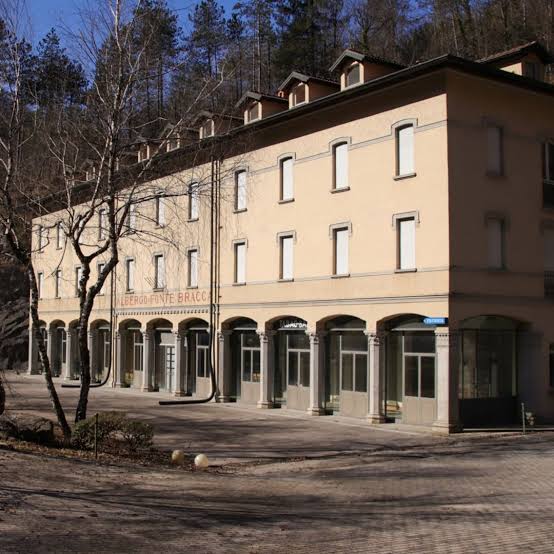
The former Fonte Bracca Hotel, in the province of Bergamo, is a historic property originally built in 1909 and operated as a hotel until 2011.
The asset is municipally owned and includes a ground floor of approximately 900 square metres, historically suitable for restaurant and bar uses, together with three upper floors of nearly 400 square metres each.
Its former hospitality configuration comprised approximately 13 rooms.
Following an initial phase of works worth approximately €700,000, of which €500,000 came from regional funding, a further €2.194 million has now been allocated to complete the redevelopment, including building systems, insulation, windows and energy-efficiency improvements.
The current programme envisages the start of works by the end of 2027 and completion by 31 December 2029.
Taking into account both the investment already made and the funding now allocated, the overall scale of the project is approaching €3 million.
But that is where the real analysis begins.
Does €3 million of CAPEX automatically create €3 million of additional value?
Not necessarily.
This is one of the most common misconceptions in hotel real estate.
A €3 million investment may generate:
€5 million of additional value.
Or:
€1 million.
In some cases, it may fail to recover the capital invested at all.
The difference depends on the asset’s ability to generate income after redevelopment.
This is why any significant CAPEX programme should be preceded by a robust economic and financial assessment.
The right question is not:
“How much will it cost to refurbish the hotel?”
The right question is:
“How much value will that investment create?”
Value before, value after
A proper assessment of a hospitality asset requiring redevelopment should establish at least four separate metrics.
1. As-is value
The current value of the property, taking into account:
-
location;
-
gross floor area;
-
physical characteristics;
-
planning and permitted use;
-
condition;
-
redevelopment potential;
-
local real estate market dynamics.
2. Required CAPEX
The analysis should determine how much capital is actually required to bring the asset to the technical and commercial standard required by the market.
CAPEX is not limited to construction works.
It may include:
-
building systems;
-
guestrooms;
-
public areas;
-
FF&E;
-
energy-efficiency measures;
-
technology;
-
pre-opening costs;
-
design and engineering;
-
professional fees;
-
contingency;
-
financing costs.
3. Prospective operating value
Once the investment is completed, the key question becomes how much operating income the business can generate.
For a hotel, this requires assumptions around:
ADR, occupancy, RevPAR, total revenue, GOP, EBITDA and cash flow.
4. Post-investment asset value
Only after this process can the potential value of the asset once fully refurbished and operationally stabilised be assessed.
This is where real value creation is measured.
Price, cost and value are three different concepts
In the Italian hotel market, negotiations often begin with one question:
“What is the owner asking?”
But the asking price does not necessarily represent value.
Price is the amount expected or negotiated by the seller.
Cost is the capital required to acquire, refurbish or reposition the asset.
Value is ultimately determined by the asset’s ability to generate sustainable income and investment returns.
For an investor, the correct question should therefore be:
“What is the economic value of this asset relative to the asking price?”
That is the difference between a simple real estate transaction and a genuine investment decision.
It is also one of the principles underpinning the advisory work developed by InvestimentiAlberghieri.it.
The best future use may no longer be hospitality
The Fonte Bracca case also introduces another strategically important issue.
The building may be brought back into use without necessarily returning to a purely hotel-based configuration.
Potential uses under consideration include restaurant, bar, tourist information facilities and cultural, tourism-related or commercial functions.
This leads directly to the concept of Highest and Best Use.
Before committing millions of euros to a property, investors should establish which use is economically, technically and planning-wise the most efficient.
For a former hotel, potential alternatives may include:
-
hotel;
-
serviced apartments;
-
aparthotel;
-
student housing;
-
senior living;
-
residential;
-
mixed use;
-
food and beverage;
-
events;
-
tourism and experience-led uses;
-
retail;
-
public or cultural functions.
The historic use of a property should not automatically determine its future.
The key question should be:
which configuration provides the best balance between investment, income, risk and terminal value?
How should a hotel actually be valued?
A hotel is not just a building.
It is simultaneously:
real estate + operating business + cash-flow generating asset.
For that reason, a professional hotel valuation should integrate several methodologies.
Asset Value
The value of the underlying property based on location, size, physical characteristics, condition and relevant real estate market evidence.
Income Approach
A valuation based on the future income-generating capacity of the asset.
Discounted Cash Flow
The present value of future cash flows, adjusted for investment risk.
Normalised GOP and EBITDA
Assessment of sustainable operating profitability.
Going Concern Value
The value of the hotel as an operating business, where applicable.
CAPEX Analysis
Assessment of the investment required to maintain, reposition or transform the asset.
Exit Value
The expected value of the property at the end of the investment period.
It is the integration of these variables that allows investors to understand whether a project is creating or destroying value.
A professional valuation should answer one simple question
If I invest X today, what could this hotel be worth tomorrow?
Answering that question properly requires a financial model.
A valuation may therefore include:
-
property value;
-
business value;
-
market analysis;
-
competitive set;
-
achievable ADR;
-
stabilised occupancy;
-
RevPAR;
-
room revenue;
-
ancillary revenue;
-
GOP;
-
EBITDA;
-
CAPEX;
-
capital structure;
-
cash flow;
-
investment returns;
-
sensitivity analysis;
-
alternative scenarios;
-
terminal value;
-
post-refurbishment value.
CAPEX must be assessed against the value it creates
One of the most common mistakes in hotel refurbishment projects is to treat CAPEX as a purely technical requirement.
In reality, CAPEX should be treated as an investment.
Every euro invested should produce a measurable return through one or more of the following drivers:
-
higher ADR;
-
improved occupancy;
-
stronger RevPAR;
-
higher GOP;
-
lower operating costs;
-
improved positioning;
-
wider demand base;
-
greater asset liquidity;
-
reduced operating risk;
-
higher disposal value.
A visually impressive refurbishment that does not improve economics may enhance the hotel without improving the investment case.
That distinction is exactly what an independent valuation should identify.
When does a hotel valuation become essential?
A structured valuation becomes particularly relevant in the context of:
-
hotel acquisitions;
-
hotel disposals;
-
refinancing;
-
bank financing;
-
investment fund entry;
-
major refurbishment projects;
-
property conversions;
-
turnaround situations;
-
distressed assets;
-
insolvency proceedings;
-
shareholder entry or exit;
-
generational transfers;
-
management contract negotiations;
-
lease agreement negotiations;
-
major CAPEX programmes.
A valuation should not simply produce a number.
It should explain why the asset is worth that amount and which variables may increase or reduce its value.
From a simple appraisal to strategic advisory
The most useful hotel valuation is not one that merely describes the present.
It is one that connects:
current value + income-generating capacity + CAPEX + future scenario.
This approach enables owners and investors to determine whether they should:
-
sell;
-
hold;
-
refurbish;
-
change operator;
-
reposition;
-
refinance;
-
convert;
-
seek new equity.
The valuation therefore becomes a strategic decision-making tool.
The InvestimentiAlberghieri ecosystem
The activity of InvestimentiAlberghieri.it is part of a wider specialist ecosystem focused on the hotel industry.
RobertoNecci.it focuses on hotel advisory, business planning, management control, feasibility studies, valuations and operating strategy.
InvestHotel.it analyses hotel investment, acquisitions, development and hospitality real estate dynamics.
HotelManagementGroup.it focuses on hotel operations, organisational structures and performance improvement.
HotelMarketingLab.it develops marketing, revenue management, distribution, digital strategy and artificial intelligence solutions for hospitality businesses.
VertexExecutiveSearch.it specialises in the search and selection of managers and executives for the hospitality sector.
RobertoNecciAcademy.it provides specialist training in hotel management and hospitality investment.
Hospitech.it integrates technology and digital tools into hotel commercial and operational processes.
The underlying principle is to assess a hotel not simply as a building, but as:
a real estate asset, an operating business, an investment and an operating platform.
Fonte Bracca: the real issue is not how much is spent, but how much value is created
The redevelopment of the former Fonte Bracca Hotel is an interesting example of tourism asset regeneration.
However, from the perspective of an investor, owner or lender, the key issue remains different.
It is not enough to know how much capital will be invested.
It is necessary to establish:
what the asset is worth today;
how much capital the transformation requires;
what level of income it may generate;
what it could be worth once the project is completed.
That is the difference between a refurbishment project and an investment capable of generating value.
Request an Independent Hotel Valuation
InvestimentiAlberghieri.it supports hotel owners, investors, family offices, real estate companies, operators and financial institutions in assessing the current and potential value of hotel assets and hospitality businesses.
The analysis may include:
Asset Value
Enterprise Value
Going Concern Value
Discounted Cash Flow
Normalised GOP and EBITDA
Business Plan
CAPEX Analysis
Highest and Best Use
Sensitivity Analysis
Scenario Analysis
Post-Refurbishment Value
Exit Value
Are you considering a disposal, acquisition, refinancing or major redevelopment programme?
Before making a capital allocation decision, it may be useful to determine independently:
what the asset is worth today, how much capital it requires and how much value it may generate tomorrow.
To request a preliminary assessment or an advisory proposal:
info@investimentialberghieri.it
FAQs
How is a hotel valued?
A hotel valuation typically combines real estate value, normalised operating performance, projected cash flows, required CAPEX and the competitive positioning of the asset.
How much is a hotel requiring refurbishment worth?
Its value depends on the current condition of the property, the capital required for redevelopment, expected future profitability and the value achievable once the asset has been refurbished and stabilised.
Does CAPEX always increase hotel value?
No. Value increases only when the investment improves profitability, positioning, asset liquidity or future cash-flow generation.
What is the difference between hotel price and hotel value?
Price is the amount requested or negotiated between buyer and seller. Value is determined by the economic capacity of the asset to generate sustainable income and returns.
What is post-refurbishment hotel value?
It is the prospective value of a hotel once the CAPEX programme has been completed and the asset has reached stabilised operating performance.
What does Highest and Best Use mean in hotel real estate?
It is the analysis used to identify the most economically efficient, technically feasible and legally permissible use of a property.
When should an independent hotel valuation be commissioned?
Before a sale, acquisition, refinancing, refurbishment, equity investment, shareholder transaction or distressed situation.
What is your hotel really worth?
If you are considering a sale, acquisition, refinancing, refurbishment or new equity investment, an independent valuation can help determine:
current value + CAPEX + prospective profitability + potential asset value.