SEO BOX
SEO Title: Former Mulino Santa Lucia in Catania: From Auction to a 175-Room Four-Star Hotel with €22 Million of Redevelopment Works
H1: Former Mulino Santa Lucia in Catania: Acquired at Auction for More Than €5 Million, It Will Become a 175-Room Hotel with €22 Million of Redevelopment Works. Where Value Is Really Created
Slug: former-mulino-santa-lucia-catania-hotel-175-rooms-auction-22-million-investment
Meta Description: The former Mulino Santa Lucia in Catania has received approval for conversion into a 175-room four-star hotel. Acquired at auction for more than €5 million, the project involves approximately €22 million of redevelopment works. An analysis of investment, CAPEX and value creation.
Primary Keyword: Former Mulino Santa Lucia Catania
Secondary Keywords: Hotel Santa Lucia Catania, 175-room hotel Catania, Sicily hotel investment, hotel auction Sicily, Dimsi Catania, Accor Catania, hotel conversion, hotel CAPEX, hospitality investment Catania, four-star hotel Catania
Excerpt: Acquired at auction in 2023 for more than €5 million, the former Mulino Santa Lucia in Catania has now received approval for conversion into a 175-room four-star hotel. The project includes approximately €22 million of redevelopment works, a 1,500 sqm rooftop, swimming pool and a collaboration with Accor. Yet the most relevant figure is financial: the purchase price represents only a fraction of the capital required. The case shows how, in hotel conversions, value is not captured at auction but created through permitting, CAPEX, positioning and operations.
Former Mulino Santa Lucia in Catania: Acquired at Auction for More Than €5 Million, It Will Become a 175-Room Hotel with €22 Million of Redevelopment Works. Where Value Is Really Created
A property acquired through an auction process. A large underutilised urban asset. More than €5 million invested in the acquisition, approximately €22 million of announced redevelopment works, 175 rooms, a 1,500 sqm panoramic rooftop and a collaboration with Accor.
The former Mulino Santa Lucia in Catania is a particularly interesting case because it illustrates another side of distressed hospitality investing.
In the Grand Hotel and Terme di Pigna case, the key lesson was that an exceptionally low purchase price can progressively become less relevant when CAPEX, timing and capital structure begin to dominate the economics of the transaction.
Catania presents a different dynamic.
Here, the critical sequence is:
acquire a non-operational or non-hotel asset, remove planning and permitting risk, and transform it into a new hospitality product.
In early August 2026, the Municipality of Catania granted Sital Srl the necessary permit to develop Hotel Santa Lucia, following an approval process lasting more than a year and involving seven formal opinions and four services conferences.
The project provides for a 175-room four-star hotel.
This is the step that turns a real estate project into a genuine hospitality development.
From Auction to Hotel: The History of the Asset
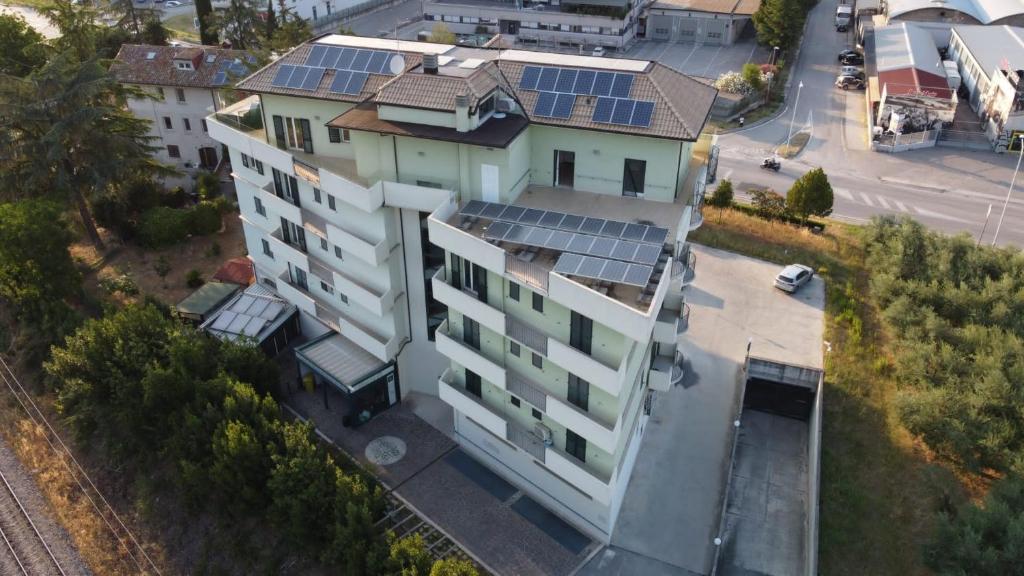
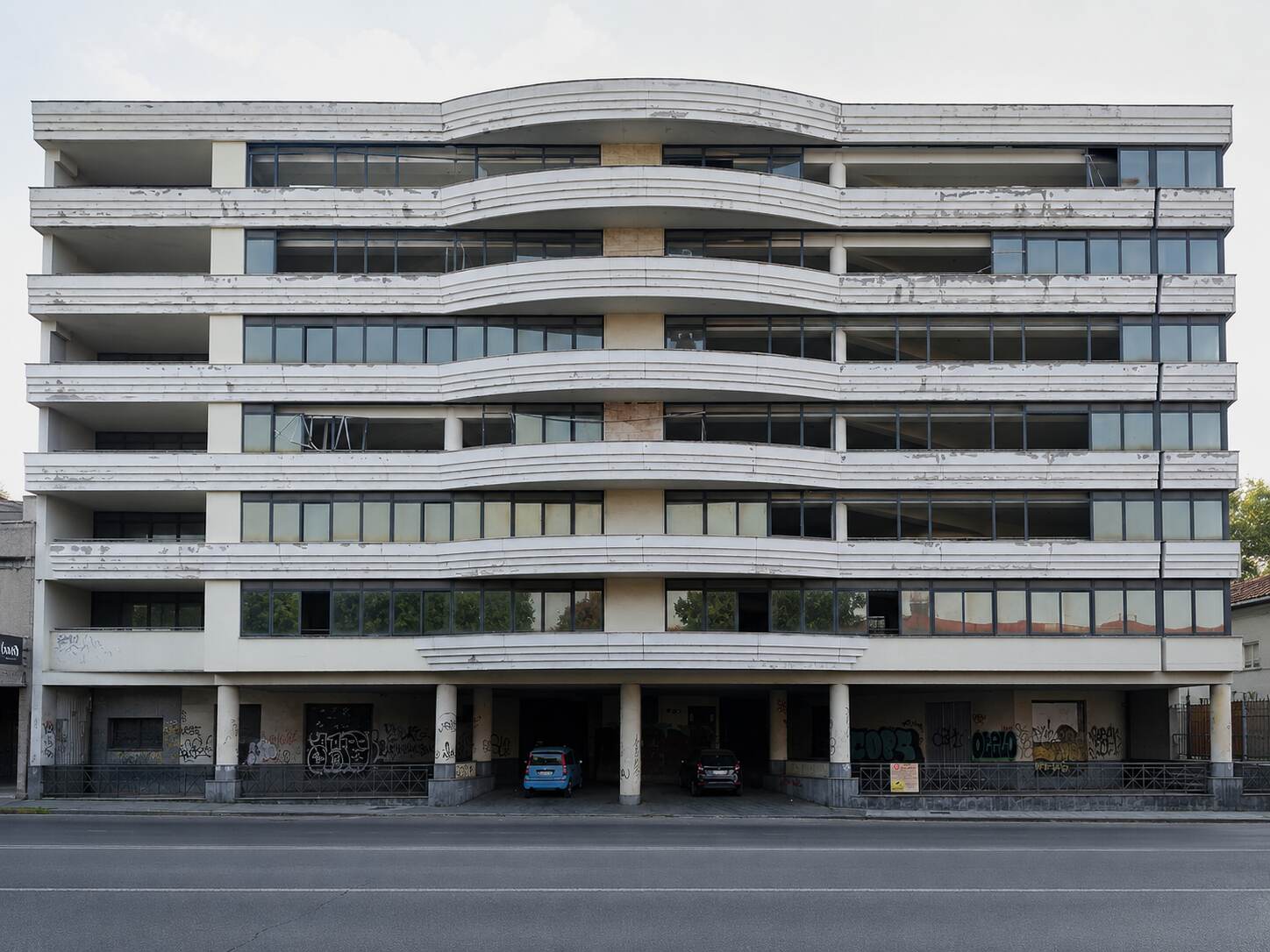
The seven-storey building formed part of the Acqua Pia Marcia portfolio, a company that entered liquidation in 2013.
In 2023, the so-called Lot B of the former complex was acquired at auction by the Dimsi – Dimensione Sicilia group, headed by entrepreneur Salvatore Zappalà, for more than €5 million.
The redevelopment plan involves converting the building into Hotel Santa Lucia, a 175-room four-star property.
The announced conversion is expected to require approximately €22 million of additional works.
The hotel is expected to include:
-
175 rooms;
-
guest rooms distributed from the first to the sixth floor;
-
room sizes reportedly ranging from approximately 16 to 36 sqm;
-
a panoramic rooftop of around 1,500 sqm;
-
swimming pool;
-
fitness area;
-
solarium;
-
bar;
-
internal garage;
-
and an additional parking facility of approximately 200 spaces on a separately acquired site.
The project has been presented as being developed in collaboration with Accor, although the publicly available information does not yet make it possible to determine with certainty whether the future hotel will operate under a specific Accor brand or what contractual structure will ultimately govern the relationship.
This is an important distinction.
From an investment perspective, there is a significant difference between:
brand affiliation, franchise agreement, management agreement and commercial partnership.
The bankability and future value of the asset may differ materially depending on the contractual structure ultimately adopted.
The Most Important Number Is Not €5 Million. It Is at Least €27 Million
The auction price naturally attracts attention.
However, from a financial perspective, the more important figure emerges from combining the acquisition cost with the capital required for redevelopment.
Using only publicly reported figures:
Acquisition: more than €5 million
Redevelopment works: approximately €22 million
the visible capital commitment already exceeds:
€27 million
before fully accounting for any additional:
-
taxes;
-
transaction costs;
-
advisory fees;
-
professional and design fees;
-
interest expense;
-
pre-opening costs;
-
launch marketing;
-
working capital;
-
FF&E potentially excluded from the reported construction budget;
-
contingency;
-
and holding costs during the non-operational period.
The actual Total Investment Cost may therefore be materially higher than the simple acquisition-plus-works figure.
And that is the number against which the investment should ultimately be assessed.
What Does the Investment Look Like on a Per-Key Basis?
With 175 rooms, the transaction allows for an immediate and useful first-level analysis.
Taking €5 million as the minimum acquisition reference:
Acquisition Cost per Key
approximately €29,000 per room
Taking €22 million of redevelopment works:
Redevelopment CAPEX per Key
approximately €126,000 per room
Acquisition plus redevelopment works:
Minimum Visible Investment per Key
approximately €154,000 per room
before any additional project costs.
This simple breakdown contains a fundamental investment lesson.
Almost all the economic value of the transaction still needs to be created after acquisition.
The real estate was merely the entry point.
The hotel product has yet to be built.
Purchase Price per Key and Total Investment per Key Are Not the Same Metric
Hotel and real estate auctions are often presented in terms such as:
“Property acquired for €X, equivalent to €Y per room.”
That metric can be highly misleading.
In the Santa Lucia case, focusing only on the acquisition price could suggest that a new hotel in central Catania was effectively acquired for less than €30,000 per key.
That is not what happened.
The investor did not acquire 175 operating hotel rooms.
It acquired a building that now has to be transformed into 175 operating hotel rooms.
The distinction is substantial.
The more relevant metric therefore becomes:
Total Investment per Key
and subsequently:
Total Investment / Stabilised EBITDA.
This is one of the core principles that should guide the investment analysis developed by InvestimentiAlberghieri.it, together with the distinction between real estate value and hotel business value explored in greater depth on RobertoNecci.it.
The Real Step-Up in Value Comes Through De-Risking
The most interesting element of the Santa Lucia case is not purely quantitative.
It is financial.
A property without the necessary approvals for hotel conversion carries a material level of development risk.
Once the required permit is granted, part of that risk is removed.
In real estate finance, this process can be described as:
de-risking the transaction.
The sequence is clear:
distressed asset
↓
auction acquisition
↓
hotel concept
↓
design
↓
permitting
↓
building permit
↓
construction phase
↓
pre-opening
↓
operating hotel
↓
stabilised asset
Each stage carries a different risk profile.
And potentially a different asset value.
Value Is Not Found. It Is Created
This is probably the central point of the entire transaction.
In many special situations, investors focus on identifying value in the discount.
In Catania, however, value has to be created through transformation.
A building acquired for €5 million does not automatically become worth €27 million, €30 million or €40 million simply because a further €22 million is invested in it.
Future value will depend on the investor’s ability to convert invested capital into:
-
ADR;
-
occupancy;
-
RevPAR;
-
GOP;
-
EBITDA;
-
cash flow.
Only then will it be possible to determine whether the transformation has genuinely created value.
The Correct Framework: Cost → EBITDA → Value
The transaction should be underwritten starting from Total Investment Cost and working towards stabilised value.
In simplified terms:
Acquisition Cost
CAPEX
Transaction Costs
Financing Costs
Pre-opening Costs
Working Capital
=
Total Investment Cost
At that point, the key question becomes:
what level of EBITDA must Hotel Santa Lucia generate in order to remunerate this capital?
And then:
what value will the market assign to that EBITDA?
The framework therefore becomes:
Total Investment → Stabilised EBITDA → Exit Yield → Stabilised Value
Only when:
Stabilised Value > Total Investment Cost + Required Investor Return
does the project genuinely create value.
Positioning Will Be Critical
Location is likely to represent one of the project’s strongest advantages.
The building is situated close to the port, Piazza Borsellino, the historic centre and within a short distance of Piazza Duomo.
This should theoretically allow the hotel to target several demand segments:
-
leisure;
-
city breaks;
-
groups;
-
corporate;
-
tour operating;
-
cruise-related demand;
-
events;
-
MICE;
-
international guests.
But a 175-room hotel changes the scale of the analysis.
It is not enough to establish that “Catania has tourism”.
Investors need to determine whether the market can absorb 175 additional rooms while maintaining ADR and occupancy levels compatible with the capital invested.
175 Rooms Require a Commercial Engine, Not Just a Good Location
As room count increases, distribution becomes increasingly important.
A 175-key hotel cannot be operated like a small boutique property.
It must generate a significant volume of room nights every day.
Purely for illustrative purposes, at a stabilised occupancy of 75%:
175 rooms × 365 days × 75%
equals almost:
48,000 room nights sold every year.
At 80% occupancy, annual room nights exceed 51,000.
This means that distribution, brand, tour operating, corporate business, groups, MICE, OTAs, direct sales and revenue management are not ancillary functions.
They are integral components of the investment case.
Why Accor Could Be Strategically Important
The announced collaboration with Accor may therefore have greater relevance than the mere presence of an international brand.
A global hospitality network can potentially contribute through:
-
international distribution;
-
loyalty programme;
-
corporate demand;
-
technology infrastructure;
-
revenue management;
-
brand standards;
-
international reputation;
-
access to overseas source markets.
However, the economics of the transaction will depend on the actual contractual structure.
A franchise agreement creates one cost and responsibility profile.
A management agreement creates another.
A commercial affiliation creates a third.
Before assigning value to the brand relationship, investors need to assess:
fees + term + performance clauses + FF&E requirements + PIP obligations + termination rights + owner priority + EBITDA impact.
The value of a brand is not the logo on the façade.
It is the incremental revenue and asset value it can generate relative to the costs it absorbs.
€22 Million of CAPEX: High or Low?
There is no absolute answer.
€22 million equates to approximately €126,000 per room, but this figure has to be interpreted in the context of converting an existing building rather than simply replacing FF&E.
The relevant scope may include:
-
structural works;
-
mechanical and electrical systems;
-
guest rooms;
-
bathrooms;
-
public areas;
-
rooftop;
-
swimming pool;
-
fitness facilities;
-
back of house;
-
lifts;
-
fire-safety systems;
-
façades;
-
energy efficiency;
-
technology;
-
potential FF&E;
-
professional fees and contingency.
The correct question is therefore not:
“Is €126,000 per key expensive?”
It is:
“Is €126,000 per key sufficient to achieve the operational, commercial and technical standard required to support the target ADR?”
That is a hotel feasibility question, not simply a construction-cost question.
CAPEX Risk Does Not End with the Budget
A development budget is only an assumption.
A professional investor should assess at least:
Base CAPEX
€22 million
Moderate Overrun
+10%
Stress Case
+20%
Applying these sensitivities, redevelopment costs would become:
Base: €22.0 million
+10%: €24.2 million
+20%: €26.4 million
A 20% overrun would absorb an additional €4.4 million of capital.
This is why an appropriate contingency allowance is essential in complex hotel conversions.
Time Is Another Financial Variable
The project had initially been presented with works expected to begin in 2026 and an indicative opening in 2027.
The permit, however, was only granted in August 2026.
The original development timetable therefore needs to be reconsidered in light of the new permitting starting point.
The issue is not simply one of timing.
It is financial.
Every additional month before opening may mean:
-
more capital tied up;
-
interest expense;
-
corporate costs;
-
insurance;
-
security;
-
maintenance;
-
lost revenue;
-
delayed stabilisation.
In hospitality development, time does not merely represent delay.
Time has a cost.
Lot A: A Second Transaction Within the Transaction
There is also another particularly interesting element.
A separate portion of the former complex, known as Lot A, remains outside the principal development.
It comprises approximately 5,000 sqm, with a recently reported auction reserve of around €1.2 million.
The hotel developer had previously expressed interest in this additional section, including a potential conference-centre use.
This may represent a strategic option.
But it should be underwritten separately.
A Conference Centre Creates Value Only If It Generates Incremental Demand
Adding more space does not automatically create more value.
A potential MICE extension would make sense only if it generated:
-
higher occupancy on weaker days;
-
business during low-season periods;
-
additional F&B revenue;
-
corporate events;
-
groups;
-
increased room utilisation;
-
higher ADR or longer average length of stay.
In that case, the conference component could operate as a genuine:
demand generator.
If, however, it required additional CAPEX without producing sufficient incremental demand, it could dilute the return of the entire investment.
The principle remains the same:
every square metre must be economically justified.
Urban Regeneration Can Become a Value Multiplier
There is also a broader urban dimension.
For years, the former Mulino Santa Lucia represented one of the major underutilised sites in the area.
Its conversion into a hotel could generate benefits extending beyond the property itself:
-
urban regeneration;
-
increased footfall;
-
employment creation;
-
commercial uplift;
-
improved urban activity;
-
stronger connection between the port and historic centre.
According to previous statements by the promoter, the hotel could generate at least around fifty permanent jobs.
From an investor’s perspective, however, it remains essential to distinguish between:
positive externalities for the city
and
economic return on invested capital.
The two may reinforce each other.
But they are not automatically the same thing.
From Distressed Real Estate to Hospitality Asset
The Santa Lucia conversion can be analysed as a genuine value-creation chain.
Phase 1 — Distressed Asset
A non-income-producing asset emerging from a liquidation context.
Phase 2 — Acquisition
Entry at a price determined through a competitive process.
Phase 3 — Planning
Definition of the hospitality use and development concept.
Phase 4 — Permitting
Reduction of planning and authorisation risk.
Phase 5 — Construction
Deployment of the majority of development capital.
Phase 6 — Branding & Pre-opening
Creation of the commercial platform.
Phase 7 — Ramp-up
Progressive build-up of ADR and occupancy.
Phase 8 — Stabilisation
Achievement of normalised EBITDA and cash flow.
Phase 9 — Investment Value
Measurement of the economic value actually created.
Each stage materially changes the risk-return profile of the transaction.
Why the Santa Lucia Case Shows the Potential of Hospitality Auctions
Auction acquisitions can create genuine opportunities.
But not simply because the underlying properties are “cheap”.
The real advantage may come from acquiring an asset on which a specialist investor can create a higher-value economic use.
It is the difference between:
buying cheap
and
buying something that can be transformed into something more valuable.
In the second case, investor expertise becomes part of the value-creation process.
Returns Are Not Created at the Auction
This point is fundamental.
The acquisition at more than €5 million is only the first financial event in the transaction.
Future returns will be determined by:
CAPEX discipline
construction management
brand strategy
distribution
revenue management
operating efficiency
market positioning
exit value
This is why hotel transformation, repositioning and redevelopment transactions require a different skill set from conventional real estate acquisitions.
Special situations and hotel value-creation transactions are explored by Investhotel.it, while HotelManagementGroup.itfocuses on the relationship between product, operations, positioning, economics and hotel performance.
The Turning Point Has Arrived
With the permit now granted, the project enters a different phase.
Previously, the dominant risk was:
“Can the hotel actually be developed?”
The question now becomes:
“Can it be delivered on budget, on time and at the required level of profitability?”
This is the transition from:
permitting risk → execution risk.
And that is a fundamental shift in the financial life cycle of any hotel development.
The Five Questions an Investor Should Ask Today
The Santa Lucia case can ultimately be reduced to five core investment questions.
1. What is the Real Total Investment Cost?
Not simply acquisition plus construction, but the entire capital requirement through opening.
2. What Will the Brand Contractual Structure Be?
Franchise, management agreement or another form of affiliation?
3. What Stabilised EBITDA Can a 175-Room Hotel Generate in This Location?
The investment requires sustainable ADR, occupancy, RevPAR and GOP assumptions.
4. How Long Will Stabilisation Take?
Opening is not the same as reaching full profitability.
5. What Will the Hotel Be Worth Once Stabilised?
Only by comparing future value with Total Investment Cost can true value creation be assessed.
The Investment Lesson from the Former Mulino Santa Lucia
The Catania case offers a very different lesson from purely speculative auction acquisitions.
Value does not come from buying cheaply.
It comes from transforming a non-performing or non-income-producing property into a hospitality business capable of remunerating the capital invested.
The investor is therefore acquiring three things:
a building;
a development right;
a future capacity to generate EBITDA.
The first is real estate.
The second is planning and permitting.
The third is entrepreneurial.
And over the long term, it is the third that determines the true value of the investment.
From More Than €5 Million to a New Hotel: The Real Question Is What It Will Be Worth Afterwards
Santa Lucia illustrates perfectly why the acquisition price cannot be considered in isolation.
Investing more than €5 million to acquire the property and another €22 million to transform it means accepting the risk of creating an entirely new hospitality product.
The success of the transaction will therefore depend on the ability to transform at least €27 million of visible capital — plus the other costs associated with the project — into an asset whose stabilised value is materially higher than the capital required to create it.
Ultimately:
The auction determines the entry price.
CAPEX determines the capital at risk.
Operations determine EBITDA.
The market determines the final value.
Four different stages.
And only when they are analysed together can investors determine whether they are looking at an inexpensive property or a genuine hospitality investment.
InvestimentiAlberghieri.it | Hospitality Investment Analysis
The transformation of the former Mulino Santa Lucia demonstrates why complex hotel transactions need to be assessed through an integrated framework combining:
real estate + CAPEX + permitting + brand + operations + financing + stabilised value.
InvestimentiAlberghieri.it analyses hospitality investments, conversions, auctions and major transactions across the Italian market.
For hotel valuation, hotel economics and value-creation analysis: RobertoNecci.it.
For extraordinary transactions, acquisitions, transformations, disposals and special situations: Investhotel.it.
For hotel management, positioning, business planning and operational performance: HotelManagementGroup.it.
For hospitality investment analysis, asset redevelopment, hotel conversions and opportunity submissions:
info@investimentialberghieri.it