The Ex Scalera case: not just an urban planning story
Brownfield hotel projects are won or lost long before construction begins.
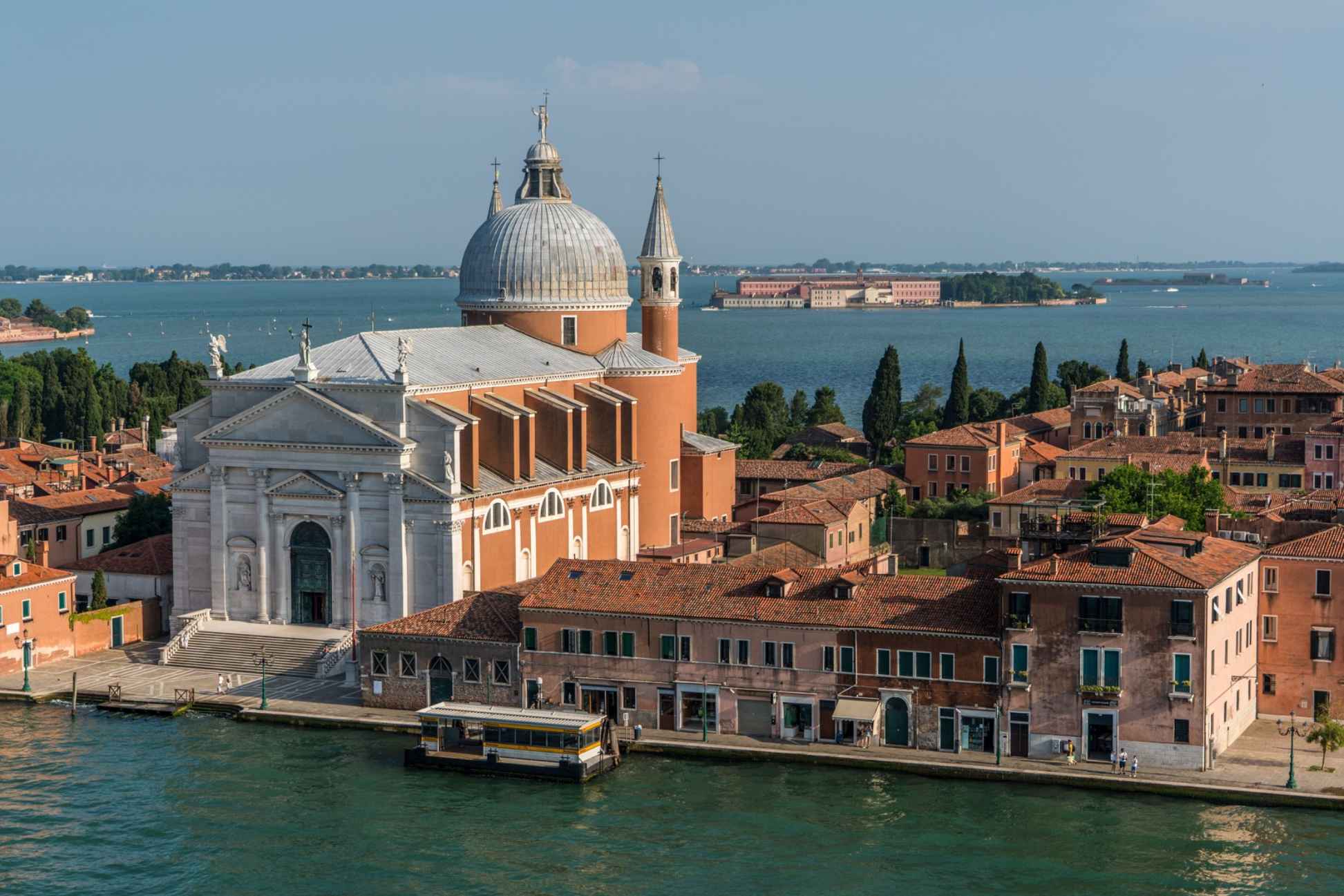
The Ex Scalera-Trevisan site on Giudecca, Venice, is a clear example. The Ghms group, owned by the Marseglia family and already the owner of the adjacent Hilton Molino Stucky, aims to develop around fifty additional rooms to support the hotel, alongside a residential component.
On paper, the industrial logic is evident: increase the accommodation capacity of an established hotel asset, strengthen control over one of Venice’s most iconic locations, and turn an abandoned urban void into an income-producing project.
But in brownfield hotel investment, value is never written only in the business plan. It is also written underground.
And it is precisely the ground beneath the site that is now rewriting the risk profile of the deal.
On 4 June, the regional commission responsible for the Strategic Environmental Assessment did not issue a decision. According to the procedure, the preliminary report contained significant methodological gaps, while essential opinions were still missing, including those of the heritage authority, Arpav and the special projects department.
Translated into investment language, the process did not stall because the hotel use lacked commercial logic. It stalled because the environmental risk had not yet been definitively closed.
The detail that changes everything: from containment to excavation down to seven metres
The heart of the matter is not the urban planning variation. It is the change in remediation scenario.
The project’s valuation framework relied on the assumption that the site had already been managed through a 2011 permanent safety measure. In simple terms, this means containment: contaminants remain on site, are physically isolated, and are prevented from migrating.
That is a scenario compatible with a certain degree of predictability in terms of costs, timing and impact.
In April 2026, however, a new operational remediation plan was submitted under Article 242-bis of Italian Legislative Decree 152/06. And that changed the scenario radically: no longer just permanent containment, but excavation and disposal of contaminated soil down to a depth of seven metres.
This is the decisive point.
From a technical perspective, it means significant soil movement, testing, transport, disposal, greater exposure to third-party opinions, possible discoveries, archaeological risk, environmental sensitivity and a longer construction timeline.
From a financial perspective, it means something even clearer: remediation capex stops being a controlled line item and becomes an open variable.
In a project estimated at around €40 million, that difference can separate a high-potential investment from a margin-eroding deal.
The low entry price was not a discount. It was the price of risk
The Ex Scalera site had been blocked for years. Acquired during the development cycle that led to the creation of the hotel inside the Molino Stucky in the late 1990s, it then remained unfinished after the 2012 collapse. Of the original plans, which included housing, a park and productive uses, only the hotel component was actually completed.
When Marseglia acquired the site at auction in 2023 for less than €3 million, the price looked extremely low: roughly €125 per square metre over an area of about 24,000 square metres.
But this is the central point.
A low entry price on a brownfield site is not necessarily a bargain. Very often, it is compensation.
The market was not giving away square metres in the Venetian lagoon. It was pricing an environmental liability, an authorisation risk, an unresolved urban planning history and a remediation profile that had not yet been fully crystallised.
In brownfield hotel investment, the real mistake is not buying at a high price. It is buying “cheaply” something that has not yet been properly measured.
A low price creates value only if the real liability is lower than the liability embedded in the acquisition price. If the liability worsens after closing, the alleged discount becomes nothing more than the first instalment of a much larger cost.
The arithmetic of the deal
The numbers explain the scale of the issue.
The site covers around 24,000 square metres. The entry price was below €3 million, equal to roughly €125 per square metre. The total estimated investment is around €40 million. The project includes approximately 50 additional rooms supporting the Molino Stucky, implying an indicative increase in accommodation capacity, plus a residential component of 88 apartments, 22 of which would be transferred to the municipality.
So far, the story could look like a classic complex regeneration project with meaningful upside.
The problem is that, in a transaction of this kind, the real metric is not the price per square metre. It is the relationship between entry price, actual remediation cost, permitting timeline, technical risk and final hotel value.
If the environmental cost remains under control, the deal can create value.
If the environmental cost expands, the transaction changes nature.
This is why, on InvestimentiAlberghieri.it, we analyse hotel transactions not only through the appeal of the asset, the location or the size of the investment, but through the real structure of risk: price, debt, capex, timing, governance, economic sustainability and hidden liabilities.
The lesson for funds, banks and investors
The Ex Scalera case is Venetian, but the principle is national.
Every hotel conversion involving a disused, industrial, healthcare, office or production site carries one preliminary question: what am I really buying?
Am I buying land?
Am I buying an urban planning destination?
Am I buying hotel potential?
Or am I buying an environmental liability with a valuation option attached to it?
This distinction is decisive for funds, banks, family offices, hotel operators and advisors.
In many dossiers, the business plan starts from the most favourable environmental scenario available. Then the authorisation process begins, and the project meets the real scenario. When the two scenarios coincide, the deal moves forward. When they diverge, time expands, capex reopens, debt becomes more delicate and the investor’s margin is compressed.
This is where hotel due diligence must be more demanding than ordinary real estate due diligence.
A hotel is not just a building. It is an income-producing business, with ramp-up timing, positioning, demand, management, staff, operating capex, contracts, permits and commercial reputation.
That is why this issue does not concern only the developer. It also concerns the lender.
A bank financing a brownfield hotel transaction must know whether the environmental risk is closed or merely assumed. A fund must understand whether the price reflects the worst plausible scenario or only the most convenient one. An operator must know whether opening may be delayed by months or years. An advisor must be able to read urban planning, environmental risk, hotel value and industrial sustainability together.
The right framework before signing
The Ex Scalera case suggests at least four questions that every investor should ask before entering a brownfield hotel transaction.
The first question is: what is the truly binding remediation scenario?
It is not enough to know that a previous safety measure exists. The key is whether that scenario is still acceptable to the authorities, whether it is compatible with the new project, and whether it can be modified during the authorisation process.
The second question is: does the entry price include the maximum plausible risk or only the base-case scenario?
If the business plan works only under the minimum remediation cost, the deal is fragile. The price must also withstand a downside scenario.
The third question is: which third-party opinions can block or delay the project?
Heritage authorities, environmental agencies, local bodies, special departments and technical offices are not procedural details. They are genuine time and financial risk factors.
The fourth question is: is there a contractual protection mechanism?
Escrow arrangements, price adjustments, conditions precedent, allocation of costs, environmental warranties and indemnity clauses are not legal formalities. They are tools for protecting capital.
Those who sign without these answers are not making a hotel investment. They are buying uncertainty.
Why the case matters for the entire Italian hotel market
Italy is full of potential hotel assets that are not yet hotels.
Former industrial complexes, former barracks, former hospitals, disused public buildings, railway areas, historic palazzi, abandoned production sites and real estate portfolios waiting to be converted.
Many of these assets are presented as “hotel opportunities”.
In reality, before becoming opportunities, they must pass a much tougher test: they must prove that the final hotel value is higher than the sum of acquisition cost, remediation, permits, timing, conversion, positioning, management and financial risk.
This is where the difference between real estate speculation and professional hotel investment becomes clear.
On Investhotel.it, this issue is approached from the perspective of transactional advisory: valuations, due diligence, complex transactions, acquisitions, value creation, restructuring, NPLs, UTPs and hotel assets with critical issues.
The hotel guides on RobertoNecci.it provide the wider reference framework: hotel valuation, management agreements, business leases, governance, corporate distress, asset management, revenue management and long-term value protection.
The Ex Scalera case shows why these worlds cannot be separated.
A hotel transaction cannot be assessed only through the price per square metre. It must be assessed through an integrated reading of real estate, business performance, permits, environmental liabilities, operations, debt and exit strategy.
The conclusion: value is protected before the SEA procedure
The point is not to determine today whether the Ex Scalera project will move forward, be modified or face further delays.
The point is different.
In a brownfield hotel transaction, remediation is not a technical cost to be placed in an appendix. It is a central variable of value.
When the environmental scenario changes, the business plan changes. When the business plan changes, the right price changes. When the right price changes, the risk-return profile changes.
Value is not protected when the procedure gets stuck.
It is protected before closing.
It is protected in due diligence.
It is protected in the contract.
It is protected through the ability to read what the seller may not emphasise, what the business plan may minimise and what the ground may still conceal.
In brownfield hotel investment, the real asset is not the land. It is the ability to measure risk before it becomes cost.
If you have a complex hotel transaction on the table, have it reviewed before you sign
If you are evaluating a hotel, a site to be converted, a brownfield transaction, an asset with environmental liabilities, a distressed hotel property, an NPL secured by a hotel, or a structure with operational, legal, banking or industrial issues, the right time to act is not after the problem has emerged.
It is before.
HotelManagementGroup.it supports owners, investors, banks, funds, advisors and operators in the integrated assessment of complex hotel transactions: due diligence, valuation, interim management, management control, debt analysis, asset management, turnaround plans, governance and operational restructuring.
If you have a live dossier, do not wait for the risk to surface in the permitting process, with the lender or on site.
Write directly to r.necci@robertonecci.it.
If the transaction has value, it must be protected immediately.
If the risk is hidden, it must be uncovered before you pay for it.
If the price looks too convenient, there is probably something that has not yet been measured.
Write now: r.necci@robertonecci.it