More than twenty years of attempted disposals. An initial valuation of over €8 million. An offer today of €2.16 million. The former Hotel Marche in Senigallia has finally returned to the centre of a tangible investment transaction. But the acquisition price is only the first line of the business plan: the real investment will begin with CAPEX, planning approvals, product definition, capital structure and the ability to transform a hospitality brownfield into an asset capable of generating sustainable cash flow.
After more than twenty years, the former Hotel Marche in Senigallia has received a valid offer.
At the close of the procedure on 30 September 2026, Auxo Group Srl, a company based in Ascoli Piceno, submitted an offer of €2.16 million, against a reserve price of €2.155 million.
The award is currently provisional and remains subject to the checks required under the procedure.
The most immediately visible figure is the price.
From an investor’s perspective, however, it may be the least important one.
The critical question is different:
How Much Capital Will Actually Be Required to Turn the Former Hotel Marche into a Productive Investment?
That is where the real investment case begins.
From More Than €8 Million to €2.16 Million: The Market Has Already Delivered Its Verdict
The history of the former Hotel Marche is particularly instructive.
The first disposal process dates back to 2004, when the property belonged to the Marche Region and was valued at more than €8 million.
In 2008, ownership transferred to the Province of Ancona.
From 2011 onwards, several attempts were made to sell the property.
By 2017, the reserve price had already fallen to approximately €2.27 million.
In 2026, the Province adopted a different strategy: rather than continuing to apply automatic discounts, it broadly maintained the valuation, setting the reserve price at €2.155 million and periodically reopening the process.
Eventually, a single offer was submitted.
€2.16 million.
The comparison with the initial valuation of more than €8 million cannot be interpreted simplistically.
The following have all changed:
-
the market;
-
the building itself;
-
the regulatory environment;
-
construction costs;
-
the cost of capital;
-
demand;
-
risk perception;
-
the required level of investment.
But one conclusion remains.
Time Has Fundamentally Altered the Economic Value of the Asset
The Time Discount: A Vacant Property Does Not Stand Still Economically
A property left unused for years does not automatically preserve its value.
Quite the opposite.
Over time it can accumulate:
-
physical deterioration;
-
technical obsolescence;
-
operational inefficiencies;
-
higher CAPEX requirements;
-
inefficient layouts;
-
additional compliance obligations;
-
greater project risk;
-
reduced liquidity.
We can define this phenomenon as the:
Time Discount
Time is not neutral.
In a real estate brownfield, every year of inactivity can widen the gap between:
theoretical value
and
investable value.
Ultimately, that is the gap the market prices.
€2.16 Million Is Not the Cost of the Transaction
This is the central point.
The acquisition price is not the same as the capital required to complete the investment.
The true investment will be closer to:
**Purchase Price
-
Technical Due Diligence
-
Professional Fees
-
Planning Costs
-
CAPEX
-
FF&E
-
Pre-opening Costs
-
Working Capital
-
Financing Costs**
Together, these items determine the:
Total Cost Basis
And it is against the Total Cost Basis, not merely the acquisition price, that the investment return must ultimately be measured.
This completely changes the perspective.
A property may appear inexpensive at €2.16 million.
But if the capital required to bring it into operation is several times the entry price, then the investment case will depend almost entirely on the quality of the redevelopment strategy.
The Purchase Price May Represent Only a Fraction of the Final Investment
Without a comprehensive technical due diligence, assigning a precise CAPEX figure to the former Hotel Marche would be inappropriate.
The financial principle, however, is straightforward.
If — purely by way of illustration — a property acquired for just over €2 million were subsequently to require:
-
several million euros of construction works;
-
FF&E;
-
professional fees;
-
planning and development charges;
-
working capital;
-
interest during construction;
the original purchase price could ultimately represent only a minority of the total investment.
This is why, in redevelopment transactions:
a low acquisition price does not automatically mean low investment risk.
Risk is often transferred from the purchase price to the CAPEX requirement.
Strong Location, Challenging Asset
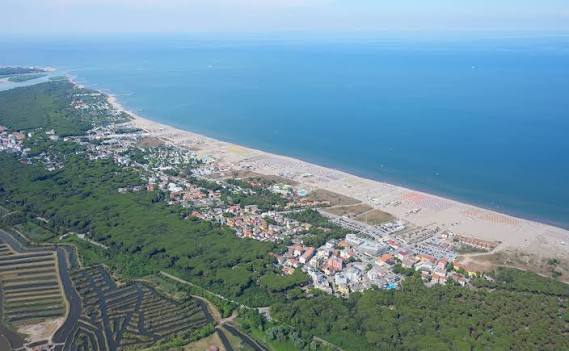
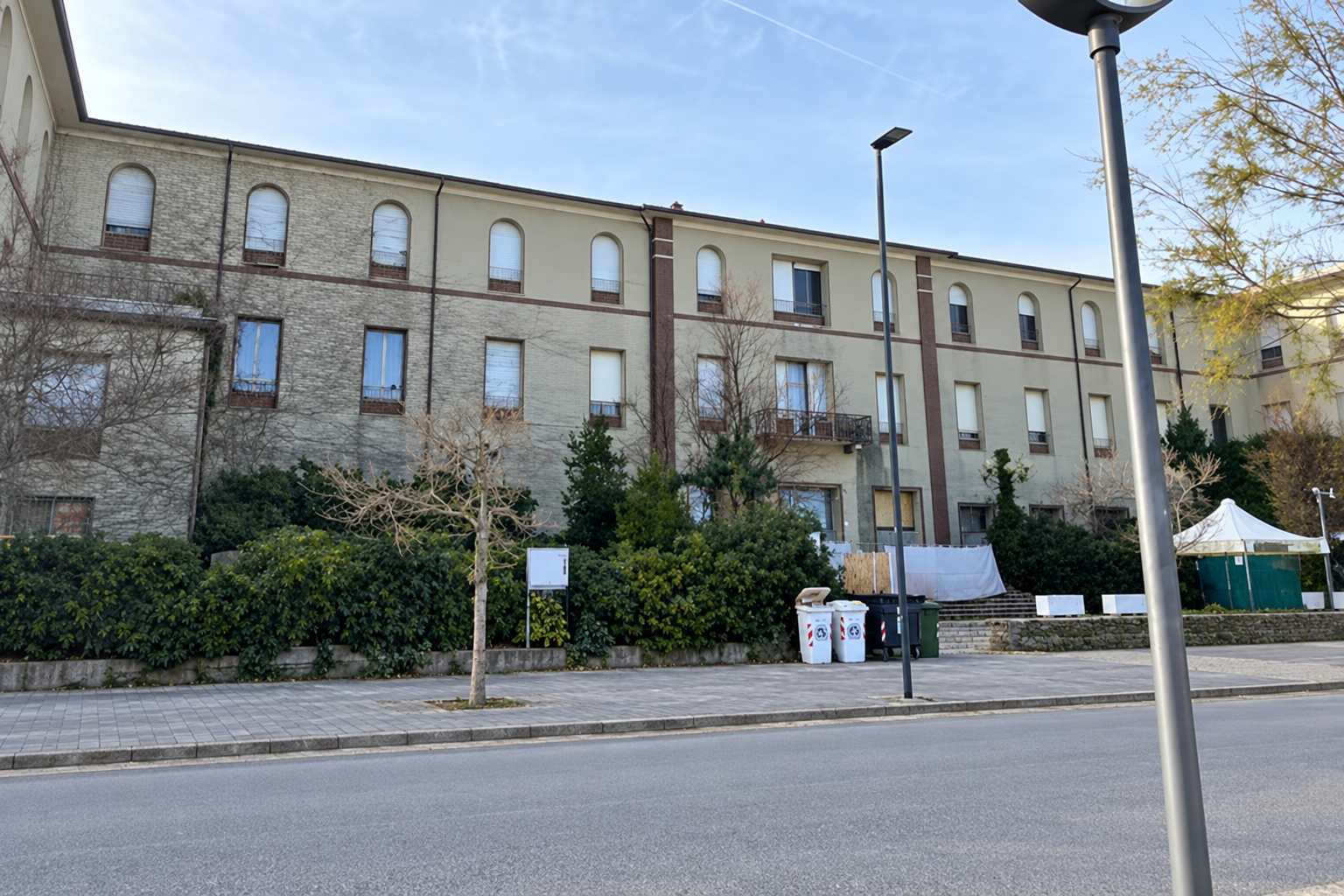
The former Hotel Marche is located on Lungomare Marconi in Senigallia.
Its position is arguably the principal strength of the investment case.
A strong location cannot be replicated.
But a strong location alone does not guarantee a strong investment.
The key is to determine which product can extract the greatest economic value from that location.
The analysis must therefore consider:
-
leisure demand;
-
seasonality;
-
achievable ADR;
-
occupancy;
-
length of season;
-
target customer segment;
-
international demand;
-
competitive supply;
-
services;
-
opportunities for year-round demand;
-
accessibility.
The question is not:
“Is this a good location?”
The relevant question is:
“Which product can convert this location into the highest risk-adjusted return?”
Hotel, Condhotel or Hybrid Product?
According to publicly available information, the property can accommodate hotel use and may also offer scope to assess a condhotel configuration, subject to the applicable planning and regulatory framework.
This optionality may be valuable.
Because each model creates a fundamentally different economic structure.
Scenario 1 — Traditional Hotel
The investor funds:
-
acquisition;
-
refurbishment;
-
FF&E;
-
pre-opening;
-
working capital.
Returns are generated primarily through operating cash flow and the future value of the hotel asset.
The key question becomes:
what stabilised EBITDA can justify the total amount of capital invested?
Scenario 2 — Condhotel
A residential component, where legally and commercially feasible, could materially alter the economics of the project.
In simplified terms:
Residential Sale Proceeds
→ Lower Net Capital Invested
→ Potentially Higher Equity Return
Greater optionality, however, also brings greater complexity.
Planning.
Regulation.
Commercial structure.
Timing.
Market absorption.
A solution being theoretically possible is not enough.
It must be economically executable.
Scenario 3 — Hybrid Hospitality
There may also be a third route.
A model combining:
-
hospitality;
-
extended stay;
-
serviced accommodation;
-
residential components;
-
services accessible to the local market.
Value is often created at this stage — through product definition — before construction even begins.
The PAI Becomes Part of the Financial Equation
Another significant factor is the framework established by the Hydrogeological Management Plan — Piano per l’Assetto Idrogeologico, or PAI.
Any redevelopment of the property will need to comply with the applicable planning and hydrogeological restrictions.
This means that not every square metre theoretically imaginable can automatically become economically developable space.
And that is crucial.
In a redevelopment:
Gross Area ≠ Developable Area ≠ Revenue-Generating Area
Investors therefore need a precise understanding of:
-
planning constraints;
-
permitted volumes;
-
urban load;
-
permitted uses;
-
parking requirements;
-
fire safety;
-
accessibility;
-
structural upgrades;
-
energy requirements;
-
functional compatibility.
Before architectural design comes:
Development Due Diligence
Auxo Group: Value May Come from a Developer Mindset
According to available information, Auxo Group Srl is linked to entrepreneurial families with experience in complex real estate transactions.
This suggests an interesting interpretation of the deal.
The transaction may not simply be:
the acquisition of a former hotel to reopen
but rather:
the acquisition of an asset to be fundamentally reconfigured.
That is a material distinction.
A hotel operator is likely to ask:
“How can I operate this hotel more effectively?”
A developer starts one step earlier:
“What is the economically sustainable highest and best use of this property?”
Only then are the following defined:
-
product;
-
operating model;
-
capital;
-
brand;
-
financing structure.
From “As Is” Value to “As Stabilised” Value
The former Hotel Marche can be assessed through a conventional value-add real estate framework.
As Is Value
The value of the asset today:
-
vacant;
-
requiring redevelopment;
-
capital intensive;
-
exposed to project risk;
-
exposed to planning risk.
Total Development Cost
The capital required to complete the transformation.
Stabilised Value
The potential value of the property once it has been:
-
redeveloped;
-
opened;
-
positioned;
-
stabilised;
-
converted into a cash-flow-generating asset.
Value creation can therefore be expressed as:
Stabilised Value – Total Cost Basis = Development Value Creation
If that margin is not sufficiently wide to compensate for:
-
capital;
-
time;
-
risk;
-
execution;
the project does not create value.
Even if the initial acquisition price looks attractive.
CAPEX Will Be the Real Arbiter of the Transaction
For a property that has remained unused for many years, due diligence should focus on at least ten areas.
1. Structure
Condition of the load-bearing structure and building envelope.
2. Building Systems
Electrical, plumbing, HVAC, lifts and fire-safety systems.
3. Energy Performance
Existing building performance and the level of upgrading required.
4. Layout
Ability to create guestrooms consistent with the intended positioning.
5. Back of House
Staff circulation, goods handling, housekeeping and storage.
6. Food & Beverage
Space allocation, productivity and margin-generation potential.
7. FF&E
Furniture, fixtures and equipment, which must be assessed separately from building costs.
8. Public Areas
Lobby, meeting facilities, wellness and leisure areas.
9. Pre-opening
Recruitment, training, distribution and commercial launch.
10. Contingency
A component that should never be underestimated in a complex redevelopment.
Only once these elements have been assessed does the €2.16 million acquisition price begin to have genuine financial meaning.
CAPEX Must Be Stress-Tested, Not Merely Estimated
A serious redevelopment cannot rely on a single scenario.
At least three cases should be modelled.
Base Case
Expected CAPEX and delivery schedule consistent with the business plan.
Downside Case
Higher costs and a delayed opening.
Severe Downside
CAPEX materially above expectations, longer delays and slower operational stabilisation.
The core question becomes:
Does the equity still generate an acceptable return when something goes wrong?
If the answer is no, the investment has an insufficient margin of safety.
The Real Cost of Time
Time is a financial variable.
Every month between closing and opening generates:
-
interest expense;
-
professional fees;
-
capital tied up in the project;
-
foregone revenue;
-
corporate overhead.
A twelve-month delay can materially alter the IRR.
That is why:
**Planning Risk
-
Construction Risk
-
Financing Risk
-
Time Risk**
must be modelled together.
In redevelopment:
Time = Capital
Market First. Design Second.
One of the most common mistakes in hospitality investment is to design the building first and build the business plan afterwards.
The sequence should be reversed.
1. Market Analysis
Understand demand.
2. Product Definition
Identify the right product.
3. Business Plan
Test its economic sustainability.
4. Architecture
Design the building around the operating model.
5. CAPEX
Determine the capital requirement.
The architectural project should be the consequence of the investment case.
Not the other way around.
Stabilised EBITDA: The Number That Ultimately Decides Everything
Whatever operating model is selected, the investor will eventually need to arrive at one number:
Stabilised EBITDA
Because a hotel is not valued solely on the basis of square metres.
Its value is also driven by its ability to generate sustainable cash flow.
In simplified terms:
Stabilised EBITDA × Market Multiple = Indicative Operating Value
Alternatively, under a DCF approach:
Present Value of Future Cash Flows + Terminal Value
That value must then be compared with:
-
acquisition cost;
-
CAPEX;
-
financing costs;
-
time;
-
risk;
-
equity invested.
Only then will it become clear whether the transaction has genuinely created value.
Debt Capacity: How Much Leverage Can the Project Really Support?
The relatively low entry price might suggest that the transaction should be easy to finance.
Not necessarily.
Banks do not finance a building alone.
They finance:
-
the project;
-
the sponsor;
-
the business plan;
-
cash flow;
-
CAPEX;
-
execution capability.
The key question therefore becomes:
how much debt can the project support without placing excessive pressure on the DSCR?
Excessive financial leverage can destroy the value created through redevelopment.
For that reason:
Development Margin without Debt Sustainability is not genuine value creation.
Acquisition Price Is Not Investment Value
This is the central distinction in the entire case.
€2.16 million is the entry price.
It is not the final value.
It is not the Total Cost Basis.
And, most importantly, it is not the return.
The transaction will create value only if Auxo succeeds in transforming:
a real estate brownfield
into
a hospitality asset capable of producing sustainable cash flow.
That transformation requires:
capital.
expertise.
time.
approvals.
discipline.
execution capability.
A Single Offer Is Also Market Information
Only one valid offer was submitted.
That fact also deserves interpretation.
It does not automatically mean that the asset lacks quality.
But it does suggest that the market has carefully priced the complexity of the transaction.
Investors do not buy only:
location.
They buy:
**location
-
CAPEX
-
risk
-
time
-
optionality
-
expected return.**
A single bidder may therefore also reflect the selectivity of capital towards complex redevelopment opportunities.
And that very complexity can create opportunity for investors with the right expertise and capital base.
From Brownfield to Cash Flow
For more than twenty years, the challenge surrounding the former Hotel Marche was:
finding a buyer.
That challenge has now changed.
The question becomes:
How Should It Be Transformed?
And, above all:
How Can It Be Transformed While Generating a Return Consistent with the Risk Taken?
Moving from an unused property to a productive investment will require:
-
market analysis;
-
concept development;
-
business planning;
-
due diligence;
-
design;
-
CAPEX control;
-
financing;
-
operating model;
-
positioning;
-
execution.
If and when the transfer is definitively completed, closing will not represent the end of the story.
It will represent:
the beginning of the investment case.
The Real Lesson from the Former Hotel Marche
The Senigallia case illustrates a problem common to hundreds of hospitality properties across Italy.
Finding someone willing to buy is not enough.
The challenge is to build a structure in which:
**Acquisition Price
-
CAPEX
-
Debt
-
Operating Model
-
Time**
can generate:
**Cash Flow
-
Equity Return
-
Exit Value**
consistent with the risk assumed.
That is the difference between:
renovating a building
and
creating a hotel investment.
The value of a disused property is not written in an appraisal report.
It lies in the ability to transform the property into an asset that the market once again wants to:
use, finance and ultimately acquire.
The Investimenti Alberghieri Approach
InvestimentiAlberghieri.it analyses hotels, resorts and properties undergoing conversion by focusing on the economic sustainability of the entire investment.
The platform integrates the strategic analysis developed through RobertoNecci.it, the hotel investment and financial expertise of Investhotel.it, and the operating experience of HotelManagementGroup.it.
In hotel redevelopment, analysis must come before design.
That means assessing:
-
market fundamentals;
-
highest and best use;
-
product;
-
planning;
-
CAPEX;
-
business plan;
-
debt capacity;
-
DSCR;
-
equity requirement;
-
stabilised EBITDA;
-
exit value.
Only then is it possible to determine whether to:
acquire, redevelop, finance or reposition the asset.
CTA — Before the Project Comes the Investment Case
Are you assessing a former hotel, a disused property or a building to be converted into hospitality use?
Investimenti Alberghieri works through preliminary analysis of investment dossiers, because a property requiring transformation should not be acquired before determining:
Total Development Cost, CAPEX, highest and best use, debt capacity, DSCR, stabilised EBITDA, equity return and exit value.
The objective is not to intermediate the asset.
It is to determine whether a configuration capable of genuinely creating value exists.
For independent analysis and value-creation scenarios:
info@investimentialberghieri.it
Methodological Note
The information regarding the sale process for the former Hotel Marche is based on publicly available information and documentation concerning the procedure undertaken by the Province of Ancona.
The reported offer is €2.16 million, compared with a reserve price of €2.155 million.
As of the publication date, the award should be regarded as provisional and subject to the checks required under the procedure.
The observations relating to CAPEX, condhotel configuration, hotel strategy, financing structure, debt, returns and value-creation scenarios constitute editorial analysis and do not attribute to the prospective purchaser any strategy or decision that has not been officially disclosed.