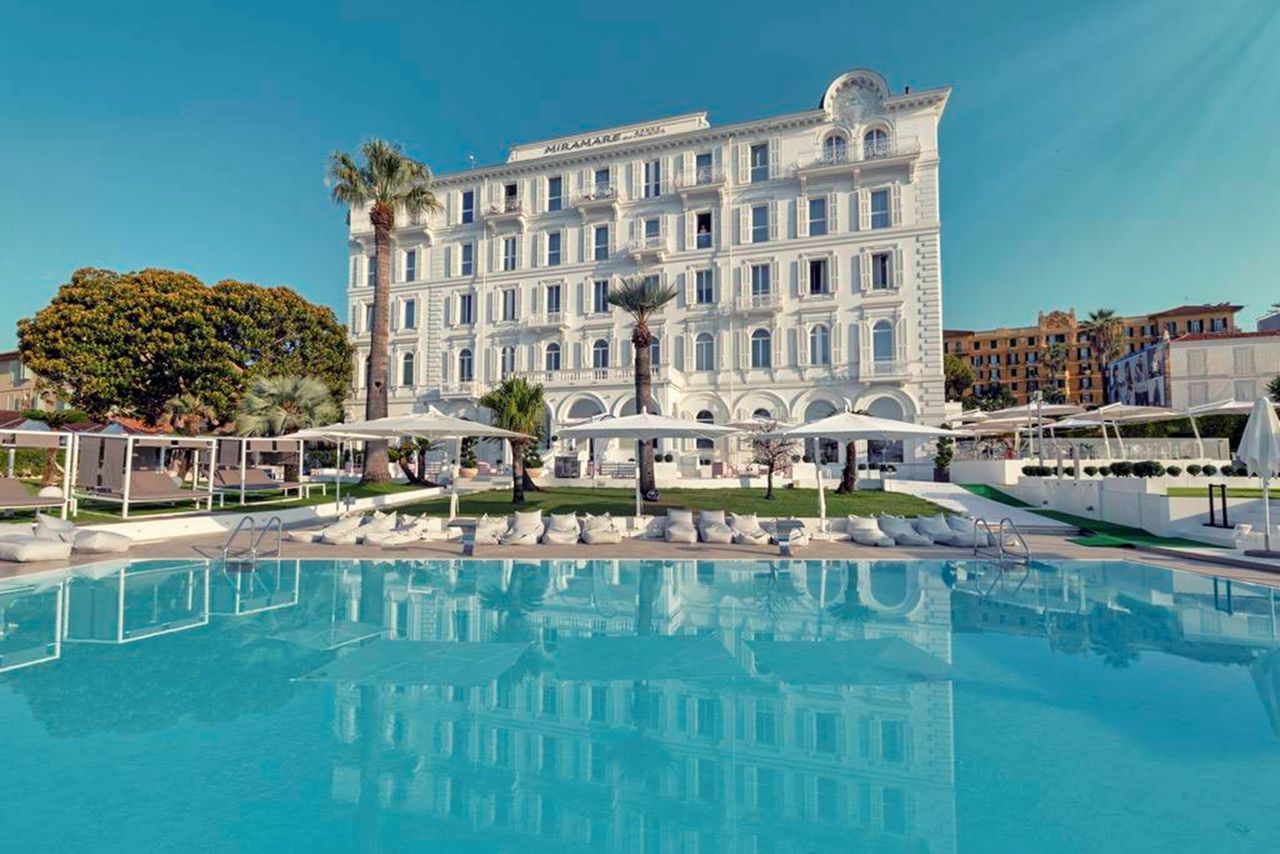
Nearly €80 million in annual revenue, a reported operating margin exceeding 40%, prestigious international awards and a substantial debt maturity. The Forte Village case raises fundamental questions about the financial culture of the Italian hospitality industry, debt sustainability and the distinction between commercial prestige, real estate value and returns on invested capital.
Hospitality Investment & Financial Intelligence | InvestimentiAlberghieri.it — 25 November 2026
1. The World's Leading Resort and the Reality Behind the Financial Statements
In 2025, Forte Village Resort was named World's Leading Resort at the World Travel Awards. In 2026, it received further recognition as Europe's Leading Resort and Europe's Leading Luxury Beach Resort.
These accolades represent international recognition for one of Italy's most prestigious hospitality destinations.
On 17 November 2026, however, Italian newspaper Il Fatto Quotidiano, in an article by Mauro Lissia, reported a fundamentally different development.
Progetto Esmeralda S.r.l., the company operating and owning part of the resort complex in Santa Margherita di Pula, Sardinia, is facing a challenging financial situation reportedly associated with a €165 million bond due to mature in December 2026.
According to the newspaper, total outstanding liabilities amounted to approximately €377 million as at 31 December 2025.
The existence of a formal court proceeding is corroborated by Italy's Creditors' Portal, which records unified insolvency-related proceeding No. 236/2026 before the Court of Cagliari, dated 10 November 2026.
The existence of these proceedings does not constitute a declaration of insolvency resulting in judicial liquidation, nor does it necessarily imply any interruption to the resort's operations.
Nevertheless, the case provides an opportunity to examine a fundamental question that is rarely addressed in mainstream hospitality coverage:
How can a hotel be recognised as one of the finest resorts in the world, generate tens of millions of euros in annual revenue and simultaneously face significant financial pressure?
The answer lies in distinguishing between hospitality excellence, operating profitability, capital structure and financial sustainability.
Four dimensions that do not necessarily coincide.
2. Hospitality Journalism and the Construction of a Success Narrative
For years, a significant portion of Italian hospitality journalism has portrayed an industry characterised by an almost uninterrupted succession of achievements.
New openings, multimillion-euro investments, acquisitions, international brand affiliations, prestigious awards, record room rates and rising tourism demand dominate industry headlines.
Far less attention is devoted to the financial statements of hotel operating companies and real estate owners.
Return on invested capital, financing costs, lease sustainability, depreciation, recurring capital expenditure and free cash flow generation are rarely examined with comparable intensity.
The risk is that parts of the hospitality media become amplifiers of corporate communications rather than independent interpreters of economic and financial performance.
A €100 million hotel development is celebrated, but the return required to justify that investment is rarely questioned.
A €1,000 average daily rate attracts headlines, while the cost of delivering the corresponding guest experience remains largely unexplored.
A 90% occupancy rate is presented as evidence of success, without establishing whether the underlying pricing strategy is sufficiently profitable.
A financing transaction worth hundreds of millions of euros is announced as a corporate milestone, with limited attention to repayment obligations.
Spectacular properties are photographed and promoted, while the economic value of the companies that own them remains unexamined.
| Commercial Narrative | Financial and Investment Analysis |
|---|---|
| International awards | Cash flow generation |
| Record revenue | Net profitability |
| High occupancy | Contribution margin |
| Luxury room rates | Cost of service delivery |
| Multimillion-euro investments | Return on invested capital |
| New hotel openings | Operating and financial break-even |
| Brand prestige | Incremental economic value |
| Real estate acquisitions | Sustainability of the acquisition price |
| New financing arrangements | Debt-servicing capacity |
| Property value | Underlying equity value |
Commercial performance indicators are unquestionably relevant. The problem arises when they are treated as substitutes for comprehensive financial analysis.
An international award recognises the quality or reputation of a hospitality offering. It does not certify the solvency of the business behind it.
Hospitality marketing serves a legitimate and necessary commercial purpose. Financial journalism, however, should be capable of looking beyond it.
The Forte Village case illustrates why both dimensions deserve equal attention.
3. Forte Village: The Financial Performance of Progetto Esmeralda
Data available through commercial corporate information databases provide an indication of Progetto Esmeralda S.r.l.'s historical revenue and net financial performance.
Historical Financial Performance: 2018–2025
| Financial Year | Revenue | Net Profit / Loss | Net Margin |
|---|---|---|---|
| 2018 | €80.95m | +€4.33m | 5.3% |
| 2019 | €72.42m | +€1.08m | 1.5% |
| 2020 | €18.56m | -€19.64m | -105.8% |
| 2021 | €39.44m | -€13.99m | -35.5% |
| 2022 | €66.68m | -€7.82m | -11.7% |
| 2023 | €63.25m | -€7.28m | -11.5% |
| 2024 | €85.38m | +€4.85m | 5.7% |
| 2025 | €79.33m | +€1.31m | 1.7% |
| Total | €506.01m | -€37.16m | -7.3% |
Sources: ReportAziende and Ufficio Camerale. Analysis by InvestimentiAlberghieri.it based on rounded figures.
Over eight financial years, Progetto Esmeralda generated more than half a billion euros in cumulative revenue while recording aggregate net losses of approximately €37 million.
The financial years 2020 and 2021, severely affected by the pandemic, account for a substantial proportion of these losses. It would therefore be inappropriate to attribute the entire cumulative deficit to operational or financial inefficiencies.
Nevertheless, the gap between the company's commercial scale and its bottom-line performance remains significant.
The comparison between the two most recent financial years is equally noteworthy.
| Financial Indicator | 2024 | 2025 | Change |
|---|---|---|---|
| Revenue | €85.38m | €79.33m | -7.1% |
| Net profit | €4.85m | €1.31m | -73.0% |
| Net profit margin | 5.68% | 1.65% | -4.03 p.p. |
The recovery in profitability during 2024 represents a positive development, followed by another profitable year in 2025, albeit at a materially lower level.
These figures illustrate how a hospitality business of exceptional international standing can nevertheless generate relatively modest net earnings in relation to its revenue base.
Accounting profit, of course, does not necessarily reflect the total investment return, which may also include capital appreciation and other economic factors requiring further examination.
4. More Than €32 Million in EBITDA — Yet Only €1.3 Million in Net Profit
According to reporting by Sardegna e Libertà, drawing on the company's 2025 management report, Progetto Esmeralda generated earnings before interest, tax, depreciation and amortisation exceeding €32 million.
Net financial expenses reportedly amounted to approximately €10.6 million.
2025 Financial Dashboard
| Financial Indicator | Reported or Indicative Value |
|---|---|
| Revenue | €79.33m |
| Reported EBITDA | Over €32m |
| Indicative EBITDA margin | Over 40% |
| Reported net financial expenses | €10.6m |
| Net profit | €1.31m |
| Net profit margin | 1.65% |
| Reported total liabilities | €377m |
| Reported outstanding bond | €165m |
EBITDA, financial expenses and indebtedness figures are based on media reports and have not been independently reconciled against the company's complete financial statements.
Using €32 million as a reference EBITDA, every €100 of revenue would translate into the following indicative financial breakdown:
| Financial Component | Amount per €100 of Revenue |
|---|---|
| Revenue | €100.00 |
| Reference EBITDA | €40.34 |
| Reported net financial expenses | €13.36 |
| Other net financial statement items below EBITDA | €25.33 |
| Net profit | €1.65 |
The residual amount represents the arithmetic reconciliation required to bridge the assumed EBITDA and reported net profit. Its precise composition can only be established by reviewing the complete financial statements.
Net financial expenses alone would absorb approximately one-third of the reference EBITDA.
The disparity between operating profitability and bottom-line earnings is particularly significant.
The underlying challenge may therefore extend well beyond the resort's ability to sell accommodation, food and beverage, and ancillary services.
It concerns the relationship between operating earnings and the financial structure supporting the business.
For hospitality investors, this distinction is fundamental.
5. €377 Million in Reported Liabilities: Scale and Sustainability
According to Il Fatto Quotidiano, Progetto Esmeralda's total indebtedness amounted to approximately €377 million.
Understanding the composition of this figure is essential.
Total balance-sheet liabilities may encompass bank borrowings, bonds, trade payables, intercompany balances, tax liabilities and other obligations.
They cannot automatically be equated with net financial debt.
Indicative Debt and Financial Exposure Ratios
| Indicator | Indicative Ratio |
|---|---|
| Total reported debt / Revenue | 4.75x |
| Total reported debt / Reference EBITDA | 11.78x |
| Bond / Reference EBITDA | 5.16x |
| Bond / Revenue | 2.08x |
| Bond / Total reported debt | 43.8% |
| Net financial expenses / Reference EBITDA | 33.1% |
| Reference EBITDA / Net financial expenses | 3.02x |
Calculations based on media-reported figures and a reference EBITDA of €32 million. These ratios do not represent verified net leverage or contractual debt coverage metrics.
The scale of the bond maturity demonstrates why repayment capacity cannot be assessed solely on the basis of a single year's operating profitability.
Available liquidity, other financial commitments, collateral arrangements, projected cash flows and access to alternative sources of capital must all be considered.
A company may own valuable real estate, operate an internationally recognised brand and generate substantial operating earnings while still being unable to convert those strengths into liquidity within the timeframe required by its creditors.
Solvency depends not only on the value of a company's assets, but also on its ability to meet financial obligations as they fall due.
6. The Bond, the Creditor and Geopolitical Risk
According to media reports, the €165 million financing exposure is associated with OWH SE, formerly known as VTB Bank Europe.
Official communications issued by the institution confirm that:
-
The company entered liquidation on 1 April 2023;
-
Its corporate name changed with effect from 2 January 2024;
-
Its banking licence was revoked with effect from 20 August 2024;
-
The institution is engaged in winding down its existing financial relationships.
The situation must also be understood within the wider geopolitical and financial consequences of Russia's war in Ukraine.
However, it is important to distinguish the European institution from its Russian parent. OWH states that it is not directly subject to the same European sanctions imposed on its parent company.
Nevertheless, the liquidation of the European institution could constrain its ability to extend or renew existing financing arrangements on their original terms.
The situation potentially represents a textbook example of refinancing risk: the risk that maturing debt cannot be replaced with new funding within the required timeframe.
Additional complexities may arise from the international ownership structure, intercompany guarantees and compliance requirements applicable to prospective lenders.
The exceptional quality of the underlying hospitality asset may represent a significant advantage, but it does not automatically eliminate these structural challenges.
7. Corporate Structure and the Risks Associated with Cross-Guarantees
According to media reports, Progetto Esmeralda is controlled by Luxembourg-based Sonogest S.à r.l., which is reportedly linked to Cyprus-based Quarmine Limited.
Sardegna e Libertà also reports an intercompany financing arrangement of approximately €33.9 million, together with guarantees associated with the ownership group's financing arrangements.
These elements warrant dedicated examination.
In complex hospitality transactions, the operating company, property-owning entity, holding companies and financing counterparties may belong to different legal and financial structures.
The financial strength of an individual hotel operation does not necessarily reflect the financial position of the wider ownership group.
For a prospective investor, several matters would require particular scrutiny:
-
Legal ownership of the underlying real estate;
-
Separation between property ownership and hotel operations;
-
Creditor ranking and repayment priorities;
-
Mortgages and share pledges;
-
Intercompany and cross-guarantees;
-
Subordinated financing arrangements;
-
Change-of-control provisions;
-
The ability to release assets from existing security interests.
Understanding the value of the resort is only part of the investment equation.
It is equally important to establish which economic, legal and proprietary rights can actually be acquired.
8. EBITDA Does Not Automatically Translate into Debt Repayment Capacity
One of the most common analytical errors in hospitality investment is equating EBITDA with cash available for debt repayment.
EBITDA measures a component of operating financial performance but excludes several items that directly affect liquidity.
From EBITDA to Cash Flow Available for Debt Service
| Financial Component | Impact |
|---|---|
| EBITDA | Starting measure of operating earnings |
| Cash taxes | Cash outflow |
| Maintenance capital expenditure | Preservation of asset competitiveness |
| Changes in working capital | Cash generation or absorption |
| CFADS | Cash flow available for debt service |
| Cash interest | Payments to lenders |
| Principal repayments | Reduction in outstanding debt |
| Residual cash flow | Funds potentially available to shareholders |
Luxury resorts require continuous investment in guest accommodation, food and beverage facilities, technical infrastructure, public areas and leisure amenities.
A proportion of operating cash generation must therefore be reinvested to preserve the quality and long-term competitiveness of the hospitality offering.
Seasonality introduces an additional layer of complexity.
A business that is profitable on an annual basis may still experience substantial liquidity requirements during particular months of the year.
Effective financial planning must therefore consider not only how much a company earns, but also when revenue is collected, when operating expenditure is incurred and when financing obligations become payable.
These issues form a central part of the hospitality finance, management and performance analysis published on RobertoNecci.it.
9. Refinancing €165 Million: What Would Financial Sustainability Require?
To illustrate the scale of the financing challenge, it is possible to model the full refinancing of the reported €165 million bond through a 20-year amortising loan with equal annual instalments.
Illustrative Annual Debt Service
| Assumed Interest Rate | Annual Principal and Interest Payments |
|---|---|
| 4% | €12.14m |
| 5% | €13.24m |
| 6% | €14.39m |
| 7% | €15.57m |
| 8% | €16.81m |
An increase in the financing rate from 4% to 8% would raise annual debt service by approximately €4.67 million.
That amount exceeds three times the company's reported net profit for 2025.
Debt Service Coverage Ratio Sensitivity Analysis
The Debt Service Coverage Ratio, or DSCR, measures the relationship between cash flow available for debt service and the corresponding financing obligations.
Using different hypothetical levels of available cash flow produces the following sensitivity matrix.
| Available Cash Flow | 4% Interest Rate | 6% Interest Rate | 8% Interest Rate |
|---|---|---|---|
| €16m | 1.32x | 1.11x | 0.95x |
| €20m | 1.65x | 1.39x | 1.19x |
| €24m | 1.98x | 1.67x | 1.43x |
A ratio below 1.0x indicates that the assumed cash flow would be insufficient to meet the full debt service obligations of the financing under consideration.
These calculations relate exclusively to the hypothetical refinancing of the €165 million bond, rather than the company's entire debt exposure.
They exclude financing fees, other outstanding obligations, security arrangements and specific contractual provisions.
The cash flow assumptions are illustrative and do not represent Forte Village's verified cash flow performance.
Nevertheless, the exercise demonstrates how borrowing costs, loan maturities and repayment structures can fundamentally alter the financial sustainability of a hospitality investment, even where operating profitability appears substantial.
10. What Could an Asset Like Forte Village Be Worth?
Valuing a hospitality complex of this scale requires an integrated understanding of real estate, hotel operations and corporate finance.
Brand recognition, geographical location and the physical characteristics of the property are important considerations, but they are insufficient to determine the economic value of an investment.
Common hospitality valuation methodologies include discounted cash flow analysis, income capitalisation, comparable transaction analysis and EBITDA-based valuation multiples.
Illustrative Enterprise Value Sensitivity Analysis
| Assumed Normalised EBITDA | 8x Multiple | 10x Multiple | 12x Multiple | 14x Multiple |
|---|---|---|---|---|
| €24m | €192m | €240m | €288m | €336m |
| €28m | €224m | €280m | €336m | €392m |
| €32m | €256m | €320m | €384m | €448m |
| €36m | €288m | €360m | €432m | €504m |
This matrix is provided exclusively for illustrative sensitivity analysis.
The multiples have not been derived from a specifically selected set of comparable transactions and do not constitute an assessment of Forte Village's market value.
A formal valuation would require detailed verification of the real estate perimeter, normalised profitability, legal ownership, projected capital expenditure and long-term operating sustainability.
Enterprise Value Versus Equity Value
One of the most important distinctions in hospitality investment is the difference between the economic value of the enterprise and the value attributable to its shareholders.
In simplified terms:
Equity Value = Enterprise Value – Net Financial Debt ± Other Relevant Adjustments
The €377 million in total reported liabilities cannot automatically be deducted from Enterprise Value as though it represented net financial debt.
However, as a general principle, substantial financial leverage can materially reduce the value attributable to existing shareholders.
A highly prestigious property does not necessarily translate into a high equity valuation.
This distinction is fundamental to the investment analysis and advisory activities developed through Investhotel Capital Partners, with particular emphasis on hospitality investments, asset value enhancement and complex financial situations.
11. Potential Financial Restructuring Scenarios
Financial distress affecting a potentially profitable operating business may be addressed through a range of different transaction structures.
Strategic Restructuring Matrix
| Scenario | Primary Objective | Key Implications |
|---|---|---|
| Full refinancing | Replace maturing debt | New security and financial covenants |
| Recapitalisation | Strengthen the balance sheet | Additional shareholder capital |
| Institutional equity investment | Reinforce capital and governance | Potential shareholder dilution |
| Debt acquisition | Restructure existing financial exposure | Renegotiation of repayment terms |
| Debt-to-equity conversion | Reduce financial leverage | Changes in ownership and control |
| PropCo–OpCo separation | Separate property ownership from operations | Requirement for sustainable lease terms |
| Asset or equity disposals | Generate liquidity | Redefinition of the corporate perimeter |
| Court-supervised restructuring | Preserve business continuity | Creditor agreements and judicial requirements |
These are theoretical transaction scenarios, not confirmed negotiations or transactions involving Forte Village.
For institutional investors, the central question is whether the enterprise's going-concern value exceeds alternative asset realisation values and whether a capital structure can be established that is compatible with projected cash flows.
Stakeholder Considerations
| Stakeholder | Principal Objective |
|---|---|
| Shareholders | Preserve residual investment value |
| Creditors | Maximise recovery of outstanding exposures |
| Employees | Protect employment and operational continuity |
| Suppliers | Maintain commercial relationships and recover receivables |
| Prospective investors | Achieve risk-adjusted investment returns |
| Local economy | Preserve economic activity and employment |
| Guests | Maintain service quality and continuity |
The most financially efficient restructuring solution may not necessarily allow existing shareholders to retain full control.
In restructuring transactions, preserving the economic value of the operating business and preserving the value of existing equity are potentially different objectives.
12. The Hospitality Special Situations Investment Market
Financially stressed hospitality businesses supported by high-quality underlying assets represent a distinct segment of the investment market.
Participants include private equity funds, real estate investors, private credit providers, family offices and specialist special situations investors.
Investment interest does not necessarily arise from weaknesses in the hotel's operating model.
Instead, the opportunity may lie in replacing an unsustainable or outdated financing structure with a more efficient and durable capital configuration.
The potential investment could involve acquiring debt, real estate, equity interests or a combination of these elements.
For professional investors, priority due diligence workstreams would include:
| Due Diligence Workstream | Key Areas of Examination |
|---|---|
| Financial | Normalised EBITDA, net debt, cash flow and liabilities |
| Real Estate | Ownership, property valuation and encumbrances |
| Legal | Security arrangements, contracts and court proceedings |
| Commercial | Demand, pricing and competitive positioning |
| Technical | Property condition and capital expenditure requirements |
| Tax | Tax exposure and intercompany arrangements |
| Compliance | Ownership structures and sanctions-related considerations |
| Governance | Corporate authority and organisational sustainability |
Evaluating such opportunities requires a multidisciplinary approach.
The ability to assess a hospitality business in its entirety represents a competitive advantage over purely real estate-driven or exclusively financial investment analysis.
13. Lessons for Hospitality Owners and Entrepreneurs
The implications of the Forte Village case extend far beyond large international resorts.
The distinction between commercial success and financial sustainability is equally relevant to independent hotels, family-owned businesses and mid-sized hospitality groups.
A hotel may benefit from excellent guest reviews, strong occupancy and attractive commercial performance while simultaneously facing excessive lease obligations, expensive financing arrangements, inefficient capital expenditure or an inadequate organisational structure.
Preventing financial distress requires a performance monitoring framework that extends beyond conventional hospitality metrics.
Financial and Operational KPIs Every Hotel Owner Should Monitor
| KPI | Analytical Purpose |
|---|---|
| Occupancy | Measures room utilisation |
| ADR | Measures average daily room rate |
| RevPAR | Measures room revenue productivity |
| GOP Margin | Measures hotel operating profitability |
| EBITDA Margin | Measures corporate operating profitability |
| Free Cash Flow | Measures cash generation |
| Net Debt / EBITDA | Assesses financial leverage |
| DSCR | Measures debt service coverage |
| Loan-to-Value Ratio | Measures debt exposure relative to asset value |
| ROIC | Measures return on invested capital |
| ROE | Measures return on equity |
| IRR | Measures the financial return on an investment |
| WACC | Measures the weighted average cost of capital |
| CAPEX / Revenue | Measures capital expenditure intensity |
Monitoring these indicators should form an integral part of hospitality governance rather than an exercise undertaken only when financial difficulties emerge.
A business creates economic value when its return on invested capital sustainably exceeds the cost of the capital required to finance it.
Everything else may represent commercial success, corporate expansion or reputational prestige — but not necessarily economic value creation for investors.
14. Hospitality Advisory as a Framework for Capital Protection
Professionalising hotel management cannot be confined to revenue management, marketing or operational cost control.
It must also encompass management accounting, financial planning, corporate governance, capital structure optimisation and proactive risk assessment.
The objective is not simply to increase revenue.
It is to improve the quality of earnings and strengthen the long-term sustainability of the underlying investment.
This integrated approach underpins the activities developed through RobertoNecci.it, Investhotel Capital Partners and Hotel Management Group, combining hotel management expertise, financial analysis and strategic asset value enhancement.
Tailored Hospitality Advisory: From Operational Performance to Capital Preservation
This article examines an advisory model designed for hotel owners seeking to introduce professional management methodologies, robust performance monitoring systems and strategic planning frameworks while preserving the independence and identity of their properties.
The value of hospitality advisory extends beyond revenue growth.
It also lies in identifying financial risks before they materialise, protecting shareholder capital, strengthening negotiating positions with financial institutions and preserving the owner's strategic flexibility.
By the time a major debt maturity becomes urgent, many of the strategic alternatives available under normal circumstances may already have disappeared.
Proactive risk management is therefore an essential component of long-term value creation.
15. Conclusion: The Hospitality Industry Needs a More Sophisticated Financial Culture
Forte Village represents a hospitality, economic and employment asset of international significance.
Its current financial circumstances do not erase decades of hospitality achievements, nor do they automatically diminish the quality of its guest experience.
They do, however, demonstrate that hospitality success and investment success must be assessed through different analytical frameworks.
The Italian hospitality industry needs a more sophisticated financial culture — one capable of moving beyond the celebration of new openings, international awards and commercial records.
It needs financial journalism that also examines the sources of invested capital, the returns generated by that capital, the quality of indebtedness and the long-term sustainability of business models.
Not to diminish the industry's outstanding achievements, but to understand and preserve them.
Revenue measures commercial scale.
EBITDA measures a component of operating performance.
Net profit measures the accounting result.
Cash flow measures liquidity generation.
Return on invested capital measures investment effectiveness.
Financial sustainability helps determine the future of the enterprise.
A hotel may win the world's most prestigious hospitality awards. Yet no award can replace the ability to generate cash, deliver sustainable returns on capital and meet financial obligations as they fall due.
That is the fundamental difference between reporting on the success of a hotel and understanding the value of a hospitality business.
It is also the distinction upon which a modern hospitality investment culture should be built.
InvestimentiAlberghieri.it | Hospitality Investment & Financial Intelligence
Independent economic, operational and financial analysis of the Italian and international hospitality investment markets.
Our platform addresses hotel owners, entrepreneurs, institutional investors, real estate funds, private equity firms, family offices, financial institutions and professionals involved in the valuation and strategic enhancement of hospitality assets.
Through the combined expertise of Investhotel Capital Partners, RobertoNecci.it and Hotel Management Group, we examine hotel operating models, financial sustainability, investment opportunities and asset value creation strategies.
For preliminary investment assessments, hotel valuations, feasibility studies, hospitality advisory, financial analysis and strategic asset value enhancement projects, please contact:
info@investimentialberghieri.it
www.investimentialberghieri.it
Sources, Methodology and Limitations
Documentary and Institutional Sources
-
OWH SE — Official Communication on the Revocation of its Banking Licence, 20 August 2024.
-
World Travel Awards — Europe's Leading Luxury Beach Resort 2026.
Media Sources and Commercial Corporate Databases
-
Il Fatto Quotidiano — 17 November 2026 Edition, article by Mauro Lissia, page 12.
-
Sardegna e Libertà — Il Forte Village in crisi?, 17 November 2026.
This analysis distinguishes between documented facts, information reported by media sources and illustrative financial calculations.
The complete 2025 financial statements, bond documentation, intercompany agreements, security documentation and full court filings have not been obtained or independently reviewed.
The financial simulations do not constitute a formal valuation, a forecast of the outcome of the court proceedings, a definitive assessment of the company's solvency or an investment recommendation.
All observations are based on publicly available information as at 25 November 2026, with due regard for the operational, professional and reputational significance of the resort and the parties involved.