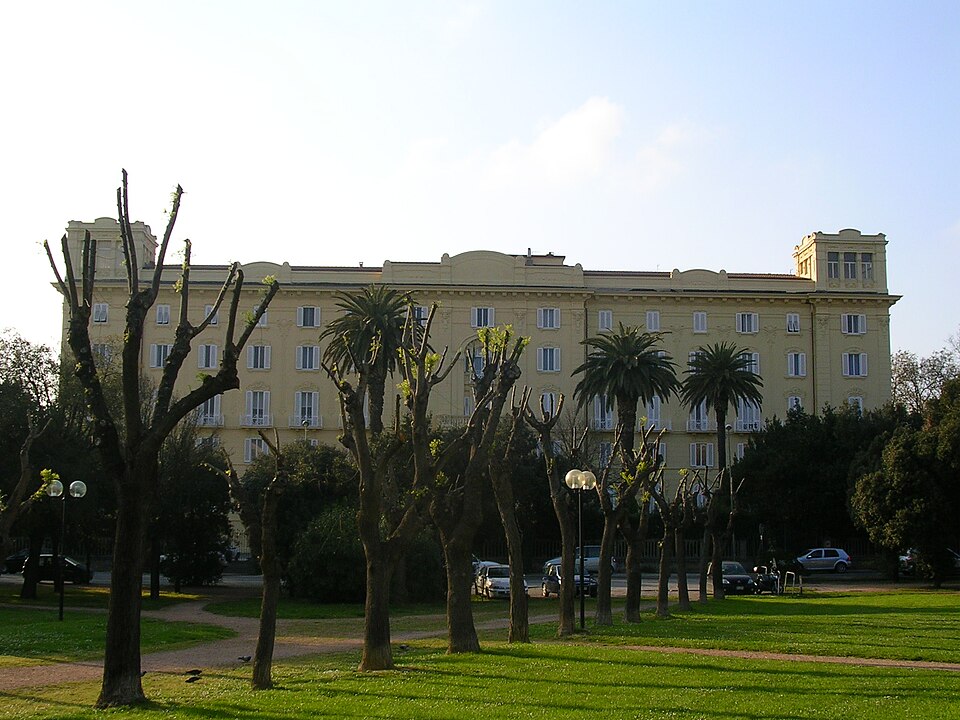
DeA Capital Real Estate has completed the refinancing of the Millennium Luxury Fund, whose main investor is Fort Partners, to support the transformation of Palazzo Marini into the future Four Seasons Hotel Rome. This is more than the development of a new luxury hotel: it sets a new benchmark for bankability, sustainability, governance and value creation in Italian hospitality real estate.
The future Four Seasons Hotel Rome has passed one of the most critical milestones in any major hotel development: securing and structuring the capital required to complete the project.
DeA Capital Real Estate has announced the refinancing of the Millennium Luxury Fund, the real estate fund dedicated to the redevelopment of Palazzo Marini, a historic complex overlooking Piazza San Silvestro in central Rome.
The new green financing totals €280 million, has an initial five-year term and may be extended for a further two years. Although some media headlines rounded the size of the transaction up to €300 million, the officially disclosed financing amount is €280 million.
Crédit Agricole CIB acted, among other roles, as green coordinator, sole underwriter and bookrunner. DeA Capital Real Estate, DLA Piper and Dentons also worked on the structuring of the transaction.
The fund’s main investor is Fort Partners, the international real estate and hotel development company led by Nadim Ashi.
This is not simply a property financing transaction. It is a complex investment in which capital, branding, sustainability, design, construction and hotel operations must converge towards a single objective: transforming a historic building into a hospitality asset capable of creating long-term value.
The key figures behind the transaction
The project includes:
-
a €280 million green loan;
-
an initial five-year term, extendable by a further two years;
-
the conversion of Palazzo Marini into a 127-room hotel;
-
the redevelopment of both the building and the square in front of it;
-
the involvement of Four Seasons as the hotel operator;
-
Fort Partners as the fund’s main investor;
-
the Carron Group as general contractor for a further phase of the works.
Dividing the financing amount by the planned 127 rooms produces a theoretical ratio of more than €2.2 million per room.
This figure should not be interpreted as the project’s actual cost per key. The financing covers the entire property redevelopment, including building systems, public areas, external works, financing costs and numerous components that cannot be allocated directly to the guestrooms.
It nevertheless provides an immediate indication of the scale of the investment.
Palazzo Marini is not a conventional hotel development. It is an ultra-luxury project involving a historic property in one of Rome’s most strategic locations, developed in accordance with the standards of one of the world’s most selective hotel brands.
Financing alone does not create value
Securing €280 million is a decisive achievement, but it does not automatically guarantee the project’s success.
The financing makes the development possible. Value creation will depend on the ability to control five critical variables:
-
construction and delivery times;
-
development costs;
-
the quality of the completed product;
-
the hotel’s operating performance;
-
the asset’s long-term or exit value.
In major hotel developments, risk is not confined to the initial investment phase. It continues throughout construction, pre-opening, launch and the period required for the property to reach operational stabilisation.
A twelve-month delay can increase financing costs, postpone revenue generation and materially alter the expected return. Higher-than-budgeted capital expenditure can absorb available contingencies, while a slower commercial ramp-up can prevent the hotel from achieving the EBITDA projected in the business plan.
The quality of the asset and the strength of the brand may mitigate certain risks, but they do not remove the need for disciplined oversight.
Four Seasons is more than a brand
In the future Four Seasons Hotel Rome, the brand is a central component of the project’s bankability.
An international operator of this standing can provide:
-
access to a global high-net-worth customer base;
-
significant commercial strength across international markets;
-
the ability to support premium average room rates;
-
established operating procedures;
-
globally recognised service standards;
-
greater visibility for the asset;
-
stronger perceived credibility among banks and investors.
The brand, however, comes at a cost.
Management fees, incentive fees, technical standards, mandatory capital expenditure, distribution systems and central service charges all affect the owner’s profitability.
For this reason, the hotel management agreement must be examined with the same degree of rigour as the property and the financing structure.
The right question is not: “How prestigious is the brand?”
The right question is:
How much net value does the brand create for the owner after accounting for fees, contractual obligations and the capital required to meet its standards?
A properly structured hotel management agreement should clearly regulate:
-
term and termination rights;
-
base and incentive fees;
-
budget approval;
-
performance tests;
-
capital expenditure obligations;
-
reserve funds;
-
control over operating expenses;
-
owner approval and oversight rights;
-
remedies in the event of underperformance;
-
conditions governing the sale of the asset.
At RobertoNecci.it, these issues are examined through dedicated analysis of hotel management agreements, valuations, governance and the protection of invested capital.
What the green loan designation really means
The classification of the financing as green is not merely a communications exercise.
Crédit Agricole CIB stated that the financing structure is potentially aligned with the European Union Taxonomy. This means that energy performance, emissions reduction and the building’s environmental sustainability become direct components of the financial structure.
For a hotel development, the relevant considerations may include:
-
the energy efficiency of the building envelope;
-
the quality and performance of mechanical and electrical systems;
-
reductions in energy consumption;
-
energy sourcing;
-
the materials used;
-
water-resource management;
-
emissions monitoring;
-
climate resilience;
-
measurement and reporting systems.
The underlying principle is clear: sustainability is becoming a financial variable.
A more efficient building can reduce operating costs, improve the quality of the guest experience, attract institutional capital and protect the asset’s long-term value.
Conversely, energy-intensive properties that lack reliable data or require significant future capital expenditure may face increasing disadvantages in terms of financing access and valuation.
For hotel investors, ESG therefore means more than reputation. It affects the cost of capital, marketability, obsolescence risk and the ability of the asset to retain value over time.
Palazzo Marini is a benchmark, not an automatic comparable
The transaction may influence perceptions of Rome’s hotel market, but it must be interpreted carefully.
The future Four Seasons could:
-
reinforce Rome’s international positioning;
-
attract further institutional investment;
-
support the growth of the ultra-luxury segment;
-
increase demand for historic properties suitable for conversion;
-
create a new benchmark for complex hotel financings and developments;
-
contribute to the regeneration of the surrounding area.
This does not mean that every nearby hotel or property will automatically increase in value.
Palazzo Marini is an exceptional asset in terms of location, scale, concept, financing structure and operator. It cannot be used as a direct comparable for buildings that do not share the same characteristics.
One of the most common mistakes in hotel valuation is applying the metrics of an extraordinary transaction to an ordinary asset.
Two hotels located in the same district may have profoundly different values depending on:
-
the number and size of the guestrooms;
-
the quality of public areas;
-
distribution efficiency;
-
GOP-generating capacity;
-
management agreements;
-
future capital expenditure requirements;
-
reputation;
-
staff quality;
-
commercial strength;
-
ownership and financing structures.
The opportunities presented on Investhotel.it must therefore be assessed by examining the property, the hotel business, the contractual framework and the economic sustainability of the investment as a whole.
Rome is entering a more selective phase
The opening of new luxury hotels strengthens Rome’s appeal, but it also increases competition.
Growth in the high-end supply does not guarantee that every hotel will be able to sustain premium rates and satisfactory occupancy levels.
The market will reward properties that can differentiate themselves through:
-
location and architectural quality;
-
guestroom size and comfort;
-
online reputation;
-
service quality;
-
a credible food and beverage proposition;
-
international distribution;
-
direct-booking capabilities;
-
cost control;
-
a clearly defined product identity;
-
management continuity.
Independent hotels will not be able to compete with Four Seasons by imitating its model or discounting their rates. They will need to establish a distinctive identity, target specific market segments and improve the relationship between revenue, operating margins and invested capital.
Hotel performance must therefore be measured not only through revenue and occupancy, but also through GOP, EBITDA, customer acquisition costs, labour productivity and the ability to protect the value of the underlying real estate.
This is the approach adopted by Necci Hotels: revenue growth matters only when it translates into stronger margins, a better reputation and increased asset value.
The relationship between debt and terminal value
A €280 million financing package requires a clear and credible view of the value the asset can achieve once construction is complete and operations have stabilised.
The business plan must be capable of supporting:
-
construction costs;
-
financing expenses;
-
pre-opening expenditure;
-
initial working capital;
-
operator fees;
-
operating costs;
-
recurring capital expenditure;
-
the expected return on equity;
-
repayment or refinancing of the debt.
The project’s sustainability will depend not only on the final property value, but also on the hotel’s ability to generate cash flows consistent with the amount invested.
In luxury hospitality, high room rates do not necessarily translate into high profitability. Delivering an ultra-luxury service requires qualified personnel, complex standards, continuous maintenance and operating costs that are considerably higher than those of lower-category hotels.
Value creation will therefore depend on the interaction between:
ADR × occupancy × ancillary revenue × operating efficiency × market multiple.
If even one of these variables is overstated, the expected return may fall materially.
Governance will be decisive
Transactions of this complexity require a governance structure capable of coordinating multiple interests:
-
the fund;
-
the investor;
-
the lender;
-
the developer;
-
the general contractor;
-
the design teams;
-
the hotel operator;
-
public authorities;
-
legal and technical advisers.
Each party has different objectives, responsibilities and timelines.
Governance must prevent decision-making delays, variations, contractual disputes or information gaps from undermining the project.
Essential controls include:
-
periodic reporting;
-
construction progress monitoring;
-
independent cost verification;
-
monitoring of debt drawdowns;
-
regular updates to the business plan;
-
oversight of planning and authorisation risks;
-
supervision of the hotel management agreement;
-
clear allocation of roles and responsibilities.
Governance quality is not a secondary consideration. It is a component of the investment’s value.
The message to the market: credit is available, but increasingly selective
The financing of the Four Seasons Hotel Rome demonstrates that substantial capital remains available for large-scale hotel projects.
The lending market, however, has become more selective.
Banks are more willing to finance transactions that combine:
-
a high-quality asset;
-
an internationally recognised destination;
-
a credible investor;
-
an established operator;
-
an adequate equity contribution;
-
a verifiable business plan;
-
a measurable ESG framework;
-
an appropriate governance structure;
-
a clear repayment or refinancing strategy.
Credit tends to become more limited or expensive when a project relies on underestimated capital expenditure, aggressive operating assumptions, a weak ownership structure or hotel agreements that have not been properly analysed.
The lesson of Palazzo Marini therefore extends far beyond this individual project.
A modern hotel investment must be assessed as an integrated system combining:
-
real estate;
-
operations;
-
finance;
-
taxation;
-
contracts;
-
sustainability;
-
governance;
-
exit strategy.
Value is created—or destroyed—through the balance between these elements.
Conclusions
The €280 million green loan supporting the Four Seasons Hotel Rome is one of the most significant Italian hospitality real estate transactions of 2026.
Its importance lies in more than the size of the financing.
The deal demonstrates that a major urban regeneration and hotel development project can attract substantial capital when it combines an exceptional location, a specialised investor, a global operator, a professionally structured financing package and measurable environmental objectives.
Palazzo Marini therefore becomes both a market benchmark and a warning.
The prestige of the brand, the strength of the destination and the availability of debt are no substitute for execution. Success will depend on cost control, product quality, delivery times, management of the hotel agreement and the property’s ability to generate sustainable profitability once operations have stabilised.
Because even in the ultra-luxury segment, value is not created by the name displayed above the entrance.
It is created by the ability to transform capital, real estate and hotel operations into sustainable cash flow.
At InvestimentiAlberghieri.it, we analyse the transactions, financing structures and strategies reshaping Italy’s hospitality investment market.
Assessing a hotel investment before committing capital
A hotel acquisition, conversion or refinancing should never be assessed solely on the basis of location, asking price or brand prestige.
Hotel Management Group advises investors, owners, funds, family offices and financial institutions through an integrated assessment of the entire transaction, including:
-
hotel due diligence;
-
business and real estate valuation;
-
business-plan verification;
-
debt-sustainability analysis;
-
hotel management agreement review;
-
capital expenditure and operating-cost control;
-
commercial positioning;
-
governance and investment protection;
-
turnaround and value-enhancement plans.
Before committing millions of euros, investors must understand which factors will create value—and which could destroy it.
For a confidential discussion: info@hotelmanagementgroup.it