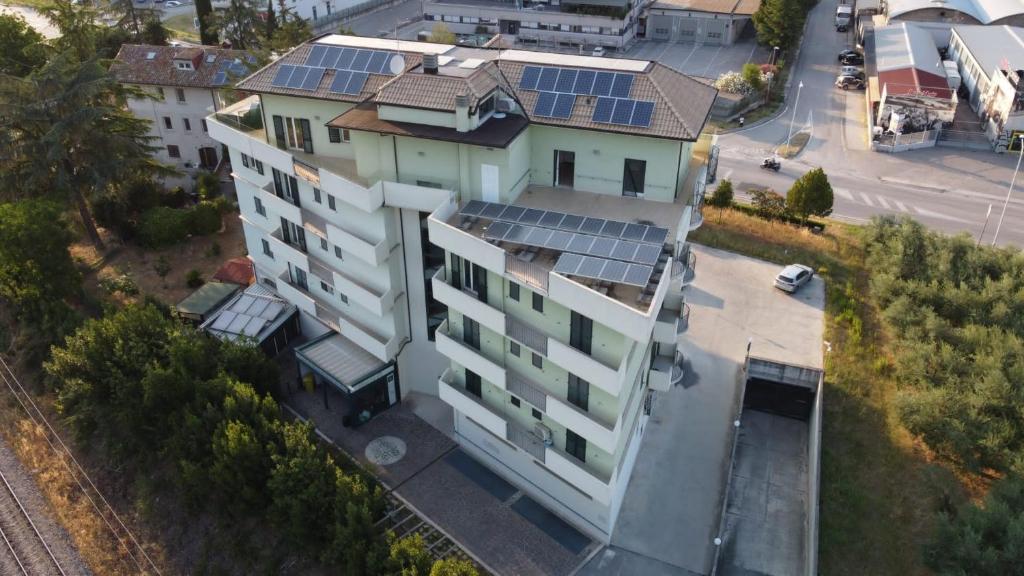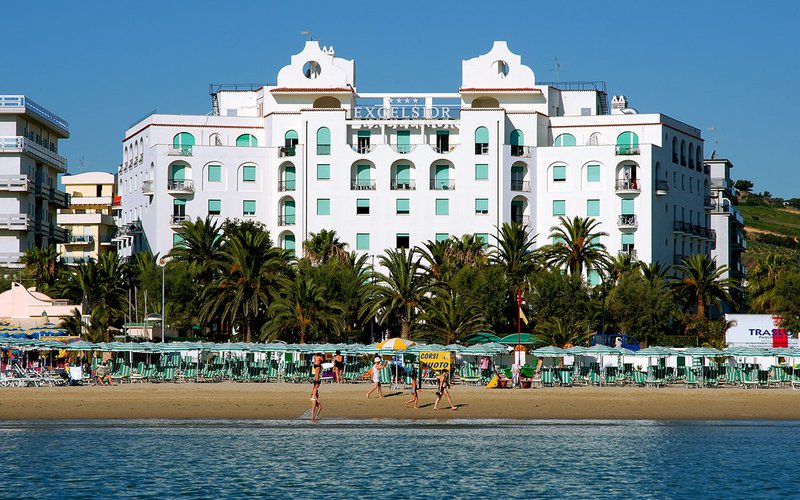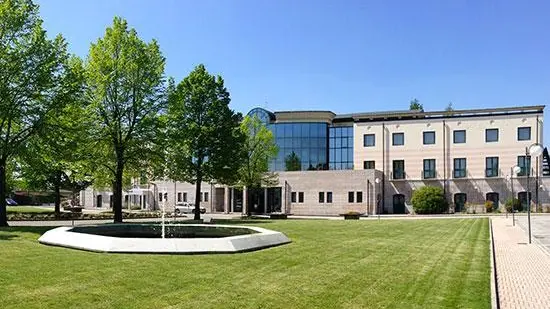
On 10 September 2026, Hotel Ca’ Brugnera, the historic hospitality complex at Via Villa Varda 4 in Brugnera, in the province of Pordenone, will return to auction. Real Estate Enforcement Proceeding No. 73/2023 before the Court of Pordenone concerns a hospitality property comprising 64 rooms and 128 beds, F&B facilities, a conference centre, two swimming pools, extensive landscaped grounds and parking areas. The reserve price is €2.625 million and the minimum admissible offer is €1.96875 million, following an unsuccessful first sale attempt on 9 April 2026 at a €3.5 million reserve price. The new minimum equates to approximately €30,760 per room — an immediately attractive acquisition basis. However, the appraisal identifies building-compliance issues requiring further investigation, while a subsequent official amendment states that the property is vacant but that the boiler is owned by a third party and is therefore excluded from the sale. That single detail encapsulates the investment case: an investor may acquire a substantial hotel complex at an apparently low price without automatically acquiring a platform that is ready to generate cash flow. The real underwriting exercise must therefore assess CAPEX, technical completeness and operating complexity — and, above all, determine whether the conference centre, F&B operations, pools and events can generate enough contribution to justify the extensive fixed-cost infrastructure required to operate the property.
In the hotel investment market, there is a fundamental difference between:
Large Hospitality Asset
and
Profitable Hospitality Platform.
Ca’ Brugnera illustrates that distinction perfectly.
The property includes:
rooms;
F&B facilities;
conference space;
swimming pools;
parking;
landscaped grounds;
extensive common areas.
But every additional amenity creates both:
Revenue Potential
and
Fixed-Cost Exposure.
The real question is therefore not:
“How much does it cost to acquire 64 rooms?”
It is:
“How much sustainable GOP can such an extensive infrastructure generate relative to only 64 keys?”
First Certainty: Real Estate Enforcement Proceeding No. 73/2023
The proceeding is:
Real Estate Enforcement No. 73/2023
before the:
Court of Pordenone.
The property is being sold as:
ONE LOT.
The sale is conducted:
without auction
through a:
synchronous online bidding process.
The sale is scheduled for:
10 September 2026 at 3:00 p.m.
Offers must be submitted by:
9 September 2026 at 12:00 noon.
Reserve Price: €2,625,000
Minimum Offer: €1,968,750
Minimum Bid Increment: €2,000
Deposit: 10% of the offer.
This is therefore a genuine:
Pre-Auction Hospitality Special Situation.
This Is Not the First Sale Attempt
The previous sale was scheduled for:
9 April 2026.
The reserve price was:
€3,500,000
with a minimum admissible offer of:
€2,625,000.
The result was:
NO AWARD — NO BIDS RECEIVED.
The new process therefore moves from:
€3,500,000
→
€2,625,000 reserve price
→
€1,968,750 minimum offer.
The current minimum is:
43.75% below
the previous reserve price.
But once again:
Price Reduction ≠ Investment Upside.
A Failed First Sale Is Already an Underwriting Data Point
The market has already been given an opportunity to acquire the asset at a:
€3.5 million reserve price
and did not do so.
That does not automatically mean that the asset is:
overpriced;
problematic;
uninvestable.
But it does mean:
the market has already voted once.
The next investor must therefore ask:
why?
Potential explanations include:
CAPEX;
operating scale;
financing constraints;
technical perimeter;
building-compliance issues;
condition of the systems;
absence of a convincing operating thesis.
The price reduction creates:
a new entry point.
It does not eliminate:
the underlying risks.
Sixty-Four Rooms and 128 Beds
The available documentation reconstructs a historic:
4-star hotel licence
with:
64 rooms
and:
128 beds.
From an underwriting perspective, this generates an immediate metric:
€1,968,750 ÷ 64 = approximately €30,762 per key.
The figure is immediately attractive.
But it may also be:
misleading.
€30,762 per Key Is Not the True Cost
It represents only:
Auction Acquisition Basis per Historic Key.
The true cost will be:
Purchase Price
Technical CAPEX
Planning / Compliance Costs
Boiler / Heating Solution
MEP Recommissioning
FF&E
OS&E
Technology
Pre-opening
Working Capital
=
All-in Cost per Reopened Key.
That is the figure that should be compared with:
Stabilised Value per Key.
Not the auction price.
The Most Surprising Detail: The Boiler Is Not Included
An official amendment issued in June 2026 contains two fundamental statements:
“The property is vacant.”
and:
“The property being sold does not include the boiler, which is owned by a third party.”
The first reduces one risk.
The second immediately introduces another.
Vacant Property ≠ Technically Complete Property
A hotel can be:
free of occupants
without being:
technically self-contained.
The boiler is a perfect example.
The question is not simply:
“How much will it cost to replace it?”
The investor needs to understand:
required capacity;
systems served;
domestic hot-water production;
heating;
integration with HVAC;
existing distribution networks;
third-party agreements;
replacement timeline;
compliance requirements.
Therefore:
Vacant Possession
≠
Technical Completeness.
The Boiler May Look Like a Small Detail. It Is Not
In a 64-room hotel with:
conference facilities;
F&B;
large common areas,
thermal generation can directly affect:
guest comfort;
hot-water availability;
kitchen operations;
conference operations;
winter opening capability;
energy costs.
A technical component excluded from the sale can therefore become part of the:
Reopening Critical Path.
The correct question is:
“Which other critical systems are not economically or legally included within the acquisition perimeter?”
The Appraisal Does Not Confirm Full Building Compliance
The technical documentation identifies issues that prevent the property from automatically being considered:
fully compliant.
This uncertainty must feed directly into the:
Maximum Bid.
Potentially Regularisable Does Not Mean Regularised
This is a fundamental distinction.
Potentially Regularisable
does not mean:
Regularised.
And:
Estimated Regularisation Cost
does not mean:
Final Regularisation Cost.
Before bidding, the investor should verify:
building permits;
as-built survey;
legitimate planning status;
accesses;
fencing;
driveways;
volumes;
building systems;
authorisations.
The sequence is:
Planning Uncertainty
→
Execution Risk
→
Time
→
Cost
→
Lower Maximum Bid.
Surface Area Must Be Read Correctly
The available documentation and sales portals use different surface metrics.
That is not necessarily a contradiction.
It is primarily a question of:
measurement definition.
An investor must distinguish among:
Gross Built Area
Net Hotel Area
Conference Area
Basement / Technical Area
External Area
Cadastral Plot
Commercial Weighted Area.
Therefore:
Headline sqm ≠ Revenue-Producing sqm.
For an asset of this scale, this distinction is critical.
This Asset Is Far More Than a Hotel
The complex includes:
guestrooms;
F&B facilities;
conference areas;
solarium;
two swimming pools;
extensive landscaped grounds;
parking;
outdoor spaces.
Its historic positioning also includes a particularly important component:
a genuine conference centre.
The Conference Centre Changes the Entire Investment Thesis
The historic product included large plenary rooms with substantial capacity and configurations capable of being divided into multiple meeting spaces.
Ca’ Brugnera should therefore not be underwritten simply as:
a 64-room hotel with some meeting rooms.
It is more appropriately analysed as:
Rooms
MICE
F&B
Pools
Events
Outdoor Infrastructure.
The Real Risk Is Asset Intensity
Sixty-four rooms have to support a very substantial infrastructure.
More space means more:
maintenance;
energy;
cleaning;
security;
insurance;
staff;
landscaping;
pool operations;
technical systems.
The relationship may become:
Large Asset Footprint
÷
64 Keys
=
High Asset Intensity per Key.
That is the central operating risk.
Asset Intensity Can Produce Two Opposite Outcomes
Case A — Operating Leverage
The infrastructure generates standalone demand.
Conferences.
Events.
F&B.
Swimming pools.
Day-use.
Corporate business.
In that case:
Amenities Generate Incremental Contribution.
Case B — Fixed-Cost Drag
The infrastructure remains underutilised.
The rooms generate revenue.
But they are forced to subsidise:
pools;
landscaped grounds;
meeting space;
F&B;
building systems;
maintenance.
In that case:
Amenities Consume Rooms GOP.
The difference between these two scenarios determines:
Investment Value.
Operating Leverage vs Fixed-Cost Drag
This is the test that completes the analysis.
It is not enough to ask:
how much revenue do MICE, F&B, pools and events generate?
The correct question is:
how much contribution remains after covering the incremental costs required to generate that revenue?
The equation is:
Incremental Revenue from MICE + F&B + Pools + Events
−
Incremental Labour
−
Incremental Energy
−
Incremental Maintenance
−
Incremental Sales Cost
−
Incremental Supplies
=
Net Ancillary Contribution.
That is the figure that matters.
Not gross revenue.
The Next Metric Is Ancillary Operating Leverage
The next step is:
Net Ancillary Contribution
÷
Incremental Fixed Cost Base
=
Ancillary Operating Leverage.
If the ratio is strong:
the amenities are:
leveraging the asset.
If it is weak or negative:
the amenities are:
dragging the asset.
This distinction is fundamental.
Revenue Diversification ≠ Profit Diversification
A hotel can generate:
Rooms Revenue;
MICE Revenue;
Restaurant Revenue;
Pool Revenue;
Event Revenue
and still remain:
economically fragile.
Because more revenue streams can also mean:
more staff;
more energy;
more maintenance;
more sales costs;
more complexity.
Therefore:
Revenue Diversification
creates value only when it becomes:
Contribution Diversification.
Otherwise, it is simply:
Cost Diversification.
Amenities Must Reduce Dependence on Rooms
The industrial test is straightforward.
If:
MICE;
F&B;
Pools;
Events
generate positive contribution, they reduce the burden of fixed costs carried by the rooms.
If instead they generate losses, they increase the Rooms Break-even Occupancy.
Therefore:
Ancillary Contribution
must reduce:
Rooms Break-even Risk.
If it does not:
the amenities are not diversifying risk.
They are:
amplifying it.
The Correct Formula Is Not Rooms Revenue
It is:
Rooms GOP
MICE Contribution
F&B Contribution
Pool / Day-Use Contribution
Events Contribution
−
Incremental Asset Intensity Cost
=
Consolidated Sustainable GOP.
That is the figure that must remunerate:
Total Invested Capital.
The Swimming Pools Are a Business, Not Decoration
Swimming pools generate:
energy costs;
water consumption;
chemicals;
staffing;
cleaning;
maintenance;
landscaping;
insurance.
A pool can therefore be:
Hotel Amenity
or:
Independent Revenue Engine.
Pool Revenue Must Cover Pool Cost
The relevant metric is:
Pool Revenue
Poolside F&B Contribution
−
Pool Operating Cost
=
Pool Contribution Margin.
If that figure is negative:
the pool must at least demonstrate an ability to generate:
ADR premium;
occupancy uplift;
event demand.
Otherwise, it becomes:
a cost centre.
MICE Could Be the Real Value Driver
With extensive conference capacity, the relationship between:
Meeting Capacity
and
64 Rooms
is unusual.
A large event may generate attendance significantly greater than the property’s internal room inventory.
That can be:
a limitation
or:
an advantage.
Conference Demand ≠ Room Demand
Not every conference delegate stays overnight.
But an event can generate:
room nights;
F&B;
coffee breaks;
room rental;
equipment rental;
parking;
external catering;
ancillary spend.
The equation is:
Meeting Revenue
Delegate F&B
Associated Room Nights
−
Event Delivery Cost
=
MICE Contribution.
That is the real metric.
Not:
“we have a 500-person meeting room.”
The Conference Centre Must Work Even Without the Hotel Rooms
This is the key principle.
With 64 rooms:
MICE demand must be capable of generating:
External Delegates.
Otherwise, the conference infrastructure may be oversized relative to the hotel inventory.
The competitive set therefore extends beyond:
hotels.
It includes:
conference venues;
event centres;
business hotels;
corporate venues;
meeting facilities.
Brugnera Is Not Primarily a Leisure Destination
Ca’ Brugnera sits within an area with a strong:
industrial and corporate
economic profile.
The core demand generator should therefore be analysed as:
Corporate + MICE.
Not:
Resort Leisure.
Two Swimming Pools Do Not Automatically Make Brugnera a Resort Destination
This is an important mistake to avoid.
Two pools;
landscaped grounds;
a solarium
can make the property appear:
resort-like.
But the underlying destination remains different.
The pools should therefore strengthen:
summer business;
events;
weekend leisure;
family demand;
local day-use.
They should not replace:
corporate demand.
Its Position Between Friuli and Veneto Is an Advantage
The location can theoretically support demand from:
corporate travellers;
supplier meetings;
industrial events;
training;
sales conventions;
small exhibitions;
weddings;
private events.
But:
Accessible Location ≠ Captured Demand.
A genuine:
Commercial Strategy
is required.
The 64 Rooms Need the Right Segmentation
A future operator will need to determine which room segmentation genuinely makes commercial sense.
The issue is not simply:
Room Renovation.
It is:
Room Product Strategy.
Potential segments may include:
corporate standard;
premium corporate;
long stay;
group;
accessible rooms;
family;
suite.
Each segment needs:
ADR;
cost-to-serve;
distribution strategy
consistent with its role in the overall business model.
The Business Plan Needs at Least Four P&Ls
1. Rooms P&L
ADR.
Occupancy.
RevPAR.
GOPPAR.
Distribution Cost.
Housekeeping.
Payroll.
Energy.
2. MICE P&L
Room Rental.
Delegates.
Coffee Breaks.
Equipment.
External Events.
Associated Room Nights.
Contribution per Event.
3. F&B P&L
Breakfast.
Restaurant.
Banqueting.
External Covers.
Food Cost.
Beverage Cost.
Labour.
Contribution Margin.
4. Pool / Leisure P&L
External Admissions.
Hotel Guests.
Poolside Bar.
Events.
Operating Cost.
Only then should they be consolidated into a:
Consolidated Hospitality P&L.
Generating Revenue Is Not Enough
Every division must generate:
Contribution.
A common mistake in large independent hotels is to celebrate:
Revenue.
When the decisive variable is:
Incremental GOP.
The correct test is:
Incremental Revenue
−
Incremental Labour
−
Incremental Energy
−
Incremental Supplies
−
Incremental Maintenance
=
Incremental Contribution.
F&B Can Be a Value Driver or a Problem
A conference and events property inevitably requires a credible F&B proposition.
But this does not automatically mean it should maintain:
a heavy traditional restaurant structure.
The investor should compare:
Full Internal F&B
Maximum control.
Maximum fixed cost.
Banqueting-Led F&B
Focused on meetings and events.
Outsourced Restaurant
Lower operating risk.
Lower control.
Hybrid Model
Breakfast operated internally.
Banqueting managed internally or externally.
Selective restaurant operations.
The decision should be driven by:
Contribution Margin.
Real Estate ≠ Operating Business
The fact that the property historically operated through a separate hotel business makes it even more important to verify each layer individually:
Real Estate;
Licences;
Furniture;
Equipment;
Brand;
Website;
Database;
OTA Accounts;
Personnel;
Contracts;
Operating Rights.
The real estate sale should not automatically be interpreted as:
purchase of the historical hotel business.
Digital Footprint ≠ Transferable Digital Business
The property’s historical online presence may create:
Digital Legacy.
But it does not automatically prove:
current operations;
ownership of accounts;
transferability of the domain;
transferability of the brand;
availability of the customer database;
continuity of OTA accounts.
Therefore:
Digital Footprint ≠ Transferable Digital Business.
Vacant Possession Reduces One Risk but Creates a Reopening Gap
For the buyer, the fact that the property is:
vacant
is positive.
But a vacant hotel may also mean:
no operating continuity.
The sequence may therefore become:
Auction Award
→
Possession
→
Technical Recommissioning
→
Regularisation
→
Boiler / Heating Solution
→
FF&E Verification
→
Licence Verification
→
Operator Setup
→
Distribution Relaunch
→
Pre-opening
→
Reopening.
That distance is the:
Reopening Gap.
Time to Reopen Must Be Included in the Underwriting
During the Reopening Gap, the buyer may incur:
security;
insurance;
utilities;
maintenance;
property costs;
professional fees;
interest;
staff recruitment;
sales & marketing costs.
Without necessarily generating:
room revenue.
Therefore:
No Revenue Period ≠ No Cost Period.
The equation becomes:
Purchase Price
CAPEX
Holding Cost
Financing Cost
Reopening Cost
=
Economic Entry Cost.
The Real Risk Is Buying Cheaply and Operating Expensively
For a property of this scale, the issue is not only:
CAPEX.
It is also:
OPEX.
That distinction is fundamental.
An investor could successfully renovate the entire property
and then discover after reopening that:
energy;
landscaping;
pools;
conference areas;
F&B;
maintenance;
staffing
absorb too much GOP.
Therefore:
Technical Feasibility ≠ Operating Feasibility.
Break-even Occupancy Alone Is Not Enough
With 64 rooms:
64 × 365 = 23,360 Available Room Nights per year.
The business plan must calculate:
Break-even Occupancy.
But at Ca’ Brugnera, that metric cannot be derived from the:
Rooms P&L
alone.
Because:
MICE;
F&B;
Pools;
Events
may contribute toward fixed costs.
The more appropriate equation is:
Total Fixed Costs
−
MICE Contribution
−
F&B Contribution
−
Pool / Event Contribution
=
Fixed Costs to Be Covered by Rooms.
Only then:
Remaining Fixed Costs
÷
Contribution per Occupied Room
=
Break-even Room Nights.
Amenities Must Lower Break-even, Not Increase It
This is arguably the most important industrial test.
If:
conferences;
restaurant operations;
swimming pools
generate contribution,
they reduce dependence on guestrooms.
If they generate losses:
they increase the Break-even Occupancy required from the rooms.
Therefore:
Revenue Diversification
must produce:
Break-even Reduction.
Otherwise it is simply:
Cost Diversification.
Ancillary Operating Leverage: The Asset’s Real KPI
A complex of this size requires an additional metric.
Ancillary Operating Leverage
measures whether ancillary operations are genuinely creating value.
The conceptual formula is:
Net Ancillary Contribution
÷
Incremental Fixed Cost Base
=
Ancillary Operating Leverage.
If it rises:
MICE;
F&B;
Pools;
Events
are leveraging the real estate platform.
If it falls:
the real estate platform is consuming:
the GOP generated by the rooms.
That is a major distinction.
The Minimum Price Equates to Approximately €30,760 per Key
That figure is difficult to ignore.
But the investor should build a second metric:
Total Invested Capital per Key.
The equation is:
Purchase Price per Key
CAPEX per Key
Compliance per Key
Technical Recommissioning per Key
FF&E / OS&E per Key
Pre-opening per Key
Working Capital per Key
=
All-in Cost per Reopened Key.
Then:
Stabilised Value per Key
−
All-in Cost per Reopened Key
=
Potential Value Creation per Key.
That is the real investment case.
The Discount to the Previous Auction Price Is Not a Return
The current minimum offer is materially below the first 2026 reserve price.
But:
Discount to Previous Auction Price ≠ Discount to Investment Value.
The asset may be:
cheap;
fairly priced;
or still too expensive
at any acquisition level.
What ultimately matters is future:
cash flow.
Three Potential Investment Theses
Scenario 1 — Corporate & MICE Hotel
64 rooms.
Conference centre.
Corporate contracting.
Training.
Conventions.
Industrial meetings.
Driver:
Rooms + MICE Contribution.
This is probably the thesis most consistent with the property’s historic DNA.
Scenario 2 — Corporate + Events Hospitality Platform
In addition to rooms and MICE:
weddings;
private events;
banqueting;
pool events;
weekend demand.
Driver:
Diversified Event Revenue.
Greater upside.
But also greater:
Operating Complexity.
Scenario 3 — Real Estate Owner + Specialist Operator
An investor acquires the property.
A hotel operator manages:
rooms;
distribution;
revenue.
A specialist platform manages:
MICE;
events;
F&B
through an integrated or partially separated operating structure.
Driver:
Asset Ownership + Operating Specialisation.
Single Operator or Specialist Platform?
Ca’ Brugnera requires several different capabilities:
hotel management;
revenue management;
conference sales;
event sales;
F&B;
pool operations;
facility management.
It should not be assumed that one operator will excel at all of them.
The investor should compare:
Single Integrated Operator
with:
Hotel Operator + Event / F&B Specialists.
The second structure is more complex.
But it may prevent:
a large asset
from being managed through:
generic hotel management.
Three Economic Scenarios
Downside Case
Competitive acquisition.
Building irregularities prove more complex than expected.
Boiler and systems require significant CAPEX.
Meeting spaces remain underutilised.
F&B is structurally heavy.
Seasonal pools lose money.
Weak Net Ancillary Contribution.
Rooms cannot absorb the fixed-cost base.
Result:
Low Acquisition Basis + High Asset Intensity + Fixed-Cost Drag + Weak GOP = Value Trap.
Base Case
Disciplined acquisition basis.
Manageable regularisation requirements.
Controlled CAPEX.
All 64 rooms fully saleable.
Stable corporate demand.
Positive MICE contribution.
Seasonal pools managed with discipline.
Optimised F&B.
Positive Ancillary Operating Leverage.
Result:
Sustainable Multi-Revenue Business Hotel.
Upside Case
Efficient technical recommissioning.
Strong corporate positioning.
Professionally relaunched MICE business.
Structured event platform.
Pools monetised through external demand as well as hotel guests.
Profitable F&B.
Strong Ancillary Operating Leverage.
Professional revenue management.
Result:
Low Entry Basis + Multiple Profitable Revenue Engines + Asset Re-rating.
Yield on Cost Must Come Before the Bid
The final test is not:
how cheap is the property relative to the previous auction?
It is:
what return does it generate on the total capital invested?
The equation is:
Stabilised Operating Return
÷
Total Invested Capital
=
Yield on Cost.
The denominator must include:
purchase;
CAPEX;
compliance;
boiler solution;
FF&E;
OS&E;
pre-opening;
working capital;
financing;
holding costs.
Development Spread Determines Whether the Project Creates Value
Then:
Yield on Cost
−
Stabilised Market Yield
=
Development Spread.
If the project generates a return on cost materially above the yield required by the market for the stabilised asset:
Value Is Created.
If the two yields are too close:
the investor assumes execution risk without being adequately compensated.
Operating Leverage and Development Spread Must Work Together
This is the final test.
Ca’ Brugnera needs to create value at two levels.
Operating Level
The amenities must produce:
Net Ancillary Contribution.
Investment Level
The stabilised business must produce:
Positive Development Spread.
The sequence becomes:
Ancillary Operating Leverage
→
Higher Consolidated GOP
→
Higher Yield on Cost
→
Higher Stabilised Value
→
Positive Development Spread.
This is the real:
Value Creation Flywheel.
If instead:
amenities generate costs;
GOP remains weak;
Yield on Cost declines;
Development Spread compresses,
the same infrastructure that appeared to create optionality becomes:
Value Destruction.
Maximum Bid Must Be Derived from the Future
The professional sequence is:
Market Demand
→
Product Strategy
→
Rooms Revenue
→
MICE Revenue
→
F&B Revenue
→
Pool / Event Revenue
→
Net Ancillary Contribution
→
Consolidated GOP
→
CAPEX
→
Total Invested Capital
→
Target Yield on Cost
→
Stabilised Value
→
Development Spread
→
Maximum Bid.
Not:
€1.968M Looks Cheap
→
Let’s Find a Business Plan.
The Ten Questions to Answer Before 9 September
What is the exact legal and technical perimeter of the lot?
Which building irregularities can genuinely be regularised, and at what cost?
Which systems, in addition to the boiler, require replacement or new contractual arrangements?
Are all 64 rooms authorised, compliant and saleable?
What is the Total Reopening CAPEX?
How much standalone GOP can MICE and F&B generate?
Do the swimming pools generate contribution or merely costs?
What is the overall Net Ancillary Contribution?
What Yield on Cost does the stabilised business generate?
What Maximum Bid is compatible with a Development Spread sufficient to compensate for the risk?
These are the questions that should determine:
whether to bid.
Not the nominal discount.
Conclusion: Ca’ Brugnera Is Not Simply a 64-Room Hotel. It Is an Operating Platform That Must Prove It Deserves All of Its Infrastructure
On 10 September 2026, a particularly complex hospitality asset will return to the market.
64 rooms.
128 beds.
Historic 4-star classification.
Conference centre.
Large meeting facilities.
F&B.
Two swimming pools.
Solarium.
Landscaped grounds.
Extensive parking.
Minimum offer €1,968,750.
The first sale attempt attracted:
no bidders.
And an official amendment now clarifies two points at the same time:
the property is vacant
but:
the boiler is excluded from the sale.
It is almost the perfect metaphor for the transaction.
The buyer may obtain:
Possession.
But still needs to establish:
Operational Readiness.
The real path is:
Auction Acquisition
→
Legal & Planning DD
→
Technical Completeness
→
Boiler / MEP Solution
→
CAPEX
→
Operating Model
→
Corporate & MICE Strategy
→
Rooms + F&B + Events + Pools
→
Net Ancillary Contribution
→
Consolidated GOP
→
Break-even
→
Yield on Cost
→
Development Spread
→
Asset Re-rating.
Because:
€30,760 per Key ≠ All-in Cost per Reopened Key.
Vacant Property ≠ Technically Complete Property.
Large Amenity Base ≠ Profitable Revenue Diversification.
Conference Capacity ≠ MICE Contribution.
Pool Revenue ≠ Pool Profit.
Revenue Diversification ≠ Profit Diversification.
Discount to Auction Price ≠ Investment Upside.
And, above all:
Incremental Revenue from MICE + F&B + Pools + Events
−
Incremental Labour + Energy + Maintenance + Sales Cost
=
Net Ancillary Contribution.
That is the key operating metric.
While:
Stabilised Operating Return
÷
Total Invested Capital
=
Yield on Cost.
And:
Yield on Cost
−
Stabilised Market Yield
=
Development Spread.
Ca’ Brugnera does not need to prove that it is:
large.
It already is.
It needs to prove that it can be:
profitable because of its scale.
If rooms, conferences, F&B, pools and events generate operating leverage and reinforce one another:
the acquisition basis can become:
Value Creation.
If instead the 64 guestrooms have to subsidise the entire infrastructure:
that same scale becomes:
Fixed-Cost Drag.
And at that point:
even €1.97 million may be too expensive.
InvestimentiAlberghieri.it Advisory
InvestimentiAlberghieri.it analyses hotel auctions, real estate enforcement proceedings, inactive hotels, turnarounds, MICE assets and hospitality special situations, from pre-auction underwriting through the design of the future operating model.
For hotel valuation, due diligence, CAPEX analysis, MICE feasibility, business planning, operator search, F&B strategy, reopening, Ancillary Operating Leverage, Yield on Cost and distressed hospitality underwriting:
info@investimentialberghieri.it
Complementary expertise and insights:
Robertonecci.it — hospitality advisory, valuations and specialist guides covering hotel investment, distressed hotels, contracts and asset management
Investhotel.it — hotel acquisitions, disposals, conversions, repositionings and turnaround transactions
HotelManagementGroup.it — hotel management, temporary management, revenue management, asset management and repositioning