A closed hotel does not necessarily need to become a hotel again.
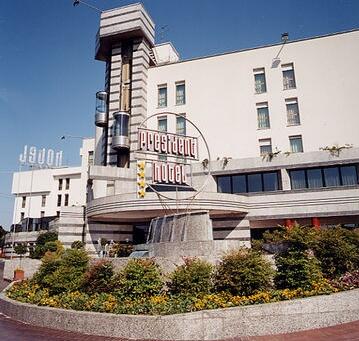
That is perhaps the most important lesson from Castel Mella, near Brescia, where the former Hotel President, unused since 2012, is being converted into a 240-bed residential care facility, backed by more than €20 million in private investment.
The project radically changes the future of the property and raises a question that many hotel owners eventually need to confront:
When does continuing to invest in a hotel stop being the best use of capital?
Because there comes a point when the right question is no longer:
“How much would it cost to reopen the hotel?”
but rather:
“What use of this property would create the greatest value today?”
That is the moment when a property decision becomes an investment decision.
From hotel to care facility: the Hotel President case
Hotel President opened in 1971 and, over the years, became a significant hospitality asset in the area, eventually offering 123 rooms and 19 conference rooms, together with a swimming pool, spa and wellness facilities.
Then the market changed.
The hotel closed in 2012 and remained unused for more than a decade.
Today, the property is entering an entirely new economic cycle. Gruppo Zaffiro is converting the building into a 240-bed residential care facility, with an investment exceeding €20 million.
This is not simply a refurbishment.
It is a complete repositioning of the asset.
And that is precisely why the case matters to owners of closed hotels, underperforming properties and hospitality assets requiring substantial capital expenditure to remain competitive.
The first mistake: starting with the project instead of the decision
When a hotel begins to struggle, the process often starts immediately with the building itself.
Architects and engineers are appointed.
Renovation costs are estimated.
New rooms, spas, restaurants, swimming pools and meeting spaces are discussed.
The capex budget starts to take shape.
But one question should come before all of this:
Does it still make economic sense for this property to remain a hotel?
If that question is not addressed before the design process begins, an owner may end up spending millions of euros bringing back to market a product that continues to suffer from structural weaknesses.
A technically sound investment can still be an economically poor one.
Five questions to answer before investing a single euro
Before deciding the future of a hotel property, owners and investors should be able to answer at least five questions.
1. Is there still sufficient demand for the hotel?
The analysis should cover the market, target segments, seasonality, demand generators, competitors and the future outlook for the destination.
It is not enough to know that the hotel performed well twenty years ago.
What matters is what it can produce tomorrow.
2. How much capital is really required to make it competitive?
The cost is not limited to construction works.
It may include building systems, energy efficiency, bedrooms, bathrooms, furniture, technology, fire-safety compliance, public areas, repositioning costs and the working capital required during the reopening phase.
3. What level of profitability can it generate after the investment?
A credible assessment should model:
-
occupancy;
-
ADR;
-
RevPAR;
-
total revenue;
-
operating costs;
-
GOP;
-
financing requirements;
-
return on invested capital.
A hotel can be beautifully renovated and still fail to generate an adequate return.
4. Are there operators willing to run it?
Before concluding that a hotel itself is no longer viable, it is essential to distinguish between problems relating to the real estate and problems relating to its operating model.
A new operator, a different brand, a management agreement or a lease structure could materially change the economics of the property.
At Investhotel.it, this relationship between owners, operators, management opportunities and investors is central, because the future of a hotel does not necessarily have to mirror its current operating model.
5. Could an alternative use generate greater value?
This is where the Hotel President case becomes particularly relevant.
Residential care, senior living, student housing, residential development, serviced apartments, healthcare facilities and other uses may, under the right conditions, offer a stronger investment case.
At that point, the objective is no longer to save the hotel.
It is to maximise the value of the asset.
A hotel does not have to remain a hotel forever
One of the most common mistakes in real estate is to confuse a property's history with its future.
The fact that a building was originally developed as a hotel does not mean hospitality will always remain its highest and best use.
Markets change.
So do:
-
tourism flows;
-
corporate demand;
-
infrastructure;
-
competition;
-
distribution models;
-
labour costs;
-
energy costs;
-
guest expectations;
-
investors' required returns.
As a result, the highest and best use of the property may change as well.
In some cases, the best option will still be a hotel.
In others, it will not.
The decision should be economic, not emotional.
Five possible strategies for an underperforming hotel
When a hospitality asset is no longer producing satisfactory returns, there are generally five realistic strategic options.
Keep it as a hotel
This is the right solution when the market still supports hotel use and the required investment is capable of producing an adequate return.
Reposition it
The property may remain a hotel while changing category, market segment, concept, brand or commercial model.
A business hotel may become more leisure-oriented.
An independent hotel may join an international brand.
A full-service property may be redesigned around a more efficient operating model.
Change the operator
Sometimes the problem is neither the location nor the property itself.
It is the management.
Before abandoning hotel use altogether, owners should therefore test the market and assess whether other operators may be interested.
Sell
The current owner is not always the party best positioned to unlock the future potential of the asset.
Another investor may have a different cost of capital, financing structure, operating expertise or investment strategy.
Selling can therefore be a value-creation decision rather than an admission of failure.
Convert the property
This is the most radical option.
But it may also be the one capable of creating the greatest value.
The former Hotel President demonstrates how a building that had been sitting idle for more than a decade can begin a completely new economic cycle through a different use.
The real value is not the number on the balance sheet
Another critical issue is valuation.
Owners and investors often begin with:
-
the original purchase price;
-
historical value;
-
construction cost;
-
floor area;
-
number of rooms.
But the market does not pay for the memory of an investment.
It pays for the asset's ability to create value in the future.
A serious analysis should therefore compare at least:
the value of the property in its current condition
the value following a hotel refurbishment
the required capex
forecast hotel profitability
potential sale value
value under alternative-use scenarios
time required for each strategy
planning and permitting risk
cost of capital
expected investor returns
At RobertoNecci.it, these issues are examined from an economic, operational and strategic perspective, because hotel valuation cannot be separated from the future ability of both the business and the real estate to generate income.
The most underestimated cost: failing to decide
There is another scenario that rarely appears in a business plan.
Doing nothing.
A closed property continues to generate costs.
Its physical condition deteriorates.
It becomes increasingly obsolete.
It requires maintenance.
Its appeal to investors and operators may decline.
And, above all, it leaves capital trapped in an unproductive asset.
The former Hotel President had been unused since 2012.
The new project gives the property a purpose again after more than a decade.
But that timeframe also shows how expensive prolonged indecision can become.
Waiting is also an investment decision.
It is simply one that is rarely measured properly.
Do not protect the hotel. Protect the capital.
This is the central issue.
Owners may have a strong personal relationship with their property.
They may have built it themselves.
It may have been in the family for generations.
It may represent decades of work and entrepreneurial history.
But when the time comes to determine the future of the asset, emotional value must be separated from economic value.
The objective should not necessarily be to save the hotel.
The objective should be to protect and maximise the capital invested in the property.
Sometimes that means refurbishing it.
Sometimes it means changing the operator.
Sometimes it means bringing in a brand.
Sometimes it means selling.
And sometimes it means changing the use of the property entirely.
Before designing the solution, analyse the alternatives
The former Hotel President should therefore be viewed as a lesson in decision-making methodology.
When a hotel enters a period of difficulty, the process should not start with the solution.
It should start with the alternatives.
Hotel.
Repositioning.
New operator.
Sale.
Conversion.
For each option, the owner should assess investment requirements, risk, timeframe, expected profitability and terminal value.
Only then is it possible to make a rational capital-allocation decision.
Through Hotel Management Group, hotel assets can be assessed from an integrated perspective covering management, development, advisory and value creation, while Investhotel.it focuses on hotel management opportunities, investments and hospitality transactions.
For further insight into valuations, profitability and strategic decisions involving hospitality real estate, visit RobertoNecci.it.
Do you own a hotel and need to decide whether to refurbish, sell or convert it?
The most expensive decision is often the one made without first comparing the alternatives.
If you own a closed hotel, an underperforming property, a hospitality asset requiring repositioning or a hotel facing significant capital expenditure, it may be worth determining which scenario actually creates the greatest value before committing additional capital.
Refurbish?
Change the operator?
Bring in a hotel brand?
Sell?
Convert?
Before deciding what to do with the property, you need to understand what the property could become.
For a direct discussion about a specific asset: r.necci@robertonecci.it