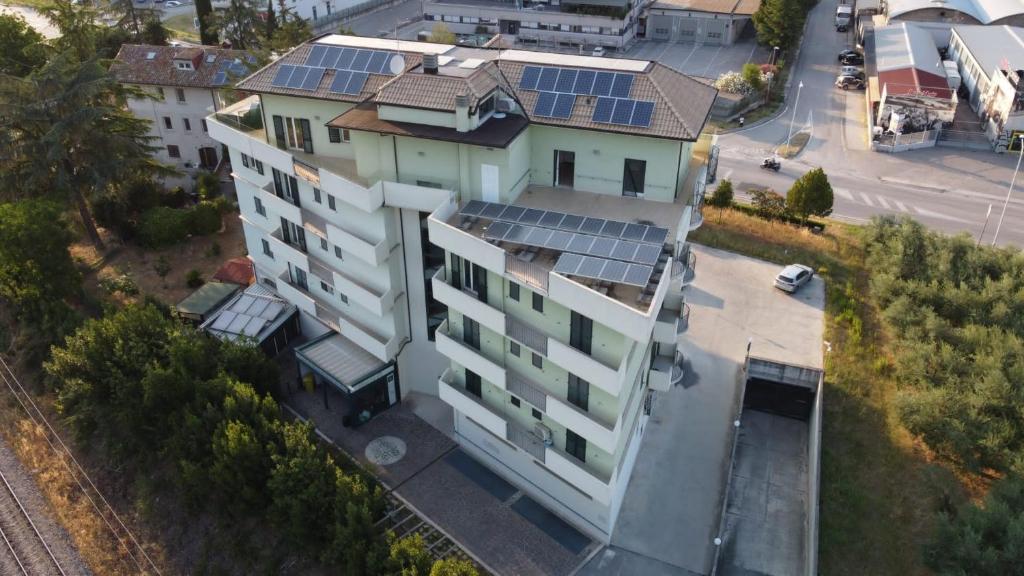
The future of Italy's hotel industry will depend not only on its ability to attract fresh investment but also on transforming fragmented hospitality businesses into financially resilient operators. Regional and relationship-driven banks can play a pivotal role in this transition—provided that lending decisions support sound business models rather than relying primarily on real estate collateral.
The real challenge is not hotel size. It is the ability to create sustainable value.
Italy's hospitality industry faces a structural paradox. A substantial proportion of its hotel real estate is held by independent operators that do not always possess the financial resources, management capabilities or organisational scale required to unlock the full potential of their assets.
A hotel may occupy a prime location, own a valuable property and enjoy a longstanding reputation within its destination without necessarily operating as a financially resilient business.
Real estate value is not the same as earnings capacity.
This distinction becomes particularly important when lenders assess financing requests involving acquisitions, business combinations or corporate restructuring.
Property assets may provide valuable collateral. However, it is the underlying business's ability to generate sustainable cash flow that ultimately determines its capacity to service and repay debt.
For regional banks, this raises an important strategic question: should they continue financing smaller hospitality businesses individually, or should they also support carefully structured consolidation initiatives capable of strengthening both individual operators and the destinations in which they operate?
There is no universal answer.
Not every hotel needs to join a larger group. Not every family-owned business is inefficient. And not every acquisition creates value.
Nevertheless, certain circumstances make maintaining the existing ownership and operating structure potentially riskier than undertaking a well-designed business transformation.
This is the perspective underpinning the analysis developed by Investimenti Alberghieri, which examines hospitality assets and businesses through their economic performance, financial sustainability and potential strategic alternatives.
1. Regional banking: shifting the focus from property financing to business financing
Relationships between banks and hotel operators have often been shaped by property valuations, mortgage security and longstanding relationships with business owners.
These factors remain relevant, but they are insufficient when assessing complex hospitality investments.
The European Banking Authority's Guidelines on Loan Origination and Monitoring emphasise robust credit assessment, repayment capacity and ongoing risk monitoring throughout the financing lifecycle.
In hospitality finance, four dimensions must therefore be considered separately.
The first is real estate value: the market value of the property in its current condition and under alternative scenarios.
The second is enterprise value and operating performance: the earnings and cash flows the hospitality business can sustainably generate.
The third is debt sustainability: the relationship between cash flow available for debt service and the borrower's financial obligations.
The fourth is management and execution capability: the expertise, organisational resources and operational discipline required to deliver the business plan.
Consider a hotel property with an estimated market value of €10 million.
While the property may provide substantial collateral, that valuation does not automatically justify a €6 million loan.
If the operating business cannot generate sufficient cash flow to meet scheduled interest and principal payments, the transaction may remain financially vulnerable despite the property's underlying value.
Credit analysis should therefore begin with repayment capacity before incorporating the available security package.
This approach is central to the hotel financing, debt structuring and investment sustainability analysis explored by Investhotel.
2. Why regional banks can facilitate hotel consolidation
Regional and relationship-driven banks often benefit from valuable local market knowledge.
They understand the business environment, the entrepreneurs operating within it, the characteristics of individual destinations and, in many cases, the historical financial performance of their borrowers.
This proximity can help identify opportunities for corporate reorganisation before underlying weaknesses develop into more serious financial difficulties.
Consider three independent hotels operating in the same destination.
The first owns a well-located property but generates insufficient operating profits.
The second delivers strong operating performance but lacks the equity capital required to finance further growth.
The third remains economically viable but faces an unresolved succession challenge.
Individually, these businesses present different limitations.
Within an appropriately structured industrial strategy, however, they may offer opportunities for operational integration, asset optimisation or corporate consolidation.
The bank's role should not be to identify buyers and sellers directly or assume responsibility for entrepreneurial decisions.
Rather, it should assess commercially credible proposals, evaluate their repayment capacity and determine whether financing can be structured within an acceptable risk framework.
Regional banks can become catalysts for hospitality consolidation without acting as real estate brokers or transaction intermediaries.
3. Consolidation does not necessarily require an acquisition
Hotel consolidation is frequently associated with larger operators acquiring smaller independent properties.
That interpretation is incomplete.
Consolidation can take several contractual, corporate and operational forms.
A corporate acquisition allows several hospitality businesses to be brought under common ownership.
A business lease arrangement may enable the property owner to retain the underlying real estate while transferring operating responsibility to another party.
A hotel management agreement allows an experienced operator to manage the business without necessarily acquiring the property.
Shared operating platforms can deliver economies of scale across legally independent hospitality companies.
Financial restructuring can also support consolidation by improving capital structures, debt maturities and repayment profiles.
The appropriate model depends on the economic, operational and ownership characteristics of the assets involved.
In certain circumstances, an owner may create greater long-term value by retaining the property and appointing a professional operator rather than pursuing an outright sale.
In other cases, divestment may represent the most economically rational option.
The distinction between property ownership, enterprise value and operating sustainability is a recurring theme in the investment and hospitality analysis published on robertonecci.it.
Before selecting a consolidation structure, investors must determine which operating and ownership model is most likely to generate sustainable economic value.
4. How consolidation can improve profitability: a financial illustration
To understand the industrial rationale for consolidation, consider three independent hotels offering a combined total of 180 rooms.
Assume that their aggregate annual revenue is €6 million and their combined EBITDA amounts to €900,000.
The resulting EBITDA margin is 15%.
Each hotel currently maintains its own administrative, commercial and operational functions.
A shared operating platform could potentially centralise selected activities, improve procurement efficiency, reduce administrative duplication and introduce a coordinated commercial strategy.
Assume that these initiatives generate €150,000 in recurring annual net operating efficiencies once fully implemented.
Combined EBITDA would increase from €900,000 to €1.05 million.
The EBITDA margin would rise from 15% to 17.5%, assuming revenue remains unchanged.
This represents a 16.7% increase in EBITDA.
Importantly, the improvement would not necessarily depend on higher room rates or occupancy.
It could result primarily from a more efficient operating structure.
The example illustrates a fundamental principle: enterprise value can be created by improving the efficiency of existing operations, not merely by expanding the number of properties under ownership or management.
However, higher EBITDA does not automatically translate into an equivalent increase in cash available for debt repayment.
Integration may involve upfront expenditure, restructuring costs, additional management resources and implementation delays.
The projected benefits must therefore be assessed against the costs and risks of achieving them.
The relevant question is whether the present value of the expected incremental cash flows exceeds the investment required to complete the integration.
This illustration is hypothetical and does not refer to any specific business or transaction.
5. Debt sustainability: why the DSCR matters
Improved operating profitability does not automatically make a consolidation transaction bankable.
Lenders must assess the cash flows that will actually be available to meet debt obligations.
One widely used metric is the Debt Service Coverage Ratio, or DSCR.
DSCR measures the relationship between Cash Flow Available for Debt Service (CFADS) and scheduled debt service, typically including principal repayments and interest.
Consider a transaction generating annual CFADS of €720,000 against scheduled annual debt service of €540,000.
The resulting DSCR is approximately 1.33x.
In this scenario, available cash flow exceeds scheduled debt service by approximately 33.3%.
While this indicates positive debt service coverage, it does not automatically establish that the transaction is suitable for financing.
Lenders must also evaluate the stability of projected cash flows and the effects of changes in revenue, operating expenditure and capital investment requirements.
What happens when cash flow declines?
Using the same example, the base-case CFADS is €720,000 and the DSCR is approximately 1.33x.
If available cash flow declines by 10%, CFADS falls to €648,000 and the DSCR decreases to 1.20x.
With a 20% reduction, CFADS falls to €576,000 and the DSCR declines to approximately 1.07x.
Under a more severe scenario involving a 30% reduction, CFADS falls to €504,000 and the DSCR decreases to approximately 0.93x.
In the final scenario, cash flow would no longer be sufficient to cover scheduled annual debt service in full.
This illustrates why sensitivity analysis is essential in hotel consolidation financing.
Assessing whether a transaction works under favourable assumptions is not enough.
Lenders and investors need to understand how much financial headroom remains when operating performance falls short of expectations.
The percentage reductions in this illustration relate to CFADS rather than revenue. Acceptable DSCR levels depend on the transaction, the lender's credit policies and the overall risk profile.
6. Which hotels are suitable for consolidation? Four different situations
Potential consolidation opportunities should be assessed by considering two fundamental variables: operating quality and financial resilience.
Combining these dimensions reveals four distinct situations.
Strong operations and a sound financial position
This type of business may be well positioned to become a consolidation platform.
It already demonstrates sustainable earnings, effective management processes and a financial structure that may support carefully planned expansion.
Potential strategies include acquiring additional hotels, developing a multi-property operating platform or expanding into complementary destinations.
Strong operations but a weak financial structure
In this case, the underlying operating model may be viable, while excessive leverage or inadequate capitalisation constrains the business.
Possible solutions include recapitalisation, debt restructuring, new equity investment or corporate reorganisation.
Consolidation may be appropriate where it produces a demonstrable improvement in the combined financial position.
Strong asset backing but inefficient operations
This situation can arise when the market value of a hotel property is not supported by the profitability of its operating business.
The most appropriate intervention may involve professionalising management, appointing a specialist operator or separating real estate ownership from day-to-day operations.
An outright acquisition is not necessarily the only viable solution.
Weak operations and financial distress
Where poor profitability and financial vulnerability occur simultaneously, consolidation requires particular caution.
Turnaround measures, restructuring, repositioning, conversion or divestment may be more appropriate.
Consolidation should never become a mechanism for combining inefficient businesses and transferring their weaknesses onto a larger balance sheet.
7. Geography is not just a location factor. It is a financial risk variable.
A hotel's location affects much more than the value of its underlying real estate.
It directly influences revenue generation, occupancy patterns, pricing power and cash flow stability.
A highly seasonal leisure destination has a different economic profile from an urban market supported by year-round corporate and leisure demand.
Transport infrastructure, accessibility, local attractions, economic activity and the quality of supporting services all influence demand.
Consolidation strategies must therefore account for geographic risk.
Combining three hotels within the same destination may create meaningful operating efficiencies while leaving the business exposed to the same seasonal demand cycle.
Conversely, a portfolio distributed across complementary destinations may provide greater diversification, although it may also introduce additional management and coordination costs.
Lenders must consider both effects.
The objective is not simply to increase the number of rooms controlled by a business, but to develop an operating platform capable of withstanding market fluctuations.
8. Management quality as a determinant of bankability
One of the main constraints facing independent hospitality businesses is organisational capacity.
An entrepreneur may operate a single hotel successfully without necessarily possessing the expertise or management infrastructure required to oversee five or ten properties.
Consolidation creates new organisational demands.
Financial planning, management reporting, operational coordination, human resources, investment oversight and commercial strategy all become increasingly important.
The development of efficient operating models and professional management structures is central to the hospitality advisory and operating expertise explored by Hotel Management Group.
Equally important is the ability to recruit and retain executives capable of leading organisational change.
The executive search, leadership assessment and senior recruitment activities associated with Vertex Executive Searchaddress the need to align management capabilities with the scale and complexity of expanding hospitality businesses.
For lenders, management quality is not simply an organisational consideration.
It is an essential component of execution risk.
A financially attractive business plan may fail if the organisation lacks the capabilities required to implement it.
9. Marketing and financial control: where operating synergies are created
A hotel operating platform must demonstrate that integration can generate measurable economic benefits.
Commercial strategy represents one of the most important potential areas of improvement.
Centralised digital marketing, stronger direct booking capabilities, improved organic visibility and more effective distribution management can all contribute to profitability.
The web marketing, content development and editorial planning methodologies explored by Hotel Marketing Lab support this approach, particularly where operators seek to strengthen direct demand generation and reduce excessive dependence on online travel agencies.
However, commercial improvements must be evaluated using financial results rather than visibility metrics alone.
A consolidation platform needs to understand the contribution of each hotel, identify opportunities for cost optimisation and measure the return generated by individual investments.
The performance measurement and operating cost control approaches developed by Hotel Control address this aspect of hospitality management.
At the same time, systematic use of operating data and market intelligence can improve forecasting and investment decisions.
The analytical perspective associated with Hotel Intelligence is relevant to this process, particularly where consistent information across several properties is required.
For lenders, reliable management information improves the ability to assess performance against the agreed business plan and identify emerging risks.
The quality of management information therefore becomes part of the overall credit assessment.
10. Generational succession: an opportunity for hospitality consolidation
Family-owned hotels frequently face succession challenges.
The next generation may be unwilling to assume direct responsibility for managing the hotel while remaining interested in retaining ownership of the underlying property.
This does not necessarily mean that the property should be sold.
Instead, succession can create an opportunity to reconsider the operating and ownership structure.
A family may retain the real estate while appointing a specialist operator.
It may contribute the hotel business to a larger operating platform.
Alternatively, a sale may represent the most efficient solution where continued ownership no longer aligns with the family's objectives.
Regional banks can support these transitions through appropriately structured financing, provided the proposed arrangements demonstrate economic viability and adequate repayment capacity.
The fundamental objective should be to prevent credit from becoming a means of postponing necessary strategic decisions.
Business continuity may require changes in ownership, governance or management.
Preserving a valuable property does not necessarily require preserving the operating model that has historically been associated with it.
11. When banks should be cautious about financing consolidation
Not every hotel consolidation project represents an attractive lending opportunity.
In certain circumstances, increasing the scale of a business can also increase financial risk.
This may occur when the acquisition price is inconsistent with sustainable earnings, projected synergies are insufficiently supported or incremental borrowing absorbs an excessive proportion of available cash flow.
Deferred capital expenditure represents another important risk.
A hotel acquisition may initially appear attractive when attention is focused primarily on the purchase price.
However, the full investment requirement must also include maintenance, regulatory compliance, refurbishment, technology and working capital.
If these expenditures are underestimated, the transaction may become substantially less attractive than originally anticipated.
Governance also matters.
Combining organisations with different operational practices without a credible integration plan can undermine expected efficiencies.
Consolidation creates value only when the financial and operational benefits exceed the costs and risks of integration.
12. The bankable investment memorandum: what lenders need to see
A credible hotel consolidation proposal should be supported by an investment memorandum capable of explaining the transaction from both an industrial and a financial perspective.
The starting point is a clear identification of the assets and businesses involved.
Property ownership, operating companies, contractual obligations, existing financing arrangements and potential liabilities must be distinguished.
The valuation process should separate the value of the underlying real estate from the value of the operating business.
The business plan should explain its assumptions regarding revenue, operating expenditure, capital investment and the timing of expected efficiencies.
The financing structure should identify the sources of capital, equity contribution, proposed debt, repayment schedule and available security.
Finally, sensitivity analysis should demonstrate how the transaction would perform under less favourable market conditions.
A robust investment memorandum should enable the lender to answer one essential question:
Is the transaction financeable because the underlying properties are valuable, or because the combined business can sustainably generate the cash flows required to repay its financial obligations?
The distinction is fundamental.
It separates asset-backed lending considerations from the assessment of a genuinely viable hospitality investment.
13. Consolidation as a strategy for regional economic development
A hospitality sector characterised by stronger and more professionally managed businesses may contribute to the competitiveness of entire destinations.
Greater investment capacity can support property refurbishment, service improvements, technology adoption and workforce development.
Larger operating platforms may also be better positioned to compete internationally and implement more sophisticated commercial strategies.
However, these outcomes should not be taken for granted.
Greater corporate scale does not automatically lead to better economic performance or stronger local economic benefits.
Consolidation may also involve organisational restructuring, the removal of duplicated functions and changes in relationships with local suppliers.
The regional impact of an aggregation should therefore be assessed through tangible outcomes, including productive investment, employment quality, sustainable profitability and improved destination competitiveness.
From this perspective, banking support can contribute to local economic development not simply by increasing credit volumes, but by financing investments capable of delivering lasting economic value.
14. Conclusion: banks can finance transformation, but they cannot replace strategy
Italy's hospitality industry needs more than additional capital.
It needs businesses capable of deploying that capital productively and sustainably.
Real estate ownership remains a defining characteristic of the sector, but property value alone cannot determine whether an investment is financially sound.
The challenge is to transform fragmented asset ownership and operating structures into businesses capable of generating earnings, producing cash flow and funding future investment.
Regional banks can play an important role in this process, particularly where their knowledge of local markets enables them to assess credible industrial projects.
Their involvement must nevertheless remain grounded in prudent lending standards, rigorous financial analysis and sound credit decisions.
Banks should not support consolidation simply because it increases the size of a hospitality business.
They should support transactions in which integration demonstrably improves competitiveness, profitability and repayment capacity.
The future of Italy's hotel industry will be determined not only by how many properties change hands, but by how many hospitality businesses become stronger, more competitive and more financially resilient.
The ultimate role of credit is to make that transformation possible when the underlying economics justify responsible financing.
Hospitality Advisory | Consolidation, Bankability and Asset Value Enhancement
Investimenti Alberghieri provides independent economic, financial and strategic analysis for hospitality assets, hotel investment projects and accommodation businesses.
Its analytical approach covers preliminary investment screening, asset valuation, operating sustainability, debt service capacity and the assessment of alternative ownership and management structures.
We do not operate as real estate brokers. Our work begins with an independent assessment of the investment dossier.
Only after completing the relevant analysis are potential strategies considered, including business leases, professional management, corporate restructuring, consolidation or divestment.
Hotel owners, investors, financial institutions and hospitality operators seeking to assess a potential consolidation, acquisition financing requirement or succession-related restructuring may submit their investment proposal for preliminary consideration.
Contact: info@investimentialberghieri.it
Website: https://investimentialberghieri.it/
Frequently Asked Questions
How can regional banks support hotel consolidation?
Regional banks can finance acquisitions, capital investment and corporate restructuring where the transaction demonstrates a credible business plan, appropriate equity capital and sufficient cash flow to service debt.
Is real estate collateral enough to secure hotel acquisition financing?
No. Property collateral may reduce certain credit risks, but lenders must also evaluate the borrower's operating performance, projected cash flows and ability to meet repayment obligations.
What are the main benefits of hotel consolidation?
Potential benefits include economies of scale, lower operating costs, professional management, stronger commercial capabilities, improved financial reporting and greater investment capacity.
What financial metrics are important when assessing hotel bankability?
Important metrics include EBITDA, cash flow available for debt service, DSCR, financial leverage, capital expenditure requirements and downside cash flow resilience.
When can hotel consolidation increase financial risk?
Consolidation may increase risk when acquisition prices are excessive, debt levels are unsustainable, integration costs are underestimated or expected operating synergies cannot be achieved.
Can hotel consolidation help address family business succession?
Yes. Consolidation, third-party management and corporate restructuring may provide alternatives for families seeking to preserve real estate ownership while ensuring the continued professional operation of a hotel business.
Institutional References
European Banking Authority — Guidelines on Loan Origination and Monitoring
https://www.eba.europa.eu/
Bank of Italy — Regional Economies and Credit Conditions
https://www.bancaditalia.it/pubblicazioni/economie-regionali/
Bank of Italy — Financial Stability Report
https://www.bancaditalia.it/pubblicazioni/rapporto-stabilita/
Methodological note: All numerical examples are hypothetical and are presented solely for illustrative purposes. This article does not constitute a credit assessment, investment recommendation, financing offer or real estate brokerage service.