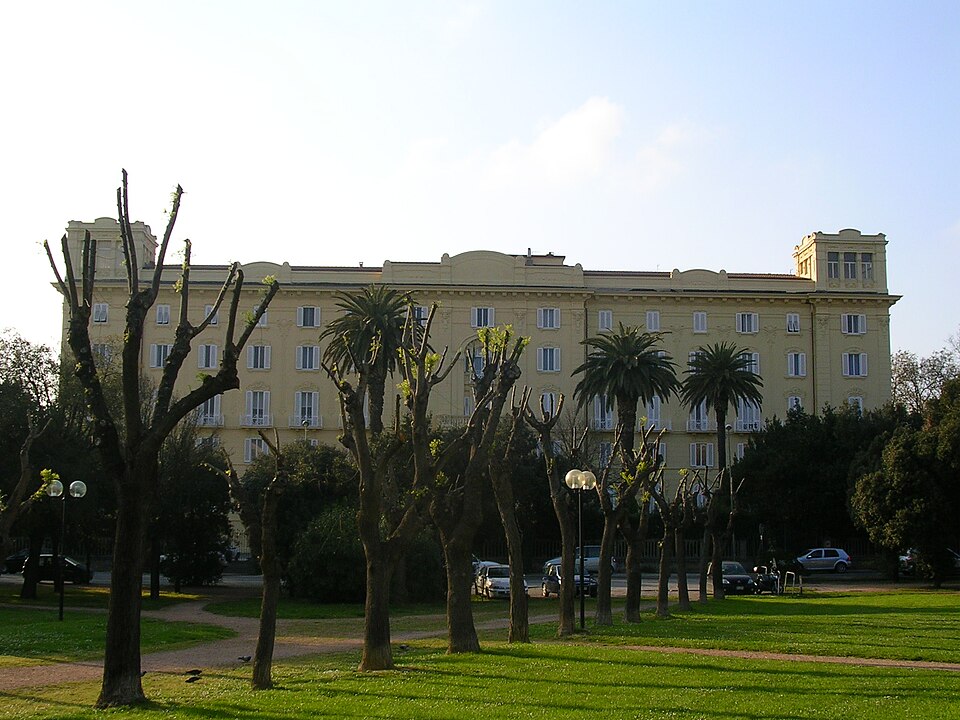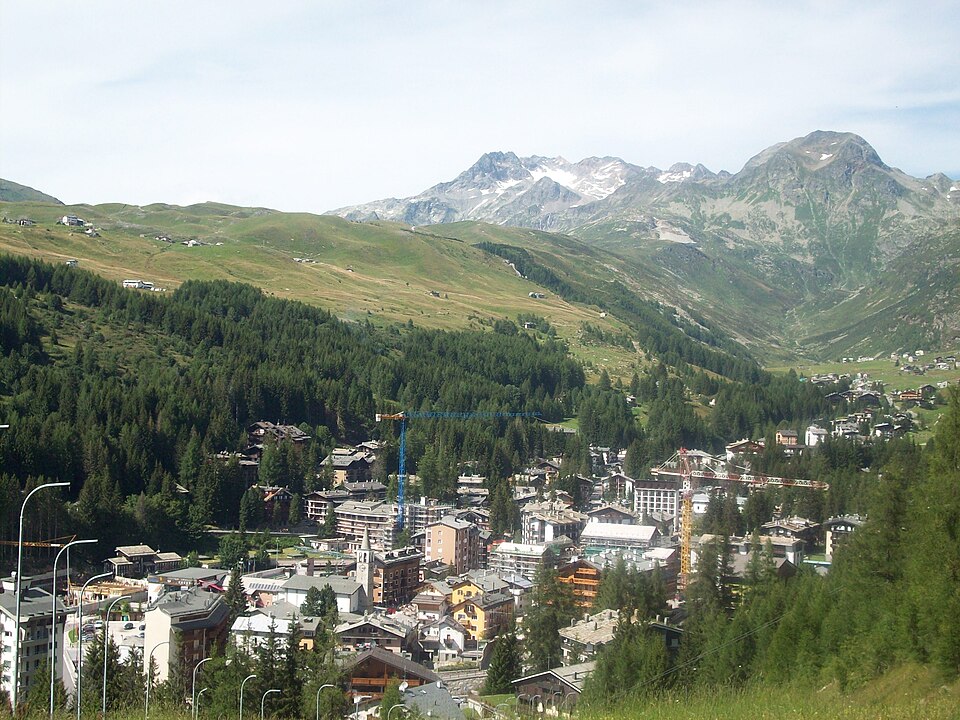
The Court of Sondrio opened Judicial Liquidation No. 12/2026 on 23 July 2026 in respect of Hotel Emet S.a.s. di Carlo Edoardo Trincavelli & C. and its partner Carlo Edoardo Trincavelli. The proceeding is therefore extremely recent. The public portal identifies Alessandro Cottica as trustee, Francesca Riccardi as delegated judge and 18 November 2026 as the date for the hearing on the examination of claims; at the time of review, no documents were publicly available in the relevant section. This is precisely what makes the case interesting: not because investors can anticipate or circumvent a future competitive process, but because they can begin assessing the transaction perimeter before a sale, business lease, continuity solution or other realisation strategy becomes fully defined. In hospitality, moreover, time is not neutral: every month of inactivity can erode staff continuity, distribution, reputation, commercial relationships and going-concern value. The real question is therefore not only what Hotel Emet is worth today, but how much of that value will still be recoverable when the transaction actually reaches the market.
In the market for hospitality special situations, there is a fundamental difference between:
arriving when a sale is published
and
arriving while the value-realisation strategy is still being shaped.
In the first case, you participate in a process.
In the second, you understand earlier:
what that process may eventually become.
It is the difference between:
Tender Monitoring
and
Early-Stage Origination.
Hotel Emet in Madesimo is a particularly interesting case through which to understand that distinction.
First Certainty: Judicial Liquidation Does Not Automatically Mean NPL
The proceeding opened by the Court of Sondrio is:
Judicial Liquidation No. 12/2026.
Based on the information currently available in the public domain, there is not enough evidence to classify the situation as an:
NPL.
The distinction matters.
A judicial liquidation describes an:
insolvency proceeding.
An NPL describes:
the impaired quality of a credit exposure, usually bank or financial debt.
The two may coexist.
But they are not synonymous.
A professional investor should therefore begin with the correct:
Legal Classification.
Before moving on to economic valuation.
The Proceeding Has Just Begun
The publicly available information indicates:
Proceeding: Judicial Liquidation
Number: 12/2026
Opening Date: 23 July 2026
Court: Sondrio
Delegated Judge: Francesca Riccardi
Trustee: Alessandro Cottica
Hearing for Examination of Claims: 18 November 2026.
At the time of review, no documents were yet publicly available on the proceeding portal.
This does not mean that the trustee has not already begun:
inventory work;
analysis;
valuations;
discussions;
strategy development.
It does mean, however, that the external market does not yet have access to a:
Structured Information Package.
And that is precisely what makes this phase:
Early Stage.
Early Stage Does Not Mean Buying Before Everyone Else
Engaging with a proceeding early does not mean seeking a shortcut around:
transparency;
competition;
equal access.
It means getting there earlier in order to:
understand;
analyse;
prepare;
structure;
express interest;
become execution-ready.
When the competitive process begins, the relevant rules must of course be respected.
The advantage of early-stage origination is not:
privileged access.
It is:
prepared access.
The First Question Is Not “How Much Does It Cost?”
It is:
“What actually belongs to the proceeding?”
That may sound obvious.
In distressed hospitality, it is not.
The proceeding concerns Hotel Emet S.a.s. and the partner named in the order.
But that alone does not establish whether a future transaction will include:
the real estate;
the operating business;
a business unit;
licences;
authorisations;
brand;
FF&E;
OS&E;
contracts;
employees;
goodwill;
database;
domains;
booking infrastructure.
Therefore:
Debtor Name ≠ Sale Perimeter.
This is one of the most important principles in the entire analysis.
Real Estate, Business and Operations Must Be Separated
Before discussing value, at least three distinct perimeters need to be reconstructed.
Real Estate
Who owns the property?
Is it included in the estate?
Are there:
mortgages;
encumbrances;
third-party rights;
leases;
easements;
urban-planning issues?
Business
What constitutes the hotel business?
Licences.
Furniture.
Equipment.
Brand.
Contracts.
Employees.
Systems.
Database.
Commercial channels.
Operations
Is the hotel operating?
Can it reopen?
How much CAPEX is required?
How much working capital?
What management model?
What pre-opening cost?
What timing?
Only after that can an investor determine:
Integrated Hospitality Value.
Hotel Emet Is a Recognisable Hospitality Asset
Historical commercial sources describe Hotel Emet as a 4-star mountain hotel.
The room count reported by different sources ranges between:
37
and
40.
That apparently minor discrepancy already contains an important lesson.
Underwriting should not rely on the room count displayed by an OTA or an old commercial listing.
It should verify:
Authorised Keys
Physical Keys
Saleable Keys
Out-of-Order Keys.
Because room count is an:
industrial
variable,
not merely a:
commercial
one.
Location and the Ski Ecosystem Matter
Hotel Emet is located in central Madesimo, and historical commercial descriptions identify amenities including:
restaurant;
bar;
ski storage;
parking;
terrace,
as well as close proximity to the ski area.
This is therefore not a generic tourism property.
It is an asset embedded directly within the:
Madesimo Hospitality Ecosystem.
That increases its potential relevance.
But it does not eliminate:
execution risk;
seasonality;
CAPEX risk;
operator risk.
The Hotel Website Signals an Operational Discontinuity
The website associated with the property currently states:
“Hotel Closed Due to Management Change.”
That wording must be interpreted cautiously.
It does not allow us to determine:
the cause of closure;
the legal status of the property;
operational availability;
the perimeter of the proceeding;
the trustee’s strategy.
But it makes one question unavoidable:
how much going-concern value can still be preserved?
That may be one of the most important questions in the entire case.
In Hospitality, Time Creates Value Leakage
A closed hotel does not lose only:
room revenue.
It progressively loses intangible assets that may be expensive and difficult to rebuild.
For example:
staff;
booking history;
customer database;
OTA ranking;
recent reviews;
direct traffic;
corporate accounts;
tour operator relationships;
supplier relationships;
brand awareness;
management know-how.
The sequence can become:
Closure
→
Commercial Disconnection
→
Staff Dispersion
→
Distribution Decay
→
Reputation Ageing
→
Higher Reopening Cost
→
Lower Recoverable Value.
This is:
Value Leakage Over Time.
Time Needs to Enter the Financial Model
In traditional real estate, time is often assessed mainly through:
holding costs;
interest;
taxes;
maintenance.
Hospitality adds another component:
Operating Franchise Decay.
The longer a hotel remains inactive, the wider the gap can become between:
Physical Asset Value
and
Recoverable Going-Concern Value.
A useful conceptual formula is:
Going-Concern Value Today
−
Delay Cost
−
Commercial Value Leakage
−
Incremental Reopening CAPEX
=
Recoverable Value Tomorrow.
This is where time becomes:
a financial variable.
Not merely a procedural one.
The Real Risk Is Not Only Physical Deterioration
A closed hotel may suffer from:
idle building systems;
humidity;
deferred maintenance;
deterioration of furniture and finishes.
But the most expensive deterioration may be invisible.
A general manager who takes another job.
A chef who leaves.
A housekeeping team that disperses.
A corporate account that moves elsewhere.
A tour operator relationship that ends.
A database that becomes stale.
An online reputation profile that stops receiving recent signals.
These assets may not appear in a real estate appraisal.
But they affect:
Reopening Cost
and the:
Ramp-up Period.
Going-Concern Preservation Can Therefore Create Value for Creditors
The question facing the proceeding may not simply be:
how much can be recovered through liquidation?
It may become:
how much value can be prevented from disappearing before liquidation occurs?
That is a material distinction.
The economics can be expressed as:
Gross Realisable Value
−
Value Leakage During the Proceeding
=
Net Recoverable Value.
Reducing the second term may be just as important as increasing the first.
Continuity and Liquidation Are Not Necessarily Opposites
The legal framework allows, where the relevant conditions and authorisations are satisfied, mechanisms that may preserve business value during a liquidation process.
For a hotel, this may involve assessing:
temporary continuation;
business lease;
unitary sale;
interim continuity;
other structures compatible with the proceeding.
The objective is not to keep an economically unsustainable activity alive.
It is to determine whether:
preserving the going concern
can generate a better recovery than:
the progressive disintegration of the business.
Asset Break-Up vs Business Preservation
Consider two extreme scenarios.
Scenario A — Asset Break-Up
The hotel remains closed.
Staff and commercial relationships disperse.
A future buyer must rebuild:
management;
staffing;
distribution;
pre-opening;
positioning.
Value is recovered predominantly through:
physical assets.
Scenario B — Business Preservation
Part of the operating organisation is preserved.
Where possible, the following remain usable:
licences;
systems;
brand;
distribution;
know-how;
commercial relationships.
A future buyer may then acquire:
Going-Concern Premium.
We do not yet know which scenario is realistically applicable to Hotel Emet.
And that is precisely why this is the right stage to analyse it.
A Business Lease Can Become a Bridge
In some cases, a business lease can create a sequence such as:
Interim Operator
→
Business Preservation
→
Competitive Sale
→
New Ownership.
The logic is attractive.
But it should not be romanticised.
It requires:
cash-flow forecasting;
working-capital analysis;
staffing plan;
utility-cost assessment;
CAPEX review;
insurance;
licensing;
contract analysis;
seasonality stress testing.
If the bridge produces:
Cash Burn
greater than the value it preserves,
the structure does not create value.
It destroys it.
The Economic Test of a Bridge Solution
The logic can be summarised as:
Going-Concern Value Preserved
−
Interim Operating Loss
−
Incremental CAPEX
−
Execution Risk
=
Net Value Preservation.
Only if the result is positive does a bridge solution have real economic logic.
That is the type of underwriting that separates an:
operational solution
from a simple:
continuity narrative.
Early Origination Means Preparing for Multiple Structures
An investor who discovers the opportunity only when a formal notice is published can usually do one of two things:
bid;
or not bid.
An investor who arrives earlier can prepare to assess several structures.
Acquisition
Purchase of the perimeter ultimately brought to market.
Business Lease
Lease of the operating business if continuity is considered useful.
Investor + Operator
Capital and operating expertise provided by separate parties.
Real Estate + OpCo
If the property and business require separate structures.
Management Solution
Where the proceeding and authorisation framework make an interim operating solution appropriate.
None of these options can be assumed to be available today.
The advantage lies in being able to:
underwrite multiple structures.
Monitoring, Origination, Execution Readiness
These are three different activities.
Monitoring
Knowing that:
Judicial Liquidation No. 12/2026
exists.
Origination
Understanding:
stage;
trustee;
perimeter;
assets;
operational status;
timing;
potential scenarios.
Execution Readiness
Being prepared with:
equity;
financing;
operator;
technical team;
business plan;
CAPEX assumptions;
guarantees;
deal structure.
When the process becomes competitive.
The advantage is not avoiding the auction.
It is reaching the auction:
with the underwriting already completed.
This Is Origination Intelligence
A professional database of special situations should not contain only:
hotel;
city;
proceeding.
It should also contain:
Stage
Decision Maker
Legal Perimeter
Real Estate Status
Business Status
Operating Status
Going-Concern Risk
Potential Deal Structures
CAPEX Risk
Timing
Next Decision Point.
That is the difference between:
information collection
and
investment origination.
Before Price Comes the Data Room
For Hotel Emet, at minimum, the following should be clarified:
property ownership;
asset perimeter;
inventory;
licences;
employees;
contracts;
FF&E;
OS&E;
building systems;
fire safety;
maintenance;
utilities;
compliance;
authorisations;
bookings;
PMS;
channel manager;
database;
domains;
brand;
OTA relationships;
tour operator relationships;
potential disputes.
Only then does it make sense to build:
Valuation.
Real Estate Value and Hotel Value Are Two Different Numbers
If the real estate were included in the transaction perimeter, the analysis should still separate:
Real Estate Value
Location.
Area.
Technical condition.
Alternative use.
Restrictions.
Technical CAPEX.
Hotel Business Value
ADR.
Occupancy.
RevPAR.
GOP.
Distribution.
Brand.
Management.
Working Capital.
Operating CAPEX.
Then:
Integrated Hospitality Value.
It is not necessarily true that:
Real Estate Value = Hotel Value.
In special situations, the difference between these values may be precisely where the opportunity lies.
The specialist guides published on Robertonecci.it cover hotel valuation, distressed hotels, contracts, governance and asset management.
Madesimo Is Already an Established Tourism Destination
This is important.
Madesimo does not need to be invented as a destination.
It already has:
skiing;
mountains;
outdoor activities;
trekking;
cycling;
leisure demand;
hospitality supply.
The strategic question for Hotel Emet is therefore not:
“Is there a market?”
It is:
“What share of that market can a repositioned Emet capture?”
That requires:
Competitive Set;
ADR Benchmark;
Room Product;
Target Guest;
Service Model;
Winter Segmentation;
Summer Segmentation;
Distribution Strategy.
Winter + Summer Needs to Become an Economic Equation
A mountain hotel should not be evaluated solely through the winter season.
But neither should it rely on a generic:
four-season
narrative.
The real model is:
Winter GOP
Summer GOP
Shoulder-Season Contribution
=
Annual Sustainable GOP.
The key metric is:
Profitable Operating Days.
Not:
Days Open.
Four-Season Does Not Mean 365 Days
An additional operating day where:
Revenue < Incremental Operating Cost
does not create value.
It destroys it.
Any season extension must cover:
staff;
energy;
housekeeping;
distribution;
F&B;
maintenance;
sales.
True season extension therefore means:
Incremental Operating Days with Positive Contribution Margin.
Otherwise it becomes:
Cost Extension.
Hotel Emet’s Scale Requires a Disciplined Operating Model
With an inventory of approximately 37–40 rooms, the risk is ending up with:
small-hotel revenue
and a:
full-service cost structure.
That requires close attention to:
lean staffing;
multifunctional roles;
technology;
outsourcing;
centralised revenue management;
direct booking;
dynamic pricing;
F&B contribution.
Hotel management should therefore be part of the due-diligence process.
Not a decision made after acquisition.
F&B Needs to Be Underwritten Separately
The historic presence of a restaurant and bar does not mean the future operating model should automatically replicate the previous one.
F&B may function as:
Amenity
Profit Centre
Demand Generator
Outsourced Function.
The question is not:
“How much revenue does it generate?”
It is:
“How much margin does it generate, and how much incremental ADR or demand does it support?”
The relevant metric should be:
F&B Contribution Margin.
CAPEX Comes Before the Maximum Bid
A future offer should be derived from:
Stabilised Hotel Value
−
Technical CAPEX
−
FF&E / OS&E
−
Pre-opening Costs
−
Working Capital
−
Value Leakage
−
Execution Risk Discount
=
Maximum Sustainable Acquisition Price.
This formula is even more important in a newly opened proceeding.
Because some costs may rise:
with time.
Delay Changes the Maximum Bid
If, between today and the eventual sale, there is an increase in:
physical deterioration;
reopening complexity;
staff rebuilding costs;
commercial ramp-up requirements;
CAPEX,
then the rational Maximum Bid may fall.
The sequence is:
Time
→
Value Leakage
→
Higher Reopening Cost
→
Lower Recoverable GOP
→
Lower Maximum Bid.
This is why:
procedural time
and
economic time
are not the same thing.
The proceeding may correctly follow its statutory timetable.
The business, meanwhile, continues to change in value.
Price Should Be the Output of Underwriting
The professional sequence is:
Legal Perimeter
→
Going-Concern Assessment
→
Technical Due Diligence
→
Market Analysis
→
Product Strategy
→
CAPEX
→
Operating Model
→
Stabilised GOP
→
Recoverable Asset Value
→
Maximum Bid.
Not:
Auction Price
→
Business Plan Built to Justify It.
That distinction separates:
investing
from
speculating.
Three Scenarios for Hotel Emet
Downside Case
The legal perimeter is complex.
The real estate is excluded or requires separate arrangements.
The going concern dissipates.
CAPEX is high.
Licences and staffing need to be rebuilt.
Prolonged inactivity extends the ramp-up period.
Result:
High Value Leakage + High Execution Risk + Low Recoverable Value.
Base Case
The perimeter is clarified within a reasonable timeframe.
CAPEX is sustainable.
The product is repositioned coherently within the Madesimo market.
The operating model is lean.
Winter demand is robust.
Summer contributes positive margin.
The ramp-up period remains manageable.
Result:
Sustainable Independent Mountain Hotel.
Upside Case
A meaningful portion of going-concern value is preserved.
Investor and operator are execution-ready.
CAPEX is targeted.
Distribution is professionalised.
Positioning is clear.
Winter + summer generate a high number of profitable operating days.
Delay is minimised.
Result:
Going-Concern Preservation + Faster Ramp-up + Asset Re-rating.
The Real Competitive Advantage Is Arriving Before the Teaser
If and when a structured teaser is released, the market will be able to see:
room count;
assets;
price;
deadline;
sale process.
That information will have:
low scarcity.
Before that point, however, the advantage lies in understanding:
what is missing;
which risks are forming;
which scenarios can already be prepared.
That is:
Pre-Market Underwriting.
It does not provide a right to preferential terms.
It creates the opportunity to be:
better prepared.
Early-Stage Engagement Should Demonstrate Execution Capability
The first message to a trustee should not be:
“How much do you want?”
It should be able to communicate:
track record;
financial profile;
type of interest;
operating capability;
technical team;
speed of due diligence;
possible structures;
ability to provide guarantees;
execution timetable.
The equation is:
Credibility
Capital
Operating Capability
Speed
=
Execution Readiness.
In a special situation:
certainty of execution
can be a fundamental component of proposal quality.
The Ten Questions That Need to Be Answered Now
Is the property itself part of the proceeding?
What is the exact business perimeter?
How many keys are authorised and saleable?
What is the real technical condition?
Which licences and authorisations can be preserved?
How much going-concern value still exists today?
How much value leakage could further delay create?
How much CAPEX will reopening require?
What Stabilised GOP can the hotel sustainably generate?
Which deal structure maximises both creditor recovery and investor return?
These are the central questions.
Price comes later.
Conclusion: Hotel Emet Is Interesting Precisely Because the Deal Is Not Yet Fully Visible
Judicial Liquidation:
No. 12/2026
was opened on:
23 July 2026.
The proceeding is still extremely recent.
Historical information describes a 4-star hotel in central Madesimo with an inventory of approximately:
37–40 rooms
and traditional hotel services.
But today we still do not know with sufficient public certainty:
what the realisation perimeter will be;
whether and how the property will be included;
how much going-concern value can be preserved;
which transaction structure will ultimately be chosen;
how much CAPEX will be required;
what the timing will be.
And that is exactly what makes the case interesting.
The sequence is:
Procedure Discovery
→
Early Contact
→
Legal Perimeter
→
Going-Concern Assessment
→
Value Leakage Analysis
→
Technical & Commercial Due Diligence
→
Investment Thesis
→
Execution Readiness
→
Competitive Process.
The question is not only:
“What is Hotel Emet worth today?”
It is:
“How much of that value will still be recoverable when the realisation process is ready?”
Because:
Going-Concern Value Today
−
Delay Cost
−
Commercial Value Leakage
−
Incremental Reopening CAPEX
=
Recoverable Value Tomorrow.
That is the real investment thesis.
The advantage is not:
buying before the auction.
It is being ready:
before the auction begins.
Because once a special situation becomes visible to the entire market:
information loses scarcity.
But:
execution capability continues to create value.
InvestimentiAlberghieri.it Advisory
InvestimentiAlberghieri.it analyses hotels in judicial liquidation, turnarounds, special situations, operator searches, business leases and hospitality opportunities before a structured sale process reaches the market.
For early-stage origination, business planning, hotel valuation, feasibility studies, due diligence, CAPEX analysis, operator search, business lease structuring, going-concern preservation and distressed hospitality transaction structuring:
info@investimentialberghieri.it
Complementary expertise and insights:
Robertonecci.it — hospitality advisory, valuations and specialist guides on distressed hotels, contracts and asset management
Investhotel.it — hotel acquisitions, disposals, turnarounds and hospitality transactions
HotelManagementGroup.it — hotel management, asset management, temporary management and performance optimisation