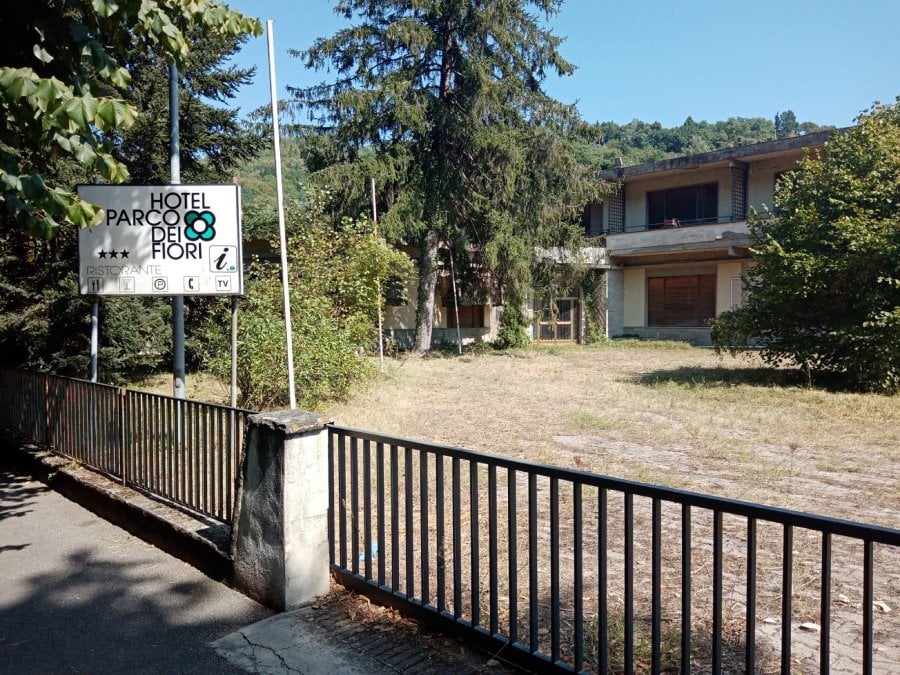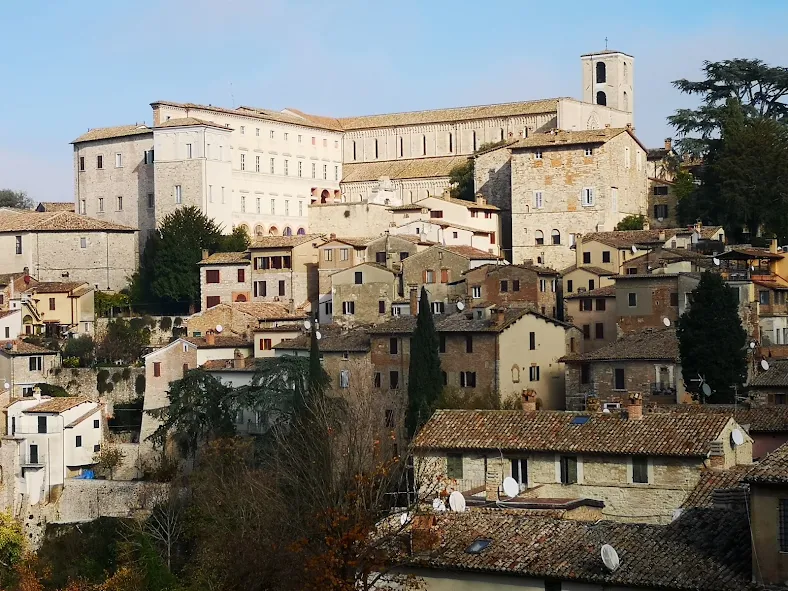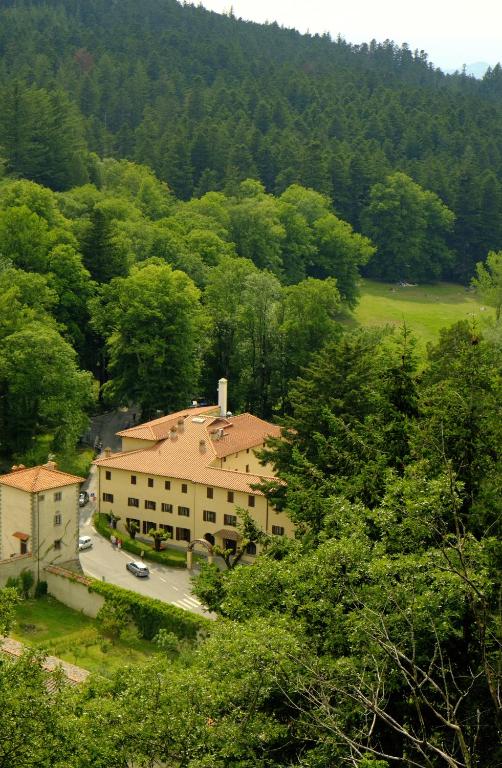
A 60-room hotel, a historic property, a well-known destination and reported annual losses exceeding €500,000. The case of Hotel Rifugio La Foresta in Vallombrosa is more than a local news story: it is a case study in hotel profitability, cost structure, real estate value and turnaround strategy. Because a hotel can be busy and still destroy capital. And because, before shutting it down, one should determine whether the problem lies with the asset itself or with the business model used to operate it.
Stefano Bandecchi has announced that Hotel Rifugio La Foresta in Vallombrosa will close by 30 September 2026, stating that he is no longer willing to sustain annual cash outflows exceeding €500,000.
The announcement has inevitably taken on a political and local dimension.
Yet, for anyone involved in hotel investment, the more relevant question is another:
How can a 60-room hotel, located in a recognised tourist destination and with part of its product recently renovated, end up absorbing half a million euros a year?
That is where this case becomes far more important than the news story itself.
Because it contains many of the issues an investor should examine before acquiring, repositioning, financing or turning around a hotel.
The first principle: a full hotel can still lose money
One of the most common misconceptions in hospitality is to equate high occupancy with profitability.
But:
Occupancy ≠ Profitability.
A hotel can achieve very high occupancy during certain periods and still produce negative financial results.
The reason is straightforward.
Profitability does not depend solely on how many rooms are sold.
It depends on the relationship between:
Occupancy × ADR × ancillary revenues − operating costs − property-related costs.
If ADR is too low, the cost structure is too heavy, or seasonality concentrates revenue into only a few months, the hotel may appear commercially successful while remaining economically fragile.
This distinction should sit at the heart of every hotel investment analysis.
At RobertoNecci.it, we have long highlighted a fundamental principle:
real estate value, operating business value and the hotel’s capacity to generate income must be assessed separately.
Confusing these three dimensions is one of the most expensive mistakes an investor can make in hospitality.
A 60-room hotel: start with the numbers
A hotel with 60 rooms theoretically offers:
60 × 365 = 21,900 available room nights per year.
Let us consider three purely illustrative scenarios.
Scenario 1 — Fragile business model
Average annual occupancy: 45%
Average ADR: €110
Theoretical room revenue:
21,900 × 45% × €110 = approximately €1.08 million
If the hotel also operates food & beverage and ancillary services, total revenue could of course be higher.
However, with a heavy cost base, year-round operations and significant seasonality, this level of revenue may be insufficient to support the organisation.
Scenario 2 — Sustainable business model
Average annual occupancy: 55%
Average ADR: €140
Room revenue:
21,900 × 55% × €140 = approximately €1.69 million
Including food & beverage and ancillary services, total revenue could theoretically exceed €2 million.
At that point, the decisive factor would become management’s ability to convert revenue into an appropriate GOP.
Scenario 3 — Repositioned business model
Average annual occupancy: 60%
Average ADR: €180
Room revenue:
21,900 × 60% × €180 = approximately €2.37 million
With restaurants, events, experiences and additional services, total revenue could theoretically increase further.
Three scenarios.
The same property.
The same number of rooms.
Completely different financial outcomes.
That is the point.
The value of a hotel depends not only on what it is today, but on what it can become under the right operating model.
The real question: what does “losing €500,000” actually mean?
The amount publicly referred to by the owner is financially significant.
But before interpreting it, we need to understand what that figure actually represents.
It could refer to:
-
negative EBITDA;
-
net operating losses;
-
negative cash flow;
-
shareholder funding;
-
capital expenditure;
-
extraordinary maintenance;
-
interest expense;
-
debt repayment;
-
working capital requirements;
-
or a combination of several of these items.
The distinction is crucial.
A hotel may operate close to EBITDA break-even while still requiring substantial shareholder funding for renovations and maintenance.
Alternatively, it may generate structurally negative EBITDA.
These are entirely different situations.
The first may primarily be a financial problem.
The second is an operating problem.
The third possibility is that both coexist.
To understand the situation properly, one would need to reconstruct the complete bridge:
Revenue → GOP → EBITDA → Cash Flow → CAPEX → Debt Service.
Without this analysis, referring generically to a “loss” risks oversimplifying the issue.
Break-even: the number every hotel investor should know
Before acquiring a hotel, an investor should know its break-even point.
In other words:
What minimum level of revenue and occupancy does the property need in order to stop losing money?
Let us assume, purely for illustration, that a hotel has annual fixed costs of €1.2 million and an average contribution margin of 65%.
The revenue required to reach break-even would be:
€1.2 million / 65% = approximately €1.85 million.
If actual revenue were only €1.5 million, the hotel would be structurally below break-even.
The question should therefore not be:
“How many rooms does it fill?”
but rather:
“What RevPAR does the hotel need to reach break-even?”
High occupancy and low ADR: a dangerous combination
A hotel may achieve high occupancy simply because it is selling too cheaply.
This is one of the most common traps in hospitality.
Consider two identical 60-room hotels.
Hotel A
Occupancy: 75%
ADR: €90
RevPAR:
€67.50
Hotel B
Occupancy: 60%
ADR: €150
RevPAR:
€90
Hotel B sells fewer rooms.
Yet it generates 33% more room revenue per available room.
And it may do so while incurring:
-
fewer housekeeping costs;
-
lower laundry costs;
-
lower utilities consumption;
-
fewer distribution commissions;
-
less pressure on staffing.
This is why occupancy on its own is an almost meaningless performance indicator.
Labour cost: the second major metric
According to press reports, the potential closure could affect approximately 17 employees.
Taken in isolation, that number tells us very little about whether the property is overstaffed.
The correct question would be:
How much revenue is generated per FTE?
An organisation of 17 employees could be:
-
highly efficient with €3 million in revenue;
-
sustainable with €2 million;
-
very expensive with €1.2 million.
The absolute headcount matters less than productivity.
Relevant indicators include:
Payroll / Revenue
Revenue / FTE
Rooms / FTE
GOP / FTE
Payroll / GOP
A hotel can function perfectly well from a commercial perspective while still carrying an organisational structure that is incompatible with its revenue base.
The third issue: seasonality
Vallombrosa has clear natural and cultural appeal.
However, being a recognised destination does not automatically mean being a destination capable of generating hotel demand twelve months a year.
The problem faced by seasonal and semi-seasonal hotels is often straightforward:
costs operate for twelve months; revenues do not.
If a property reaches high occupancy in summer but performs poorly during other periods, annual occupancy may still be insufficient to support the fixed cost structure.
In these situations, the solution is not necessarily to increase occupancy.
It is to increase the depth and diversity of demand.
Potential segments may include:
-
outdoor tourism;
-
trekking;
-
religious tourism;
-
corporate retreats;
-
wellness;
-
groups;
-
events;
-
small meetings;
-
international leisure;
-
themed weekends;
-
experiential tourism;
-
food & beverage;
-
short breaks.
The real question is therefore not:
“How many tourists visit Vallombrosa?”
but:
“How many different reasons are there to stay overnight in Vallombrosa throughout the year?”
Positioning can be more valuable than occupancy
A historic building facing an abbey and surrounded by a nature reserve does not necessarily have to compete as a conventional hotel.
It could potentially be positioned as a:
Heritage Hotel
Nature Retreat
Wellness Destination
Spiritual Retreat
Outdoor Resort
or as a combination of these concepts.
This is the difference between simply operating a hotel property and creating a hospitality product.
The strategic question is not:
How much can a room in Vallombrosa sell for?
The better question is:
How much might a guest be willing to pay for a distinctive experience in Vallombrosa?
That is where repositioning begins.
And, frequently, where value creation begins as well.
A higher ADR can radically change the value of the asset
Assume that repositioning allows the property to increase average ADR by just €30.
With 12,000 room nights sold per year:
12,000 × €30 = €360,000 in additional room revenue.
If a meaningful share of that incremental revenue flows through to GOP, the impact on EBITDA could be substantial.
And this leads to an even more important point.
If a hotel generates an additional €250,000 of EBITDA and the market applies a 10x multiple:
€250,000 × 10 = €2.5 million of potential additional value.
This is why hotel turnaround is not merely an operational issue.
It is also a real estate value-creation strategy.
Real Estate Value and Hotel Business Value are not the same thing
This case highlights a fundamental principle.
A beautiful property can contain a poor hotel business.
And a highly profitable hotel business can operate from an otherwise ordinary property.
Therefore:
Real Estate Value ≠ Hotel Business Value.
In transactions assessed through Investhotel.it, we always distinguish between:
-
the value of the real estate;
-
the value of the operating company;
-
the value of the management platform;
-
the potential value after repositioning;
-
the alternative-use value of the property.
This distinction is essential in hotel acquisitions, disposals, transformations and restructuring processes.
The real issue is forward-looking value
A professional investor should not acquire a hotel by looking only at historical EBITDA.
The analysis should consider:
Historical EBITDA
Normalised EBITDA
Stabilised EBITDA
Potential EBITDA
These are four completely different figures.
A hotel losing €300,000 today could theoretically generate €500,000 of EBITDA after an effective turnaround.
Or it could continue losing money.
The difference comes down to one thing:
the quality of the diagnosis.
That is precisely why proper hotel due diligence should precede any investment decision.
Infrastructure can destroy a business plan
The public discussion surrounding the property has also touched on water supply and other local infrastructure constraints.
Regardless of the specific allocation of responsibility, the issue is highly relevant from an investment standpoint.
Anyone buying a hotel must assess more than the building itself.
They must assess the wider operating environment in which the building exists.
Key areas include:
-
water supply;
-
electricity;
-
sewage and drainage;
-
accessibility;
-
parking;
-
landscape restrictions;
-
heritage restrictions;
-
fire safety compliance;
-
permitted use;
-
development potential;
-
the feasibility of adding a swimming pool or spa;
-
easements;
-
licences and permits;
-
maintenance costs.
A constraint that appears relatively minor during acquisition may ultimately compromise millions of euros of investment.
Is closing the hotel really the best option?
From an entrepreneurial perspective, closing a business that systematically destroys capital can be entirely rational.
But closure should ideally be the final stage of an analytical process.
Before shutting down a hotel, at least seven scenarios should be compared.
1. Operational turnaround
Reducing costs and improving productivity.
2. Revenue turnaround
Redesigning pricing, segmentation and distribution.
3. Repositioning
Changing the concept and increasing ADR.
4. Outsourcing management
Separating property ownership from hotel operations.
This type of strategy can also be structured through specialist operators such as HotelManagementGroup.it.
5. Business lease
Transferring operating risk to another hotel operator.
6. Disposal
Selling the asset to an investor with a different business plan.
7. Conversion
Redeploying the property to an alternative use.
The right decision should be driven by the economic value of each scenario.
Not by the emotion of the moment.
Highest and Best Use
Real estate finance is built around a fundamental concept:
Highest and Best Use.
It means identifying the most economically productive use of a property.
If a hotel is worth €4 million as a hospitality asset but €7 million under an alternative permitted use, conversion may be economically rational.
But the opposite can also be true.
If a hotel currently making losses could, after a turnaround, generate €600,000 of EBITDA and the market values that income stream at 10x:
€600,000 × 10 = €6 million.
Closing it without analysing that potential could mean destroying value.
The La Foresta case also offers a lesson for banks and investors
This issue does not concern hotel owners alone.
It also matters to:
-
banks;
-
investment funds;
-
loan servicers;
-
distressed investors;
-
family offices;
-
real estate investors.
When a hotel gets into financial difficulty, the first question is often:
How much is the property worth?
But another question should come first:
How much could the hotel generate if operated correctly?
Because collateral value and operating performance are connected.
A hotel that generates EBITDA can support debt.
A hotel that destroys EBITDA progressively weakens the quality of that debt.
A distressed hotel can be a problem. Or an opportunity.
Professional investors do not look exclusively for perfect hotels.
They also look for situations where there is a gap between:
current value
and
potential value.
That gap is precisely where investment returns can be created.
If an asset suffers from:
-
inefficient costs;
-
underpriced ADR;
-
weak positioning;
-
suboptimal management;
-
an underdeveloped product;
while at the same time benefiting from:
-
a strong location;
-
sufficient room inventory;
-
underlying demand;
-
identity;
-
repositioning potential;
then a turnaround opportunity may exist.
The real €500,000 question
The issue is ultimately not about deciding who is right in the disagreement between the owner and the local authorities.
The real economic question is:
Does the reported €500,000 represent the failure of the asset, or the failure of the business model being applied to that asset?
To answer that question properly, one would need to analyse:
-
RevPAR;
-
GOPPAR;
-
ADR;
-
occupancy;
-
payroll ratio;
-
F&B margins;
-
cost per occupied room;
-
break-even occupancy;
-
CAPEX;
-
normalised EBITDA;
-
stabilised EBITDA;
-
real estate value;
-
alternative-use value;
-
post-turnaround potential.
Only after completing this analysis can an informed decision be made as to whether a hotel should be:
closed, sold, converted, outsourced to an operator or relaunched.
Conclusion
The case of Hotel La Foresta in Vallombrosa highlights one of the most important principles in hotel investment.
A loss-making hotel is not necessarily a bad asset.
It may be:
a good property with the wrong business model.
Or:
a good product with the wrong cost structure.
Or even:
a well-managed hotel operating in a destination that cannot adequately support it.
These are three completely different diagnoses.
And they require three completely different strategies.
That is why, before buying, financing or closing a hotel, the key question should never be simply:
“How much is it losing?”
The better question is:
“What could it be worth if the underlying problem were fixed?”
It is precisely in the gap between those two answers that capital is created — or destroyed — in hospitality.
Hotel asset analysis, valuation and strategic advisory
For financial and operational analysis, hotel valuations, business planning, turnaround strategies, due diligence and assessments of alternatives including sale, management, business lease, repositioning and the introduction of new investors, further information is available through:
Contact: r.necci@robertonecci.it