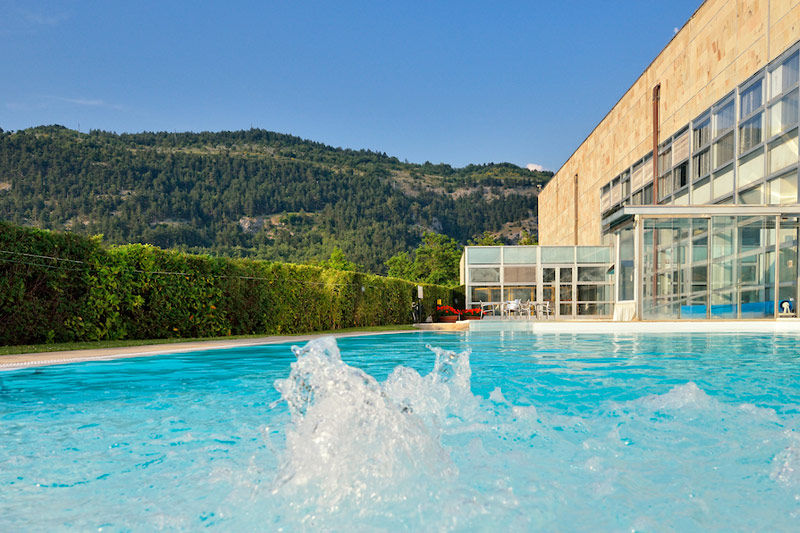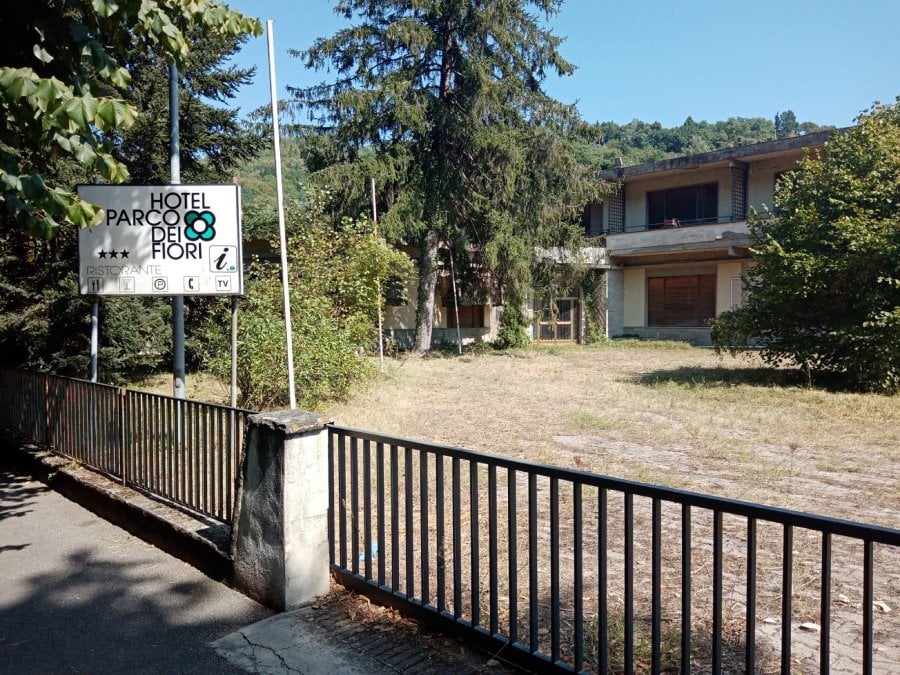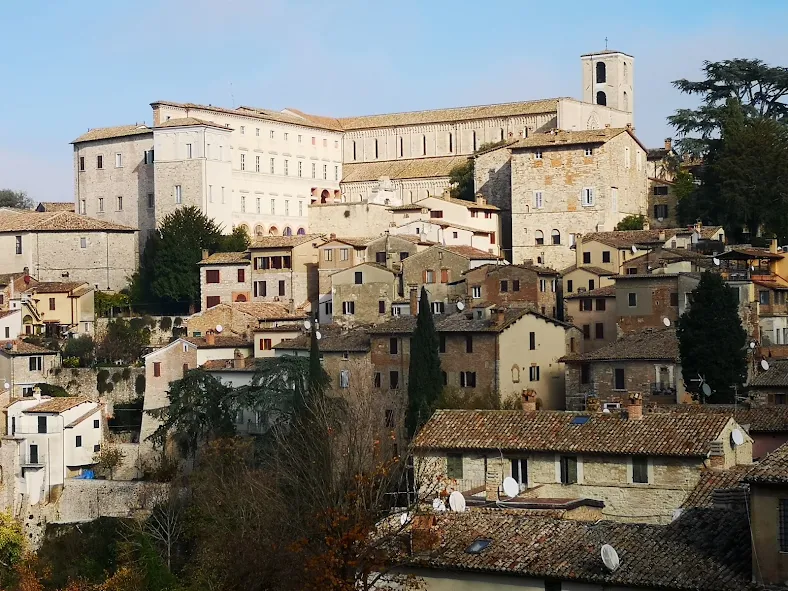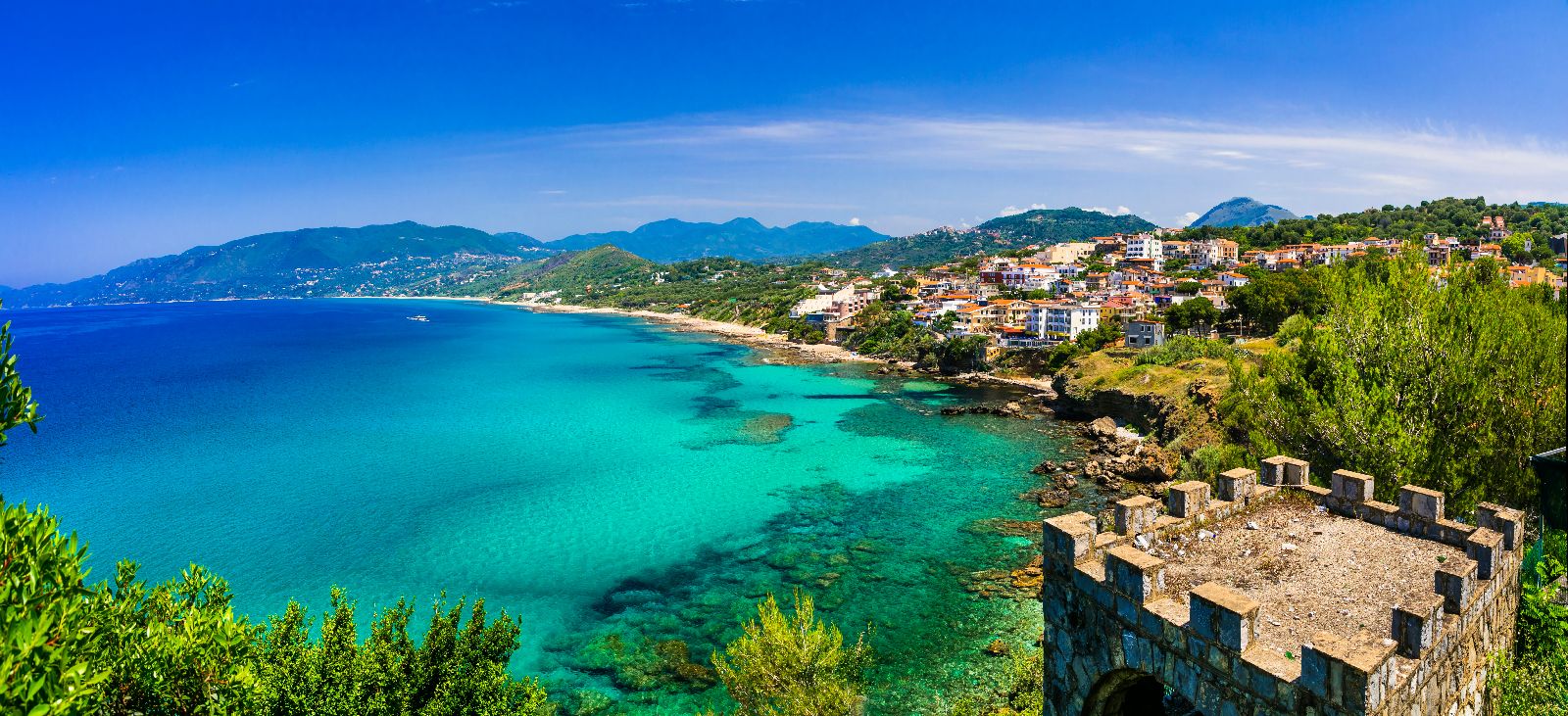
Thirty-seven rooms, approximately 3,380 square metres of commercial space, two swimming pools, sea views and a location in the heart of Cilento, just minutes from the beaches of Palinuro. Hotel San Paolo in Centola is currently non-operational and is being offered through a competitive sale process. A listing attributable to Astebook indicates a price of €1.2 million. But the real investment case is not the entry price: it is the amount of capital required to bring the hotel back to market, reposition it and turn it once again into an asset capable of generating enough EBITDA to remunerate both equity and debt.
The property is located in Via San Paolo, in the Municipality of Centola, province of Salerno, within close reach of central Palinuro.
The Astebook listing describes a hospitality complex of approximately:
3,380 sqm
including:
-
37 guestrooms;
-
two swimming pools;
-
common areas;
-
reception and guest-service spaces;
-
hotel operating areas;
-
a panoramic setting;
-
several rooms with sea views.
The property is described as:
vacant and currently non-operational.
The published documentation also indicates:
Deadline for requesting site inspections and documentation:
13 October 2026, 12:00 p.m.
Deadline for submitting offers:
20 October 2026, 12:00 p.m.
Potential competitive bidding session:
22 October 2026, from 9:00 a.m. to 12:00 p.m.
The party identified as responsible in the listing is AMCO S.p.A., while the process is managed by Astebook S.r.l.
The involvement of AMCO alone is not sufficient to classify the underlying exposure as UTP or NPL without additional documentation.
€1.2 Million for 37 Rooms: An Eye-Catching Number. But Potentially Misleading.
A property listing published by Astebook through Trovacasa indicates a price of:
€1,200,000.
On a purely arithmetic basis, spread across the existing 37 rooms, this equates to approximately:
€32,400 per key.
That figure is immediately attention-grabbing.
But it would be a mistake to conclude that an investor is acquiring 37 productive hotel rooms for just over €32,000 each.
Those rooms do not currently represent a stabilised hospitality product.
The relevant metric is therefore not:
Acquisition Price per Key
but:
Total Cost per Stabilised Key.
The Purchase Price Buys the Property. CAPEX Creates the Hotel.
The first step in any proper investment analysis is to separate:
Acquisition Price
from:
Total Investment Cost.
Depending on the actual technical condition of the property, bringing a non-operational hotel back to market may require:
-
structural works;
-
MEP upgrades;
-
fire-safety compliance;
-
energy-efficiency improvements;
-
guestrooms and bathrooms;
-
public areas;
-
swimming pools;
-
kitchens;
-
F&B facilities;
-
FF&E;
-
digital infrastructure;
-
pre-opening;
-
marketing;
-
working capital.
The real investment should therefore be assessed as:
**Acquisition Price
-
Transaction Costs
-
Due Diligence
-
CAPEX
-
FF&E
-
Pre-opening
-
Working Capital
-
Financing Costs
-
Contingency**
The result is the:
Total Cost Basis.
Returns need to be measured against this figure.
Not against €1.2 million.
Cheap Acquisition ≠ Cheap Investment
This transaction captures one of the core principles of distressed hospitality:
Cheap Acquisition ≠ Cheap Investment.
A relatively low entry price may be offset by:
-
substantial CAPEX;
-
reopening timelines;
-
seasonality;
-
cost of capital;
-
repositioning requirements;
-
working capital;
-
commercial ramp-up.
The right question is therefore not:
“How much am I paying for the hotel?”
It is:
“How much capital must I invest before the hotel starts generating cash flow again?”
37 Rooms: Sufficient Scale or Structural Constraint?
Thirty-seven rooms can represent an attractive scale for an independent leisure property.
But this does not automatically guarantee economic viability.
A hotel of this size needs to absorb, across a relatively limited number of keys:
-
management;
-
front office;
-
housekeeping;
-
maintenance;
-
administration;
-
utilities;
-
marketing;
-
distribution;
-
potentially F&B.
The critical question therefore becomes:
how much EBITDA per room must Hotel San Paolo generate to remunerate the capital invested?
In a small-to-mid-sized property, productivity per key is decisive.
Palinuro: Strong Destination, But Seasonality Must Be Modelled
The location clearly has value.
Palinuro is one of the best-known seaside destinations in Cilento.
The hotel also benefits from proximity to:
-
the sea;
-
Palinuro town centre;
-
the marina;
-
the Grotte di Capo Palinuro;
-
Cilento, Vallo di Diano and Alburni National Park.
But a well-known leisure destination does not eliminate the most important structural issue in Italian resort hospitality:
Seasonality.
The analysis needs to measure at least:
-
actual operating days;
-
monthly occupancy;
-
ADR by period;
-
shoulder-season performance;
-
average length of stay;
-
domestic demand;
-
international demand;
-
groups;
-
tour operating;
-
direct bookings.
The relevant KPI is not August occupancy.
It is:
Annualised Operating Performance.
The Real Financial Risk: Seasonal Revenue, Annual Debt
This is the issue that must be built into the financing model.
A leisure hotel may generate most of its EBITDA within a limited number of months.
Debt does not necessarily follow the same pattern.
Interest, amortisation and covenants generally operate on an annual basis.
This creates a potential mismatch:
Seasonal Cash Flow vs Annual Debt Service.
A hotel may be highly profitable in July and August and still have a fragile capital structure.
The business plan must therefore test not only annual DSCR, but also:
-
minimum cash balances;
-
liquidity buffers;
-
working capital;
-
repayment frequency;
-
debt service profile;
-
funding requirements during low season.
In leisure hospitality:
when cash flow is generated matters almost as much as how much cash flow is generated.
A Full Summer Does Not Necessarily Mean a Profitable Investment
A seaside destination can achieve very high occupancy during peak months.
But hotel value depends on:
total room nights sold over the year × margin generated per room.
A business plan built almost entirely around July and August risks overstating the asset’s ability to generate EBITDA.
The questions are:
-
when should the hotel open?
-
when should it close?
-
what does it cost to extend the season?
-
is there sufficient demand in April, May, September and October?
-
which customer segments can support shoulder-season trading?
Seasonality management is not a marketing slogan.
It is a financial variable.
Market First. Project Second.
The correct sequence should not be:
buy → refurbish → look for guests.
It should be:
Market → Product → Business Plan → Architecture → CAPEX.
Before defining the refurbishment budget, the investor needs to understand:
-
which customer to target;
-
at what positioning;
-
at what ADR;
-
with what average length of stay;
-
through which channels;
-
with what service level.
Only then should the building be redesigned.
Hotel, Boutique Hotel or Resort?
The Astebook listing itself identifies several potential directions:
-
hotel reactivation;
-
resort conversion;
-
boutique hotel;
-
upgraded hospitality product.
These are not equivalent strategies.
Scenario A — Traditional Leisure Hotel
A relatively straightforward product strongly linked to beach-season demand.
Advantages: lower complexity and potentially lower CAPEX.
Risks: high seasonality, pricing pressure and OTA dependence.
Scenario B — Boutique Hotel
Less emphasis on volume and more focus on:
-
design;
-
experience;
-
service;
-
ADR;
-
direct booking.
This could create stronger differentiation.
But it requires CAPEX consistent with the intended premium pricing.
Scenario C — Resort
The two swimming pools could support a more experience-led product.
But the question becomes:
are 37 rooms enough to support genuine resort infrastructure?
More services can generate higher revenue potential.
But also:
-
higher payroll;
-
higher maintenance;
-
more utilities;
-
more CAPEX.
Scenario D — Upscale Leisure Hotel
A move towards a higher-end positioning could increase:
-
ADR;
-
RevPAR;
-
spend per guest;
-
F&B revenue;
-
ancillary revenue.
But the model works only if:
Price Premium > Incremental Cost.
Highest and Best Use: Knowing It Is a Hotel Is Not Enough
The property was built and is being marketed as a hospitality asset.
But the investor still needs to determine its:
Highest and Best Use.
In this case, the question is primarily which hospitality configuration maximises value.
The analysis should compare:
Existing Product
with:
Optimised Product.
The difference may come from:
-
room count;
-
room size;
-
suite mix;
-
F&B;
-
pools;
-
guest services;
-
distribution;
-
branding;
-
management model.
The Historical Room Count May Not Be the Optimal One
The existing 37 rooms should not automatically be treated as untouchable.
It may turn out that:
fewer rooms + higher ADR + better product
creates more value than:
37 rooms + lower ADR + undifferentiated positioning.
Or the opposite.
The metric to maximise is not:
Number of Keys.
It is:
EBITDA per Available Key.
The Pools Need to Create Value, Not Just Cost
The two swimming pools are a distinctive feature.
But every amenity must also be assessed economically.
A pool creates:
-
maintenance;
-
energy;
-
water consumption;
-
staffing;
-
safety obligations;
-
insurance costs.
It therefore needs to support:
-
higher ADR;
-
higher occupancy;
-
better positioning;
-
longer stays;
-
higher ancillary spend.
The correct question is:
how much incremental EBITDA does each amenity generate?
F&B: Service or Revenue Centre?
For a leisure hotel, food and beverage can play a central role.
The analysis should consider:
-
breakfast;
-
half board;
-
full board;
-
restaurant;
-
bar;
-
pool service;
-
external customers.
F&B can be a:
Profit Centre
or a:
Cost Centre.
It depends on:
-
food cost;
-
payroll;
-
pricing;
-
covers;
-
table turns;
-
external demand.
The Real KPI Is Total Revenue per Guest
For a leisure property, RevPAR alone may be insufficient.
Investors should also measure:
Total Revenue per Guest
including:
-
room;
-
restaurant;
-
bar;
-
pool-related services;
-
transfers;
-
experiences;
-
excursions;
-
ancillary services.
A guest paying €180 for a room but generating €260 in total revenue may be economically very different from a guest acquired at €150 through a high-cost distribution channel.
Distribution Cost: Margin Comes After Revenue
Palinuro is a market where:
-
OTAs;
-
tour operators;
-
direct bookings;
-
travel agencies;
-
groups;
may carry very different weights across the season.
The business plan should therefore distinguish:
Gross Room Revenue
from:
Net Room Revenue.
Headline ADR does not tell the full margin story.
You need to deduct:
-
commissions;
-
marketing;
-
discounts;
-
customer acquisition costs.
Hotel value partly depends on controlling:
Customer Acquisition Cost.
Commercial Performance Becomes Asset Value
This is where hotel operations and real estate intersect.
A hotel with:
-
a high direct-booking share;
-
strong reputation;
-
CRM;
-
customer database;
-
advanced pricing;
-
SEO visibility;
-
recognisable branding;
can generate materially more EBITDA than the same physical asset with weak distribution.
The commercial layer developed through HotelMarketingLab.it therefore becomes an integral part of the investment case.
Commercial Performance → EBITDA → Asset Value.
Hotel Intelligence Before CAPEX
Before investing substantial capital in repositioning, the investor needs a robust competitive benchmark.
HotelIntelligence.it represents the ecosystem’s data and decision-intelligence layer, covering:
-
competitors;
-
pricing;
-
demand;
-
reputation;
-
seasonality;
-
data;
-
decision intelligence.
The key questions include:
-
what ADR is genuinely achievable?
-
what RevPAR is sustainable?
-
which hotels are truly comparable?
-
which services command a pricing premium?
-
which segments can extend the season?
CAPEX should respond to data.
Not intuition.
As Is Value vs Stabilised Value
Investors need to distinguish two completely different concepts.
As Is Value
What is the property worth today:
-
vacant;
-
non-operational;
-
in its current condition?
Stabilised Value
What could it be worth after:
-
CAPEX;
-
reopening;
-
repositioning;
-
ramp-up;
-
EBITDA stabilisation?
The real value creation equation is:
Stabilised Value – Total Cost Basis = Development Value Creation.
That is the decisive calculation.
Debt Capacity: Financing Comes After the Business Plan
The existence of real estate collateral does not automatically determine how much debt the project can support.
A lender will assess:
-
Total Cost Basis;
-
equity;
-
CAPEX;
-
timeline;
-
EBITDA;
-
DSCR;
-
Loan to Cost;
-
Loan to Value.
But in a leisure property, the timing of cash generation is equally important.
An apparently acceptable annual DSCR may still conceal months of insufficient liquidity.
The financing structure should therefore also consider:
-
cash reserves;
-
debt service reserves;
-
working capital;
-
repayment frequency;
-
potentially seasonal amortisation structures.
The key question is:
how much debt can the hotel’s cash flow support throughout the entire year?
This is the type of financing analysis developed through Investhotel.it.
Collateral protects the lender.
But:
Cash Flow Repays Debt.
Stabilised EBITDA: The Number That Ultimately Determines Value
The entire investment case ultimately converges on:
Stabilised EBITDA.
The operating model needs to include:
-
ADR;
-
occupancy;
-
RevPAR;
-
room revenue;
-
F&B;
-
ancillary revenue;
-
payroll;
-
utilities;
-
distribution;
-
marketing;
-
maintenance;
-
GOP;
-
management costs;
-
EBITDA.
Only then is it possible to estimate:
-
value;
-
Debt Capacity;
-
equity requirement;
-
IRR;
-
Exit Value.
Stress Test: What Happens if the Season Is Shorter?
The business plan should include at least three scenarios.
Base Case
Expected CAPEX, timing and operating performance.
Downside Case
-
higher CAPEX;
-
shorter season;
-
lower occupancy;
-
weaker ADR.
Severe Downside
A combination of:
-
cost overruns;
-
delayed opening;
-
higher borrowing costs;
-
weaker demand;
-
greater OTA dependence;
-
fewer economically productive months.
The right test is:
does the equity survive the Downside Case?
If the answer is no, the entry price alone does not make the investment attractive.
Time to Market: Losing One Season Can Be Extremely Expensive
For a leisure hotel, the calendar matters more than for many other asset classes.
A delay of only a few months can mean losing:
an entire summer season.
That means, at the same time:
-
zero revenue;
-
interest expense;
-
operating costs;
-
working capital;
-
tied-up capital.
For this reason:
Time to Market = Financial Variable.
The redevelopment schedule should be built backwards from the target opening date.
Brand or Independent?
Another strategic question concerns the commercial model.
Hotel San Paolo could theoretically operate as:
-
an independent hotel;
-
a soft-brand affiliate;
-
a franchise;
-
a third-party managed property;
-
a white-label hotel.
Each model brings:
-
fees;
-
standards;
-
distribution;
-
brand contribution;
-
CAPEX implications;
-
different degrees of autonomy.
There is no universally superior option.
The right model is the one that maximises:
Net Owner Return.
Lease, Management Contract or Direct Operation?
The operating structure also needs to be assessed.
Lease
More predictable rent and lower direct exposure to operating performance.
Management Contract
The owner remains more exposed to performance but benefits from professional management.
Direct Operation
Maximum control, but also maximum operating risk.
White Label
Professional management with greater branding flexibility.
HotelManagementGroup.it focuses precisely on the relationship between ownership, management and execution.
The contract should follow the investment strategy.
Not the other way around.
Operating Control Comes Before Returns
A hotel does not generate EBITDA simply because it has been refurbished.
It generates EBITDA because it is managed well.
That requires:
-
budgeting;
-
cost control;
-
food cost management;
-
payroll control;
-
energy management;
-
productivity;
-
revenue management;
-
forecasting;
-
reporting.
HotelControl.it addresses this part of value creation.
The real investment does not end at opening.
It begins at opening.
An Integrated Analysis Through the Ecosystem
A case such as Hotel San Paolo requires several disciplines to work together.
RobertoNecci.it provides the strategic perspective on the hospitality industry.
InvestimentiAlberghieri.it analyses assets, CAPEX, scenarios and investment sustainability.
Investhotel.it focuses on capital structure, Debt Capacity and DSCR.
HotelControl.it measures costs, KPIs and operating performance.
HotelIntelligence.it integrates market data and decision intelligence.
HotelMarketingLab.it focuses on pricing, distribution and demand generation.
HotelManagementGroup.it addresses management, organisation and execution.
The result is an integrated framework:
real estate + market + CAPEX + finance + operations + commercial strategy + management.
The 15 Questions to Answer Before Making an Offer
1.
What is the real technical condition of the property?
2.
How much CAPEX does it require?
3.
What is the CAPEX per key?
4.
Are 37 rooms the optimal room count?
5.
What is the hotel’s Highest and Best Use?
6.
Hotel, boutique hotel or resort?
7.
What ADR is genuinely achievable?
8.
What annualised occupancy is realistic?
9.
How far can the season be extended?
10.
What is the Total Revenue per Guest?
11.
What is the Stabilised EBITDA?
12.
What is the Total Cost Basis?
13.
How much Debt Capacity can the hotel support even during low season?
14.
What is the Stabilised Value?
15.
How much value remains for equity after CAPEX, debt, seasonality and execution risk?
Without answers to these questions:
€1.2 million is a price.
Not yet an investment.
The Hotel San Paolo Investment Equation
The case can be summarised as follows:
**Location
-
Real Estate
-
37 Keys
-
Two Pools
-
Sea View
-
Repositioning Potential
– CAPEX
– Seasonality
– Distribution Cost
– Debt Service Mismatch
– Execution Risk
= Investment Case**
The value is not in the first half of the equation.
It is in the final result.
Conclusion
Hotel San Paolo contains several of the characteristics that can make a value-add leisure investment compelling:
a recognised destination, sea views, manageable scale, 37 rooms, two swimming pools and a vacant asset that can potentially be repositioned.
The indicated €1.2 million entry price may immediately attract attention.
But the acquisition price does not determine whether the transaction will create value.
What determines value is:
CAPEX + positioning + seasonality + distribution + management + finance.
A hotel is not worth what it costs to buy.
It is worth the cash flow it can generate after all required capital has been invested.
And in leisure hospitality there is an additional rule:
Generating EBITDA is not enough. It must be generated in the right months, and in sufficient quantity to support twelve months of capital, operating costs and debt service.
That is the real test for Hotel San Paolo.
The question is therefore not:
“Are 37 rooms at €1.2 million cheap?”
It is:
“What Total Cost Basis is required to transform those 37 rooms into a competitive hotel, and what Stabilised Value can that investment create after absorbing seasonality and Debt Service?”
Do not buy the rooms. Buy the investment case.
CTA — The Dossier Comes Before the Offer
Are you assessing:
-
hotels;
-
resorts;
-
leisure properties;
-
non-operational assets;
-
repositioning opportunities;
-
distressed hospitality;
-
redevelopment projects?
InvestimentiAlberghieri.it provides independent preliminary analysis before capital-allocation decisions are made.
We assess:
-
the asset;
-
the market;
-
Highest and Best Use;
-
CAPEX;
-
CAPEX per key;
-
Total Cost Basis;
-
business plan;
-
Stabilised EBITDA;
-
Debt Capacity;
-
DSCR;
-
seasonal cash-flow profile;
-
operating scenarios;
-
downside case;
-
Stabilised Value;
-
Exit Value.
We do not intermediate the purchase price. We analyse the value and economic sustainability of the investment case.
For enquiries:
info@investimentialberghieri.it
Methodological Note
This article is based on information published by Astebook concerning the hospitality property located at Via San Paolo snc, Centola, identified as Hotel San Paolo.
The Astebook listing reports approximately 3,380 sqm of commercial area, 37 rooms, two swimming pools, vacant possession and a currently non-operational status.
The published information indicates 13 October 2026 at 12:00 p.m. as the deadline for requesting site inspections and documentation, 20 October 2026 at 12:00 p.m. as the deadline for submitting offers, and 22 October 2026, from 9:00 a.m. to 12:00 p.m., as the potential bidding window in the event of multiple offers.
AMCO S.p.A. is identified as the responsible party in the listing. AMCO’s involvement is not interpreted in this article as independent evidence that the underlying exposure is classified as UTP or NPL.
A property listing published by Astebook through Trovacasa indicates a price of €1,200,000. The main Astebook page reviewed does not display the property price in the accessible text. The figure should therefore be verified against the applicable sale rules and current documentation before any investment decision or offer is made.
References to boutique hotel, resort, upscale positioning, operating models and financial performance are methodological scenarios only and do not constitute confirmation of their technical, planning or commercial feasibility.
Any investment decision requires a full review of the sale documentation and the technical, cadastral, planning, legal, tax and financing position of the asset.