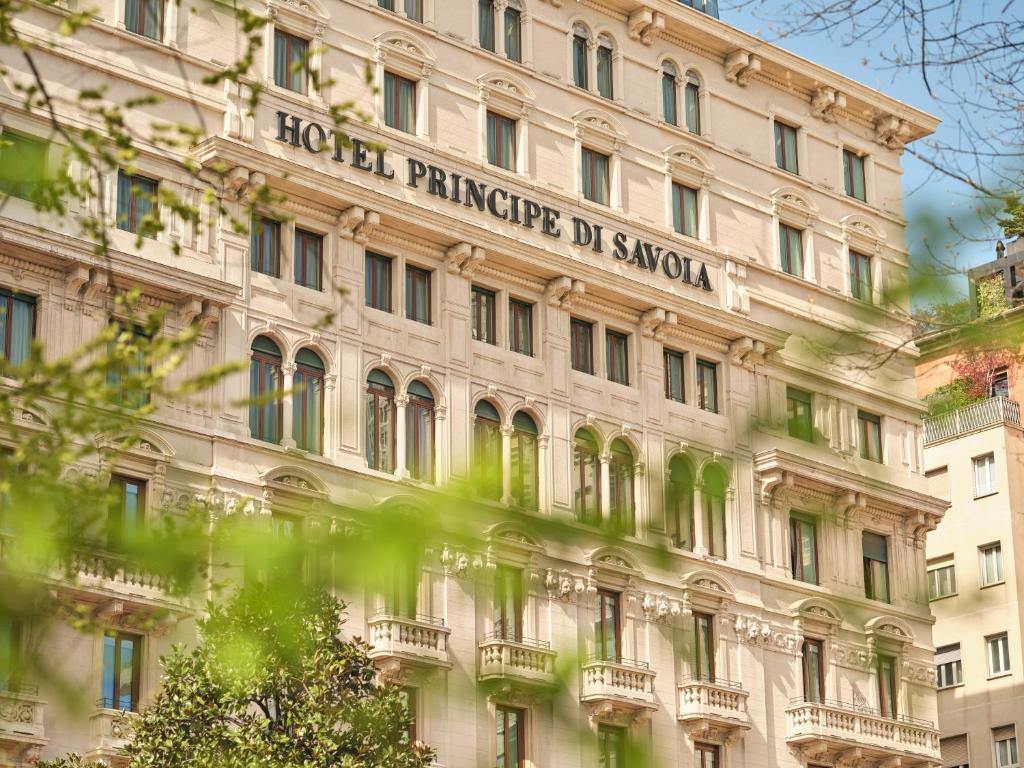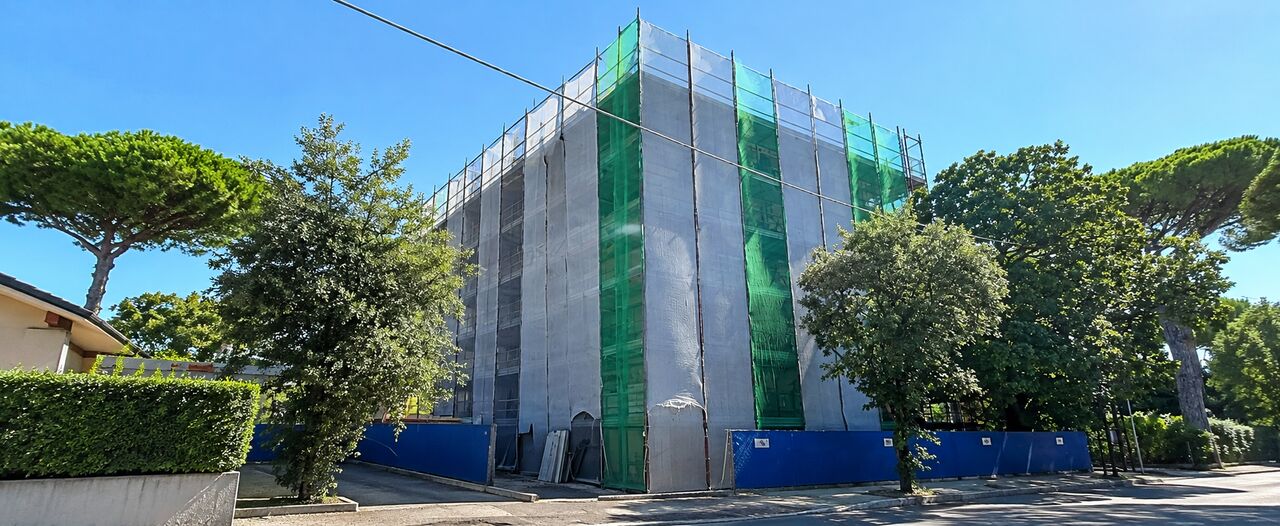
Public funding, real estate value creation and debt sustainability: two regional programmes designed to support the transformation of Italy's hospitality assets. The opportunities are significant, but investment viability ultimately depends on the strength of the underlying business plan.
InvestimentiAlberghieri.it | Hospitality Investment Advisory & Finance | Updated 12 October 2026
Executive Summary
Sardinia has extended the application deadline for its Albergo Diffuso (distributed hotel) incentive programme to 17 October 2026, offering grants of up to €300,000 per project. Meanwhile, Emilia-Romagna's EuReCa Tourism Fund provides financial support of up to €150,000 per business, with applications scheduled to close on 30 October.
Together, the two programmes represent approximately €13.5 million in originally allocated public funding.
Yet the central question extends well beyond access to government incentives. What matters is whether those incentives can be translated into financially sustainable investments, stronger operating performance and measurable increases in hotel asset values.
For hotel owners, investors and lenders, public funding should be viewed as one component of a comprehensive investment strategy—not as a substitute for commercial viability, disciplined capital allocation or rigorous financial due diligence.
1. Hotel Investment and Public Incentives: Government Funding as a Strategic Capital Lever
Across Italy's hospitality sector, public incentive programmes are becoming increasingly relevant to hotel refurbishment, property conversion and the development of new accommodation concepts.
Rising capital requirements, the need to modernise existing hotel stock and lenders' growing emphasis on debt repayment capacity have made disciplined investment planning more important than ever.
Against this backdrop, two regional initiatives deserve particular attention:
-
Sardinia: €2.5 million allocated to the development and refurbishment of distributed hotels, with grants of up to €300,000 per project. Extended deadline: 17 October 2026, 5:00 p.m.
-
Emilia-Romagna: Approximately €11 million in initial funding for the EuReCa Tourism programme, offering financial incentives of up to €150,000 per eligible business. Published deadline: 30 October 2026, subject to the availability of funds.
The financial distinction between these programmes is fundamental.
Sardinia primarily provides non-repayable grants towards eligible investment expenditure. Emilia-Romagna focuses on improving access to credit and reducing financing costs through interest subsidies and guarantee mechanisms.
A capital grant reduces the net economic cost of an investment. An interest subsidy reduces the cost of borrowing. Neither automatically guarantees profitability.
Understanding this distinction is essential for hotel owners, property investors and financial institutions seeking to develop credible, bankable hospitality investment cases.
2. Sardinia: Deadline Extended to 17 October for the Distributed Hotel Programme
The Autonomous Region of Sardinia has allocated €2.5 million to micro and small enterprises planning to develop or refurbish distributed hotels.
The initiative supports an accommodation model that brings together historic building restoration, destination development and urban regeneration.
Eligible projects may receive non-repayable grants of up to €300,000, with funding potentially covering up to 100% of certain eligible expenditure, subject to the programme's terms and conditions.
A specific 25% limitation applies to property acquisition and building works under the relevant provisions of the scheme, making the composition of eligible expenditure a critical consideration.
The Extension: A Significant Development for Investors
Through Determination No. 2115/31875 of 9 October 2026, reflected in the regional information updated on 12 October, Sardinia extended the deadline for submissions through its SIPES application platform.
The revised deadline is 17 October 2026 at 5:00 p.m.
The extension is particularly relevant to businesses that have already made substantial progress in preparing their applications but require additional time to finalise the supporting documentation.
However, it does not automatically alter the programme's financial conditions, eligibility requirements or assessment procedures.
Official source: Autonomous Region of Sardinia — Programme Documentation and Extension
The Distributed Hotel as a Real Estate Regeneration Strategy
The investment appeal of the Albergo Diffuso model extends beyond the availability of government grants.
Distributed hotels can create an integrated hospitality business by bringing together existing properties that, when considered individually, may have limited income-generating potential.
Converting these properties into a coordinated accommodation operation can create a distinctive hospitality product while preserving their connection to the surrounding community.
From a tourism perspective, the concept may appeal to travellers seeking authenticity, local character and an experience closely associated with the destination.
From an investment perspective, however, its operating structure presents specific challenges.
Accommodation dispersed across separate buildings can increase housekeeping, maintenance, logistics and operational supervision costs.
The commercial success of the project therefore depends on management's ability to control these complexities without undermining service quality or profitability.
Financial Case Study: A 12-Room Distributed Hotel in a Historic Village
Consider the following illustrative investment scenario.
| Financial Indicator | Assumption |
|---|---|
| Total investment | €500,000 |
| Assumed grant | €200,000 |
| Theoretical net economic investment cost | €300,000 |
| Guest rooms | 12 |
| Average annual occupancy | 60% |
| Average daily rate (ADR) | €125 |
| Estimated annual room revenue | €328,500 |
| Assumed EBITDA | €82,125 |
| EBITDA margin on room revenue | 25% |
The scenario assumes that the project is completed and the estimated grant is actually awarded. It is not an assessment of eligibility under the programme.
The EBITDA figure is an illustrative operating assumption rather than a market-validated forecast. It assumes that all relevant operating costs are reflected in the stated margin, while excluding any additional revenue streams.
Under these assumptions, the grant would represent 40% of the total investment.
While material, this reduction in the theoretical net investment cost is insufficient on its own to establish the project's financial attractiveness.
To translate EBITDA into cash flow available to investors or lenders, a detailed assessment must also consider working capital requirements, taxation, maintenance capital expenditure, financing obligations and the timing of grant disbursements.
The potential residual value of the properties is another important factor, particularly in determining whether the business can remain viable under less favourable trading conditions.
The central investment question is not simply how much funding can be obtained, but how much sustainable economic value the completed project can generate.
Further analysis of hotel asset valuation and investment performance is available through InvestimentiAlberghieri.it, while financing structures and investment sustainability are explored in greater depth on Investhotel.it.
Key Risks to Assess Before Committing Capital
A professional investment assessment for a distributed hotel should address at least seven areas:
-
Planning compliance, property ownership and legal availability of the buildings.
-
Consistency of the project with the regulatory requirements governing distributed hotels.
-
Eligibility of individual categories of expenditure.
-
Local tourism demand, competitive positioning and seasonality.
-
Additional operating costs arising from the physical dispersion of accommodation units.
-
Working capital requirements and potential delays between expenditure and grant disbursement.
-
The risk of the grant being rejected, reduced or subsequently withdrawn.
The most important mistake to avoid is treating the maximum advertised grant as funding that has already been secured.
3. Emilia-Romagna: EuReCa Tourism Provides Up to €150,000 in Financial Support
Emilia-Romagna's EuReCa Tourism Fund offers a potentially valuable financing mechanism for businesses seeking to refurbish, expand or reposition hospitality assets.
The programme has an announced initial allocation of approximately €11 million and aims to facilitate an estimated €50–60 million in total investment.
This investment figure is a mobilisation target, not a confirmed amount of capital already deployed.
The initiative involves the regional administration, Cassa Depositi e Prestiti and participating mutual guarantee institutions, known in Italy as Confidi.
Which Businesses Are Eligible?
The programme targets SMEs meeting the relevant eligibility requirements and operating within qualifying accommodation categories, including:
-
Hotels, hotel residences and condhotels.
-
Campsites, holiday villages and marina resorts.
Subject to specific conditions, the scheme may also accommodate businesses that own or have legally recognised rights over properties intended for the development of new qualifying accommodation operations.
Eligible Investment Activities
The programme supports projects involving refurbishment, modernisation, expansion, replacement of furnishings and equipment, and the development of new guest services.
Investments related to digital transformation, innovation and sustainability may also qualify, subject to the scheme's requirements.
The minimum eligible project value is €200,000, excluding VAT, while qualifying bank financing may range from €100,000 to €1.4 million.
Financing may cover up to 100% of eligible project costs, subject to the applicable programme conditions and the lender's credit assessment.
How Does the Financial Support Work?
The scheme combines an interest subsidy, calculated according to the programme rules, with an additional fixed contribution of €10,000.
The interest subsidy may be calculated using an annual rate reduction of up to six percentage points, subject to the applicable ceiling of 80% of the relevant borrowing costs as determined under the scheme.
Total financial support is capped at €150,000 per business.
The discounted value of the subsidy is paid in a single instalment following loan disbursement, subject to the prescribed procedure.
This mechanism can improve the economics of a financing transaction, but it does not convert the underlying bank loan into a non-repayable grant.
Debt remains debt. The subsidy changes the cost of borrowing; it does not eliminate the company's repayment obligations or credit risk.
Official source: Emilia-Romagna Region — EuReCa Tourism Fund
Remaining Funding: A Critical Variable
As displayed on 12 October 2026, the ArtigianCredito programme administrator's website reported €7,304,024.99 in remaining funds.
This figure represents the amount shown at the time of consultation, rather than a guarantee that funding will remain available for any particular application.
The balance may change as applications are processed and financing transactions are approved.
Investors and advisers should therefore check the latest information before initiating or completing an application.
ArtigianCredito — EuReCa Tourism and Remaining Funding
An Essential Requirement: Bank and Confidi Approvals Must Precede the Grant Application
The regional FAQs clarify an operational requirement of considerable importance.
An application for the subsidy can only be submitted once the relevant bank and Confidi approvals have been obtained.
This condition fundamentally changes how the opportunity should be approached.
Identifying a promising project and preparing a grant application is not enough.
The applicant must first structure a financeable transaction, supported by a credible business plan and a positive assessment from the participating financial institutions.
The process therefore follows a defined sequence: preliminary investment assessment, project structuring, credit due diligence, required financing approvals and subsequent subsidy application.
The FAQs also address restrictions relating to eligible expenditure, the combination of public aid and post-award obligations.
Failure to comply with the applicable business commencement and operating continuity requirements may result in the full withdrawal of the financial benefit.
4. Financial Modelling: Can a Hotel Sustain an €800,000 Refurbishment Programme?
Consider a hotel planning an €800,000 refurbishment programme, financed through a combination of shareholder equity and bank debt.
The following assumptions illustrate the importance of debt service capacity.
| Financial Parameter | Assumption |
|---|---|
| Total investment | €800,000 |
| Equity contribution | €200,000 |
| Bank financing | €600,000 |
| Loan term | 10 years |
| Illustrative fixed annual interest rate | 5% |
| Approximate annual debt service | €77,700 |
| Base-case annual CFADS | €110,000 |
| Base-case DSCR | 1.42x |
The model assumes constant annual repayments and excludes the potential effects of the EuReCa subsidy.
Cash Flow Available for Debt Service (CFADS) must be calculated after the relevant cash outflows, including taxes, changes in working capital and maintenance capital expenditure.
Three Scenarios to Measure Financial Resilience
| Scenario | Annual CFADS | DSCR |
|---|---|---|
| Downside: 25% below base case | €82,500 | 1.06x |
| Base case | €110,000 | 1.42x |
| Upside: 15% above base case | €126,500 | 1.63x |
Under the upside scenario, the business retains a stronger margin of safety in meeting its debt obligations.
In the downside scenario, debt service coverage becomes substantially tighter.
The analysis demonstrates why investment sustainability cannot be measured solely by comparing expected revenue against initial capital expenditure.
The more relevant question is whether the business can generate sufficient cash to meet its financial obligations under both expected and adverse operating conditions.
An investment that appears attractive under optimistic assumptions may become financially vulnerable when occupancy, ADR or operating margins fall below expectations.
This is particularly relevant when investments combine equity, bank financing and public-sector support.
Detailed financial modelling, capital structure assessment and hospitality investment planning are among the areas explored through Investhotel.it.
5. Comparing the Two Schemes: Which Can Create More Investment Value?
The relative attractiveness of the Sardinian and Emilia-Romagna programmes cannot be determined simply by comparing their maximum benefits.
| Parameter | Sardinia | Emilia-Romagna |
|---|---|---|
| Initial allocation | €2.5 million | Approx. €11 million |
| Maximum incentive | €300,000 | €150,000 |
| Main instrument | Non-repayable grant | Interest subsidy and guarantees |
| Investment focus | Distributed hotels | Accommodation refurbishment and development |
| Principal risk | Eligible expenditure, upfront funding and operations | Bankability, debt costs and cash flow |
| Published deadline | 17 October 2026 | 30 October 2026 |
Sardinia may deliver a substantial reduction in the theoretical net cost of qualifying development projects.
EuReCa may improve the financial sustainability of investments requiring external borrowing.
For the Sardinian programme, particular attention should be paid to the classification of eligible expenditure and the ability to fund the project before reimbursement or grant payment.
For EuReCa, the central issues are borrowing costs, cash generation and the company's ability to service debt throughout the loan term.
In both cases, the financial benefit must be assessed net of associated costs, compliance obligations and operating or financing risks.
An incentive should enhance the economics of an otherwise sound transaction, not become the sole justification for proceeding.
6. The Strategic Risk: Investing Simply Because a Grant Is Available
One of the most significant weaknesses in investment decision-making arises when the availability of public funding becomes the primary reason for committing capital.
This approach can lead to overinvestment, inefficient asset allocation and operating costs that cannot be justified by market demand.
Consider a hotel undertaking a €1 million refurbishment programme and receiving a hypothetical €150,000 financial benefit.
The theoretical net economic investment cost would be €850,000.
If the investment generated only €35,000 in additional annual free cash flow, the simple payback period on the theoretical net cost would exceed 24 years.
The example excludes the investment's residual value and the time value of money, but illustrates the underlying principle.
Government funding can improve an economically viable investment. It cannot automatically turn a weak business proposition into a sustainable one.
This is why hospitality capital expenditure must be assessed against its potential effects on ADR, occupancy, RevPAR, operating margins and long-term asset value.
Technology and commercial investments also need to be linked to measurable economic outcomes.
Hotel Marketing Lab examines hotel marketing, distribution strategy and direct booking performance, with a focus on commercial efficiency.
Hotel Intelligence addresses the use of data, performance metrics and decision-support systems.
Hotel Control focuses on financial controls, management reporting and the measurement of operational performance.
Taken together, these disciplines are relevant to determining whether an investment can generate sustainable returns beyond the immediate benefit of an incentive.
7. From Public Funding to a Bankable Investment Case
Accessing a public incentive should form part of a broader investment appraisal process.
A professional hospitality investment memorandum should assess the asset, market conditions, operating model, capital expenditure requirements and financing structure within a coherent financial framework.
Seven analytical dimensions are particularly important.
1. Asset Due Diligence
Assessment of the property's physical characteristics, technical condition, planning status, legal documentation and potential constraints affecting the proposed investment.
2. Market Analysis
Evaluation of tourism demand, competitive positioning, comparable properties and the asset's ability to attract profitable customer segments.
3. Business Planning
Preparation of multi-year financial projections based on transparent and defensible operating assumptions.
4. Capital Expenditure Assessment
Detailed analysis of investment costs, contingencies, implementation schedules and future maintenance requirements.
5. Financing Structure
Assessment of the balance between equity, bank debt, government incentives and working capital requirements.
6. Risk Assessment
Development of alternative scenarios, sensitivity analyses, debt service coverage tests and financial stress testing.
7. Asset Value-Creation Strategy
Assessment of direct operation, hotel leasing, management contracts and potential alternative ownership or disposal strategies.
This framework makes it possible to distinguish the underlying economic value of a hotel asset from the financial benefits associated with a particular incentive programme.
Investment planning must also reflect the ownership structure of the property and the allocation of operational responsibilities between owners and managers.
Hospitality management, asset advisory and operational value creation are among the areas covered by Hotel Management Group.
The broader entrepreneurial, financial and strategic dimensions of the hospitality industry are explored on RobertoNecci.it.
A genuinely bankable hotel project is built on evidence of sustainable cash generation, not simply on the availability of subsidised capital.
8. A Broader Outlook for Hospitality Financing in Italy
On 9 October 2026, Emilia-Romagna announced a further package of measures designed to support business financing and investment.
Among the initiatives presented was an extension of the EuReCa 2021–2027 platform to additional economic sectors, with a separate allocation of €7.6 million and a forthcoming application window.
The Region also indicated its intention to introduce a new measure specifically targeting accommodation businesses through non-repayable grants.
These initiatives are distinct from the existing EuReCa Tourism Fund, whose published deadline is 30 October 2026.
Their allocations should therefore not be added to the approximately €13.5 million covered by this article.
Nevertheless, the announcement suggests an important direction for future hospitality financing strategies.
The interaction between bank lending, public guarantees, investment grants and private capital may play an increasingly significant role in the transformation of Italy's accommodation infrastructure.
Source: Emilia-Romagna Region — Business Financing Measures, 9 October 2026
9. Conclusion: Sustainable Investment Comes Before Public Funding
The extension of Sardinia's distributed hotel programme and the continued availability of EuReCa Tourism present two relevant opportunities for hospitality owners and investors.
These schemes can contribute to the regeneration of existing properties, the modernisation of accommodation businesses and improved access to investment financing.
However, the decisive factor is not the nominal amount of public support available.
Investment decisions must be based on a project's ability to generate operating profits, produce sustainable cash flow and create long-term asset value.
Public incentives should therefore be treated as components of the capital structure, rather than sufficient reasons to proceed with an investment.
This distinction is especially important in hospitality, where financial viability depends simultaneously on property characteristics, operational efficiency, product quality and the behaviour of tourism demand.
Public funding can accelerate an investment. Only a financially sound business plan can turn that investment into lasting value.
InvestimentiAlberghieri.it | Hospitality Investment Advisory and Financial Analysis
InvestimentiAlberghieri.it supports hotel entrepreneurs, property owners, investors and hospitality operators in the economic, financial and strategic assessment of hotel investments.
Our approach begins with an independent professional analysis of the investment dossier, rather than acting as a real estate or financial intermediary.
Depending on the nature and complexity of the assignment, our advisory services may include:
-
Preliminary hospitality investment assessments.
-
Hotel business plans and integrated financial models.
-
CAPEX analysis and debt sustainability assessments.
-
Profitability analysis, cash flow forecasting and scenario modelling.
-
Hotel asset value-creation strategies.
-
Preliminary assessment of projects against public funding eligibility criteria.
Professional investment dossier assessments typically start from €5,000 plus applicable VAT, with final fees determined by the scope and complexity of the assignment.
Specialist administrative work relating to the preparation, submission or management of grant applications, where required, is subject to separate agreement.
Request a Preliminary Hospitality Investment Assessment
To submit a project for consideration, please provide the property's location, accommodation category, number of rooms, proposed investment amount and principal financial or strategic objectives.
Contact: info@investimentialberghieri.it
Suggested email subject: Hospitality Investment Assessment – Public Funding Opportunities 2026
SEO Box — English-Language Publication
| Field | Recommended Content |
|---|---|
| SEO Title | Italy Hotel Grants 2026: Sardinia & Emilia-Romagna Deadlines |
| Meta Description | Italy hotel incentives 2026: Sardinia extends its deadline to 17 October, EuReCa closes 30 October. Explore grants, loan support and investment viability. |
| URL Slug | italy-hotel-grants-2026-sardinia-emilia-romagna |
| Primary Keyword | Italy hotel grants 2026 |
| Category | Hospitality Finance / Hotel Investment / Government Incentives |
| Search Intent | Informational and investment advisory |
| Target Audience | Hotel owners, investors, developers, lenders and hospitality asset managers |
Secondary Keywords: Italy hospitality incentives, Sardinia hotel grants, Emilia-Romagna tourism funding, EuReCa Tourism Fund, hotel refurbishment financing Italy, hospitality investment Italy, hotel development grants, hotel financing incentives, hotel investment business plan.
Long-Tail Keywords:
-
How to apply for hotel grants in Italy in 2026.
-
Sardinia distributed hotel grant October 2026 deadline.
-
EuReCa Tourism Fund eligibility and financing requirements.
-
Government incentives for hotel refurbishment in Italy.
-
Financing hospitality investments through public grants and bank loans.
-
How to structure a bankable hotel investment in Italy.
Open Graph Title: €13.5m in Italian Hotel Incentives: Sardinia Extension and EuReCa Deadline
Open Graph Description: Two regional funding programmes for Italian hospitality investors. Updated deadlines, grants, financing requirements and investment analysis.
Recommended Structured Data: Article and BreadcrumbList, with datePublished and dateModified reflecting the actual publication and revision dates.
Internal Linking Strategy: Include contextual links to hospitality finance, hotel business planning, asset valuation, operational performance, investment feasibility and commercial strategy resources across the editorial ecosystem.
Editorial and Legal Disclaimer: This article is provided for general informational and financial analysis