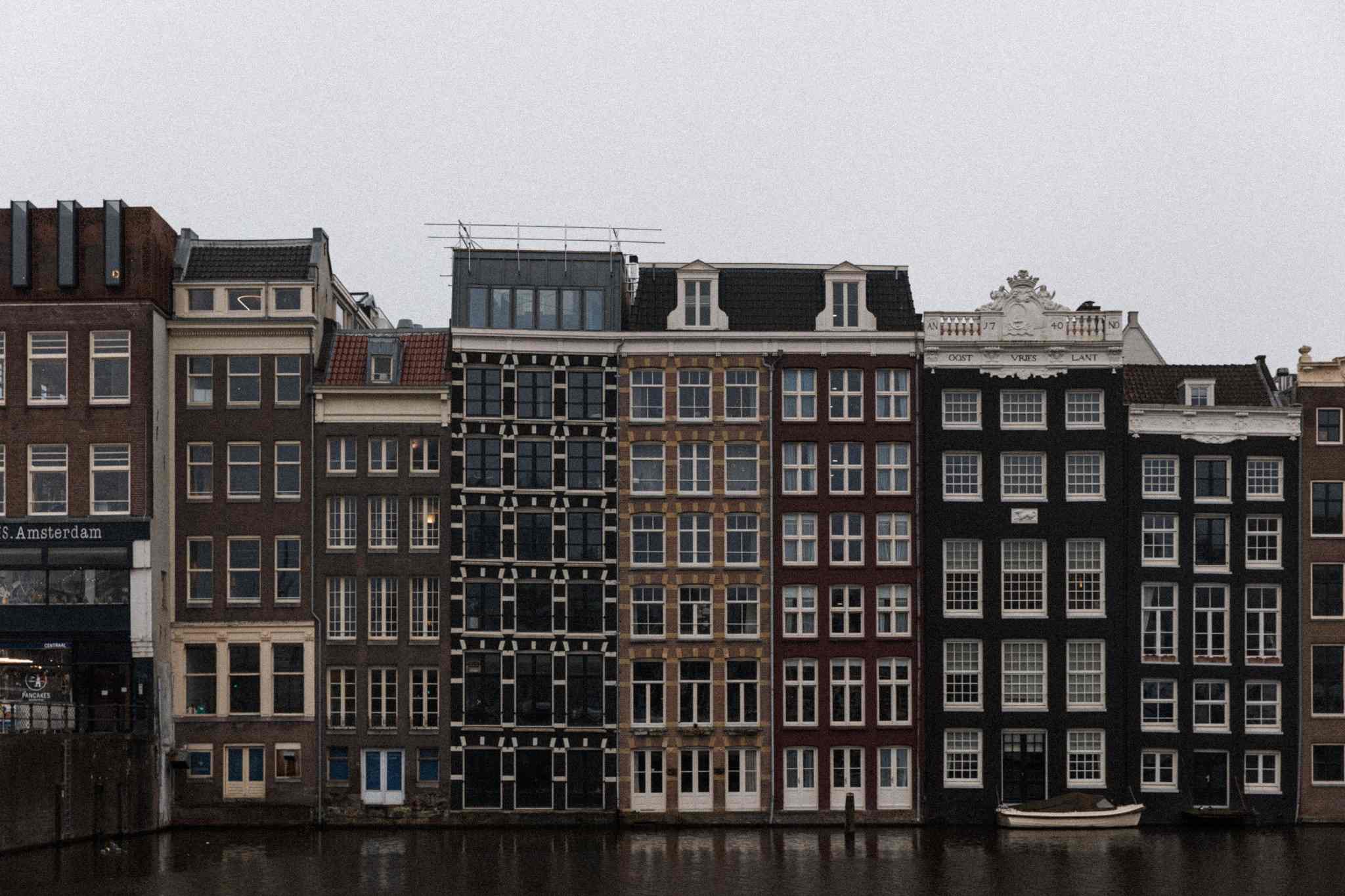
On 3 August 2026, Invesco Real Estate announced the sale of the Andaz Amsterdam Prinsengracht, a 122-room luxury hotel located in the heart of Amsterdam’s Canal Ring, a UNESCO World Heritage site.
The buyer is a consortium of investors led by First Sponsor Group Limited, a Singapore-listed property company that is already active in the Dutch market.
The property was sold on behalf of the European Hotel Fund, an institutional investment vehicle managed by Invesco Real Estate. The transaction price was not disclosed.
In June 2026, however, international real estate publications reported that Invesco was in advanced negotiations to sell a trophy hotel asset in Amsterdam for more than €100 million.
Should that indication be confirmed, the transaction would imply a gross value of more than €800,000 per room. This would nevertheless be only a broad reference metric: the complex also includes office accommodation, common areas, ancillary property components and a long-term hotel lease, all of which have a material impact on the overall valuation.
The figure should therefore not be interpreted as a simple price-per-room multiple. It reflects the combined value of a scarce, stabilised and contractually structured property in one of Europe’s hotel markets with the highest barriers to entry.
The asset: a hotel lease, not a management agreement
From an investor’s perspective, the defining feature of the transaction is not merely the Andaz brand. It is the underlying contractual structure.
The Andaz Amsterdam Prinsengracht is operated directly by Hyatt under a long-term lease agreement, rather than through a conventional hotel management agreement.
The distinction is fundamental.
Under a management agreement, the property owner generally remains materially exposed to fluctuations in the hotel’s operating performance. Under a lease structure, by contrast, all or part of the operating risk is transferred to the tenant, while the owner receives rent determined in accordance with the contractual terms.
This makes the property more comparable to an income-producing real estate investment and potentially easier to assess for institutional investors seeking predictable cash flows.
A lease does not, of course, eliminate risk.
The quality of the investment depends on the remaining lease term, the rent structure, indexation mechanisms, guarantees, maintenance and capital expenditure obligations, termination rights and the tenant’s ability to meet its rental commitments during weaker phases of the economic cycle.
In the case of the Andaz Amsterdam, however, the combination of a trophy asset, an international destination, structurally constrained supply, a global brand and a long-term lease creates a profile particularly suited to core and core-plus investment strategies.
For an investor with operating expertise, the structure may offer an additional opportunity. The lease protects the income stream during the holding period, while a future renegotiation of the agreement could provide scope to reconsider how value is allocated between the property owner and the hotel operating business.
More than 10,000 square metres in Amsterdam’s historic centre
The complex was converted from Amsterdam’s former public library and features interiors designed by Marcel Wanders.
The property comprises two interconnected buildings with approximately 10,618 square metres of gross floor area, together with an additional 1,374 square metres of office space that is fully leased to independent tenants.
The office component is not a marginal detail.
Income generated by space that is not directly dependent on hotel operations helps diversify the asset’s cash flows, reduces reliance on the hospitality cycle and may enhance the investment’s overall resilience during financing, valuation and due diligence processes.
This point is also highly relevant to the Italian market, where many hotel properties include retail, office or ancillary areas that remain underused or lack a dedicated value-enhancement strategy.
Invesco’s strategy: capital rotation, not withdrawal
Invesco Real Estate acquired the Andaz Amsterdam Prinsengracht in 2019, adding it to the European Hotel Fund’s portfolio as a stabilised asset with relatively defensive cash flows and a contained risk profile.
During its ownership period, the investment manager implemented a selective capital expenditure programme covering the redesign of the lobby and entrance, the repositioning of the food and beverage offering, and a number of measures aimed at reducing emissions.
The disposal therefore does not appear to indicate that Invesco is retreating from the hotel sector.
On the contrary, the message communicated by the fund manager is one of active portfolio management: selling mature assets, crystallising the value created and reallocating capital to new opportunities across Europe.
This is not a fund liquidating its hotel portfolio. It is an investor rotating capital.
The distinction matters because, in the institutional market, the sale of a hotel does not necessarily signal a loss of confidence in the asset class. It may instead represent the logical conclusion of an investment cycle based on acquisition, stabilisation and value creation.
Invesco also described the buyer as an experienced, long-term hotel investor with operating expertise.
This is more than a standard courtesy statement.
It describes the type of capital currently competing for Europe’s trophy assets: patient, specialised capital capable of investing through consortia and combining real estate income, financial structuring and hotel operating knowledge.
The transaction advisors
Invesco Real Estate was advised by:
-
CMS as legal advisor;
-
PwC on tax, financial and transaction structuring matters.
The consortium led by First Sponsor was advised by:
-
Greenberg Traurig on legal matters;
-
Loyens & Loeff on tax, financial and transaction structuring matters.
The involvement of multidisciplinary advisory teams confirms that a transaction of this nature cannot be viewed as a straightforward real estate sale.
Its value is created through the interaction of the property, the hotel contract, taxation, financing, guarantees, the corporate structure and the asset’s future value-enhancement potential.
First Sponsor is not buying a hotel: it is building a platform
This is the point that the press release does not explicitly address, but that the market should examine more closely.
In May 2026, First Sponsor Group had already acquired a 33% interest in the Crowne Plaza Amsterdam South, located in the Zuidas business district, as part of a transaction reportedly valued at €58.1 million.
That acquisition was also completed through a consortium and involved a property supported by a very long-term lease, reportedly extending until 2043.
Less than three months later, First Sponsor is now leading another consortium in the acquisition of one of the most recognisable trophy hotels in Amsterdam’s historic centre.
Two transactions completed within a short period in the same market, both involving co-investors and hotel properties secured by long-term leases, can hardly be regarded as isolated events.
The emerging strategy is the gradual construction of a hotel investment platform in the Netherlands, backed by Asian capital, designed for long-term ownership and focused on assets capable of producing stable real estate income.
First Sponsor has also previously identified the Netherlands, Germany and Italy as target markets for the deployment of investment capital.
The Andaz transaction should therefore be assessed not only for what it represents today, but also for what it may anticipate: stronger competition from Singaporean and broader Asian capital for European hotel properties combining irreplaceable locations, bankable contracts and long-term appreciation potential.
At InvestimentiAlberghieri.it, we have been monitoring the consolidation of the hotel industry and the progressive creation of investment platforms capable of separating, integrating or recombining real estate capital and operating expertise through PropCo, OpCo, lease and hotel management agreement structures.
Why this transaction directly concerns Italy
The Italian market offers many of the characteristics sought by international capital:
-
historic and irreplaceable properties;
-
prime locations in major art cities;
-
destinations supported by structural international demand;
-
significant planning and regulatory barriers to entry;
-
international hotel brands;
-
substantial repositioning and revenue-growth potential.
What is often missing is not the quality of the property, but the quality of the transaction structure.
Most branded hotels in Italy operate under management agreements or franchise arrangements. Cases in which an international hotel group directly enters into a long-term lease of the property remain comparatively limited.
This difference produces at least three consequences.
1. Institutional capital struggles to price operating risk
An investor accustomed to acquiring leased properties may find it difficult to assess a hotel whose return depends directly on the operating performance of the business.
In the absence of contracted rent, appropriate guarantees or a clear separation between real estate risk and operating risk, the buyer will generally require a higher return.
The seller, however, often continues to assess the property on the basis of its theoretical real estate value rather than the risk effectively being transferred to the buyer.
The resulting bid-ask gap does not necessarily arise from a different assessment of the hotel’s quality. It may instead reflect a different assessment of the contractual structure.
2. Owners may leave value on the table before a sale
Preparing a hotel for disposal does not simply mean drafting an information memorandum or opening a data room.
It may require preliminary work involving:
-
the hotel management agreement;
-
the sustainability of the rent;
-
the separation of the PropCo and OpCo;
-
tenant guarantees;
-
the contract term;
-
maintenance and capital expenditure obligations;
-
licences and authorisations;
-
the property perimeter;
-
ancillary areas;
-
financial and operating reporting.
In certain cases, transforming a property that is fully exposed to operating risk into an investment supported by a bankable lease structure may alter its risk profile and therefore the return required by the market.
This does not mean that a lease is always preferable to a management agreement.
The rent must remain sustainable throughout the economic cycle, the tenant must possess sufficient financial strength and the agreement must not compromise the property’s future flexibility.
The point is different: the contractual structure must be designed before the property is brought to market, rather than accepted as the unintended outcome of the negotiation process.
3. Ancillary areas can become an independent source of value
In the case of the Andaz Amsterdam, the 1,374 square metres of office space leased to independent tenants contribute to income diversification.
Many Italian hotel properties include retail units, offices, terraces, parking facilities, conference areas, residential units, food and beverage spaces or unused areas that are not independently valued or managed.
Leasing, functionally separating or converting these areas may improve the property’s financial profile, reduce its reliance on room revenue and make the transaction easier for investors and lenders to understand.
The real issue is not always the price
The lesson from the Andaz Amsterdam transaction is clear.
A hotel is not valued solely according to its room count, revenue, GOP or location.
It is also valued according to the quality of its contracts, the predictability of its cash flows, the financial strength of its counterparties, the allocation of capital expenditure obligations, its corporate structure, its financeability and its ability to preserve value across different stages of the economic cycle.
For this reason, an Italian hotel owner considering a sale does not always have a pricing problem.
More often, the problem lies in the preparation and structure of the transaction.
This is precisely where the difference emerges between those who merely place a property on the market and those who build an investable transaction.
Would you like to understand how to structure the sale of your hotel?
Selling a hotel does not simply mean finding a buyer.
It means preparing the business, making its financial performance transparent, reviewing its contracts, enhancing its ancillary spaces, reducing perceived risks and creating a structure compatible with the type of capital the owner intends to attract.
If you are considering a sale, an acquisition, the renegotiation of a hotel management agreement or the restructuring of a PropCo-OpCo arrangement, the first step is to identify the measures that can make the asset genuinely investable.
Contact: info@investimentialberghieri.it
Roberto Necci - r.necci@robertonecci.it
Our integrated advisory ecosystem
RobertoNecci.it
Analysis, professional guides, track record and insights into hotel economics, investment and management.
InvestimentiAlberghieri.it
An independent observatory covering transactions, investments and structural developments across the Italian and European hotel markets.
Investhotel.it
Advisory services for the sale, acquisition, repositioning and restructuring of hotel businesses and properties.
NecciHotels.it
Direct hotel operations, management agreements and operating turnaround programmes.
HotelManagementGroup.it
A multidisciplinary advisory platform covering M&A, due diligence, management control, debt restructuring, governance, marketing and the negotiation of hotel operating agreements.
Investimenti Alberghieri is a deal journalism platform dedicated to extraordinary transactions and structural developments across the Italian and European hotel industries. Its content is provided solely for information purposes and does not constitute investment advice or an invitation to invest.