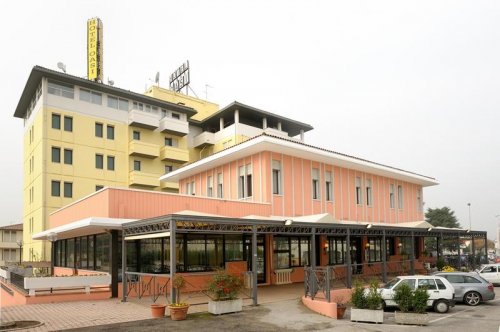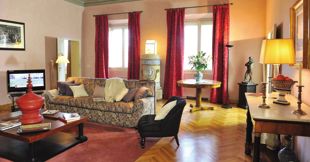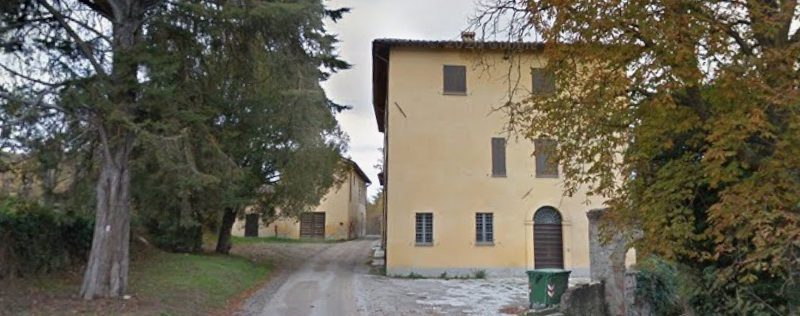
Two protected regional properties, a former Foresteria intended as a tourism and cultural centre with accommodation, a former Montessori School designated for non-hotel accommodation, and a rent-free concession with an initial term of 15 years, potentially renewable for a further 10. Sviluppumbria has reopened the procedure for the La Montesca complex in Città di Castello, with applications due by 30 September 2026. But “rent-free” does not mean economically cost-free: the concessionaire will be responsible for furniture, equipment, operations, maintenance, working capital and operating risk. Most importantly, the procedure is restricted to Third Sector Entities registered with Italy’s RUNTS register, with social enterprises excluded.
In the hotel investment market, some opportunities cannot be analysed using the same metrics applied to a conventional hotel lease.
La Montesca is one of them.
The regional complex forms part of the Alta Umbria 2030 project and Italy’s National Innovative Programme for Housing Quality — PINQuA.
The public strategy assigns complementary functions to the two properties:
Former Foresteria: a tourism and cultural centre combining accommodation with spaces for cultural activities.
Former Montessori School: a tourism accommodation facility intended to support the wider cultural centre.
The project is therefore not simply:
a property requiring an operator.
It is a platform in which:
hospitality + culture + education + destination development + social impact
must coexist within the same operating model.
That integration is precisely what makes the opportunity interesting.
It is also what makes it complex.
The Headline Number: Zero Rent
The concession is:
rent-free.
The initial term is:
15 years
with the potential for a further:
10-year renewal.
Potential operating horizon:
25 years.
For a conventional hospitality operator, those terms may appear immediately compelling.
A real estate asset available for such a long period without rent.
But stopping the analysis there would be a mistake.
Because the economic cost of occupying the properties is not the same as the rent.
Zero Rent Does Not Mean Zero Occupancy Cost
The concessionaire will be responsible for:
furniture;
equipment;
operating supplies;
ordinary maintenance;
extraordinary maintenance within the applicable limits;
management costs;
tax and contractual expenses;
working capital;
operating risk.
The documentation also assumes a combined theoretical market rental value of:
€69,600 per year
allocated approximately as follows:
€55,200 for the former Montessori School
and
€14,400 for the former Foresteria.
This figure matters not because the concessionaire will be required to pay it.
It matters because it helps quantify the implicit real estate benefit being made available to the project.
The correct equation is therefore not simply:
Rent = €0
but:
Rent = €0
FF&E
OS&E
Maintenance
Working Capital
Operating Costs
Management Risk.
That is the real economic structure of the opportunity.
The Theoretical Rental Value Shows How Much Public Real Estate Is Being Made Available
Looking only at the theoretical rental value contained in the documentation:
€69,600 per year
equates, on a purely nominal basis, to approximately:
€1.04 million over 15 years.
Over 25 years:
€1.74 million.
This is not a discounted financial valuation of the concession.
Nor should it automatically be interpreted as a saving available to the concessionaire.
But it illustrates an important principle.
The public owner is choosing not to monetise the properties through conventional market rent in exchange for a different type of return:
social impact;
cultural activity;
tourism development;
public access;
preservation of the assets.
The public-sector return is therefore not purely financial.
PropCo Return, OpCo Return and Social Return
In a conventional hotel transaction, the analysis normally seeks to balance two returns:
PropCo Return
and
OpCo Return.
At La Montesca, a third variable has to be added:
Social Return.
The transaction structure therefore becomes:
Public Real Estate
Third Sector Operating Capability
Social Impact.
The public owner is not necessarily trying to maximise rent.
Instead, it is seeking to maximise the ability of its real estate to generate:
culture;
education;
tourism;
training;
temporary accommodation;
services;
territorial impact.
This is a particularly interesting form of:
impact hospitality.
But This Is Not an Opportunity Open to the Conventional Hotel Market
This point needs to be absolutely clear.
The procedure is not open indiscriminately to:
hotel companies;
professional operators;
investors;
commercial management companies.
Eligible applicants must be qualifying Third Sector Entities registered with the RUNTS — Registro Unico Nazionale del Terzo Settore.
The eligible universe includes, among others:
voluntary organisations;
social promotion associations;
foundations;
philanthropic entities;
associative networks;
other qualifying non-profit private entities.
Social enterprises are excluded from the rent-free concession under the applicable legal framework.
This dramatically changes the size and composition of the potential operator market.
Eligibility and Operating Capability May Not Be the Same Thing
This is one of the central issues in the transaction.
The strongest hospitality operator in the market may not be eligible to participate.
An entity that perfectly satisfies the eligibility requirements may not possess sufficient hospitality expertise.
This creates a potential gap between:
eligibility
and
operating capability.
And it is a significant one.
A 15- to 25-year project requires expertise across:
hospitality;
culture;
facility management;
fundraising;
programming;
marketing;
governance;
financial control.
It is unlikely that all these capabilities will exist within a single organisation.
The ability to participate through an associated structure therefore becomes strategically important.
The Ideal Operator May Be a Coalition
The most effective structure could involve a combination of complementary capabilities.
For example:
lead Third Sector Entity
hospitality management capability
cultural programming
fundraising expertise
destination partnerships.
But partnerships only work when they are properly governed.
A collection of organisations is not enough.
The structure needs:
clear responsibilities;
budgets;
KPIs;
decision-making processes;
allocation of activities;
accountability.
In this type of project, governance is not an ancillary issue.
It is part of the investment itself.
Further analysis of governance, operating models and hospitality structures is available through the specialist guides published on Robertonecci.it.
The First Procedure Has Already Failed to Produce an Award
The fact that makes La Montesca particularly interesting is this:
the first procedure did not result in an award.
Sviluppumbria had already launched an earlier call during 2026.
Despite expressions of interest and site inspections, no proposal ultimately resulted in an assignment.
The procedure was therefore relaunched.
That materially changes the analysis.
Because it demonstrates that:
zero rent
a potential 25-year horizon
were not, by themselves, enough to produce a suitable proposal.
That is genuine market feedback.
Why Can a Rent-Free Concession Still Attract No Bids?
This is probably the most important question in the entire case.
If rent is zero, why does the market not respond?
At least four variables may explain the difficulty.
1. Eligibility
The pool of potential operators is heavily restricted by the eligibility requirements.
A narrower market means less competition and a lower probability of identifying the ideal operator.
2. Governance Complexity
The project must simultaneously integrate hospitality, cultural programming, social impact and property management.
The more missions coexist within one platform, the more complex the decision-making architecture becomes.
3. Maintenance Burden
The concessionaire pays no conventional rent but assumes meaningful maintenance and operating responsibilities.
The rent may be zero.
The real occupancy cost is not.
4. Demand Generation
The buildings themselves do not create demand.
The operator must build a system capable of attracting:
tourists;
groups;
events;
training programmes;
residencies;
cultural projects.
Without a credible demand generator, even a rent-free asset can become economically fragile.
That is the real lesson from the first unsuccessful procedure.
If Nobody Takes an Asset for Free, Rent Is No Longer the Question
In a conventional hotel concession, when no bids are received the first question is often:
“Is the rent too high?”
At La Montesca, that explanation is unavailable.
Rent is zero.
The question therefore has to become:
“Which risks are not adequately compensated by the rent-free real estate?”
That is a far more useful question.
Because it forces the analysis to focus on:
CAPEX;
maintenance;
governance;
demand;
human resources;
fundraising;
operations;
regulatory constraints;
long-term sustainability.
Free real estate removes one variable.
It does not remove operating risk.
Protected Properties Create Both Value and Complexity
The properties are owned by the Region of Umbria and are subject to historical and landscape protection.
That can create a competitive advantage.
Historic character can generate:
identity;
storytelling;
positioning;
uniqueness.
But it can also introduce:
restrictions;
authorisation requirements;
greater rigidity;
maintenance obligations;
limits on physical transformation.
Historic real estate can therefore command a commercial premium.
But only when management can monetise its distinctive value without conflicting with conservation requirements.
The Former Foresteria and Former Montessori School Should Be Treated as One Ecosystem
The project includes:
the Former Foresteria
the Former Montessori School
associated areas.
The Foresteria has a primarily cultural and accommodation function.
The former Montessori building is focused on non-hotel hospitality.
The economic model should therefore integrate the two.
They should not be treated as two completely separate businesses.
The logic could be:
Cultural Hub → Accommodation Demand
and simultaneously:
Accommodation → Cultural Participation.
That is a much stronger model than simply:
rooms + events.
Culture Needs to Become a Demand Generator
This is one of the central elements of the investment thesis.
If cultural activity is treated purely as a programme obligation, it creates cost.
If it is structured as a demand generator, it can feed the wider operation.
Festivals.
Workshops.
Training programmes.
Artist residencies.
Seminars.
Retreats.
Educational activities.
International programmes.
These can generate, simultaneously:
occupancy;
F&B;
space utilisation;
participation fees;
fundraising;
sponsorship;
partnerships.
The product should therefore not be:
hospitality + culture.
It should become:
hospitality generated by culture.
That is a strategic distinction.
The Business Plan Cannot Be Just a Hotel P&L
In a traditional hotel, the model usually starts with:
Room Revenue;
F&B Revenue;
Ancillary Revenue.
Here the economic architecture can be significantly broader.
Potential sources may include:
hospitality revenue;
events;
training;
institutional projects;
donations;
fundraising;
grants;
sponsorship;
partnerships.
The business plan should therefore combine:
Hospitality P&L
Social & Cultural Funding Model.
Sustainability comes from integrating the two economies.
Non-Profit Does Not Mean Non-Economic
The absence of a profit-distribution objective does not remove the need for economic equilibrium.
If anything, it makes financial discipline even more important.
A project with a potential life of 15 or 25 years must generate sufficient resources to support:
staff;
utilities;
maintenance;
insurance;
administration;
programming;
marketing;
technology;
renewal of furnishings and equipment.
The equation remains:
Resources Generated ≥ Operating Costs + Maintenance + Reinvestment.
If that condition is not met, zero rent will not rescue the project.
The principle is very close to professional hotel management: long-term value comes from maintaining a sustainable balance between revenue, cost, reinvestment and product quality.
Maintenance Is the Real Economic Rent
Over a 15- to 25-year horizon, maintenance cannot be treated as an exceptional event.
It is inevitable.
A more useful metric is therefore:
Maintenance-Adjusted Occupancy Cost.
That tells us far more than:
Rent = €0.
The concessionaire should establish a genuine:
Maintenance Reserve
from the first year.
Because over such a long period the issue is not whether intervention will be required.
It is:
when
and
how much.
FF&E and OS&E Still Need to Be Funded
Rent-free real estate does not mean a free operating business.
The concessionaire may still need to fund:
FF&E;
OS&E;
technology;
management systems;
Wi-Fi;
access-control systems;
equipment;
linen;
cultural fit-out;
marketing;
working capital.
The true Initial Investment Requirement therefore becomes:
Pre-opening CAPEX
Working Capital
Operating Ramp-up
Maintenance Reserve.
Only once these items have been quantified can the economic value of the rent-free concession be properly assessed.
Twenty-Five Years Is a Major Opportunity — but It Is Not Guaranteed
Duration is clearly one of the strongest elements of the project.
Fifteen years already provides a long enough horizon to support significant investment.
The possibility of reaching 25 years can further improve payback economics.
But it is important to distinguish:
Potential Tenure
from
Guaranteed Tenure.
The additional ten-year period should not automatically be treated as certain in the financial model.
The business should demonstrate sustainability within the initial concession term.
The renewal period should represent upside.
Not a condition required for survival.
The Selection Process Rewards the Project, Not the Money
The evaluation framework confirms the nature of the opportunity.
The competition is not about:
who offers the highest rent.
It is about:
who can build the project with the greatest ability to generate impact.
The assessment areas include:
territorial impact;
education;
training;
culture;
tourism activities;
temporary accommodation;
experience.
That shifts the centre of gravity completely.
Financial strength still matters.
But it is subordinated to the quality of the project.
Hospitality as Infrastructure for the Mission
Here, hospitality is not necessarily the end objective.
It is also a tool.
The accommodation can host:
participants;
artists;
trainers;
students;
researchers;
groups;
volunteers;
cultural tourists;
retreat participants.
The relevant KPIs therefore need to go beyond:
Occupancy
and
ADR.
Potential measures might include:
Total Revenue per Guest;
Annual Users;
Length of Stay;
Cultural Events;
Cost per Beneficiary;
Social Impact per Euro Invested.
This is where:
hotel analytics
meets
impact measurement.
The Five Conditions Required to Make La Montesca Truly Sustainable
1. Demand Generation
Culture must generate real demand.
Not simply programming.
2. Professional Hospitality Management
Pricing, booking, distribution and cost control must be professional even within a non-profit framework.
3. Maintenance Reserve
Maintenance needs to be funded from the beginning.
4. Funding Diversification
The project should not rely on one source alone.
Hospitality revenue, fundraising, events, grants and partnerships need to create a resilient mix.
5. Governance
Social mission and financial sustainability need to coexist within a clear decision-making framework.
These five variables can turn zero rent from a simple real estate benefit into a genuine competitive advantage.
Three Underwriting Scenarios
Downside Case
Weak accommodation demand, cultural activities with limited monetisation, high maintenance requirements and substantial dependence on external funding.
This is the scenario in which free real estate is still not enough.
Base Case
Stable cultural programming, event-driven occupancy, professional hospitality management, a properly funded maintenance reserve and a balanced mix of earned revenue and external funding.
This is the sustainability case.
Upside Case
La Montesca becomes a genuine:
Cultural Hospitality & Social Impact Destination
capable of attracting:
retreats;
training;
artist residencies;
cultural tourism;
European projects;
events;
international partnerships.
This is the value-creation case.
The economic sequence becomes:
Hospitality Revenue
Cultural Revenue
Institutional Funding
→
Operating Surplus
→
Maintenance
→
Reinvestment
→
Social Impact.
The Second Procedure Is More Interesting Than the First
The new deadline is:
30 September 2026.
But the most important fact is that this is already the second attempt.
The first procedure demonstrated that:
a potential 25-year tenure
and
zero rent
are not automatically enough.
That is an important lesson even for the conventional hotel market.
Real estate cost is only one component of an investment.
An asset can have zero rent and still be economically weak.
Another can carry high rent and still be an excellent investment if it generates sufficient GOP.
The correct question is not:
“How much does the real estate cost?”
It is:
“What return does the project generate relative to the risk being assumed?”
La Montesca Is Hospitality — but It Is Not a Traditional Hotel Deal
For Investhotel Capital Partners, cases such as this demonstrate how much the boundaries of hospitality have expanded.
There is no:
hotel acquisition;
conventional property lease;
standard business lease.
Instead, there is a publicly owned real estate asset that needs to be transformed into:
hospitality;
culture;
service;
impact.
The real estate is the container.
The real investment thesis is the operating model.
Conclusion: Zero Rent, but Underwriting Is Still Mandatory
La Montesca appears to offer extraordinary headline terms:
2 properties;
zero rent;
15-year initial concession;
potential 10-year renewal;
30 September 2026 application deadline.
But those figures describe only half of the transaction.
The other half consists of:
maintenance;
CAPEX;
working capital;
eligibility;
governance;
culture;
demand;
constraints;
sustainability.
And that is where the real principle emerges.
Free does not mean economically free.
It means that the return required by the property owner is not expressed through rent.
It is expressed through:
preservation of public assets
public service
cultural impact
tourism development
long-term sustainability.
The final question is therefore not:
“How much rent does the operator save?”
It is:
“Can the project generate enough resources over 15 to 25 years to sustain the obligations that replace that rent?”
That is the question that separates a rent-free concession from a genuine impact hospitality investment.
Because even when rent is zero, cash flow still has the final word.
InvestimentiAlberghieri.it Advisory
InvestimentiAlberghieri.it analyses public hospitality concessions, publicly owned tourism assets, hospitality special situations and operating models in which real estate, territorial impact and financial sustainability need to coexist.
For business plans, PEFs, valuations, sustainability analysis, due diligence, operator searches and hospitality transaction structuring:
info@investimentialberghieri.it
Complementary expertise and insights:
Robertonecci.it — hospitality advisory, analysis and specialist guides
Investhotel.it — hotel acquisitions, disposals and hospitality transactions
HotelManagementGroup.it — hotel management, asset management and performance optimisation