Bain Capital and Omnam Group have announced the sale of The Lake Como EDITION to Sansiri Capital. The transaction price has not been officially disclosed: market reports have suggested a figure in the region of €230 million, while the asset has been described as being worth more than €200 million. If those figures prove accurate, they would imply a valuation of more than €1.3 million per key. Yet focusing solely on the price would miss the most compelling aspect of the transaction: the ability to transform a historic hotel with almost 300 rooms into a 148-key international trophy asset and monetise that repositioning only a few months after opening.
The Italian hotel investment market has recorded one of the most noteworthy luxury transactions of the year.
Bain Capital and Omnam Group have announced the sale of The Lake Como EDITION, the five-star luxury hotel in Cadenabbia on Lake Como, to Sansiri Capital, an investment platform linked to Thai real estate group Sansiri.
The transaction is expected to close in the coming weeks, subject to customary closing conditions.
One point, however, needs to be made clear from the outset.
The official transaction price has not been disclosed.
Market reports have indicated a figure of approximately €230 million, while other communications concerning the transaction have described the asset as being worth more than €200 million.
For a professional investment analysis, the correct distinction is therefore:
-
Official transaction price: undisclosed
-
Indicated asset value: above €200 million
-
Reported market value: approximately €230 million
This distinction does not diminish the significance of the deal.
On the contrary, it allows us to focus on the most important question:
How was the value actually created?
From Almost 300 Rooms to 148 Keys: Less Capacity, More Value
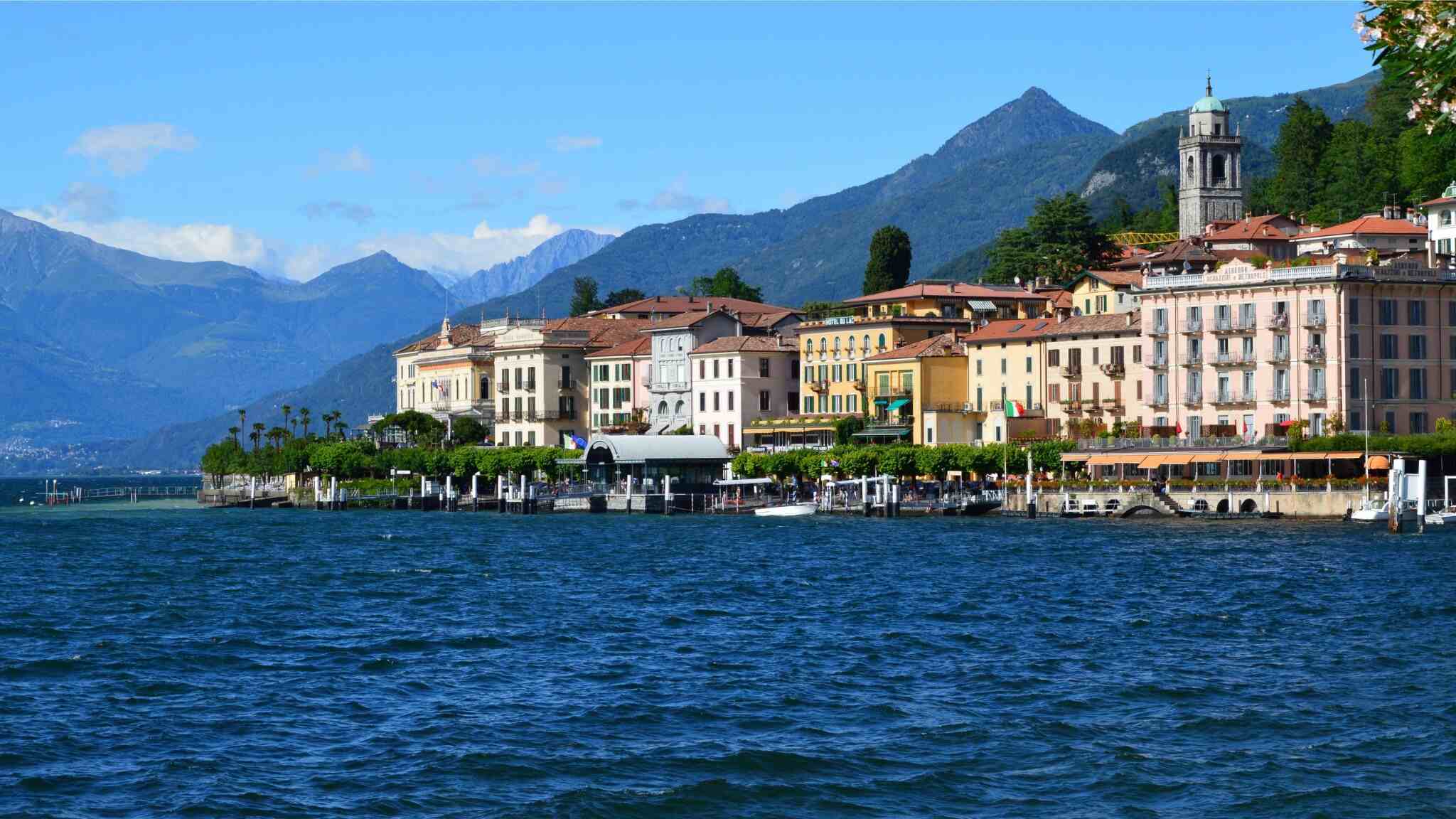
The Lake Como EDITION is located in Cadenabbia, a hamlet of Griante on the western shore of Lake Como, directly opposite Bellagio.
The property formerly housed the historic Britannia Excelsior hotel.
Bain Capital and Omnam acquired the property at the end of 2021 and subsequently launched a major redevelopment and repositioning programme.
The transformation has been substantial.
The former hotel had almost 300 rooms.
The new Lake Como EDITION has just 148 keys, with a configuration strongly focused on the luxury segment, including suites, leisure and wellness facilities, destination dining and waterfront amenities.
The hotel officially opened in March 2026 under Marriott International’s EDITION brand.
And this is precisely where the transaction becomes particularly interesting from an investment perspective.
The room count was almost halved. The value of the asset increased dramatically.
This is an important lesson for the wider Italian hotel market.
A hotel is not necessarily more valuable simply because it has more rooms.
What matters is the economic productivity of every room, every square metre and every service in terms of:
ADR, RevPAR, margins, positioning, brand equity and real estate value.
Reducing the room count from almost 300 to 148 should therefore not be viewed as a loss of capacity.
It represents a completely different economic allocation of space.
INVESTMENT SNAPSHOT
Asset: The Lake Como EDITION
Location: Cadenabbia, Lake Como
Segment: Ultra-luxury
Keys: 148
Brand: EDITION – Marriott International
Opening: March 2026
Buyer: Sansiri Capital
Sellers: Bain Capital and Omnam Group
Official transaction price: Undisclosed
Indicated asset value: > €200 million
Reported market value: Approximately €230 million
Implied Value per Key
Based on €200 million:
approximately €1.35 million per key
Based on €230 million:
approximately €1.55 million per key
Naturally, this is only an indicative metric.
In a trophy asset of this calibre, value per key cannot be assessed in isolation.
The acquisition price reflects at least four distinct components:
real estate value + operating business + brand premium + scarcity value.
1. The Most Important Multiple May Be the Scarcity Premium
Lake Como is one of the markets where the concept of a scarcity premium becomes particularly relevant.
Large waterfront hotel properties capable of being repositioned into international ultra-luxury assets are inherently limited.
The ability to replicate them through new development is even more constrained.
This means that an investor is not simply buying:
-
rooms;
-
revenues;
-
GOP;
-
square metres.
The investor is also buying irreplaceability.
And irreplaceability can become a major component of valuation.
The value of a trophy asset does not derive exclusively from its current cash flows.
It also reflects how difficult — or impossible — it would be for a competitor to create a comparable product in the same location.
On Lake Como, that possibility is structurally limited.
2. The Deal Shows That Value Is Created Before the Exit
The sequence of the transaction is particularly instructive:
acquisition → redevelopment → repositioning → international branding → opening → exit.
Bain Capital and Omnam did not simply acquire and resell a hotel.
They fundamentally changed the economic profile of the asset.
This is the real difference between a straightforward property transaction and a genuine hotel value-creation strategy.
Capital is deployed when there is still a meaningful gap between:
the current value of the property
and
its potential value after repositioning.
Value creation is generated by successfully closing that gap.
3. An Exit Only Months After Opening: A Significant Signal
The Lake Como EDITION opened in March 2026.
The sale was announced in September of the same year.
The speed of the transaction deserves attention.
The buyer has not waited for the hotel to establish a long operating track record.
This suggests that, for assets of sufficient quality, the market may recognise substantial value even before the property reaches full operational stabilisation.
Why?
Because a sophisticated investor does not assess historical performance alone.
It also assesses the asset’s forward earnings potential.
This distinction is fundamental.
A stabilised hotel is typically valued largely on the basis of established operating performance.
A newly repositioned trophy asset, by contrast, may command a valuation partly based on its future earning capacity.
4. Development Risk Changes Hands
The structure of the deal also reveals a clear redistribution of risk.
Bain Capital and Omnam assumed the more complex phase of the investment:
-
acquisition;
-
design;
-
permitting;
-
redevelopment;
-
capital expenditure;
-
positioning;
-
brand selection;
-
opening.
Sansiri is entering at a different point in the investment cycle, acquiring an asset that is already:
completed, branded and operational.
The buyer is therefore assuming a different risk profile.
The new owner may be paying a significantly higher entry price, but much of the development risk has already been absorbed by the previous investors.
This is a classic institutional real estate dynamic:
greater risk at the development stage → greater potential for value creation;
lower risk once the asset is operational → higher acquisition price.
5. The Brand Becomes Part of the Asset’s Financial Architecture
The change of ownership is not expected to alter the hotel’s positioning within Marriott International’s EDITION portfolio.
This helps illustrate another element that is often underestimated in hotel investment analysis.
In international hospitality, it is essential to distinguish between:
real estate ownership, equity ownership, hotel operator and brand.
They do not necessarily belong to the same party.
An international brand also forms part of the hotel’s economic value because it can contribute to:
-
international distribution;
-
access to loyalty-driven demand;
-
pricing power;
-
reputation;
-
global customer acquisition;
-
lower perceived commercial risk.
In transactions of this scale, therefore, the brand is not merely a marketing tool. It becomes part of the financial architecture of the asset.
6. More Than €1.3 Million per Key: Why Comparing It with an Ordinary Hotel Is Misleading
Using the lower €200 million reference value, The Lake Como EDITION would already exceed €1.35 million per key.
Using the reported €230 million market figure, the implied value would rise to approximately €1.55 million per room.
It is an exceptional metric.
But comparing it directly with the per-room valuation of an ordinary Italian hotel would be methodologically misleading.
A trophy asset combines:
location + rarity + luxury positioning + global brand + real estate + operating business.
Price per key is therefore only one indicator.
The correct question is not:
“How much does each room cost?”
The better question is:
“What combination of cash flow, real estate value, scarcity and brand premium is the investor actually acquiring?”
7. What the Lake Como Deal Tells Us About Italy
The transaction also sends a broader message.
A significant proportion of Italy’s hotel stock remains:
-
fragmented;
-
undercapitalised;
-
family-owned or family-managed;
-
insufficiently branded;
-
not always fully optimised from an investment perspective.
At the same time, international capital continues to demonstrate strong appetite for Italian hospitality assets when the fundamentals are compelling:
prime location + repositioning potential + international-quality product + global brand + real estate scarcity.
The problem facing parts of the Italian hotel sector is therefore not necessarily a lack of investor demand.
In many cases, it is the absence of assets that have already been structured according to the standards required by institutional capital.
8. The Real Lesson: A Hotel Is Not Worth Only What It Is Today
This is perhaps the most important lesson from the entire transaction.
When a professional investor analyses a hotel, the question should not simply be:
What is it worth today?
The question should also be:
What could it be worth after the right repositioning strategy?
This is the concept of the hotel asset’s highest and best use.
A property may have relatively modest current operating value but substantial embedded upside where there is:
-
a strong location;
-
sufficient physical potential;
-
repositioning opportunities;
-
underlying demand;
-
access to capital;
-
potential for international branding;
-
scope for ADR growth;
-
potential margin expansion.
This is precisely why hotel valuation should never be reduced to the simple capitalisation of historical earnings.
INVESTMENT TAKEAWAY
The Lake Como EDITION transaction can be summarised through five numbers:
148 keys
> €200 million indicated asset value
€1.35–€1.55 million implied value per key
March 2026: opening
September 2026: sale announced
But the most important number does not appear in any press release.
It is the difference between the value of the property before redevelopment and its value after transformation.
That is where the investor’s ability to create value is truly measured.
The Investimenti Alberghieri View
The most important lesson from this transaction is not confined to ultra-luxury hospitality.
It applies to virtually every hotel investment.
A sophisticated investor should assess at least three separate values:
the asset’s current value;
its post-capex value;
its potential exit value.
The spread between these three values ultimately determines the investment opportunity.
This is the approach adopted by Investimenti Alberghieri when analysing assets on behalf of investors, owners, banks and operators seeking to understand not only what a hotel is worth today, but also which strategies could materially increase its value.
Where the asset involves financial distress, debt exposure, turnaround requirements or UTP/NPL situations, the assessment can be integrated with the specialist expertise of Investhotel Capital Partners.
Transactions requiring multidisciplinary expertise in hotel management, due diligence, governance, asset management, restructuring and development can also draw on the specialist capabilities available through Hotel Management Group.
Strategic analysis and hospitality advisory activities are coordinated through the sector experience developed by Roberto Necci.
Conclusion
It is easy to tell this story through a single figure:
€230 million.
But not only is that figure still unconfirmed; it is also not the most interesting part of the transaction.
The real story is different.
A historic hotel property is acquired.
It undergoes a fundamental transformation.
Its room count is almost halved.
An international luxury brand is introduced.
The property is repositioned at the top end of the market.
The hotel opens.
And only a few months later, an international investor is prepared to acquire it.
This is not simply a hotel sale.
It is a case study in the transformation of real estate capital into hospitality value.
And it is precisely through that transformation that some of the most compelling returns in today’s hotel investment market are being created.
CONFIDENTIAL HOTEL INVESTMENT ANALYSIS
Investimenti Alberghieri prepares confidential investment dossiers for investors, private equity funds, banks, lenders, owners and hotel operators evaluating hotel acquisitions, restructuring projects and value-creation opportunities.
The analysis may include:
-
asset valuation;
-
business valuation;
-
assessment of the sustainability of the asking price;
-
comparable transaction benchmarks;
-
potential ADR and RevPAR;
-
financial and operating scenarios;
-
required capex;
-
repositioning strategy;
-
international brand opportunities;
-
turnaround options;
-
sale strategies;
-
lease structures;
-
business lease transactions;
-
extraordinary transactions;
-
value-creation scenarios;
-
exit strategy.
Confidential enquiries:
info@investimentialberghieri.it