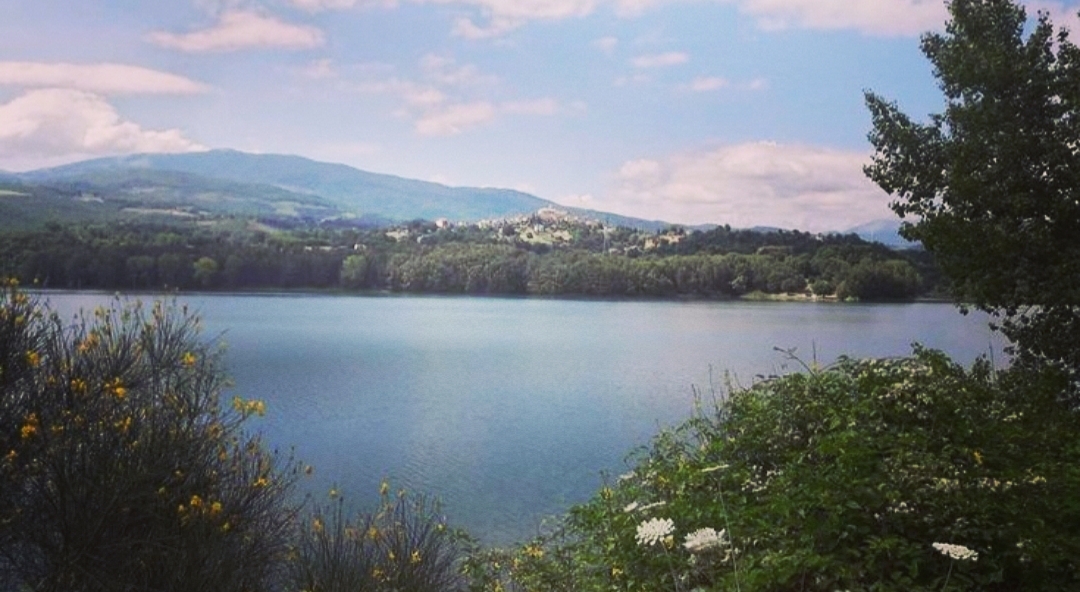
Four tree houses, 16 beds, a chalet that can accommodate hospitality and food & beverage operations, an adventure park, picnic areas and outdoor spaces overlooking Lake Pertusillo. The Municipality of Grumento Nova is seeking a private operator capable of turning this collection of assets into an integrated tourism and leisure platform. The initial concession runs for nine years, with the possibility of a further nine-year renewal, and includes a particularly attractive start-up incentive: no rent for the first two years. Yet the real underwriting question has little to do with the cost of occupying the property. It is whether accommodation, food, adventure and experiences can be integrated into a single, sustainable cash-flow model.
This is not a traditional hotel.
And that is precisely what makes the opportunity interesting.
The scope of the hospitality investment market is increasingly expanding beyond conventional hotels towards assets where value creation is driven not only by room sales, but by the combination of accommodation, destination, outdoor activities, food & beverage and experiences.
The tourism complex located in Bosco Maglie, within the Municipality of Grumento Nova in the province of Potenza, fits squarely within this emerging category.
The Municipality has launched an open procedure for the concession and operation of the tourism and sports complex on Lake Pertusillo.
The stated value of the procedure is €108,000, while bids must be submitted by 12:00 noon on 21 September 2026.
That figure, however, should not be interpreted as the purchase price of the property.
The real estate remains publicly owned.
The successful bidder enters through an operating concession.
And that contractual structure fundamentally changes the economics of the investment.
Not One Asset, but Four Revenue Platforms
The first key to understanding the opportunity is the composition of the site.
The complex includes a chalet with space suitable for guest reception, food & beverage and ancillary activities.
It comprises two large glazed areas of approximately 100 sqm and 65 sqm respectively, together with a kitchen, storage areas, staff changing facilities, bathrooms and outdoor areas.
Then comes the most distinctive hospitality component:
four tree houses.
Each unit includes a bedroom, double bed, two single beds, private bathroom, heating and cooling, and an outdoor veranda.
Total accommodation capacity is therefore approximately:
16 beds.
The site also includes an adventure park of approximately 1,400 sqm, developed within a wooded setting and comprising multiple suspended platforms and routes.
The wider complex also provides:
-
picnic areas;
-
barbecue facilities;
-
green spaces;
-
an area for scout tents;
-
outdoor activities;
-
a strong natural setting.
The strategic point is clear.
There is not one business unit.
There are at least four:
Accommodation
Food & Beverage
Adventure
Experiences
The profitability of the concession will depend on how effectively those four components are made to work together.
The Concession Could Run for Up to 18 Years
One of the most significant elements of the opportunity is its duration.
The initial concession is for nine years.
The Municipality may then renew it once for a further nine years, subject to the conditions set out in the tender documentation.
The potential investment horizon therefore reaches:
18 years.
For an operator, this is far more important than it may initially appear.
A long concession period makes it possible to amortise upfront investments in:
-
furniture and fixtures;
-
kitchen facilities;
-
operating equipment;
-
technology;
-
distribution;
-
marketing;
-
branding;
-
outdoor activities;
-
ancillary facilities.
A short-term agreement could make many of these investments difficult to recover.
A nine-year horizon — potentially extending to eighteen — makes it possible to build a genuine business plan.
But duration alone is not enough.
The critical question remains how much capital must be invested and how quickly that capital can be recovered.
Two Years Rent-Free: A Genuine Start-Up Runway
The annual concession fee starts from €6,000.
For the first two years, however, the concessionaire is not required to pay any rent.
This needs to be interpreted correctly.
It does not mean that the first two years are economically cost-free.
It means that the Municipality is effectively providing the operator with an initial financial runway, allowing capital to be directed towards building the business rather than paying rent.
Those first 24 months can be used to:
-
complete fit-out works;
-
develop the brand;
-
build the website and distribution infrastructure;
-
establish online reputation;
-
launch the food & beverage concept;
-
activate the adventure park;
-
develop commercial partnerships;
-
test pricing and occupancy;
-
understand the true seasonality of demand.
From a financial perspective, that runway has real value.
But the principal investment lies elsewhere.
Initial CAPEX Is the First Number That Needs to Be Underwritten
The chalet will require part of the equipment and furnishings necessary to operate the business.
The tree houses already include certain furnishings, but additional equipment, supplies and upgrades may remain the responsibility of the concessionaire.
It would therefore be misleading to describe the opportunity simply as:
€6,000 of annual rent.
The real capital requirement is:
initial CAPEX + working capital + start-up costs + payroll + marketing + maintenance.
That is the first number a prospective operator needs to establish.
Not the rent.
The same principle applies to transactions assessed by Investhotel Capital Partners: a low real estate entry cost does not automatically make an investment attractive if the operating capital requirement is substantial or the business model cannot produce an adequate margin.
With Only 16 Beds, Room Revenue Cannot Be the Only Engine
The four tree houses represent a highly differentiated hospitality product.
But 16 beds inevitably place a physical ceiling on room revenue.
The underwriting should therefore begin with:
ADR × occupancy × operating days
but it cannot end there.
The operating model needs to assess:
-
occupancy;
-
ADR;
-
seasonality;
-
OTA contribution;
-
direct bookings;
-
housekeeping;
-
distribution costs;
-
included services;
-
average length of stay.
Yet the real economic potential needs to be found in the interaction with the other activities on site.
The most relevant KPI may therefore not be RevPAR alone.
It could be:
Total Revenue per Guest.
The Tree Houses Could Support Premium Pricing
The four tree houses are probably the component with the greatest ability to create positioning and pricing power.
A product of this nature does not necessarily compete with a conventional hostel, B&B or small hotel.
It can compete within the broader universe of:
glamping;
experiential hospitality;
nature retreats;
romantic escapes;
family outdoor travel.
That changes the pricing logic entirely.
A standard accommodation unit is compared primarily on:
price;
location;
rating.
An iconic product can instead be sold through:
experience;
uniqueness;
design;
setting;
storytelling.
That difference can translate directly into ADR.
Any serious feasibility study should therefore include national benchmarks for tree houses, premium glamping and differentiated outdoor accommodation.
Further analysis on hospitality positioning, valuation and economic sustainability is available through the specialist guides published on Robertonecci.it.
The Adventure Park Radically Expands the Addressable Market
The presence of the adventure park changes another crucial variable.
The site does not have to monetise only overnight guests.
It can potentially generate demand from:
-
families;
-
schools;
-
groups;
-
associations;
-
summer programmes;
-
hikers;
-
day visitors;
-
the local leisure market.
This creates a second commercial logic.
A conventional hotel primarily monetises the resident guest.
An integrated outdoor destination can monetise:
resident guests + day visitors + event guests + F&B customers.
The site's addressable demand therefore becomes potentially much larger than its accommodation capacity alone.
This is where the real operating leverage may emerge.
The Chalet Should Become the Site's Monetisation Hub
The chalet's indoor and outdoor spaces can play a central role in the commercial model.
The operation does not necessarily need to be designed as a traditional seven-day-a-week restaurant.
A more efficient model could combine:
-
breakfast;
-
light lunch;
-
aperitifs;
-
evening dining;
-
events;
-
celebrations;
-
groups;
-
tastings;
-
adventure + lunch packages;
-
accommodation + dinner packages.
The financial question should be:
how much incremental operating profit can food & beverage generate?
Not:
how much additional revenue can it produce?
In F&B, that distinction is fundamental.
Revenue growth that requires excessive staffing, high food costs and significant energy consumption may fail to create any additional value.
Food & beverage should therefore be structured as a standalone business unit, with its own P&L and operating KPIs.
The Real Product Is a Destination, Not a Collection of Activities
Managing the various elements separately —
four tree houses;
one chalet;
an adventure park;
a picnic area —
would probably be the principal strategic mistake.
Value is created through integration.
The commercial proposition should evolve into something closer to:
Pertusillo Outdoor Experience.
A concept in which each business line feeds the others.
A tree-house guest can purchase access to the adventure park.
An adventure-park customer can be converted into an F&B customer.
A day visitor can become a future overnight guest.
A school can purchase an educational + adventure + lunch package.
A family can purchase a stay + experience package.
A group can buy the destination as an integrated product.
The key metric then changes.
Not simply:
ADR.
But:
Revenue per Visitor.
Technical Quality Matters Far More Than Rent
Another important feature of the tender is the award mechanism.
The technical proposal accounts for up to 80 points out of 100.
The financial offer accounts for only 20 points.
This makes it very clear what type of concessionaire the Municipality is seeking.
Not simply the bidder willing to pay the highest rent.
But the operator capable of presenting the strongest operating concept.
The technical component rewards:
-
management model;
-
food and local-product positioning;
-
maintenance;
-
safety;
-
human resources;
-
outdoor expertise.
The true competitive advantage is therefore:
execution capability.
Not financial firepower in isolation.
The Ideal Operator May Not Be a Traditional Hotelier
The nature of the site requires a broader skill set.
The ideal concessionaire should be able to integrate:
hospitality management;
outdoor operations;
food & beverage;
destination marketing;
event management;
safety and risk management.
This could favour operators already active in outdoor tourism or partnerships between businesses with complementary expertise.
The quality of hotel and hospitality management nevertheless remains critical, because reception, pricing, distribution, reputation management, cost control and customer experience require the same discipline found in conventional hospitality businesses.
Operating Risk Is More Complex Than 16 Beds Suggest
The small number of beds may make the project appear operationally simple.
It is not.
Outdoor activities introduce additional layers of risk.
The operator needs to manage:
-
adventure-park safety;
-
maintenance of structures;
-
vegetation;
-
insurance;
-
public-facing activities;
-
food safety;
-
overnight accommodation;
-
outdoor areas.
The insurance obligations required under the concession further confirm the relevance of these risks.
This is therefore not a small hotel with a few ancillary activities.
It is a multi-activity micro-destination.
And it must be managed accordingly.
Invested Capital Must Be Protected Within the Concession Period
The long concession period helps support investment.
But it introduces another important issue.
Permanent improvements made by the concessionaire may, under the terms of the concession, ultimately remain attached to the publicly owned asset.
Every investment should therefore be assessed against at least five variables:
total CAPEX;
payback period;
useful life;
residual value;
recoverability before concession expiry.
An investment may make perfect operational sense and create commercial value.
But if it cannot be recovered within the contractual horizon, it may still be a poor financial decision.
That is one of the basic principles of concession underwriting.
The Five Conditions That Would Make the Opportunity Truly Investable
The quality of the project will depend primarily on five conditions.
1. Sustainable Initial CAPEX
The capital required to open and position the site needs to be recoverable within a timeframe consistent with the concession term.
2. Premium ADR for the Tree Houses
The accommodation product needs to support pricing materially above undifferentiated lodging alternatives.
3. Strong Day-Use Demand
The adventure park and food & beverage operation need to generate revenue from non-resident guests as well as overnight customers.
4. Genuine F&B Profitability
Food and beverage must increase GOP, not simply turnover.
5. Commercial Integration
The four business units need to be marketed and sold as one ecosystem.
If these five conditions are achieved, the site could become economically far more valuable than its limited accommodation capacity might suggest.
At Least Three Scenarios Should Be Modelled Before Bidding
A professional business plan should develop at least three cases.
Downside Case
Low tree-house occupancy, strong seasonality, predominantly local demand and limited F&B utilisation.
This case identifies potential losses and the maximum working-capital requirement.
Base Case
Sustainable occupancy, coherent pricing, an active adventure park, effective integration with food & beverage and structured distribution.
This case tests the fundamental viability of the project.
Upside Case
Premium positioning of the tree houses, partnerships with tour operators, groups, schools and events, strong day-use traffic and higher Revenue per Visitor.
This is the scenario in which the property stops behaving like a public facility under concession and becomes a genuine destination hospitality platform.
The Site Visit Should Become a Mini Due Diligence Exercise
Before bidding, the mandatory site inspection should not be treated as a routine administrative step.
It should be used to assess at least:
-
condition of the chalet;
-
kitchen;
-
building systems;
-
furniture and equipment;
-
tree houses;
-
timber structures;
-
adventure park;
-
certifications;
-
accessibility;
-
safety;
-
outdoor areas;
-
utilities;
-
required maintenance;
-
pre-opening investment.
This assessment should generate the first real number in the underwriting:
Initial Investment Requirement.
Without that figure, there is no credible business plan.
Public Concessions Are Creating a Parallel Hospitality Market
The Pertusillo case confirms a trend already visible in other transactions.
Italy has a significant stock of:
-
former hotels;
-
chalets;
-
mountain lodges;
-
hostels;
-
campsites;
-
guesthouses;
-
sports facilities;
-
tourism properties;
owned by municipalities, regions and other public-sector entities.
Many of these assets do not necessarily need to be sold.
They need to be activated.
For InvestimentiAlberghieri.it, this represents a particularly interesting market segment.
Because it separates two components:
public real estate
and
private operating business.
The operator does not necessarily need to commit capital to acquire the property.
It needs to commit capital to create income from the property.
That is a fundamentally different investment proposition.
Conclusion: From Four Tree Houses to an Integrated Hospitality Platform
The Lake Pertusillo complex brings together:
4 tree houses;
16 beds;
a chalet;
food & beverage;
an adventure park;
picnic areas;
outdoor activities;
a destination setting.
It also offers:
a nine-year initial concession;
a potential extension to eighteen years;
zero rent for the first two years;
a relatively modest concession fee thereafter;
and an award process heavily weighted towards technical quality.
None of these factors, however, determines the investment return in isolation.
The real question is:
how much cash flow can an integrated destination generate by monetising overnight guests, day visitors, F&B customers and experiences at the same time?
If the tree houses, adventure park, chalet and destination are managed as four separate activities, the site's potential will remain constrained.
If they are integrated into a single commercial proposition, the project can evolve from a simple public concession into a multi-revenue outdoor micro-destination.
And that is precisely the difference between gaining access to a low-cost property and building an investment.
The value does not come from avoiding rent for the first two years.
It comes from the cash flow that can be built over the years that follow.
InvestimentiAlberghieri.it Advisory
InvestimentiAlberghieri.it analyses acquisition, concession, leasing, management, turnaround and repositioning opportunities across publicly and privately owned hospitality assets, including outdoor hospitality, resort concepts and hospitality special situations.
For business plans, feasibility studies, valuations, due diligence, concession sustainability analysis, operator searches and hospitality transaction structuring:
info@investimentialberghieri.it
Complementary expertise and insights:
Robertonecci.it — hospitality advisory, analysis and specialist guides
Investhotel.it — hotel acquisitions, disposals and hospitality investment transactions
HotelManagementGroup.it — hotel management, asset management and performance optimisation