The potential transfer of L’Andana from the Terra Moretti group to the De Santis family is more than a hospitality M&A story. It provides a useful lens through which to examine three core dynamics shaping today’s hotel market: asset quality, investment sustainability and capital-structure discipline. Because even in luxury hospitality, prestige is no substitute for returns.
There is a fundamental distinction in hotel investment that sophisticated investors understand very well:
a great hotel is not necessarily a great investment.
An asset may enjoy an exceptional location.
A luxury positioning.
A strong reputation.
A virtually irreplaceable real estate footprint.
A well-established market identity.
And yet it may continue to require significant capital, generate suboptimal financial results or simply cease to be strategic within its owner’s portfolio.
This is the lens through which the L’Andana situation should be viewed.
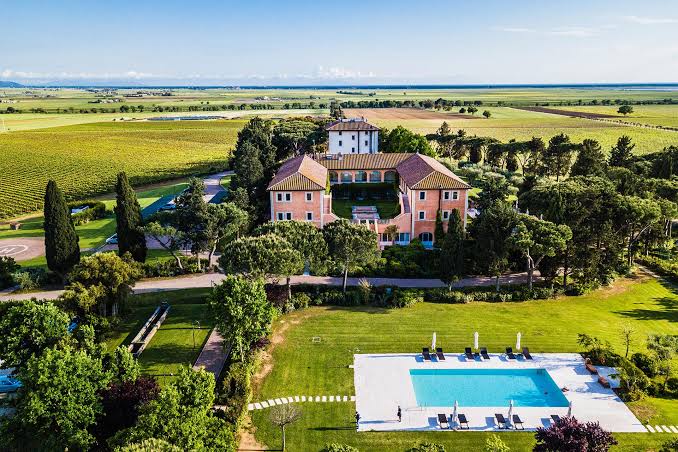
The five-star resort forms part of Tenuta La Badiola, in Castiglione della Pescaia, at the heart of Tuscany’s Maremma region.
According to several financial and industry sources, Terra Moretti is reportedly in the process of selling the asset to the De Santis family, owners of Grand Hotel Tremezzo and Passalacqua on Lake Como.
Market reports have indicated a transaction value in excess of €30 million, with the perimeter potentially extending to the wider Tenuta La Badiola estate, covering approximately 500 hectares.
At the time of publication, however, no joint statement from the parties appears to have been issued confirming the final price, transaction structure or exact scope of the deal.
That distinction matters.
In professional real estate analysis, there is a material difference between a transaction reported by the market and a closing formally confirmed by the parties.
A Hard-to-Replicate Asset
L’Andana is not simply a hotel.
The resort sits within Tenuta La Badiola, a large estate in the Maremma countryside between Castiglione della Pescaia and Grosseto.
According to press reports, the potential transaction perimeter may include not only the hotel itself, but also an ecosystem comprising a historic villa, rural buildings, agricultural land, spa facilities, sports infrastructure, food and beverage operations and an estate of approximately 500 hectares.
From a real estate perspective, this is critical.
When valuing an asset of this type, a simple price-per-key metric becomes close to meaningless if considered in isolation.
The buyer is not merely acquiring a room inventory.
The buyer is acquiring:
-
a destination;
-
a substantial landholding;
-
a market position;
-
an identity;
-
an ecosystem of services;
-
a hospitality platform;
-
meaningful future optionality.
This is the difference between acquiring a hotel and acquiring a true hospitality estate.
The Price Tells Only Part of the Story
Market reports point to a transaction value exceeding €30 million.
On its own, however, that number tells us very little.
To assess whether the price is high, low or appropriate, an investor would need to understand at least:
the precise real estate perimeter, any debt included in the transaction, future CAPEX requirements, normalised operating performance, underlying land value, development potential and the legal and financial structure of the deal.
Without these elements, any conclusion on pricing would be premature.
This is one of the most common mistakes when commenting on hotel transactions.
The purchase price is divided by the number of rooms, and the asset is immediately labelled either “expensive” or “cheap”.
For a complex asset such as L’Andana, that methodology would be inadequate.
The hotel component is only one part of the overall value proposition.
The Economics of Tenuta La Badiola
The most interesting financial data comes from the accounts of Tenuta La Badiola S.r.l.
Publicly available information indicates 2025 revenues of approximately €6.13 million, up from roughly €5.42 million in 2024.
The company nevertheless reported a net loss of around €1.71 million in 2025.
The loss was close to €2 million in 2024 and approximately €1.9 million in 2023.
These figures must be interpreted with caution.
A statutory net loss does not automatically equate to the operating performance of the hotel itself.
Depreciation, financing costs, corporate structure, one-off items and other factors can create a significant difference between hotel-level EBITDA and reported net income.
A proper investment analysis would therefore require at least:
-
normalised EBITDA;
-
GOP;
-
payroll costs;
-
energy costs;
-
maintenance expenditure;
-
FF&E reserve;
-
net financial position;
-
interest expense;
-
depreciation;
-
historical CAPEX;
-
future CAPEX requirements.
One point, however, remains clear:
revenue growth has not been sufficient, at least at net-income level, to return the company to profitability.
That is precisely what makes the case interesting.
Luxury Does Not Automatically Mean Profitability
There is sometimes an implicit assumption in the Italian hotel market that:
luxury = high profitability.
That is not necessarily the case.
Luxury hotels may command exceptionally high ADRs, but they also operate with significantly more complex cost structures.
Labour.
Food and beverage.
Maintenance.
Spa operations.
Landscaping.
Gardens.
Personalised service.
Energy.
Sales and marketing.
Distribution.
Continuous product investment.
An estate extending across hundreds of hectares adds a further level of cost and complexity that a city hotel simply does not carry.
Investors therefore need to distinguish between:
the prestige of the asset
and
the asset’s ability to generate an adequate return on invested capital.
They are not the same thing.
The Potential Seller: Capital Allocation Matters
The financial press has placed the potential disposal of L’Andana within the broader context of Terra Moretti’s financial restructuring and portfolio rationalisation.
The Giornale di Brescia has reported overall indebtedness close to €170 million, linking the potential sale to a strategy aimed at generating liquidity and strengthening the group’s financial structure.
The Brescia edition of Corriere della Sera has also referred to the holding company’s financial position and to the objective, mentioned in corporate documents, of improving financial management partly through the rationalisation of investments and shareholdings.
An important distinction is nevertheless required.
Based on the public information currently available, Terra Moretti does not appear to have officially stated that its financial position is the direct cause of the potential sale of L’Andana.
That link has been made in journalistic reporting.
This caution does not make the transaction any less relevant.
Quite the opposite.
It highlights one of the most important principles in portfolio management:
Capital Allocation
A group should not ask only:
“Is this a good asset?”
It should ask:
“Is this the best possible use of our capital?”
A hotel can be an exceptional asset and still become a rational candidate for disposal.
Because the capital released through a sale may be used to:
-
reduce debt;
-
lower interest costs;
-
strengthen liquidity;
-
fund investment in other assets;
-
support opportunities offering higher returns;
-
reduce overall group risk.
A disposal therefore does not necessarily imply a negative view of the hotel.
It can be an entirely rational portfolio-management decision.
Debt Changes the Meaning of Returns
Consider an asset generating positive operating returns.
If the return on the asset exceeds both the cost of capital and the cost of debt, financial leverage can increase returns on equity.
But when that relationship reverses, the same leverage can work in the opposite direction.
In simplified terms:
ROIC > Cost of Capital → value creation
ROIC < Cost of Capital → value destruction
And where debt levels are high:
insufficient cash flow + high interest expense + required CAPEX = increasing pressure on equity
This is where hospitality ceases to be purely a hotel-management business and becomes a matter of corporate finance.
The Potential Buyer: Why the De Santis Family Would Make Strategic Sense
From the buyer’s perspective, the transaction is equally interesting.
Market sources indicate the De Santis family as the potential acquirer.
The family is behind two of the most recognisable luxury hospitality assets in Italy:
Grand Hotel Tremezzo
and
Passalacqua.
Passalacqua, in particular, has become an internationally recognised example of ultra-luxury positioning within a relatively short period of time.
If L’Andana were to enter that portfolio, the transaction could therefore be viewed not simply as a real estate acquisition, but as a deal with a clear industrial rationale.
Lake Como and the Maremma are very different destinations.
However, they share several characteristics:
-
international clientele;
-
a strong leisure component;
-
high-spending guests;
-
destination-driven experiences;
-
unique real estate;
-
a strong lifestyle component;
-
significant importance of food and beverage;
-
the potential to create brand equity through service.
It would therefore not be merely a matter of geographic diversification.
It could represent coherent diversification within the same customer segment.
From Financial Turnaround to Operating Turnaround
The most interesting question, should the transaction ultimately be confirmed, will be what strategy is adopted for the asset.
There are at least four potential value-creation levers.
1. Pricing
A luxury hotel must be able to convert the uniqueness of its experience into pricing power.
Increasing ADR is not enough.
The challenge is to increase it without damaging occupancy, reputation or customer mix.
2. Revenue Mix
In a resort, value is not generated by rooms alone.
Food and beverage.
Spa.
Experiences.
Events.
Retail.
Wine tourism.
Outdoor activities.
Private events.
Destination experiences.
The quality of the revenue mix can materially transform the economics of the asset.
3. Cost Architecture
In luxury hospitality, cost control does not mean indiscriminate service cuts.
It means understanding which costs genuinely create guest value and which merely add complexity.
The challenge is always the same:
protect the guest experience while improving the productivity of both capital and labour.
4. Brand Positioning
Iconic assets often contain latent value that is not fully reflected in their financial statements.
The right repositioning strategy can materially influence:
-
customer mix;
-
distribution;
-
international awareness;
-
ADR;
-
ancillary revenues;
-
average length of stay.
This is where the experience of an operator with a proven track record in ultra-luxury hospitality can create significant value.
Asset Value and Operating Value Are Not the Same Thing
L’Andana also illustrates a fundamental point in hotel valuation.
A hotel has at least two distinct components of value.
Real Estate Value
The value of the physical property and underlying land.
Operating Business Value
The value generated by the hotel business and its ability to produce sustainable cash flow.
In complex assets, the two may diverge significantly.
An extraordinary property can host an operating business that is not fully optimised.
Equally, a highly profitable hotel business can operate in a property with limited real estate optionality.
A sophisticated investor needs to separate these components.
And then determine where the value-creation opportunity truly lies.
The Core Concept: Hotel Value Gap
We can define the:
Hotel Value Gap
as the difference between:
the value of the asset under its current configuration
and
the value that could potentially be achieved under a different operating, asset-management or capital structure.
This is precisely the gap value-add investors typically seek.
They do not necessarily acquire perfect hotels.
They acquire assets where something can be changed:
-
management;
-
pricing;
-
brand;
-
CAPEX;
-
debt;
-
positioning;
-
distribution;
-
revenue mix;
-
ownership structure.
The right question is therefore not:
“What is L’Andana worth?”
But:
“What could L’Andana be worth under a different strategic and economic configuration?”
The Acquisition Price Is Only the First Investment
This is another key point.
If the transaction were indeed valued above €30 million, that would not necessarily represent the total capital commitment required from the buyer.
The real investment could be expressed as:
**Acquisition Price
-
Transaction Costs
-
CAPEX
-
Working Capital
-
Repositioning Costs
-
Marketing
-
Financing Costs**
Only then can the investor determine the true Total Cost Basis.
It is therefore the return on total invested capital — not simply the return measured against the acquisition price — that should drive the investment case.
The Questions an Institutional Investor Would Ask
When approaching a dossier such as L’Andana, professional due diligence should seek answers to at least ten questions.
1.
What is the hotel’s normalised EBITDA?
2.
How much CAPEX will be required over the next five years?
3.
What is the standalone value of the underlying land and estate?
4.
Which activities create value and which absorb cash?
5.
What is the property’s true pricing power?
6.
Is there potential to increase room count or develop additional accommodation units?
7.
What debt structure would make the investment financially sustainable?
8.
What return can the equity realistically achieve?
9.
What value could be reached after repositioning?
10.
What could the exit market look like seven or ten years from now?
These questions distinguish simple property analysis from genuine investment analysis.
What the L’Andana Case Says About the Next Phase of Italian Hospitality
The Italian hotel market is progressively becoming more sophisticated.
For many years, hotel value was assessed primarily through:
location + real estate + room count.
That is no longer enough.
Investors increasingly focus on:
EBITDA.
CAPEX.
Cash flow.
Debt capacity.
Brand.
Management.
Optionality.
Exit liquidity.
Trophy assets are subject to the same discipline.
Perhaps even more so.
Because they require more capital and must therefore justify a higher level of investment.
The Lesson for Owners and Investors
The potential L’Andana transaction offers a lesson that goes far beyond the individual deal.
Real estate value cannot remain indefinitely disconnected from the asset’s ability to generate adequate returns.
A hotel may have an extraordinary history.
An irreplaceable location.
A recognised name.
A unique real estate footprint.
But capital will always ask the same question:
Is the return appropriate relative to the capital invested and the risk taken?
That is the question that separates an asset from an investment.
And, more importantly, separates:
prestige
from
value creation.
The Investimenti Alberghieri Approach
InvestimentiAlberghieri.it analyses hospitality assets by integrating:
real estate, operations, finance and strategy.
The platform works alongside the strategic insights developed through RobertoNecci.it, the hotel investment and financial expertise of Investhotel.it, and the operating experience of HotelManagementGroup.it.
The objective is not simply to determine whether a hotel is attractive or benefits from a prestigious location.
The objective is to understand:
-
how much capital the asset will require;
-
how much cash flow it can generate;
-
which issues need to be addressed;
-
what level of CAPEX is sustainable;
-
which capital structure is appropriate;
-
where value can be created;
-
which exit strategy can realistically be pursued.
Because a hotel becomes an investment only when asset quality and capital efficiency can coexist.
CTA — Analysis Comes Before Price
Are you considering the acquisition, disposal, repositioning or financing of a hotel or resort?
The first question should not be:
“How much does it cost?”
It should be:
“How much capital will it really require, and what return can that capital generate?”
Investimenti Alberghieri provides independent analysis of hospitality assets, business plans, CAPEX, financial sustainability, positioning and value-creation scenarios.
info@investimentialberghieri.it
Methodological Note
The information regarding the potential sale of L’Andana, the identity of the prospective buyer, the indicative transaction value and the possible transaction perimeter is based on financial and press reports published between late September and early October 2026.
As of the publication date, no joint announcement from the parties appears to be publicly available confirming the final terms, price or completion of the transaction.
The financial and strategic observations contained in this article represent editorial analysis and should not be interpreted as attributing motivations to the parties beyond those officially disclosed.