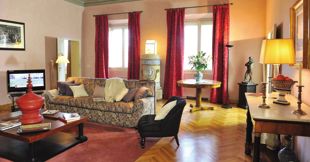
The sale of Le Massif Courmayeur Hotel & Lodge represents one of the most relevant transactions in the recent Italian hospitality market, not because of its size, but because of what it signals to institutional investors: Italian luxury leisure remains one of the most resilient, defensible and internationally attractive segments in European hospitality real estate.
In today’s market, high-end hotels are no longer evaluated purely as real estate assets. Investors increasingly focus on an asset’s ability to sustain premium pricing, generate strong operating margins, maintain international reputation, and ensure long-term demand stability. In other words, value is no longer driven solely by bricks and mortar, but by positioning strength and operational quality.
It is precisely within this framework that a transaction such as Le Massif acquires strategic relevance.
The rising dominance of trophy assets
The global hospitality market is undergoing a clear structural polarization. On one side, underperforming or undifferentiated assets face increasing pressure. On the other, iconic, highly differentiated properties are attracting a disproportionate share of institutional capital.
Trophy assets are not simply luxury hotels. They are strategic hospitality platforms defined by:
- irreplicable location fundamentals;
- experiential depth and emotional value;
- strong brand positioning;
- scarcity-driven supply dynamics;
- consistent appeal to high-net-worth international demand.
Courmayeur stands out as one of the most established alpine luxury destinations in Europe. Structural scarcity of prime hotel stock, strict development constraints, and limited pipeline of new supply significantly enhance the value of existing assets.
From real estate to experiential platforms
The most profound shift in hospitality investment is conceptual: hotels are no longer being assessed as static properties, but as integrated experiential platforms.
This evolution has redefined valuation drivers. Investors now prioritize:
- revenue per available room sustainability (ADR resilience);
- experiential differentiation;
- brand equity and digital reputation;
- operational excellence and consistency;
- guest loyalty and repeat demand;
- ability to command pricing power across cycles.
A well-executed luxury hotel can materially increase its value over time through superior management and strategic positioning. Conversely, even an architecturally exceptional asset can experience value erosion if operational execution is weak.
As a result, investment logic is shifting from ownership of real estate to ownership of performance potential.
Luxury leisure as a structural outperformer
The high-end leisure segment has consistently demonstrated stronger resilience and recovery dynamics compared to many other real estate classes.
Demand is increasingly driven by:
- experiential travel;
- wellness and nature-based tourism;
- destination-led luxury consumption;
- international high-spending leisure flows.
Within this context, the Alpine region—particularly in Italy—benefits from a rare combination of global recognition, natural scarcity, and strong emotional positioning.
Italy retains a structural competitive advantage, supported by:
- globally recognized destinations;
- unmatched cultural and landscape diversity;
- strong luxury tourism demand;
- significant repositioning potential across independent assets.
A clear direction for European hospitality capital
The Le Massif Courmayeur transaction ultimately reinforces a broader structural trend: European hospitality investment is increasingly concentrated in iconic assets, professionally managed platforms, and experience-driven luxury ecosystems.
Ownership alone is no longer sufficient to generate value. The decisive factor is the integration of real estate, management, branding, revenue strategy, and guest experience into a single coherent operating system.
This convergence between real estate investment and industrial hospitality strategy will continue to define asset valuation across the sector over the coming cycle.
Further insights, strategic analyses, and hospitality investment frameworks are available at Robertonecci.it and InvestimentiAlberghieri.it.
For advisory, asset repositioning, hotel management, and investment structuring services:
HotelManagementGroup.it