The real story is not that a hotel is being demolished. It is that, in a specific micro-location, capital can determine that selling residential square metres is more profitable than continuing to sell hotel rooms.
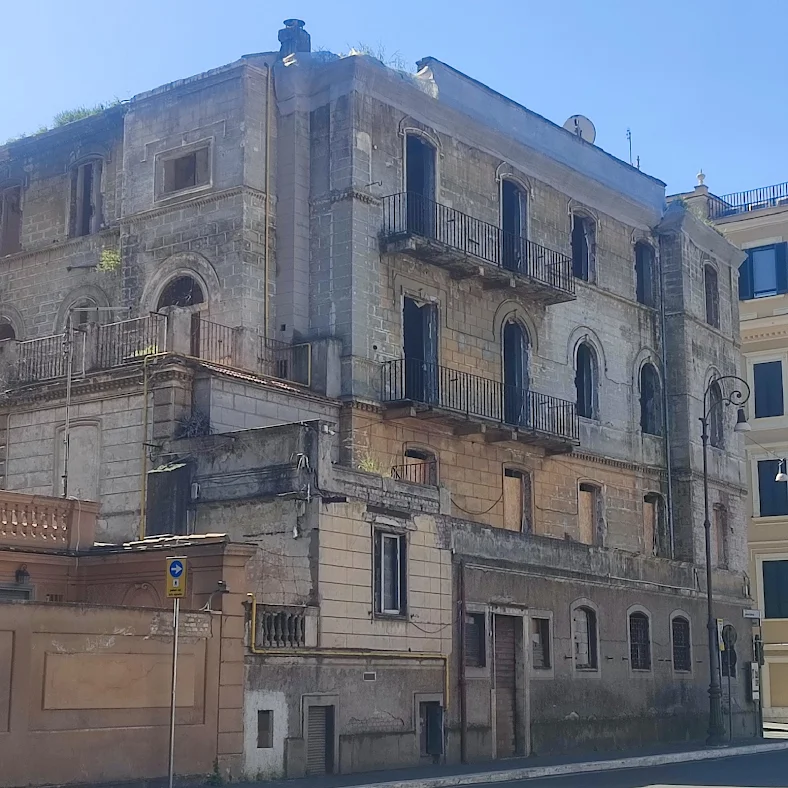
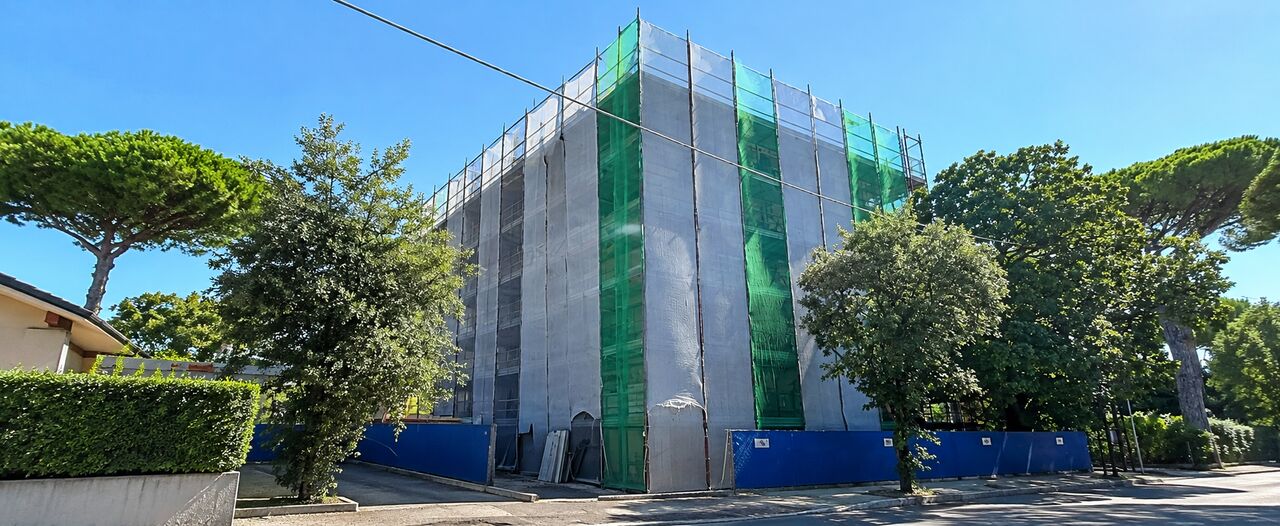
That is what is happening in Lido di Camaiore, where demolition work has begun on the Piccolo Hotel, which is set to make way for a new development comprising eight high-end apartments.
Viewed purely as a local news story, it is simply another real estate redevelopment.
From a hotel investment perspective, however, it raises a much more important question:
what is a hotel really worth when an alternative use of the property can generate greater value than continuing to operate it as hospitality accommodation?
According to local press reports, the project will comprise seven apartments of approximately 80 square metres each and a duplex penthouse of around 110 square metres, arranged over four floors.
The property is owned by Fata Srl of Barga, a company that has already undertaken another conversion of a former hotel in Lido di Camaiore.
A hotel can sometimes be worth more closed than open
This is one of the most delicate issues in the valuation of hospitality assets.
The value of a hotel does not automatically correspond to the value of the real estate in which the business operates.
Likewise, the value of the property does not necessarily correspond to the value generated by the hotel business itself.
For well-located properties — particularly in established tourism destinations with strong residential demand — at least three distinct values may coexist:
-
the real estate value of the property;
-
the enterprise value of the hotel operation;
-
the potential value generated by an alternative use.
When the third significantly exceeds the first two, conversion may become the economically rational choice.
This is one of the principles regularly explored by Investimenti Alberghieri: before determining what a hotel is worth, investors need to establish which use allows the asset to generate the highest sustainable value.
From revenue per room to value per square metre
The redevelopment of the Piccolo Hotel fundamentally changes the economics of the investment.
A hotel creates value through:
-
occupancy;
-
ADR;
-
RevPAR;
-
ancillary revenues;
-
EBITDA;
-
long-term cash-flow generation.
A residential development follows a completely different economic model, driven primarily by:
-
saleable floor area;
-
achievable selling price per square metre;
-
product quality and positioning;
-
market absorption;
-
construction costs;
-
developer margin.
The correct comparison is therefore not simply between an “hotel” and “apartments”.
It requires two competing financial scenarios.
Scenario 1 — Continued hotel operation
An investor would typically assess the business using a framework such as:
Hotel value = Normalised EBITDA / Required yield
From this value, any CAPEX required to bring the property back to a competitive standard must then be deducted or appropriately factored into the valuation.
An outdated property can appear attractive based on its acquisition price alone, yet rapidly lose much of that attractiveness once refurbishment, building services, energy efficiency, guestrooms, common areas and regulatory compliance costs are included.
Scenario 2 — Residential conversion
Under a conversion scenario, the key metric changes:
Potential revenue = Saleable floor area × Average achievable selling price per sqm
From this gross development value, the investor must deduct:
-
acquisition price;
-
demolition costs;
-
construction costs;
-
design and professional fees;
-
planning and development charges;
-
financing costs;
-
sales and marketing expenses;
-
taxation;
-
contingencies;
-
the minimum development margin required by the investor.
Only after comparing these two scenarios can the highest-value use of the asset be properly identified.
The Villa Alice precedent
The Piccolo Hotel is not an isolated case.
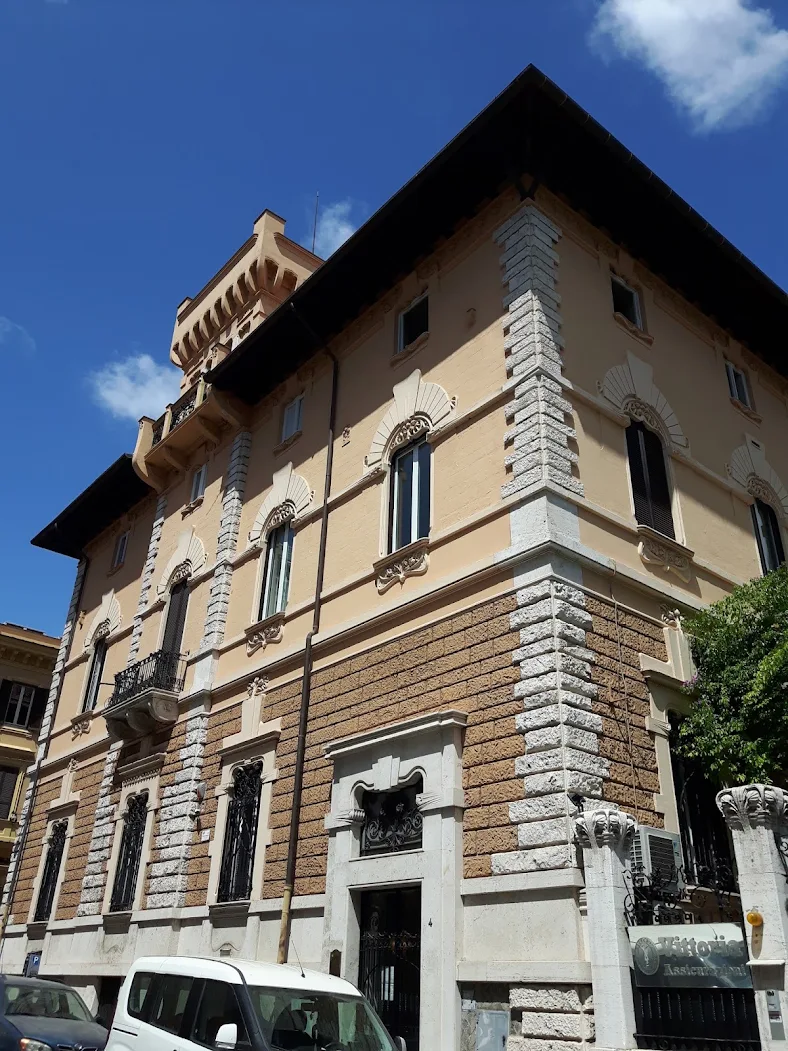
The same investor had previously undertaken the redevelopment of Villa Alice, another former hospitality property in Lido di Camaiore, converting it into high-end residential apartments.
The precedent is relevant not because the values of the individual units can necessarily be transferred directly to the Piccolo Hotel project, but because it demonstrates the existence of a market capable of absorbing premium residential product in an established tourism destination.
That materially changes the investment equation.
If residential development can provide a faster return on capital and a superior risk-adjusted return compared with continued hotel operations, conversion can become the financially dominant strategy.
Lido di Camaiore: a trend that extends beyond one hotel
The issue becomes even more significant when viewed at destination level.
In recent years, several hospitality properties in the area have been subject to conversion, redevelopment or alternative-use projects.
At the same time, other investors have pursued the opposite strategy: acquiring existing hotels, investing substantial CAPEX and repositioning them into higher market segments.
These are two fundamentally different strategies.
And both can be correct.
The decisive variables include:
-
location;
-
property size;
-
room count;
-
expansion potential;
-
building quality;
-
refurbishment requirements;
-
seasonality;
-
prospective profitability;
-
alternative real estate value.
The right decision should therefore never be dictated solely by the property's existing use.
It should be dictated by the numbers.
The real mistake is valuing a hotel under a single scenario
Many hotel transactions are still assessed from only one perspective.
The owner focuses on the value of the property.
The operator focuses on EBITDA.
The real estate investor focuses on price per square metre.
The lender focuses on debt-service capacity.
None of these perspectives, taken in isolation, is sufficient.
A robust valuation should instead compare several potential scenarios simultaneously:
Scenario A
Continuation of the existing hotel operation;
Scenario B
Refurbishment and hotel repositioning;
Scenario C
Appointment of a new operator;
Scenario D
Lease of the business or property;
Scenario E
Sale of the asset;
Scenario F
Conversion to an alternative use, where permitted by planning regulations.
It is through this comparison that the strategic value of the asset emerges — and that value can differ substantially from its simple real estate valuation.
The critical question: how much capital is required to preserve the hotel use?
For smaller hospitality properties, one variable is particularly easy to underestimate: CAPEX.
Keeping a hotel open does not simply mean avoiding demolition.
It means continuing to invest.
A hotel must compete every day with:
-
newly opened hotels;
-
recently refurbished properties;
-
serviced apartments;
-
branded residences;
-
alternative accommodation formats;
-
increasingly demanding guest expectations.
If keeping a small hotel competitive requires substantial investment relative to the EBITDA it can realistically generate in the future, the value of the operating business can deteriorate quickly.
At that point, the property's alternative-use value may become dominant.
The risk for tourism destinations
What is economically rational for an individual property owner may have very different consequences for the destination as a whole.
If a growing number of hotels are converted into residential units, the destination may progressively lose accommodation capacity.
The issue should not, however, be approached simply by opposing hotel conversions.
The more important question is:
why is the market assigning greater value to residential redevelopment than to preserving the hospitality use?
Possible explanations include:
-
insufficient hotel scale;
-
physically obsolete properties;
-
strong seasonality;
-
significant CAPEX requirements;
-
difficulties in generational succession;
-
weak operating profitability;
-
fragmented ownership structures;
-
rising residential property values.
Attempting to prevent the phenomenon without understanding its underlying economics means addressing the consequence rather than the cause.
Before selling a hotel, understand what is actually being sold
The right question is therefore not:
“How much is this hotel worth?”
The better question is:
“Which configuration allows this asset to generate the highest value, taking into account risk, capital requirements and prevailing market conditions?”
A hotel asset can derive value as:
-
an operating business;
-
an income-producing leased property;
-
a repositioning opportunity;
-
an asset to be operated by a new management company;
-
a turnaround opportunity;
-
a real estate redevelopment project.
Separating the real estate component from the operating business is therefore essential.
Hotel Management Group advises on the analysis, valuation and strategic development of hospitality assets, while Investhotel Capital Partners focuses on turnaround situations, corporate restructuring, asset enhancement and special situations.
Further analysis on the hotel industry, governance and hospitality management is available at RobertoNecci.it.
The Piccolo Hotel case: the real information lies in the allocation of capital
The demolition of the Piccolo Hotel therefore tells us something far more important than the physical transformation of a building.
It reflects a capital allocation decision.
In that specific location, an investor has concluded that creating residential product is more attractive than retaining the hotel use.
That does not mean residential conversion is always preferable.
Quite the opposite.
Every hospitality asset should be analysed without assuming that its current use is necessarily its optimal use.
In some cases, the highest value will come from continuing hotel operations.
In others, from refurbishment and repositioning.
Elsewhere, a new operator or international brand may unlock value.
And in some cases, the optimal solution may involve an entirely different use.
That is the difference between simply buying a property and truly understanding a hotel investment.
For hotel asset analysis, valuations of both the real estate and operating components, value-enhancement strategies, turnaround situations and investment opportunities:
info@investimentialberghieri.it
InvestimentiAlberghieri.it
Investhotel Capital Partners
Hotel Management Group
RobertoNecci.it