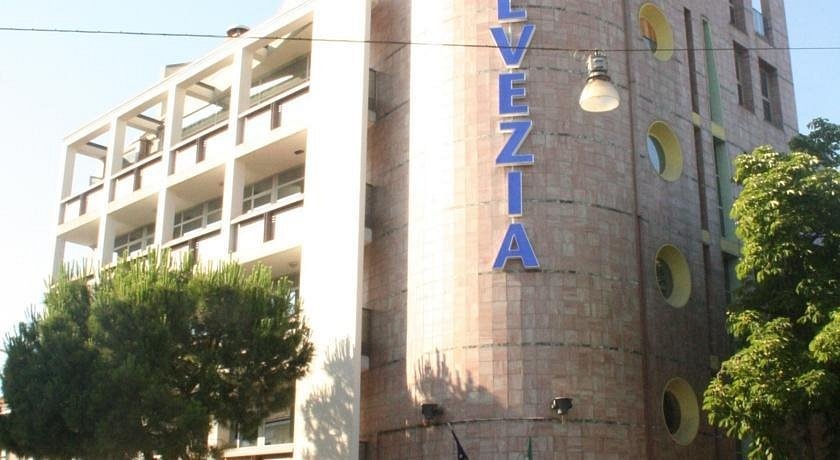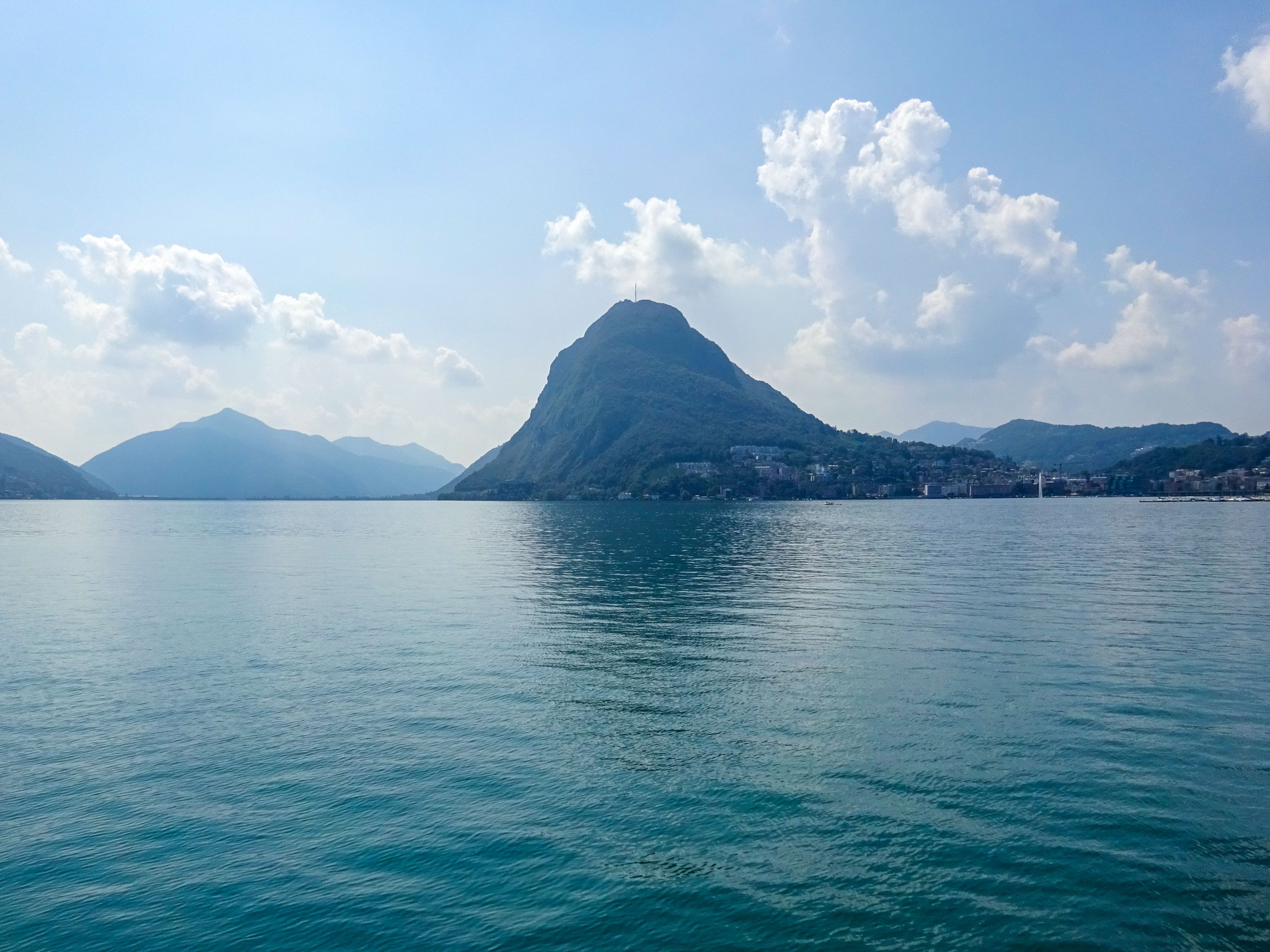
More than CHF 52 million will be invested in the transformation of Villa Sassa and Villa Principe Leopoldo in Lugano. This is far more than a refurbishment programme: it is a tangible case of capital allocation in luxury hospitality. Ultimately, the success of the investment will not be measured by the quality of the renovated product alone, but by the incremental EBITDA and asset value the capital deployed is able to generate.
In hospitality, there is a fundamental difference between spending capital and allocating capital.
The first creates a construction project.
The second should create value.
This is the perspective from which the investment announced in Ticino by DOT LIFE SA should be assessed. The company plans to deploy more than CHF 52 million across Villa Sassa and Villa Principe Leopoldo, two of Lugano’s most established and recognisable hospitality assets.
According to information reported by Corriere del Ticino, more than CHF 40 million will be invested in Villa Sassa, while more than CHF 12 million will be allocated to Villa Principe Leopoldo. Both hotels are expected to close temporarily from late December 2026 until late April 2027, reopening at the beginning of May.
This is therefore not simply an extraordinary maintenance programme.
It is a hospitality capital allocation decision.
And from an investor’s perspective, the key question is unavoidable:
What economic return will CHF 52 million of CAPEX ultimately generate?
Two Hotels, Two Investment Strategies
One of the most compelling aspects of the transaction is that the two properties are not being treated as interchangeable assets.
Villa Principe Leopoldo and Villa Sassa have different identities, market positions and value-creation opportunities.
The strategy therefore appears to start from a sound principle:
the project should be designed around the asset — not the asset around the project.
At Villa Principe Leopoldo, built in 1926 and celebrating its centenary in 2026, the stated objective is to preserve the property’s historic character while upgrading guest areas and technical infrastructure.
The hotel comprises 37 suites and has been a member of Relais & Châteaux since 2000, positioning it firmly within the luxury hospitality segment.
At Villa Sassa, by contrast, the transformation will be broader and will support the hotel’s repositioning as an urban wellness hotel, combining resort-style characteristics with an urban location.
The existing product already provides a strong foundation for this strategy: Villa Sassa offers rooms, suites and apartments alongside approximately 3,000 square metres of wellness facilities.
Two assets.
Two potential markets.
Two different value-creation strategies.
CAPEX Does Not Automatically Create Value
One of the most common mistakes in hospitality investment is to confuse the amount of capital deployed with the amount of value created.
Investing CHF 40 million in a hotel does not automatically increase the value of that hotel by CHF 40 million.
Value is created only when investment sustainably improves the asset’s ability to generate future cash flows.
CAPEX should therefore deliver one or more measurable outcomes:
-
higher ADR;
-
RevPAR growth;
-
stronger or better-quality occupancy;
-
higher guest spend;
-
increased ancillary revenues;
-
improved GOP;
-
improved EBITDA;
-
reduced technical obsolescence;
-
greater energy efficiency;
-
stronger competitive positioning;
-
an extension of the asset’s economic life;
-
higher real estate and operating value.
This is the difference between property refurbishment and hospitality value creation.
The Real Investment Equation
In highly simplified terms, the value generated by a hotel repositioning can be conceptualised as:
Value Creation ≈ Stabilised Incremental EBITDA × Market Multiple – CAPEX – Closure Costs – Financing Costs – Ramp-Up Costs
This is not intended as a hotel valuation formula.
It is, however, a useful representation of the economic logic that should govern an investment of this scale.
Consider a major refurbishment that enables the hotel to increase room rates significantly, but at the same time creates a materially more expensive operating structure.
Revenue may rise substantially without producing a comparable increase in EBITDA.
In that case, the hotel product may have improved.
The investment has not necessarily improved to the same extent.
Conversely, a project that successfully changes an asset’s competitive positioning, increases ADR and ancillary revenue while keeping operating costs under control may generate incremental EBITDA which, once capitalised into the value of the property, creates value significantly greater than the capital originally invested.
That is the outcome a professional investor should seek.
Post-Renovation EBITDA Is the Critical Metric
With projects of this scale, attention naturally gravitates towards architecture and design.
But the most important design exercise should arguably be the financial one.
Before defining finishes, rooms, spas, restaurants or interior concepts, the future hotel P&L should be modelled.
The relevant questions therefore become:
What ADR can the repositioned hotel realistically sustain?
What occupancy can be achieved once the asset reaches stabilisation?
What will the new competitive set look like?
How much can revenue per available room increase?
How much additional non-room revenue can be generated?
What GOP margin can the asset achieve?
What normalised EBITDA can the property produce?
How long will stabilisation take?
And, most importantly:
what incremental return will be generated on the capital invested?
A hotel can be exceptional from an aesthetic standpoint and still represent a mediocre investment.
Because aesthetics and returns are not the same thing.
Villa Sassa: Turning Wellness into an Economic Platform
Villa Sassa presents a particularly interesting configuration.
Its approximately 3,000 square metres of wellness facilities, combined with rooms, suites and apartments, provide the potential to develop a much broader economic model than that of a predominantly room-driven hotel.
Wellness, fitness, food and beverage, extended stays, dedicated wellbeing programmes and demand from the local market can all contribute to a more diversified revenue structure.
Yet this is precisely where one of the key risks of luxury hospitality emerges.
More services do not automatically mean more value.
More services can also mean:
more employees,
higher energy consumption,
greater maintenance requirements,
more operating space,
greater complexity,
more working capital,
and higher fixed costs.
The correct assessment therefore concerns not merely the additional revenue generated.
It concerns the incremental margin generated by every new component of the hospitality offering.
Wellness creates value when it can evolve from an amenity into a profit centre, a pricing tool, a driver of demand or a mechanism for reducing seasonality.
Otherwise, it remains primarily a cost.
Villa Principe Leopoldo: Protecting Intangible Value
The investment logic at Villa Principe Leopoldo is different.
Here, a significant proportion of the asset’s value is also associated with elements that are difficult — if not impossible — to replicate:
history, architecture, reputation, location, identity and brand recognition.
Built in 1926, the villa reaches its centenary in 2026, and the announced project is intended to preserve its historical character while bringing the property into a more contemporary hospitality environment.
Heritage luxury hotels face a particular challenge.
Renovate too aggressively, and part of the property’s intangible value can be lost.
Renovate too cautiously, and the asset risks gradual obsolescence.
CAPEX must therefore achieve a highly sophisticated balance between preserving identity and meeting the expectations of today’s international luxury traveller.
Luxury guests do not necessarily buy the newest product.
They buy uniqueness, service, experience, space, history and perceived quality.
These are competitive advantages that a new entrant cannot simply reproduce by acquiring a development site.
Four Months of Closure: The Hidden Cost of CAPEX
Villa Sassa and Villa Principe Leopoldo are expected to concentrate the main works within a closure period running from late December 2026 until late April 2027.
This highlights another factor that is frequently underestimated.
The cost of a hotel refurbishment does not equal the cost of the building works.
In addition to headline CAPEX, investors must consider:
-
revenue foregone during closure;
-
residual fixed operating costs;
-
workforce management;
-
financing costs;
-
cost overruns;
-
project variations;
-
pre-opening expenses;
-
relaunch marketing;
-
rebuilding commercial positioning;
-
distribution costs;
-
the ramp-up period required to return the hotel to stabilised performance.
DOT LIFE has also indicated that the temporary closure will have consequences for employees and that the transition will be managed directly with the respective teams.
In an investment exceeding CHF 52 million, therefore, time itself becomes capital.
A delay of even a few months is not merely a technical issue.
It can alter the IRR of the entire investment.
The Greatest Risk Is Not Investing CHF 52 Million
In projects of this scale, the amount of capital invested is often perceived as the principal source of risk.
Not necessarily.
The greater risk is deploying capital without sufficiently improving the asset’s earnings capacity.
A hotel can complete its renovation successfully.
It can reopen on schedule.
It can deliver an outstanding physical product.
And it can still fail to achieve the expected investment return.
The market may not accept the new pricing.
The competitive set may evolve.
Higher operating costs may absorb much of the additional revenue.
The targeted segment may prove less deep than anticipated.
The stabilisation period may take longer than projected.
Or the product may have been designed before the economic model was properly defined.
For this reason, due diligence on major hotel CAPEX programmes must be commercial, operational and financial as well as technical.
Business Plan First, Construction Site Second
The correct sequence for a major hotel investment should be:
market → positioning → demand → product → revenue → cost structure → EBITDA → sustainable CAPEX → design
Too often, the process works in reverse.
It starts with the property.
The architectural project is defined.
The construction budget is calculated.
Only afterwards does the investor attempt to determine the operating performance required to justify the expenditure.
But capital should not simply finance what can physically be built.
It should finance what can be economically justified.
An Important Signal for the Hotel Investment Market
The investment announced by DOT LIFE is significant beyond Lugano itself.
It reflects a broader trend becoming increasingly evident across the European hospitality market: competition for high-quality hotel assets is no longer confined to acquisitions.
It is also about the ability of owners to reinvest effectively in their existing portfolios.
A hotel that performs well today will not necessarily remain competitive ten years from now.
Guests change.
Technology changes.
Distribution changes.
Energy standards change.
Consumption patterns change.
Competitive sets change.
Service expectations change.
CAPEX therefore becomes part of an asset ownership strategy.
Failing to invest can gradually destroy value.
Investing badly can destroy it much faster.
Spending Capital or Allocating Capital?
This is ultimately the most important lesson to draw from the Villa Sassa–Villa Principe Leopoldo investment.
Spending capital means improving a property.
Allocating capital means increasing the asset’s future ability to generate income and value.
The difference will become measurable after the hotels reopen.
Not in the number of refurbished rooms.
Not in the quality of the materials selected.
Not in the final construction budget.
But in the relationship between:
invested capital → incremental EBITDA → cash flow → asset value.
That is the metric that should accompany every major hospitality investment.
Because CHF 52 million is not the outcome of this transaction.
It is the capital that must produce the outcome.
Hotel Investment: Analysis Before Capital Deployment
InvestimentiAlberghieri.it analyses hospitality assets, transactions, hotel companies, acquisitions, development projects, repositioning strategies and value-creation opportunities through an economic, financial, real estate and operational perspective.
Investhotel.it focuses on turnaround strategies, business planning, financial restructuring and hotel value creation.
Robertonecci.it explores the relationship between hotel operations, ownership, governance, finance and the structural transformation of the hospitality industry.
HotelManagementGroup.it integrates advisory, governance, asset management, management control, organisation and hotel development expertise.
For hotel asset analysis, valuations, business plans, value-creation scenarios, due diligence and investment dossiers:
info@investimentialberghieri.it