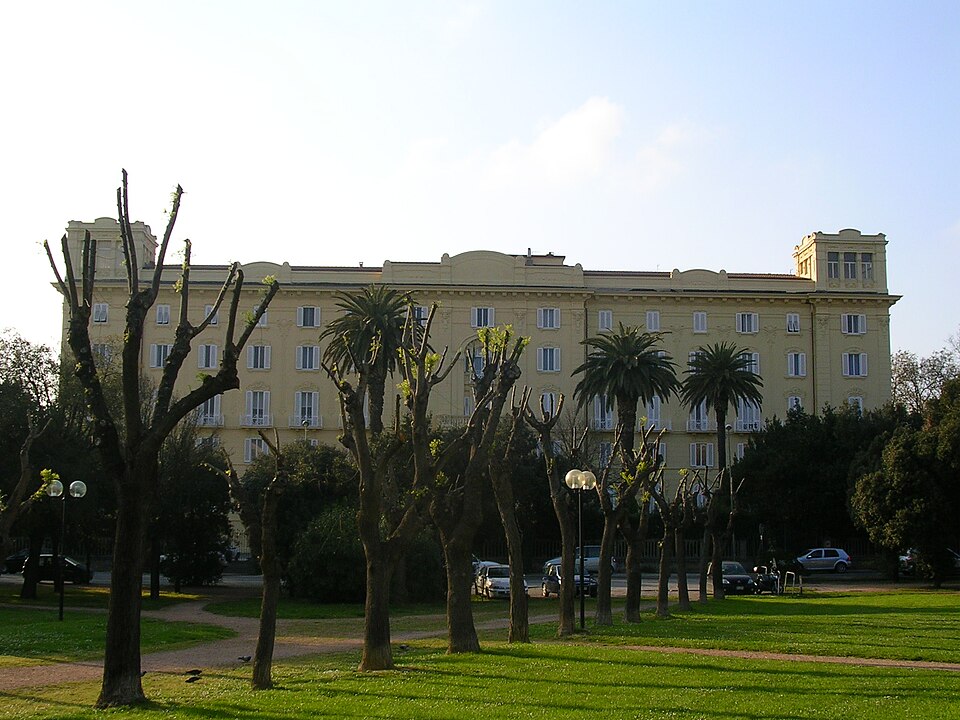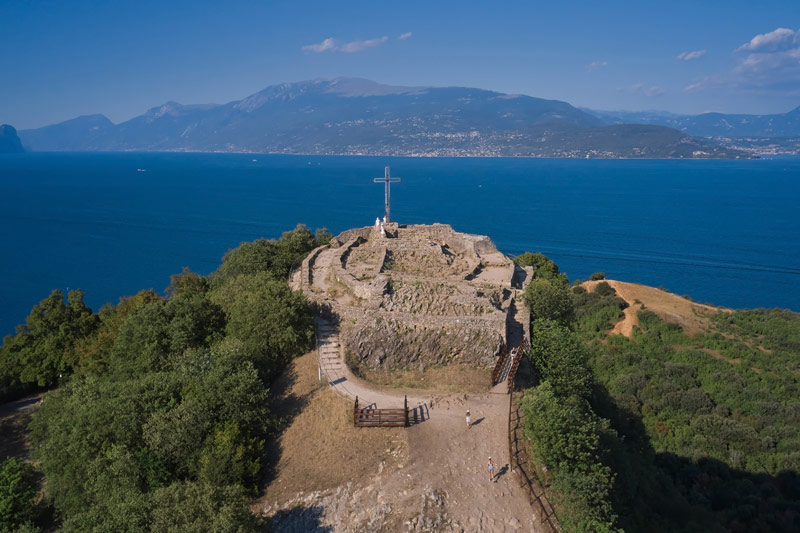
In Manerba del Garda, close to the shores of Lake Garda, a 4-star hotel forming part of a wider tourism and commercial complex is being offered at auction. The property comprises approximately 1,625 sqm, 25 rooms, F&B facilities, a kitchen, underground parking and ancillary areas. The minimum bid stands at €1.192 million, equivalent to approximately €47,700 per key. But the real arbitrage is not simply buying at €47,700 per key: it is determining whether the strength of the Lake Garda destination can translate that entry basis into a materially higher stabilised value following capex, repositioning and operational normalisation.
Investment Snapshot
Location: Manerba del Garda, Brescia – Lake Garda, Italy
Asset: 4-star hotel
Keys: approximately 25
Area: approximately 1,625 sqm
Base price: €1,589,531.25
Minimum bid: €1,192,148.44
Minimum bid per key: approximately €47,700
Minimum bidding increment: €16,000
Bid submission deadline: 8 September 2026 at 12:00 p.m.
Auction: 9 September 2026 at 10:30 a.m.
Proceeding: Court of Brescia – Real Estate Enforcement Proceeding No. 145/2021 – Lot 5
The Manerba del Garda opportunity is particularly relevant for InvestimentiAlberghieri.it because it combines three characteristics that rarely appear together:
a strong leisure destination, a very low entry price per key and the opportunity to reposition an asset already configured as a 4-star hotel.
That combination makes it particularly important to avoid simplistic conclusions.
The most striking number — approximately €47,700 per room based on the minimum bid — may appear sufficient to define the opportunity.
It is not.
In distressed hotel acquisitions, price per key is only the first layer of the analysis.
The real underwriting process begins when investors move from:
Purchase Price
to
Total Investment Cost
and then from:
Total Investment Cost
to
Stabilised EBITDA, Stabilised Value and Risk-Adjusted Return.
The Asset: A 4-Star Hotel Within a Wider Mixed-Use Complex
The property is located at Via Catullo 1 in Manerba del Garda.
It is currently designated for 4-star hospitality use and forms part of a broader real estate complex incorporating tourism and commercial uses.
The reported commercial area is approximately 1,625 sqm, distributed across several levels.
The configuration includes:
en-suite guestrooms, lobby, reception, breakfast area, bar, kitchen, offices, technical areas, underground parking, storage areas, porticoes, balconies and terraces.
The property also benefits from a lift and underground parking spaces.
Available documentation indicates a generally good state of maintenance and a favourable tourism location.
That matters.
But investors must distinguish between:
a property that appears to be in good physical condition
and
a property requiring no capex.
They are entirely different propositions.
The Auction History Shows Significant Repricing
The history of the procedure shows a progressive reduction in the auction base price.
6 December 2022 — €3,750,000
3 October 2023 — €2,812,500
12 March 2024 — €2,109,375
9 September 2026 — €1,589,531.25
Compared with the initial 2022 level, the current base price has fallen by approximately €2.16 million, or around 57.6%.
The current minimum bid is €1,192,148.44.
Compared with the original €3.75 million auction base, the minimum potential entry point is approximately 68% lower.
That is a substantial repricing.
But the same principle that applies across hospitality special situations applies here:
a discount to a previous asking level does not automatically represent value.
The fact that the asset was previously offered at €3.75 million does not mean that €1.19 million is necessarily the right price today.
Investors are not rewarded for the gap to a historical auction base.
They are rewarded for future cash flow.
€47,700 per Key: A Powerful Headline, but an Incomplete Metric
Assuming approximately 25 rooms, the minimum bid implies an acquisition price of around:
€47,700 per key.
That is an exceptionally low figure for a 4-star property in the Lake Garda market.
But price per key can create an illusion of value.
The investor should immediately ask:
what does the cost per key become after capex, FF&E, working capital and relaunch costs?
If, purely for analytical purposes, the purchaser were required to invest an additional €1.0-1.5 million in refurbishment, technology, FF&E, pre-opening, marketing, working capital and contingency, the effective capital invested per room would look very different.
The appropriate benchmark is therefore not:
Purchase Price / Keys
but:
Total Investment Cost / Stabilised Keys.
And, more importantly:
Total Investment Cost / Stabilised EBITDA.
Lake Garda Is the Real Strategic Differentiator
The asset's principal strategic advantage is not its price.
It is the destination.
Lake Garda is one of Italy's most established, international and liquid leisure hospitality markets.
It benefits from:
strong leisure demand, significant international visitation, good accessibility, deep summer demand, substantial tour-operator activity and the ability to generate ADR levels materially above those achievable in many secondary Italian destinations.
Yet even within a strong destination, micro-location matters.
An investor should not stop at the statement:
“It is a Lake Garda hotel.”
The underwriting should examine:
actual distance from the lake, accessibility, visibility, relationship with nearby beaches, parking, competitive environment, surrounding amenities, local demand generators and the hotel's relationship with the wider real estate complex.
The value of a leisure hotel ultimately emerges from the interaction between:
destination strength + micro-location + product quality + management capability.
The Critical Question: How Independent Is the Hotel from the Wider Complex?
The hotel forms part of a larger real estate development.
That can represent both an advantage and a risk.
It may be beneficial where neighbouring services, commercial activities and events increase demand and enhance the guest proposition.
It can become a constraint if hotel operations depend on:
shared access, common infrastructure, parking, plant and equipment, technical services, utilities, maintenance arrangements or complex condominium relationships.
Before acquisition, investors should therefore construct a detailed shared infrastructure map.
The key question is:
which components essential to hotel operations are fully controlled by the purchaser, and which remain dependent on the wider complex?
The answer can materially change the operating risk profile.
Common Areas: A Property Detail That Can Become an Investment Issue
The available documentation indicates that the property carries proportional interests in common areas.
This may be entirely normal from a real estate perspective, but it is highly relevant from an investment standpoint.
Investors need to establish:
which common areas exist;
what costs they generate;
how those costs are allocated;
whether extraordinary works are planned;
which services are shared;
how the wider complex is governed.
An apparently compelling hotel acquisition can become less attractive if it carries condominium or shared-infrastructure costs that have not been properly incorporated into the underwriting.
This is precisely where legal due diligence and operational due diligence need to converge.
Capex Cannot Be Assessed Solely from the Property's Current Condition
One of the most common mistakes is to confuse “good condition” with “competitive hotel product”.
A building can be technically well maintained while remaining commercially outdated.
Investors should distinguish between at least four categories of investment.
Technical Capex
Structural works, plant and equipment, safety systems, HVAC, lifts, fire compliance and energy efficiency.
Product Capex
Guestrooms, bathrooms, public areas, reception, F&B facilities, outdoor spaces and the overall guest journey.
FF&E
Beds, furniture, lighting, televisions, operating equipment and technology.
Commercial Capex
Website, PMS, RMS, booking engine, CRM, photography, distribution, branding and relaunch activities.
The required capex must therefore be determined by the future strategy.
Not merely by the property's current physical condition.
What Should the Hotel Become?
This is arguably the most important strategic question.
Acquiring the asset is not enough.
The investor must decide what the property should become.
Potential concepts could include:
independent 4-star leisure hotel
boutique lifestyle hotel
upper-midscale seasonal property
family-oriented Lake Garda hotel
bike and outdoor hotel
small premium leisure property
Each strategy produces materially different implications for:
ADR, customer segmentation, capex, staffing, distribution and margins.
Before establishing the maximum acquisition price, the investor should therefore define the future product concept.
This is one of the principles underpinning repositioning strategies analysed by HotelManagementGroup.it: hotel value is not determined by its official star classification, but by the product's ability to capture demand consistent with its positioning.
25 Keys: Scale Constraint or Opportunity?
A hotel of approximately 25 rooms presents a particular operating challenge.
It is large enough to require a genuine hotel operating structure.
But it is not necessarily large enough to absorb a complex fixed-cost base efficiently.
Productivity therefore becomes critical.
A small hotel must manage with particular discipline:
staffing;
front office;
housekeeping;
F&B;
management;
outsourcing;
technology;
automation;
revenue management;
marketing.
Every management or operating position has a much greater impact on GOP than it would in a 100-room property.
The operating model therefore needs to be designed with considerable precision.
Break-Even Occupancy May Be the Most Important Number
Before underwriting the upside, investors should establish the hotel's break-even occupancy.
In other words:
what average annual occupancy, at a given ADR, is required to cover the operating cost base and produce a sustainable GOP?
The conceptual calculation begins with:
Break-even Revenue = Fixed Costs / Contribution Margin
and then translates that revenue requirement into a combination of:
Occupancy × ADR.
This is particularly important for a small hotel.
If the property requires very high occupancy merely to break even, the transaction carries materially greater operating risk.
If break-even can be achieved under conservative performance assumptions, the margin of safety increases.
The Revenue Ceiling Must Be Established Before Acquisition
Lake Garda can support strong hotel performance.
But every individual asset has its own economic ceiling.
The investor needs to estimate:
how many rooms can be sold
at what ADR
over how many months
with what demand mix
through which distribution channels
and at what customer acquisition cost.
Together, these variables determine the hotel's Revenue Ceiling.
Only then can investors assess whether the proposed capex is consistent with the asset's ability to generate an adequate return on that investment.
The Mistake Would Be to Chase Product Quality Instead of Returns
A strong destination can encourage investors to overcapitalise a property.
This is a common risk.
Spending more to create a better hotel does not automatically generate a higher return.
Every euro of capex should be assessed against its incremental return.
If a €300,000 investment increases ADR by €10 but does not improve occupancy, reputation or profitability sufficiently, it may not be economically justified.
The correct framework should therefore be:
Capex → Incremental Revenue → Incremental GOP → Incremental Value.
Not:
Capex → Better-looking hotel.
Total Investment Cost Is the Number That Matters
The €1.192 million minimum bid does not represent the true cost of the transaction.
Total Investment Cost should include at least:
**acquisition price
-
taxes and transaction costs
-
technical capex
-
repositioning capex
-
FF&E
-
IT and technology
-
pre-opening / relaunch costs
-
working capital
-
marketing
-
professional fees
-
contingency.**
Only after reconstructing these components can the investor establish the true cost per key.
This is the level of analysis required in extraordinary hotel transactions of the type examined by Investhotel.it, where the real estate purchase price is only one component of the capital ultimately at risk.
Value Creation Potential: The Number Missing from the Auction Headline
Once Total Investment Cost has been established, investors need to estimate the stabilised value of the property after execution of the business plan.
The central equation becomes:
Stabilised Value – Total Investment Cost = Value Creation Potential.
That is the real arbitrage.
Not the difference between the old auction base and the current price.
Not the nominal discount.
Not price per key viewed in isolation.
Value is created only where, after incorporating capex, working capital, relaunch costs and execution risk, the stabilised value of the hotel remains materially above the total capital invested.
If Total Investment Cost were very close to Stabilised Value, the transaction might provide insufficient headroom to compensate for the risk being assumed.
If the gap were substantial, the investor could have a genuine margin of safety.
The underwriting therefore needs to model simultaneously:
entry basis
capital required
stabilised cash flow
exit valuation
value creation gap.
Only then does the discount become economically meaningful.
From Total Investment Cost to Investment Returns
Once the total capital requirement has been established, investors should model at least three scenarios.
Downside Case
ADR and occupancy below expectations, pronounced seasonality, slower ramp-up and capex above budget.
Base Case
Realistic positioning, efficient distribution, market-consistent demand and a normalised cost structure.
Upside Case
Successful repositioning, stronger ADR, high international penetration and an extended operating season.
These scenarios should produce:
Revenue
GOP
EBITDA
Free Cash Flow
and ultimately:
Unlevered IRR
Levered IRR
Equity Multiple
Cash-on-Cash Return.
Only at this stage does the auction price become meaningful.
Maximum Bid Price Should Be Calculated Backwards
The correct question is not:
“How much can we bid?”
It is:
“What is the maximum acquisition price that allows us to achieve our required return?”
Conceptually:
Stabilised Enterprise Value
– Required Capex
– FF&E
– Working Capital
– Transaction Costs
– Relaunch Costs
– Contingency
– Execution Risk Discount
= Maximum Bid Price.
If the result is below the minimum bid, the opportunity may not be economically attractive even at the lowest admissible price.
If it is materially higher, there may be a genuine margin of safety.
That is the appropriate framework for underwriting a hospitality special situation.
Exit Risk May Be the Critical Variable
Manerba del Garda has an important advantage over many hospitality special situations:
the destination is comparatively liquid.
A Lake Garda hotel could potentially attract:
hotel operators;
family offices;
private investors;
leisure hospitality groups;
German and Central European operators;
specialist hospitality investors.
But liquidity should never be assumed.
A 25-room property may be too small for certain institutional funds while remaining too operationally complex for purely real estate investors.
The potential exit buyer universe should therefore be identified at the acquisition stage.
Exit Strategy Should Influence Capex
If the strategy is to sell the hotel to an operator in the future, the product should be designed to maximise operating profitability.
If the intended buyer is a real estate investor, the stability and structure of a future lease or management arrangement may become more important.
If the asset is intended to be held for the long term, a higher level of product investment may be justified.
Capex therefore depends partly on the exit strategy.
Not only on positioning.
Where Value Could Be Created
The Manerba opportunity offers at least five potential value-creation levers.
Acquisition Basis
A significantly compressed entry price compared with previous auction rounds.
Location Arbitrage
The potential to acquire a Lake Garda hospitality asset at a price per key substantially below the levels typically associated with the destination.
Operational Improvement
Revenue management, distribution optimisation, staffing productivity and cost control.
Product Repositioning
Enhancing the product to increase ADR and market penetration.
Exit Repricing
The potential future sale of a stabilised hotel with an established operating track record and greater visibility over sustainable cash flows.
The combination of these levers may create value.
None of them is automatic.
Risk-Adjusted Entry Basis Matters More Than Price per Key
€47,700 per key makes a compelling headline.
But an investment committee should focus on a different metric:
Risk-Adjusted Entry Basis.
The acquisition price must adequately compensate for:
**technical risk
-
capex risk
-
operating risk
-
seasonality risk
-
shared infrastructure risk
-
execution risk
-
exit risk.**
A strong destination mitigates some risks.
It does not eliminate them.
The quality of the location should never become an excuse for overestimating the value of the asset.
A Potential Advantage: A More Efficient Area-to-Key Ratio
Unlike other hospitality special situations characterised by substantial ancillary areas, Manerba comprises approximately 1,625 sqm for 25 rooms.
That equates to approximately 65 sqm per key.
The property is therefore relatively compact.
This may represent an operating advantage.
Less unproductive space can potentially mean:
lower utility costs;
lower maintenance expenditure;
greater labour efficiency;
more controllable capex;
higher productivity per square metre.
The actual configuration must of course be verified, but the ratio is relevant when comparing the opportunity with more oversized hospitality assets.
Due Diligence Should Cover Six Workstreams
Before submitting a bid, an investor should complete at least six separate workstreams.
Commercial Due Diligence
Market, demand, competitors, ADR, occupancy, segmentation and seasonality.
Operational Due Diligence
Staffing, costs, GOP, F&B, housekeeping and operating structure.
Technical Due Diligence
Building systems, guestrooms, structural condition, compliance and capex.
Legal Due Diligence
Title, common areas, access rights, easements, governance of the wider complex and regulatory compliance.
Financial Due Diligence
Business plan, Total Investment Cost, working capital requirements and returns.
Strategic Due Diligence
Future product, operating model, financing strategy and exit.
Only when these six workstreams converge can the true investment value of the property be established.
Ten Questions to Answer Before Bidding
A professional investor should have documented answers to at least ten questions.
1. What is the real capex required to position the hotel competitively?
2. Which common areas and shared services affect hotel operations?
3. What is the Total Investment Cost?
4. What ADR can the product realistically support?
5. What occupancy can reasonably be achieved?
6. What is the break-even occupancy?
7. What stabilised GOP and EBITDA can the hotel generate?
8. Which operating model maximises risk-adjusted returns?
9. What is the Maximum Bid Price?
10. Who could acquire the stabilised asset in five to seven years?
Without answers to these questions, €1.192 million remains simply a price.
It is not yet an investment thesis.
Manerba Is a Different Kind of Special Situation: Here, the Market Can Be Part of the Solution
Many distressed hotel opportunities are located in destinations where the primary question is:
“Is there sufficient demand to support this hotel?”
At Manerba, the question is different.
Lake Garda has sufficient tourism depth to make it more relevant to ask:
“What product and capital structure are required to capture this market effectively?”
That distinction matters.
The destination does not remove risk.
But it increases the number of strategic options available to the investor.
The hotel valuation framework developed on Robertonecci.it is based precisely on the relationship between real estate and prospective income generation: value does not reside solely in the physical asset, but in the economic model that the property is capable of supporting.
Manerba del Garda is a particularly effective case in which to apply that principle.
Conclusion: €47,700 per Key Is the Beginning of the Analysis, Not the Conclusion
A 4-star hotel on Lake Garda with a minimum bid of approximately €1.192 million and an implied acquisition price of around €47,700 per room unquestionably deserves attention.
The significant repricing across successive auction rounds makes the opportunity even more compelling.
But the discount is not the return.
Price per key is not Total Investment Cost.
And destination quality does not automatically guarantee investment success.
The true value will depend on five variables:
how much capital is actually required;
what product is ultimately created;
what ADR and occupancy the market can support;
what GOP the property can generate;
what Stabilised Value can be achieved following operational normalisation.
It is the difference between:
Stabilised Value – Total Investment Cost
that ultimately determines the true Value Creation Potential.
Only then can the investor establish the appropriate Maximum Bid Price.
This is where an opportunistic hotel acquisition differs from a simple real estate purchase.
The competitive advantage will not necessarily belong to the investor who sees €47,700 per key and concludes that the property is cheap.
It will belong to the investor who can determine:
what the hotel will be worth after capex, how much capital it will absorb, what cash flow it can generate and how much value can actually be created relative to the capital invested.
In a hospitality special situation, price determines the entry point.
It is the gap between invested capital and stabilised value that creates the return.
For further analysis of hotel auctions, distressed hospitality assets and investment opportunities: InvestimentiAlberghieri.it.
For hotel acquisitions, disposals, turnarounds and extraordinary transactions: Investhotel.it.
For hotel valuations, strategic analysis and hospitality market insights: Robertonecci.it.
For operational due diligence, hotel management, positioning and performance improvement: HotelManagementGroup.it.
For further information and investment enquiries: info@investimentialberghieri.it
This article is provided solely for informational and analytical purposes and does not constitute an offer, investment recommendation or solicitation. All information relating to the auction procedure should be independently verified against the official documentation. Any prospective investor should undertake its own legal, planning, technical, tax, financial and operational due diligence before making any investment decision.