A five-star operating hotel with 58 rooms, an iconic seafront location in Sanremo and commercial performance that management describes as improving. At the same time, enforcement action has reportedly been initiated against the real estate complex in connection with a claim of approximately €1.7 million. The Miramare The Palace case shows why, in distressed hospitality, real estate ownership and hotel operations must be analysed separately: a hotel may continue to create operating value while the property-owning entity faces financial or balance-sheet disruption.
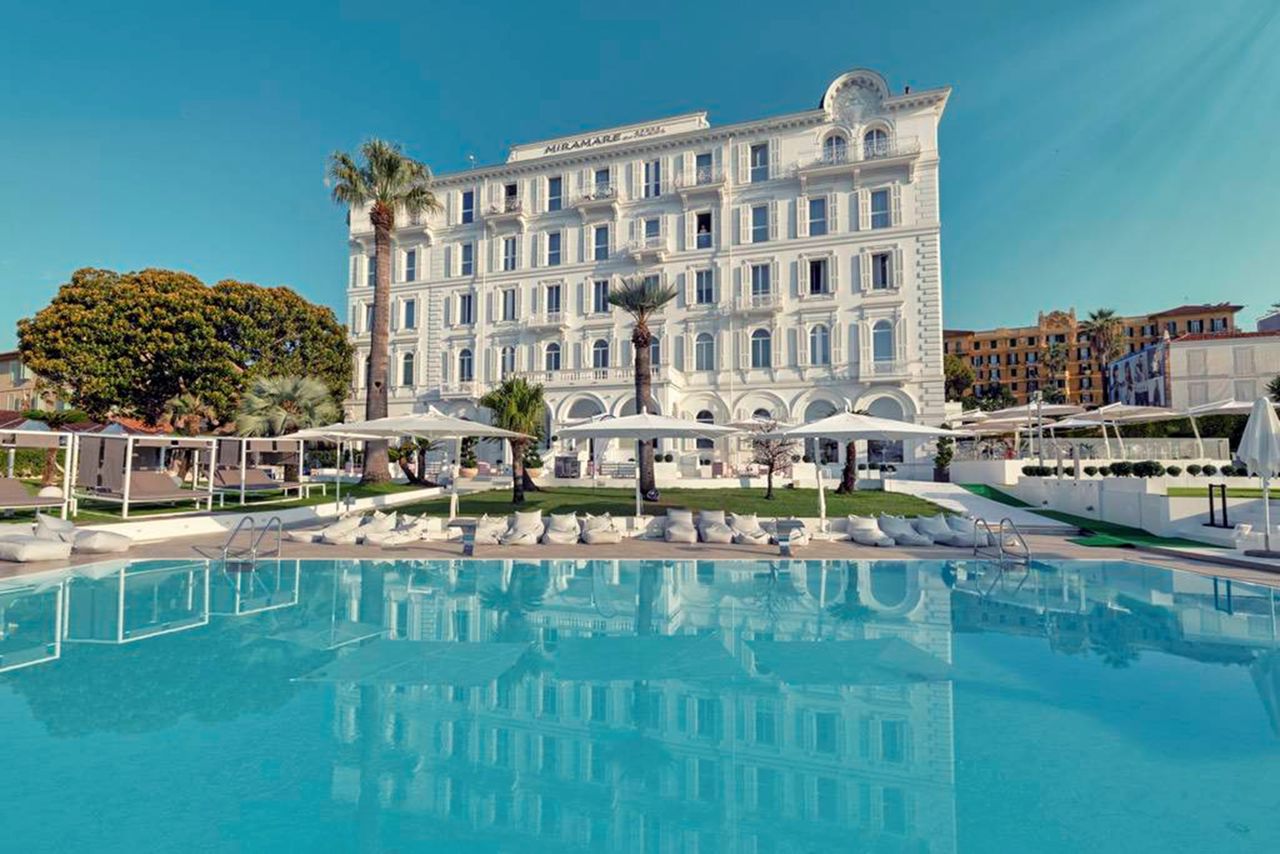
Miramare The Palace, located on Corso Matuzia in Sanremo, is a five-star hotel overlooking the Italian Riviera.
The hotel’s official website reports:
58 rooms
across guestrooms and suites, together with a heated outdoor swimming pool, F&B outlets, event facilities and landscaped grounds overlooking the Mediterranean.
The hotel is actively marketed and remains operational.
That is the first point investors need to understand:
Operating Hotel ≠ Distressed Operation
The news reported on 14 October 2026 concerns enforcement action against the real estate complex.
It does not concern the closure of the hotel business.
The Facts: Enforcement Action Linked to Approximately €1.7 Million
According to press reports, attachment proceedings were initiated on 11 July 2026.
The underlying payment demand reported by the source amounts to:
€1,704,267.75
in favour of Davis & Morgan S.p.A.
The recipient is identified as Brandsquare S.r.l., described as the owner of the hotel complex.
The same reporting also refers to a tax mortgage registered in 2022 against one of the secondary properties for:
€2,001,667.12
originally associated with the previous ownership.
These are material facts.
But they need to be interpreted correctly.
Enforcement Does Not Automatically Mean Sale
This is the first mistake to avoid.
The existence of an attachment does not mean that Miramare The Palace is currently:
“a hotel at auction”.
Therefore:
Enforcement ≠ Asset Sale
and, more importantly:
Enforcement ≠ Completed Sale Process.
The relevant fact today is the existence of enforcement action.
Not an asset sale already open to the market.
The Hotel Continues to Operate
This is the most important feature of the entire case.
The hotel remains open and operational, while management is entrusted to Urban Guest.
Management has also reported growing commercial performance and revenue, together with recent refurbishment and upgrading works.
Its position is therefore distinct from the enforcement action itself: the financial pressure is presented as relating to legacy liabilities and a broader dialogue with creditors, while hotel operations continue.
This creates a fundamental distinction:
Property-Level Distress ≠ Operating-Level Distress.
PropCo and OpCo: The Distinction That Changes the Entire Case
In hotel real estate, at least two layers need to be separated.
PropCo
The entity that owns the real estate.
OpCo
The entity that operates the hotel business.
The two can:
-
be the same entity;
-
be related parties;
-
be entirely separate.
In the Miramare case, the available information makes it especially important to analyse:
Ownership
separately from:
Operations.
Because financial or balance-sheet pressure at PropCo level does not automatically imply commercial distress at OpCo level.
A Hotel Can Perform While Its Ownership Structure Comes Under Pressure
This is one of the most interesting situations in distressed hospitality.
The hotel may continue to generate:
-
room revenue;
-
F&B revenue;
-
event revenue;
-
EBITDA;
-
employment;
-
reputation;
-
commercial value.
At the same time, the property owner may be dealing with:
-
debt;
-
mortgages;
-
creditors;
-
enforcement;
-
refinancing requirements;
-
recapitalisation needs.
The equation therefore becomes:
Healthy Operations + Stressed Capital Structure = Complex Hospitality Investment Case.
That is very different from:
Loss-Making Hotel + Insolvent Owner.
The First Question: Where Is the Distress Actually Located?
Before assigning any classification, investors need to determine:
which part of the economic structure is under pressure?
There are at least four possible scenarios.
Scenario 1 — Operating Distress
The hotel is loss-making and fails to generate sufficient EBITDA.
Scenario 2 — Financial Distress
The business may be viable, but the debt burden is excessive.
Scenario 3 — Property-Level Distress
The issue lies in the real estate ownership, security package or liabilities of the PropCo.
Scenario 4 — Combined Distress
Operating and financial problems overlap.
The information currently available suggests that attention should, prudently, be focused on the:
Property / Capital Structure Level
without concluding that there is Operating Distress.
The €1.7 Million Claim Tells Only Part of the Story
A single creditor claim is not enough to assess the true financial position.
A proper analysis would require reconstruction of the entire:
Debt Stack.
This would include:
-
senior debt;
-
any subordinated financing;
-
mortgages;
-
tax claims;
-
trade liabilities;
-
additional security interests;
-
creditor ranking;
-
maturities;
-
interest expense;
-
litigation;
-
agreements already under negotiation.
The €1.704 million amount is therefore:
One Claim
not:
Total Financial Exposure.
Collateral Value and Business Value Are Not the Same Thing
A hotel is simultaneously:
Real Estate
and:
Operating Business.
Its real estate value may depend on:
-
location;
-
gross area;
-
asset quality;
-
physical condition;
-
permitted use;
-
comparable transactions.
Its operating value depends on:
-
ADR;
-
occupancy;
-
RevPAR;
-
GOP;
-
EBITDA;
-
reputation;
-
distribution;
-
management;
-
branding.
The true investment case emerges from combining the two dimensions.
This is the type of analysis developed through InvestimentiAlberghieri.it and Investhotel.it.
58 Rooms: Value per Key Is Not Enough
The official website reports 58 rooms.
But simply calculating:
Asset Value / 58 Keys
would be insufficient.
For a five-star hotel in a location such as Sanremo, investors also need to consider:
-
room quality and size;
-
suite mix;
-
landscaped grounds;
-
swimming pool;
-
F&B;
-
events;
-
ancillary buildings;
-
land value;
-
additional development potential.
Value per Key
can be a useful metric.
It cannot become the entire valuation methodology.
Stabilised EBITDA: The Decisive Variable
If management is genuinely improving operating performance, as publicly stated, the critical metric becomes:
Stabilised EBITDA.
At a minimum, investors would need to reconstruct:
ADR
× Occupancy
= RevPAR
and then:
**Room Revenue
-
F&B
-
Events
-
Ancillary Revenue
– Payroll
– Utilities
– Distribution
– Maintenance
– Other Operating Costs
= GOP / EBITDA**
Only then can the investor understand:
-
what the business is worth;
-
how much debt it can support;
-
what refinancing may be possible;
-
how much equity may be required.
Debt Capacity: How Much Debt Can a Performing Hotel Support?
This is the central question.
If Miramare is producing growing operating EBITDA, the investment case may not necessarily be one of liquidating the asset.
It may instead involve:
Restructuring the Capital Stack.
Potential theoretical solutions could include:
-
refinancing;
-
new equity;
-
preferred equity;
-
mezzanine financing;
-
creditor agreements;
-
asset disposal;
-
sale & leaseback;
-
entry of a new investor;
-
recapitalisation.
This does not mean that any of these transactions is currently planned.
It means they are the scenarios normally tested in a case of this type.
DSCR Matters More Than Real Estate Value Alone
A lender may be protected by high-quality collateral.
But debt is repaid with cash flow.
Therefore:
Collateral Protects Debt.
But:
Cash Flow Services Debt.
The financial analysis developed through Investhotel.it should therefore focus on:
-
Stabilised EBITDA;
-
Debt Service;
-
DSCR;
-
Interest Coverage;
-
Loan to Value;
-
maturities;
-
refinancing requirements.
An excellent asset can still sit within the wrong capital structure.
That is precisely where distress can emerge.
Asset Quality ≠ Capital Structure Quality
This is arguably the most important equation in the entire case.
A hotel may be:
-
attractive;
-
well located;
-
operational;
-
supported by demand;
-
capable of strong ADR;
-
well regarded by the market.
And still sit within an:
Unsustainable Capital Structure.
Therefore:
Asset Quality ≠ Capital Structure Quality.
The property market may attribute strong value to the asset.
The hotel may generate cash flow.
But if debt, liabilities and maturities are misaligned with those cash flows, financial pressure emerges.
Distressed Asset or Distressed Capital Structure?
This is the question an investor should ask.
If the hotel is performing and the pressure sits primarily within the capital structure, describing the situation generically as:
“a hotel in crisis”
may be economically misleading.
A more sophisticated classification could be:
Distressed Capital Structure around a Performing Hospitality Asset.
That distinction matters enormously.
Because it changes the type of investor that may be interested.
Which Investors Might Look at a Case Like This?
In theory, the opportunity could attract:
Hotel Investors
interested in the real estate.
Private Equity
interested in restructuring the capital base.
Credit Funds
interested in the debt and security package.
Family Offices
interested in a trophy hospitality asset.
Hotel Operators
interested in maintaining operating continuity.
Real Estate Funds
interested in stabilised property value.
The case is therefore not necessarily only:
Asset Sale.
It may become:
Capital Structure Opportunity.
Going Concern Value: Operating Continuity Protects the Asset
If the hotel remains open through a period of ownership or financial tension, the operating platform can preserve:
-
revenue;
-
staff;
-
reputation;
-
customer relationships;
-
distribution;
-
positioning;
-
contracts;
-
know-how.
Closure, by contrast, could destroy value rapidly.
For this reason:
Going Concern Value > Closed Hotel Value.
Operating continuity may therefore serve the interests not only of management, but also of:
-
ownership;
-
creditors;
-
potential investors.
Management Continuity Becomes Part of the Value
The operating dimension analysed by HotelManagementGroup.it therefore becomes central.
Any change in the ownership structure should not be assessed in isolation.
Investors need to understand:
-
who manages the hotel;
-
on what terms;
-
contract duration;
-
change-of-control clauses;
-
termination rights;
-
management fees;
-
performance tests;
-
operating continuity.
The management agreement itself can have a direct impact on:
Asset Value.
Commercial Performance → EBITDA → Debt Capacity → Asset Value
A hotel that preserves demand and reputation is better able to protect its value.
The commercial capabilities analysed through HotelMarketingLab.it therefore become part of asset protection.
Because:
Commercial Performance → EBITDA → Debt Capacity → Asset Value.
Marketing is not separate from finance.
It is one of its drivers.
Hotel Intelligence: Measuring the True Competitive Position
Before assigning value to Miramare, the hotel should be benchmarked against its competitive set in Sanremo and the wider Ligurian Riviera.
HotelIntelligence.it should assess:
-
ADR;
-
RevPAR;
-
occupancy;
-
seasonality;
-
reputation;
-
competitors;
-
luxury demand;
-
events;
-
the Sanremo Music Festival;
-
international demand.
A five-star hotel in Sanremo cannot be valued solely as a building.
Destination strength and market positioning are fundamental.
Hotel Control: Revenue Is Not Enough
Management has stated that commercial performance and revenue are improving.
But for an investor, revenue is only the starting point.
The analysis needs to include:
-
GOP;
-
GOP margin;
-
payroll incidence;
-
F&B margin;
-
energy costs;
-
distribution costs;
-
EBITDA;
-
cash conversion.
The framework developed through HotelControl.it is designed to convert:
Revenue
into:
Sustainable Cash Flow.
A hotel can increase revenue without proportionately improving its ability to service debt.
The Correct Logic: Preserve Value Before Restructuring Capital
If the hotel generates positive EBITDA, the economic logic should be:
Preserve Operations
→ Stabilise Cash Flow
→ Restructure Capital
→ Protect Asset Value.
That is very different from:
Close Hotel
→ Liquidate Asset.
Naturally, the actual strategy depends on the true debt perimeter, the creditors involved and any judicial determinations.
But the economic principle is clear:
do not destroy Going Concern Value while addressing Capital Structure Risk.
Any Potential Sale Must Remain a Scenario, Not a Fact
The press has also referred to previous discussions concerning a possible disposal.
But:
Negotiation ≠ Transaction.
And:
Enforcement ≠ Auction.
There is currently no documented evidence of:
-
an open competitive sale process;
-
a reserve price;
-
an offer deadline;
-
an award.
Any article presenting Miramare today as:
“a hotel for sale”
or:
“a hotel at auction”
would go beyond the facts currently verified.
Highest and Best Use: Here the Issue Is Capital, Not Use
Unlike many distressed hotels, the question does not appear to be:
“What else could this property become?”
The asset is already:
-
a five-star hotel;
-
operational;
-
refurbished;
-
commercially positioned.
The real question is instead:
how can the value of a functioning hospitality asset be maximised through a sustainable capital structure?
In this case, Highest and Best Use may well coincide with maintaining and further enhancing the hotel operation.
But that still needs to be proven through the numbers.
Equity Value ≠ Real Estate Value
Another fundamental distinction.
The property itself may be worth a significant amount.
But equity value depends on:
Enterprise Value – Net Debt – Other Liabilities = Equity Value.
This is why a trophy asset can have:
-
strong Real Estate Value;
-
strong Business Value;
but materially different Equity Value depending on the liability structure.
This is precisely the kind of mistake investors need to avoid.
The Miramare Investment Equation
The case can be summarised as:
**Prime Real Estate
-
58 Keys
-
Luxury Positioning
-
Operating Business
-
Brand Reputation
-
Commercial Performance
-
Going Concern Value
– Existing Liabilities
– Enforcement Risk
– Capital Structure Risk
= Equity Investment Case**
The real uncertainty may not be the hotel.
It may be the:
Capital Stack.
The 15 Questions to Answer Before Valuing the Case
1.
What is the exact real estate perimeter of Miramare?
2.
Which properties and rights are effectively included in the ownership structure?
3.
What is the updated Market Value?
4.
What is the total debt exposure?
5.
Which creditors are secured?
6.
What is the ranking of the security package?
7.
What is the actual tax exposure?
8.
What is the contractual relationship with Urban Guest?
9.
What are ADR, occupancy and RevPAR?
10.
What is Stabilised EBITDA?
11.
How much debt can EBITDA support?
12.
What is DSCR?
13.
Is new equity required?
14.
Which scenario maximises creditor recovery while preserving Going Concern Value?
15.
What is Equity Value after all liabilities?
Without answers to these questions:
the enforcement action tells only part of the story.
An Integrated Analysis Through the Ecosystem
The Miramare case shows why hotel investment requires a multidisciplinary perspective.
InvestimentiAlberghieri.it analyses ownership, value, distress and value-creation scenarios.
Investhotel.it focuses on capital structure, Debt Capacity, DSCR and financial sustainability.
HotelManagementGroup.it addresses management, operating continuity and management models.
HotelControl.it measures KPIs, margins and the real ability to generate cash flow.
HotelIntelligence.it integrates competitive data, pricing and market intelligence.
HotelMarketingLab.it analyses demand, distribution, direct booking and commercial performance.
RobertoNecci.it develops the strategic interpretation of changes across the hotel industry.
The Miramare case requires precisely this formula:
Real Estate + Operations + Debt + Management + Market = Investment Case.
Conclusion
Miramare The Palace is particularly interesting because it challenges one of the most common simplifications in hotel investment.
A hotel involved in a financial dispute is not necessarily a hotel that is failing operationally.
The property remains open.
The product is positioned in the five-star segment.
Management states that performance and revenue are improving.
At the same time, enforcement action exists and cannot be ignored.
The correct analysis is therefore:
Operating Performance on one side.
Capital Structure on the other.
Confusing the two leads to the wrong valuation.
In distressed hospitality, value is not necessarily lost when the hotel stops performing. It can be lost much earlier, when the wrong capital structure starts to compress the value of a good operating asset.
That is the real lesson from Miramare.
The first question is therefore not:
“Is the hotel in crisis?”
It is:
“Where exactly does the distress sit: in the asset, in the operations, or in the capital structure?”
In the Miramare The Palace case, that distinction may determine almost the entire value proposition.
A functioning hotel business may still be an asset worth protecting.
But only a sustainable capital structure can convert that operating value into:
Sustainable Equity Value.
The real risk is not always a bad hotel. Sometimes it is a good hotel sitting inside a capital structure that needs to be rebuilt.
CTA — The Dossier Comes Before the Solution
Are you assessing:
-
hotels under financial pressure;
-
indebted hotel ownership structures;
-
hospitality collateral;
-
assets subject to enforcement;
-
capital restructurings;
-
distressed investments;
-
recapitalisations;
-
repositioning opportunities?
InvestimentiAlberghieri.it provides independent preliminary analysis before capital-allocation decisions are made.
We assess:
-
Asset Value;
-
Enterprise Value;
-
Equity Value;
-
Debt Stack;
-
LTV;
-
Debt Capacity;
-
DSCR;
-
Stabilised EBITDA;
-
business plan;
-
capital structure;
-
management agreements;
-
refinancing scenarios;
-
downside case;
-
restructuring scenarios;
-
Stabilised Value;
-
Exit Value.
We do not intermediate the purchase price. We identify where the risk actually sits and whether there is still value to protect, restructure or rebuild.
For enquiries:
info@investimentialberghieri.it
Methodological and Legal Note
This article is based on information published on 14 October 2026 by the local press and on publicly available information from the official Miramare The Palace website.
According to the press reconstruction, enforcement action was initiated on 11 July 2026 in connection with a payment demand of €1,704,267.75 in favour of Davis & Morgan S.p.A., with Brandsquare S.r.l. identified as the owner of the property complex subject to the action.
The same source also refers to a tax mortgage registered in 2022 against a secondary property for €2,001,667.12, originally relating to the previous ownership.
The press reports that the hotel remains open and operational and that management is entrusted to Urban Guest. The official website reports a room inventory of 58 rooms.
Statements concerning revenue growth, commercial performance, legacy liabilities and discussions with creditors reflect the position expressed by management and reported by the press; they do not constitute an independent financial review by InvestimentiAlberghieri.it.
As of the date of this article, no open sale process, auction, award or UTP/NPL classification of specific financing facilities is being treated as verified.
References to refinancing, recapitalisation, capital restructuring, asset disposal or the entry of new investors are methodological scenarios only and do not represent transactions currently announced.
Any investment assessment would require direct review of the judicial documentation, land registry filings, financing agreements, financial statements, debt position, management agreements and relevant technical and tax documentation.