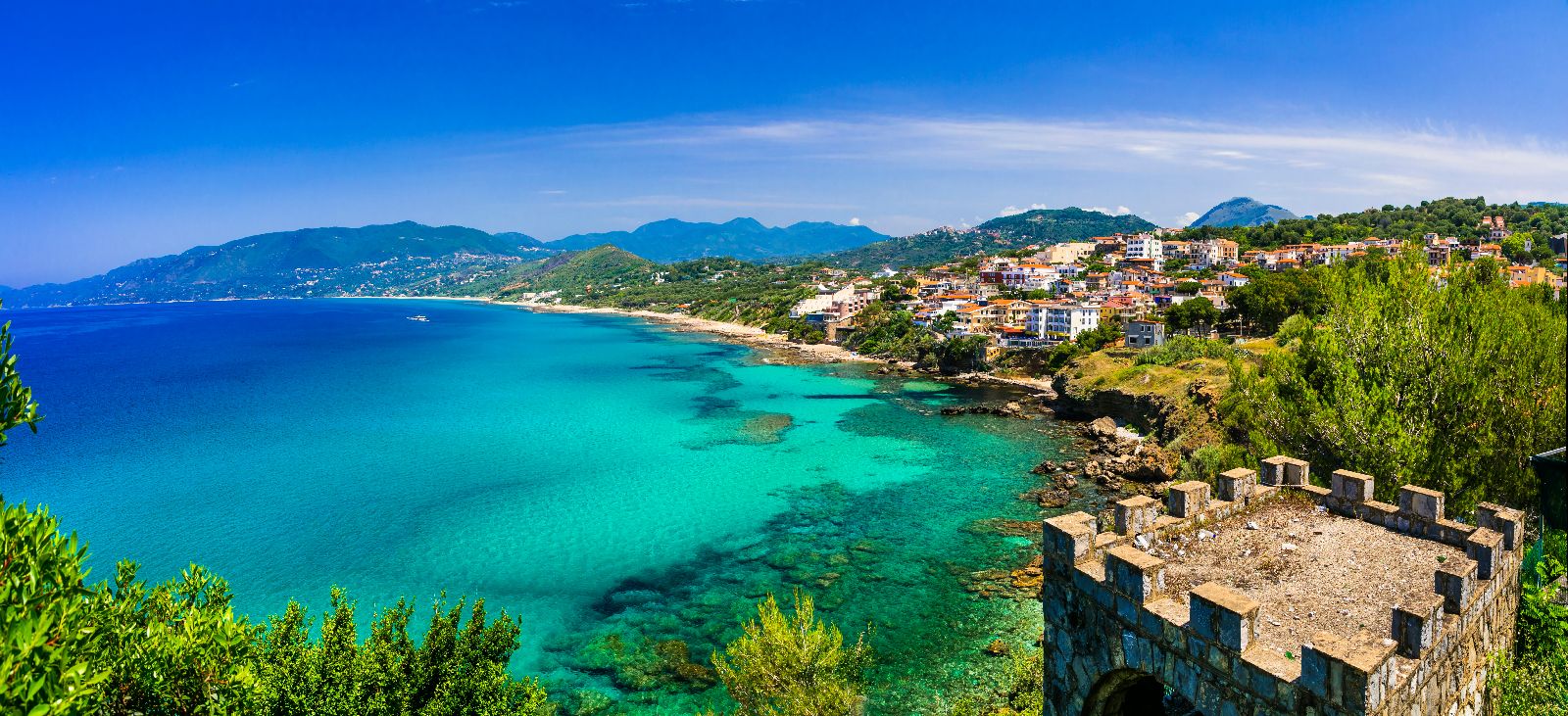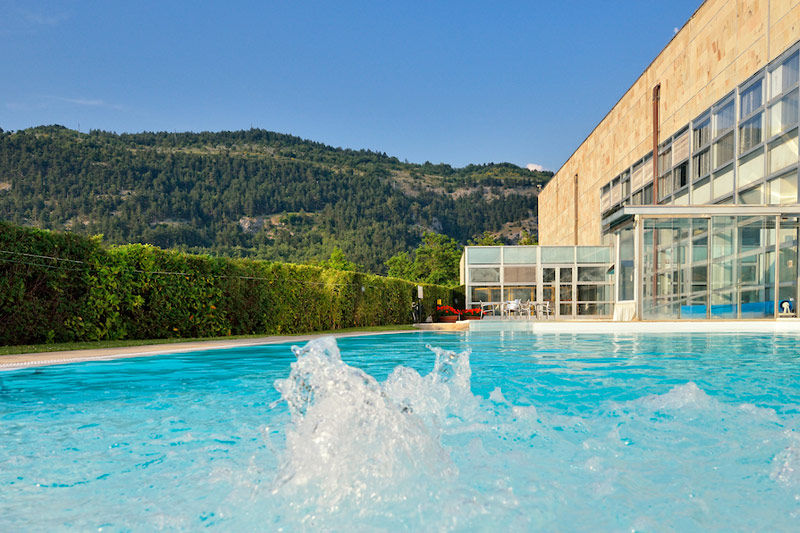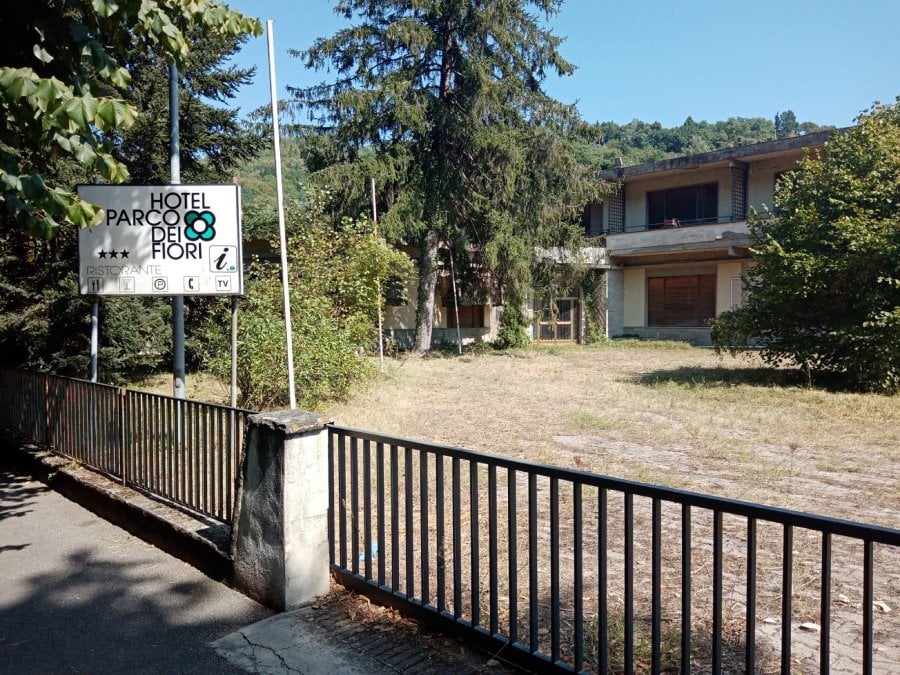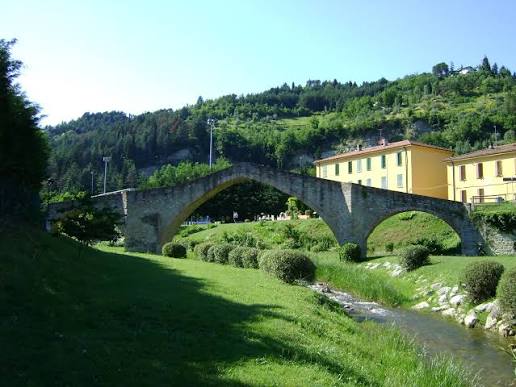
In Modigliana, amid the hills between Romagna and Tuscany, a substantial agritourism estate is coming to auction, comprising a restaurant, conference facilities, guestrooms and apartments, DOC vineyards, olive groves, agricultural land and approximately 19 hectares of property. The base price has fallen from €3.68 million in June 2025 to €873,495, while the current minimum admissible bid stands at €655,122. The repricing exceeds 76% on the base price and 82% when measured against the current minimum bid. Yet, unlike many hospitality special situations, the available documentation does not describe a hotel devastated by physical deterioration. It describes a complex, relatively high-quality hospitality and agricultural estate. The real challenge, therefore, is not rebuilding the asset. It is finding an investor capable of converting its complexity into EBITDA.
There are special situations where prices collapse because the physical asset is severely compromised.
And then there are more sophisticated situations where repricing may primarily reflect the market’s difficulty in finding the right buyer for a complex asset.
The estate at 6 Via dei Frati, Modigliana, in the province of Forlì-Cesena, appears to fall into the second category.
The property is known as Il Borghetto di Brola and was developed as an agritourism business within the countryside between Romagna and Tuscany.
It combines accommodation, food and beverage, event facilities and a substantial agricultural component.
It is therefore not simply a hotel.
It is not simply an agriturismo.
And it is not simply an agricultural estate.
Potentially, it is:
a wine & hospitality estate
That definition fundamentally changes the way the investment should be underwritten.
The property is being sold as part of Real Estate Enforcement Proceeding No. 37/2024 before the Court of Forlì.
The current auction terms are:
-
Base price: €873,495
-
Minimum admissible bid: €655,122
-
Minimum bid increment: €5,000
-
Deposit: 15% of the bid submitted
-
Bid deadline: 5 October 2026 at 12:00 noon
-
Auction: 6 October 2026 at 10:15 a.m.
-
Sale format: asynchronous online auction
-
Lot: single lot
But the figure that makes the transaction particularly interesting is the repricing history.
From €3.68 Million to €873,495
The progression of the auction base prices is striking:
| Auction Date | Base Price |
|---|---|
| 19 June 2025 | €3,680,900 |
| 30 September 2025 | €2,760,675 |
| 17 December 2025 | €2,070,506 |
| 31 March 2026 | €1,552,879.69 |
| 3 June 2026 | €1,164,660 |
| 6 October 2026 | €873,495 |
The current base price is therefore approximately:
76.3% lower
than at the first auction.
Compared with the current minimum bid of €655,122, the repricing relative to €3.68 million exceeds:
82%
These figures would normally suggest a severely distressed physical asset.
But the picture here is different.
This Is Not the Typical Distressed Hotel Requiring Reconstruction
The agritourism complex comprises approximately:
1,344 sqm of buildings used for hospitality purposes
and the available documentation describes the property as being in broadly very good condition.
That distinction is critical.
In conventional distressed hospitality, a low acquisition price is often offset by:
-
severe deterioration;
-
obsolete building systems;
-
guestrooms requiring complete refurbishment;
-
structural deficiencies;
-
years of deferred maintenance;
-
substantial CAPEX.
At Modigliana, the risk appears to be of a different nature.
The challenge may be less about:
technical turnaround
and considerably more about:
strategic and operational turnaround.
Because it is not enough for the buildings themselves to work.
The entire economic ecosystem has to work.
Hospitality, Restaurant, Events and Accommodation
The estate comprises several interconnected buildings.
The principal functions include:
Reception and Restaurant Area
-
lobby;
-
entrance;
-
reception;
-
restaurant;
-
substantial covered outdoor area.
Meetings and Events Area
-
conference room;
-
ancillary facilities;
-
workshop spaces;
-
areas suitable for food and wine conferences;
-
breakfast and buffet rooms;
-
small kitchen.
Accommodation
-
guestrooms;
-
apartments;
-
units with living areas;
-
some accommodation configured with kitchen facilities;
-
bathrooms;
-
storage;
-
technical rooms.
The estate therefore already has the physical foundations to address several demand segments:
leisure
food
events
meetings
experiential hospitality.
But the real scale of the opportunity lies outside the buildings.
Approximately 19 Hectares of Land
The estate includes approximately:
19.07 hectares
equivalent to more than:
190,000 sqm
of land.
The agricultural uses include:
-
vineyards;
-
arable land;
-
olive groves;
-
orchards;
-
woodland.
The wine component is particularly relevant.
The documentation refers to vineyards suitable for DOC production and varieties including:
-
Sangiovese;
-
Cabernet;
-
Merlot;
-
Chardonnay;
-
Trebbiano.
This means the land should not be regarded merely as an ancillary feature of the agritourism business.
It is part of the product itself.
This Is Not Hospitality With Some Land Attached
It is the opposite.
It is hospitality embedded within an agricultural and wine estate.
The distinction is strategic.
An investor underwriting the opportunity purely through:
rooms × ADR × occupancy
would miss a fundamental part of the investment thesis.
The estate potentially contains at least five different revenue engines.
1. Rooms & Apartments
Accommodation revenue.
2. Food & Beverage
Restaurant, breakfast, tastings and banqueting.
3. Events
Weddings, private events, meetings, workshops and retreats.
4. Wine & Agriculture
Production, direct sales, tastings, experiences and agricultural products.
5. Ancillary Experiences
Outdoor activities, local experiences, gastronomy, cycling and countryside-related activities.
Value may therefore arise not from maximising one of these businesses individually, but from integrating all of them.
This is consistent with the investment-underwriting approach developed on InvestimentiAlberghieri.it.
So Why Has the Market Not Bought It?
This may be the most interesting question of all.
If the estate is physically sound, offers approximately 19 hectares of land, vineyards, accommodation, a restaurant and event facilities, why has the base price fallen from €3.68 million to €873,495?
One possible explanation is:
buyer universe compression
The number of investors genuinely capable of acquiring and operating an asset of this kind may be significantly smaller than the buyer pool for a conventional hotel.
A traditional real estate investor may think:
too operational.
A hotel operator may think:
too much agriculture.
A wine business may think:
too much hospitality.
A financial investor may conclude:
too small to justify building an institutional operating platform.
A local entrepreneur may see:
too much complexity.
The consequence is that an asset can possess meaningful intrinsic value while suffering from:
limited liquidity caused by operating complexity.
That is an important concept.
A complex asset can become underpriced not because it has little value, but because relatively few buyers know how to operate it successfully.
Complexity Can Be Both the Risk and the Source of Alpha
This leads to one of the most compelling aspects of the transaction.
If complexity reduces the number of potential buyers, it can compress price.
But that same complexity can create opportunity for a specialist investor.
The thesis can be expressed simply:
Complexity reduces liquidity.
Reduced liquidity can create discount.
Operational capability can convert discount into alpha.
This is not conventional real estate arbitrage.
It is capability arbitrage.
The investor does not make money simply by paying less than everyone else.
The opportunity arises if the investor can operate successfully what other buyers are unwilling or unable to operate.
Why Has the Estate Been Kept as a Single Lot?
During the proceedings, the possibility of separating:
-
buildings;
-
land;
-
agritourism operations;
-
agricultural activities
was considered.
However, subdivision would have created a range of:
-
planning;
-
cadastral;
-
economic;
-
functional
complications.
The estate is closely connected to its rural status and agricultural activity.
Separating the various components could have required:
-
new development plans;
-
cadastral subdivisions;
-
additional administrative procedures;
-
redefinition of common areas;
-
energy certification updates;
-
building alterations;
-
planning charges;
-
costs associated with removing rural classification.
Keeping the property as a single lot is therefore not merely a procedural choice.
It reflects the underlying economic nature of the asset.
The Investor Needs to Buy the System
The relevant question is not:
“What are the rooms worth?”
Nor is it:
“What are 19 hectares worth?”
The correct question is:
what is the system worth when all of its components operate together?
The investor is simultaneously acquiring:
real estate
agricultural land
vineyards
hospitality
restaurant
events
rural identity.
That is what makes the opportunity interesting.
It is also what makes it difficult.
Price per Hectare Is Almost Irrelevant
A simple division of the base price by approximately 19 hectares produces a figure below:
€46,000 per hectare
At the minimum bid:
approximately €34,000 per hectare.
But economically, the calculation is of limited value.
The acquisition price also includes:
-
more than 1,300 sqm of agritourism buildings;
-
accommodation;
-
restaurant facilities;
-
conference space;
-
infrastructure;
-
vineyards;
-
olive groves;
-
woodland.
Similarly, dividing the minimum bid by the approximately 39 beds associated with the agritourism business produces a figure below:
€17,000 per bed
But this can be equally misleading.
The investor is not buying:
39 beds.
The investor is buying:
an operating estate.
The Primary Risk May Not Be CAPEX
This is the principal difference from many distressed hotels.
In a conventional case, the key risk is often:
CAPEX Risk
At Modigliana, it may instead be:
Business Model Risk
The buildings exist.
The accommodation exists.
The restaurant exists.
The meeting facilities exist.
The vineyards exist.
The land exists.
The decisive question is:
how can all of these components be made to work economically as one business?
Without the right answer, the estate risks becoming a collection of cost centres.
With the right answer, it could become an integrated value-creation platform.
The Hills Market Is Showing Encouraging Signals
Tourism in the hill destinations of Emilia-Romagna has shown positive momentum.
This is particularly relevant for:
-
agritourism;
-
rural hospitality;
-
wine resorts;
-
countryside retreats;
-
experiential accommodation.
The estate therefore does not necessarily need to compete only with accommodation businesses located in Modigliana.
Its competitive set may be much broader.
And that is precisely where repositioning becomes important.
The Competitive Set Is Experiential, Not Merely Geographical
An international guest looking for:
wine
Italian countryside
gastronomy
nature
authenticity
does not necessarily choose between two agritourism properties in the same municipality.
The choice may instead be between:
-
Tuscany;
-
Umbria;
-
Langhe;
-
Veneto;
-
Emilia-Romagna.
The relevant competitive set is therefore:
experience-based
rather than purely:
location-based.
The positioning strategy must reflect this reality.
This principle is consistent with the hotel strategy and positioning work developed on RobertoNecci.it.
Three Potential Investment Theses
Scenario 1 — Traditional Agriturismo
Maintain the existing model:
-
guestrooms;
-
apartments;
-
restaurant;
-
agricultural operations;
-
events.
This is the simplest scenario.
Advantages
-
limited transformation;
-
potentially lower CAPEX;
-
continuity with the property’s existing identity.
Risk
Remaining within a relatively undifferentiated product segment that cannot generate sufficiently high ADR or margins for an estate of this scale.
Scenario 2 — Wine Resort
This is probably the most natural repositioning strategy.
The product becomes:
stay + vineyard + wine + food + territory
Potential target segments could include:
-
wine travellers;
-
international guests;
-
couples;
-
small groups;
-
destination weddings;
-
incentive travel;
-
corporate retreats.
In this model, wine is not merely an agricultural output.
It becomes:
brand
experience
customer acquisition
ancillary revenue.
Scenario 3 — Rural Retreat & Events Estate
A third strategy could place greater emphasis on:
-
corporate retreats;
-
management meetings;
-
workshops;
-
training;
-
wellness;
-
cycling;
-
private events;
-
weddings.
The existing conference space is particularly relevant.
Many countryside resorts have to create MICE facilities as part of a later repositioning.
Here, that demand-generating infrastructure already exists.
Corporate Retreats Could Help Reduce Seasonality
A property set within 19 hectares offers something a conventional city hotel cannot easily replicate:
privacy and exclusivity.
For:
-
board meetings;
-
executive retreats;
-
training programmes;
-
strategy sessions;
-
team-building activities;
relative isolation can itself become part of the product.
The experience can combine:
meetings
accommodation
food
wine
outdoor activities.
Under this model, the conference room becomes a genuine revenue centre.
Not simply an ancillary amenity.
The Wine Business Needs Its Own P&L
This is essential.
A robust business plan should distinguish between:
Hospitality P&L
F&B P&L
Events P&L
Agriculture / Winery P&L
Ancillary Experiences P&L
For the wine business, investors should analyse:
-
actual vineyard hectares;
-
grape varieties;
-
age of vines;
-
yields;
-
production volumes;
-
agricultural costs;
-
winemaking;
-
bottling;
-
inventory;
-
brands;
-
distribution;
-
pricing;
-
gross margins.
For hospitality:
-
saleable keys;
-
ADR;
-
occupancy;
-
RevPAR;
-
average length of stay;
-
F&B capture;
-
event capture;
-
payroll;
-
utilities;
-
distribution;
-
GOP;
-
EBITDA.
Only then should the synergies between the businesses be assessed.
The question is:
Wine + Hospitality = 1 + 1, or > 2?
If integration does not create incremental value, the additional complexity is not justified.
Agriturismo and Hotel Are Not Legally the Same Thing
This is another critical operating and legal issue.
The estate is connected to its agricultural and rural status.
An investor should therefore not assume that it can simply be transformed into a conventional hotel operating independently of agricultural activity.
A different operating structure could require:
-
planning review;
-
change of use;
-
removal of rural status;
-
development charges;
-
building upgrades;
-
cadastral amendments;
-
new permits.
Rurality can therefore be both:
a constraint
and:
a competitive advantage.
A constraint because it may limit transformation flexibility.
A competitive advantage because it provides the foundation for an authentic product that is difficult to replicate.
The legal framework does not come after the business plan.
It is part of the business plan.
Technical Issues Exist, But They Do Not Appear to Define the Investment Case
Even where the estate is broadly described as well maintained, several matters still require verification.
The technical documentation refers, among other points, to:
-
specific issues relating to natural ventilation and lighting in certain bathrooms;
-
small structures or building sections requiring further verification;
-
construction elements requiring additional investigation.
Based on the available information, however, this does not appear to be a turnaround dominated by severe structural deterioration.
CAPEX may therefore be directed more towards:
repositioning
than:
reconstruction.
That distinction materially changes the economics.
Access Also Needs to Be Reassessed
The technical documentation referred to the effects of landslides and the 2023 flooding events on sections of the local road network.
A 2026 investor should therefore verify:
-
current accessibility;
-
road conditions;
-
works completed;
-
any remaining restrictions;
-
suitability for transfers and group traffic.
For a premium rural resort, arrival is part of the guest experience.
A scenic road can enhance the product.
A difficult road can reduce:
-
conversion;
-
international appeal;
-
events demand;
-
wedding business;
-
group business.
This is an operating variable, not a minor detail.
Total Investment Cost
The real investment cost does not equal the minimum auction bid.
The underwriting must include:
Acquisition
Transaction Costs
Technical CAPEX
Regulatory CAPEX
FF&E & Product Upgrade
Wine & Agricultural Investment
Branding
Digital Distribution
Pre-opening / Repositioning
Working Capital
Financing Costs
Together, these represent:
Total Investment Cost
That is the capital base against which returns must be measured.
This is the same logic applied to turnaround and special-situation transactions analysed by Investhotel.it.
The Discount Could Create Significant Room for Repositioning
This is nevertheless one of the key attractions of the opportunity.
If the physical quality of the property is confirmed and the real estate requires only reasonable investment, an acquisition price close to €655,122 could preserve meaningful capital for:
-
guestrooms;
-
FF&E;
-
branding;
-
website and distribution;
-
wine experiences;
-
landscaping;
-
wellness;
-
a swimming pool, subject to technical and regulatory feasibility;
-
event product;
-
international sales and marketing.
In other words, the discount could be used not primarily to:
repair the asset
but to:
reposition the business.
That is a critical distinction.
Maximum Sustainable Repositioning CAPEX
For an estate of this type, it is useful to think in terms of:
Maximum Sustainable Repositioning CAPEX
The process should begin with:
Rooms EBITDA
F&B EBITDA
Events EBITDA
Wine & Agricultural EBITDA
Ancillary EBITDA
=
Stabilized Estate EBITDA
From this, an appropriate:
Stabilized Estate Value
can be derived.
From that value, deduct:
-
acquisition;
-
transaction costs;
-
financing;
-
contingency;
-
required investor return.
The residual represents:
Maximum Sustainable Repositioning CAPEX
If the investment required exceeds this threshold:
the project destroys value.
If it remains below it:
genuine value creation may exist.
But Who Should Buy an Asset Like This?
This may be the most strategic question of all.
The ideal buyer is not necessarily:
a hotel operator.
Nor necessarily:
a wine producer.
Nor necessarily:
a real estate fund.
Potential buyers might include:
-
a family office with hospitality capabilities;
-
a wine entrepreneur seeking to vertically integrate the customer experience;
-
a hospitality entrepreneur;
-
a private investor supported by specialist management;
-
a rural-hospitality platform;
-
a luxury countryside operator;
-
a partnership between a real estate investor and an operating partner.
The fundamental point is that:
ownership and operations do not necessarily need to coincide.
An investor can own the property while creating a governance structure in which:
-
agricultural operations;
-
winery;
-
hospitality;
-
restaurant;
-
events
are managed by different specialist teams under a coordinated strategy.
It is precisely this management architecture that may unlock value.
These are the areas addressed by HotelManagementGroup.it through its hotel management, organisational, turnaround and repositioning work.
The Eight Essential Due Diligence Workstreams
1. Legal Due Diligence
Proceedings, rural status, title, encumbrances, contracts and transfer conditions.
2. Planning & Cadastral Due Diligence
Compliance, permitted uses, residual irregularities and potential for future changes.
3. Technical Due Diligence
Buildings, technical systems, roofs, accommodation areas, services and CAPEX.
4. Agricultural Due Diligence
Land areas, crops, productivity, vineyards, olive groves, woodland and operating costs.
5. Winery Due Diligence
Production, inventory, brands, distribution, pricing, margins and wine-tourism potential.
6. Hospitality Market Study
Competitive set, ADR, occupancy, international demand, wine tourism, retreats, weddings and events.
7. Financial Underwriting
Total Investment Cost, EBITDA by business unit, Stabilized Estate EBITDA, Maximum Sustainable Repositioning CAPEX, IRR and exit value.
8. Operating Model & Governance
Determine who operates:
agriculture
wine
rooms
restaurant
events
and how those five business units are coordinated.
For an asset of this kind, governance can create — or destroy — more value than the acquisition price itself.
Conclusions
The Modigliana case challenges many conventional assumptions about distressed hospitality.
The key figures are:
approximately 19 hectares
more than 1,300 sqm of agritourism buildings
restaurant
conference facilities
guestrooms and apartments
approximately 39 beds
DOC vineyards
Sangiovese, Cabernet, Merlot, Chardonnay and Trebbiano
initial base price of €3,680,900
current base price of €873,495
minimum bid of €655,122
auction on 6 October 2026
The repricing exceeds 76% and rises above 82% when measured against the current minimum bid.
But focusing only on the discount would be a mistake.
Because Modigliana does not appear to be primarily a story of:
distressed real estate.
It is a story of:
distressed complexity.
The estate combines:
land
wine
agriculture
rooms
food
events.
That complexity narrows the buyer universe.
It can reduce liquidity.
It may contribute to the discount.
But for an investor with the right capabilities, it can also become the true source of alpha.
The correct question is therefore not:
“How much does this agritourism property cost?”
It is:
“How much EBITDA can this estate generate if all of its components are integrated into one coherent economic model?”
If the answer is compelling, the repricing could represent a highly attractive opportunity.
If, by contrast, guestrooms, vineyards, restaurant, land and events continue to operate as disconnected activities without a common strategy, complexity may consume much of the value created by the low entry price.
The real investment thesis therefore becomes:
Deep Entry Discount
Quality Real Estate
Wine & Agricultural Identity
Hospitality Repositioning
Events
Integrated Governance
=
Potential Estate Value Creation
At Modigliana, the investor is not simply acquiring an agritourism property at auction.
The investor is acquiring an economic platform that still needs to be orchestrated.
And the discount does not necessarily reward the investor who is best at buying real estate cheaply.
It rewards the investor who can turn a complex estate into a single operating platform capable of generating brand equity, demand, cash flow and EBITDA.
That — far more than the auction price — is the real special situation.
InvestimentiAlberghieri.it monitors and analyses hotel auctions, distressed assets and hospitality investment opportunities; Investhotel.it focuses on turnarounds, extraordinary transactions and special situations; RobertoNecci.itcovers hotel valuation, strategy, positioning and governance; while HotelManagementGroup.it focuses on management, repositioning and operational performance.
Are You Assessing an Agriturismo, Wine Resort or Hospitality Estate at Auction?
Before submitting a bid, investors need to assess much more than real estate value alone.
The analysis should include:
Rural & Regulatory Framework, Agricultural Economics, Winery Business, Hospitality EBITDA, Operating Model, Total Investment Cost and Stabilized Estate Value.
For preliminary investment analysis, feasibility studies, hotel valuations and due diligence:
info@investimentialberghieri.it