The Montecatini thermal estate failed to attract a buyer at more than €42 million and again, eight months later, at around €35 million. Once the procedure abandoned the idea of selling the entire portfolio as a single lot and began separating the assets, an irrevocable offer of approximately €15 million emerged for the Leopoldine, Salute and Redi properties, backed by an overall investment programme approaching €100 million. The lesson is not simply about price. It is about how an asset package is structured before it is taken to market. And the mechanism devised to govern the thermal water resource — a consortium shared by different property owners — could become a model for many Italian spa destinations.
The facts, in sequence
The portfolio of Terme di Montecatini initially put up for sale by the Court of Pistoia was exceptional in both scale and complexity.
The single lot included, among other assets:
-
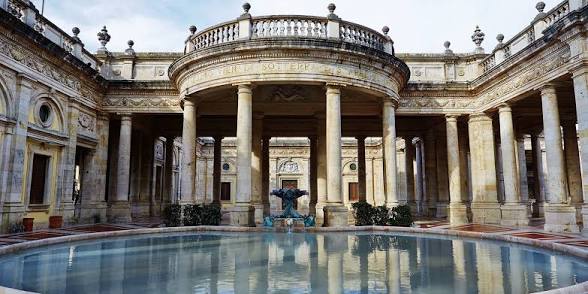
Terme Tettuccio;
-
Terme Leopoldine;
-
treatment facilities;
-
healthcare properties;
-
thermal-water infrastructure;
-
greenhouses;
-
retail units;
-
parks;
-
movable assets;
-
trademarks;
-
the mineral-water concession.
In total, the portfolio comprised roughly twenty properties, many of them protected as cultural heritage assets.
The mineral concession governing the thermal water resource is currently reported as running until 2033.
The first auction took place on 16 July 2024, with a starting price of more than €42 million.
No bids.
The second followed on 11 March 2025, this time with the asking price reduced to approximately €35 million.
Again, no bids.
In eight months, the price had fallen by roughly €7 million.
The market still did not respond.
That is the first important fact.
Because when a meaningful price reduction fails to change the outcome, the obvious question is whether price was ever the real problem.
Public-sector buyers were already interested in individual assets
Meanwhile, public and institutional investors had already expressed interest in specific properties.
The Region of Tuscany had confirmed an irrevocable offer for Tettuccio, Regina and Excelsior, allocating €17.5 million.
The Municipality of Montecatini had indicated its willingness to invest approximately €1.5 million in the Torretta property.
Fondazione Cassa di Risparmio di Pistoia e Pescia had expressed interest in Tamerici.
Demand therefore existed.
Just not for the entire portfolio.
And that distinction changes everything.
The procedure gradually moved towards breaking the portfolio into separate lots, each containing one or more assets with a more coherent economic profile.
From that moment, the structure of the transaction changed.
The Apt Terme offer
In January 2026, an offer emerged from an investment initiative led personally by Claudio Cardini, Chairman and founder of Human Company — which has formally clarified that the group itself is not participating in the transaction — together with other investors.
The offer was submitted through Apt Terme, a special-purpose company created for the transaction.
The proposed acquisition perimeter includes:
-
Leopoldine;
-
Salute;
-
Redi.
The purchase offer has been reported at approximately:
€15 million.
But the real scale of the transaction is much larger.
Cardini has indicated that at least another:
€80 million
would be required for redevelopment.
Potential total commitment therefore approaches:
€100 million.
The proposed scheme includes:
-
around one hundred upper-upscale rooms;
-
additional hospitality facilities within the Salute park;
-
restoration of the Leopoldine complex;
-
completion of the thermal pool designed by Massimiliano Fuksas;
-
wellness;
-
redevelopment of the thermal offering;
-
continued use of the traditional drinking-water therapy component.
Fiuggi and Saturnia have been cited as reference models.
At the Leopoldine, the concept includes a high-end hospitality product alongside completion of the thermal pool, which could also be accessible to guests staying at other hotels.
And this is where the crucial difference from the previous two auctions becomes visible.
The price did not simply change.
What the investor was being asked to buy changed.
The transaction is not yet complete
A clear distinction must nevertheless be maintained between interest, an offer and final completion.
In February 2026, the separate-lot procedures were suspended after a legal question arose over whether authorisation from the Italian Ministry of Culture was required before protected assets could be transferred.
The issue concerns the legal nature of the properties and the application of cultural-heritage disposal rules.
In March 2026, Cardini publicly confirmed that he had no intention of withdrawing the offer for Leopoldine, Salute and Redi.
The Ministry subsequently indicated its intention to accelerate the procedure.
At the time of this analysis, however, the final outcome of the subsequent tenders and the completion of the wider transactions should still be verified with the relevant bodies overseeing the procedure.
That qualification matters.
This article analyses the industrial and financial structure that has emerged from the process.
It does not treat a transaction as completed where publicly available information still requires procedural confirmation.
Why the single lot did not work
This is where the main lesson lies.
The market did not necessarily reject €42 million.
Nor did it necessarily reject €35 million.
It rejected:
€35 million + that perimeter + those restrictions + that complexity.
Those are very different propositions.
The single lot combined:
-
a monumental Liberty-style thermal complex;
-
healthcare properties;
-
subsidised thermal-treatment activities;
-
buildings requiring redevelopment;
-
water infrastructure;
-
parks;
-
retail operations;
-
trademarks;
-
a mineral concession;
-
income-producing assets;
-
properties that mainly create maintenance obligations.
This was not a homogeneous investment.
It was an entire territorial ecosystem.
The obvious line almost writes itself:
the single lot looked more like a municipal administration than an investment asset.
The lot did not only require capital. It required omniscience
It is extremely difficult to identify a single investor with simultaneous expertise in:
-
hotels;
-
healthcare;
-
thermal operations;
-
heritage assets;
-
park management;
-
real estate;
-
infrastructure;
-
public-sector and heritage-authority relations.
A hospitality investor may be the ideal owner for Leopoldine.
That same investor may have no interest whatsoever in owning a thermal aqueduct.
A public body may have a strong rationale for preserving Tettuccio.
It may have no reason to operate a luxury resort.
A foundation may be the natural owner of a cultural asset.
Not necessarily of a wellness business.
The single-lot structure therefore demanded something beyond capital.
It demanded omniscience.
That was the structural problem.
Average price per property is meaningless
At approximately €35 million for around twenty properties, the simple arithmetic produces an average of roughly:
€1.75 million per asset.
That sounds inexpensive.
It is also almost meaningless.
Value is not evenly distributed.
Some assets have:
-
hospitality potential;
-
monumental value;
-
revenue potential;
-
strategic importance.
Others may predominantly require:
-
maintenance;
-
security;
-
restoration;
-
insurance;
-
taxation;
-
conservation expenditure.
Buying the whole portfolio means acquiring both:
the assets capable of creating value
and
the assets that may mainly absorb capital.
An average price conceals that distinction.
Breaking up the portfolio changes the buyer universe
Splitting the portfolio into separate lots addresses precisely this problem.
It allows each category of investor to focus on the assets that fit its own mandate.
The public sector can concentrate on assets whose primary function is:
-
monumental;
-
cultural;
-
civic;
-
identity-driven.
Private investors can allocate capital to assets capable of supporting:
-
hospitality;
-
wellness;
-
food and beverage;
-
healthcare activities;
-
cash flow.
Foundations and other institutional bodies can participate in other components.
This does not mean the entire structure has already been fully implemented at Montecatini.
It means that breaking up the portfolio radically expands the universe of potential buyers.
The timeline illustrates the point.
Approximately 18 months passed between the first single-lot auction in July 2024 and the emergence of the Apt Terme offer in January 2026.
The price had already been reduced.
But the real discontinuity came when the architecture of the sale changed.
The thermal-water consortium: the real innovation
Breaking up the properties creates another problem.
Multiple owners. One water resource.
And this may be the most technically interesting part of the entire case.
The thermal resource cannot realistically be treated as though every individual property had its own fully independent supply infrastructure.
Historically, the system has operated as one interconnected resource.
The proposed solution is therefore a consortium bringing together the different future property owners.
The role could potentially be performed by Terme di Montecatini itself, which is majority-owned by the Region of Tuscany and minority-owned by the municipality.
The principle is straightforward:
the resource remains governed as a single system.
Real estate ownership can be fragmented.
A common body governs access to the water.
This is institutional engineering before it is real estate engineering.
Why this model matters for Italian spa destinations
The problem is not unique to Montecatini.
Across many Italian thermal destinations there is a combination of:
-
fragmented ownership;
-
independent hotels;
-
treatment facilities;
-
concessions;
-
shared infrastructure;
-
public assets;
-
private assets.
Thermal water is often a local natural monopoly.
It cannot simply be replicated.
But that does not mean every property must have the same owner.
A consortium model potentially separates:
ownership and governance of the resource
from
ownership and management of the assets that use it.
This is a framework worth examining in other destinations.
Fiuggi.
Chianciano.
Salsomaggiore.
Abano.
Castrocaro.
Each destination has its own concession, planning and corporate framework, so the Montecatini solution cannot simply be copied.
But the industrial principle is transferable:
a shared resource does not require a single owner for every asset connected to it.
First variable: the concession expires in 2033
This is the first major issue an investor needs to price.
The mineral concession is currently reported as running until 2033.
From the date of this analysis, that leaves an indicative residual horizon of approximately seven years.
Now compare two numbers:
concession horizon: approximately 7 years
versus
declared redevelopment CAPEX: at least €80 million in addition to acquisition.
The mismatch is obvious.
An investment of this scale requires a far longer economic life.
No rational investor should automatically assume that a future renewal or extension will be granted.
The matter needs to be addressed before the main capital commitment becomes irreversible.
The water is part of the hotel’s value
This is conceptually important.
A thermal property without secure access to the resource does not have the same economic value as the identical building with guaranteed access to thermal water.
Part of the asset’s value therefore does not reside in the walls.
It resides in the:
right to use the resource.
The same principle appears elsewhere in hospitality investment.
Title.
Concession.
Duration.
Usage rights.
These are economic variables, not merely legal ones.
That is why the advisory work described at Investhotel.it does not stop at real estate value when assessing complex hospitality transactions.
The analysis must establish which rights actually allow that property to generate the income assumed in the business plan.
The consortium also has to solve the time problem
If structured effectively, the consortium can do more than allocate thermal water.
It can potentially provide greater stability around:
-
access;
-
pricing;
-
usage rules;
-
infrastructure maintenance;
-
common investment;
-
relationships among users;
-
system continuity.
But one issue remains.
The economic duration of the agreements must be consistent with the economic life of the investment.
An investor expected to recover tens of millions of euros cannot base the entire business plan on the assumption that a future administrative decision will go its way.
The risk must be:
identified.
priced.
contractualised where possible.
stress-tested in the business plan.
Second variable: Montecatini must become a destination again
The Apt Terme concept also includes a significant hospitality component.
Approximately one hundred high-end rooms.
Assume, purely for analytical purposes, that between:
€45 million and €55 million
of the approximately €80 million redevelopment budget were attributable to hospitality and directly related functions.
Across one hundred rooms, that would equate to:
€450,000–550,000 per key.
That is a plausible order of magnitude for a complex luxury product.
So cost per key is not necessarily the problem.
The real issue comes afterwards.
You can build an excellent hotel in a destination that does not work
This is one of hospitality’s fundamental rules.
A hotel can be:
-
beautiful;
-
newly restored;
-
technically excellent;
-
well managed;
-
equipped with a spa;
-
internationally branded.
And still fail if the destination does not generate sufficient demand.
Montecatini therefore needs to execute two turnarounds simultaneously.
The first concerns the thermal assets.
The second concerns the destination itself.
A successful new product needs:
-
a vibrant town centre;
-
functioning thermal facilities;
-
coherent retail;
-
restaurants;
-
services;
-
events;
-
infrastructure;
-
a renewed image;
-
a healthier hotel ecosystem.
In a market where numerous hotels have experienced distress, closure or sale processes, this is one of the most important underlying risks.
Redeveloping Leopoldine alone is not enough.
The project needs to help change the economic perception of Montecatini as a whole.
Thermal tourism can no longer depend on treatment alone
The references to Fiuggi and Saturnia contain another strategic clue.
Modern thermal tourism can no longer be defined simply as:
water + treatment.
The product is increasingly becoming:
water + wellness + hospitality + F&B + experience + destination.
Medical treatment can remain.
Drinking-water therapy can remain.
Healthcare services can remain.
But they need to sit within a much wider product ecosystem.
This explains why the transaction cannot be analysed simply by asking how much the Leopoldine buildings are worth per square metre.
The correct question is:
how much revenue can the ecosystem built around Leopoldine generate once the redevelopment is complete?
That is the transition from real estate to hospitality.
And it is precisely the kind of analysis developed at InvestimentiAlberghieri.it.
Procedural risk
For completeness, another element must be recorded with appropriate caution.
In a periodic report, the court-appointed liquidator referred to the existence of criminal proceedings involving an alleged auction-rigging offence connected with the wider procedure.
The company is reported as the injured party and complainant.
That means one very specific thing:
there is a proceeding and an allegation under investigation.
It does not mean:
there has been any finding of liability.
The existence of the proceeding therefore provides no basis for drawing conclusions about the responsibility of any party.
For an investor, however, additional procedural complexity is still something that belongs in due diligence.
It should be acknowledged.
Not interpreted beyond what the available documentation establishes.
A failed auction is not costless
This is probably the second major lesson of the case.
Failed auctions are not economically neutral.
Terme di Montecatini’s 2023 accounts recorded a loss of more than €7 million, linked in part to property impairments following unsuccessful sale procedures.
But the conclusion needs to be stated precisely.
A failed auction does not automatically prove that an asset “is worth less”.
What it demonstrates is something more specific:
at that price, with that perimeter, under those conditions, with those constraints and at that particular point in time, the market did not express demand.
That is valuable information.
And inevitably becomes an input into valuation.
The market also values the way an asset is sold
This is the paradox.
If an auction fails because the lot itself is structurally wrong, and the response is simply to reduce the asking price, every subsequent auction risks transferring a structural problem onto the valuation.
That distinction matters enormously.
Imagine an asset portfolio is offered at €40 million.
Nobody bids.
The price drops to €35 million.
Still no bids.
Then to €30 million.
If the issue were purely price, the market should eventually react.
But if no investor wants to own all of those assets simultaneously, the price can continue falling without solving the underlying problem.
That is what makes insolvency and court-led sale processes so delicate.
Price cannot indefinitely compensate for a structural mistake in the transaction design.
A price reduction is not the answer when the problem is structural
This principle extends far beyond Montecatini.
A failed auction should generate a question.
Not simply another discount.
The question is:
why did the market not buy?
Possible answers include:
-
price;
-
CAPEX;
-
title;
-
restrictions;
-
scale;
-
destination;
-
timing;
-
documentation;
-
financing;
-
lot structure.
Only once the cause has been identified does it make sense to decide whether the price should be reduced.
Otherwise, the process risks repeatedly using the easiest variable to change — the auction base price — even when it is not the variable driving the outcome.
Montecatini and the seven risks of major hospitality assets
The case studies published on InvestimentiAlberghieri.it are gradually forming a practical taxonomy of the risks that can block complex hospitality assets.
Portofino Kulm: time.
The issue is time-to-cash and the amount of capital tied up before opening.
Sammezzano: revenue model.
Hotel rooms are not necessarily the correct economic denominator for a major heritage property.
Marinella di Nervi: tenure.
Value depends on the duration and nature of the legal right that allows the asset to be used.
Busca Thedy: scale and seasonality.
Development capacity must match the number of days during which the market can economically support it.
Campo dei Fiori: external dependency.
A financially credible project may still depend on infrastructure and decisions outside the private investor’s control.
Palazzo Castelluccio: bankability.
An asset becomes financeable when product, CAPEX, operator, timetable and financing structure reduce uncertainty sufficiently for a lender to underwrite the risk.
Montecatini adds the seventh category: transaction perimeter.
And it may be the one most directly relevant to anyone structuring a sale.
Lot structure is an industrial decision
This is the central point.
The perimeter of a sale lot is not an administrative convenience.
It is an industrial decision.
Selling everything together may be simpler for the administrator of the procedure:
-
one buyer;
-
one contract;
-
one auction;
-
one transfer;
-
less coordination.
But simplicity for the seller can become unsustainable complexity for the buyer.
And it is the buyer market that ultimately determines whether the assets are sold.
The question that should therefore be asked before the first auction is:
Does an investor actually exist with the capital, expertise and mandate required to acquire and operate everything we are placing inside this lot?
If the answer is no, the problem already exists.
Before the auction even begins.
Breaking up a portfolio does not necessarily destroy value
There is often a cultural resistance to breaking large portfolios into separate components.
The fear is that separation destroys:
-
identity;
-
coordination;
-
economies of scale;
-
control.
Montecatini points to another possibility.
Real estate ownership can be separated while the elements that need to remain shared continue to be governed collectively.
In this case:
different owners can hold different properties.
The thermal water can still be managed as one system.
That is precisely what the consortium model is designed to achieve.
Separate what can be separated.
Share what needs to remain common.
That is far more sophisticated than simply “selling the estate in pieces”.
The destination comes before the individual hotel
For the hospitality and wellness component, one final issue remains decisive.
Montecatini does not simply need a new hotel.
It needs to rebuild a destination proposition.
Product development, revenue generation, wellness strategy, management control, revenue management and organisation — areas also developed through HotelManagementGroup.it — therefore need to sit within a wider destination strategy.
A five-star hotel cannot, by itself, correct:
-
urban decline;
-
obsolete excess supply;
-
weak retail;
-
destination deterioration;
-
unmanaged seasonality.
But it can become one of the anchor assets around which the market is rebuilt.
That is the real prize.
The lesson for insolvency and disposal procedures
Anyone structuring the sale of a large hospitality portfolio should therefore follow a different sequence.
1. Map the assets
Which properties generate income?
Which have primarily monumental value?
Which are infrastructure?
Which mainly generate costs?
2. Identify the natural buyers
Hotel investor.
Healthcare operator.
Public authority.
Foundation.
Developer.
Thermal operator.
3. Design the lots
Not around administrative convenience.
Around real market demand.
4. Isolate shared infrastructure
Water.
Energy.
Road access.
Services.
Brand.
5. Build common governance
Consortium.
Service agreements.
Concessions.
SLAs.
6. Verify CAPEX
Each lot must be capable of supporting an independent business plan.
7. Set the price
Only at the end.
Because the investment structure comes before the asset price.
This is also a core principle behind the advisory work described at Investhotel.it.
What Montecatini teaches the Italian hospitality market
The Terme di Montecatini case leaves behind a very simple rule.
When the market rejects an asset, the automatic response should not be to lower the price. The first question should be whether the market is rejecting what it is being asked to buy.
That is an enormous distinction.
And it applies to:
-
auctions;
-
restructuring procedures;
-
bank portfolios;
-
NPLs;
-
inherited estates;
-
public disposals;
-
large hospitality portfolios.
Price is only one variable.
Sometimes it is not even the most important one.
Montecatini demonstrates that changing the transaction perimeter can turn:
one improbable buyer
into
several natural buyers.
At the same time, the strategic resource can remain unified through common governance.
That is far more than simply breaking up a portfolio.
It is asset structuring.
And it may be the most modern feature of the entire Montecatini case.
Value is not recovered by cutting the price. It is recovered by making the asset investable
The final conclusion is straightforward.
Two failed auctions do not necessarily mean the Montecatini thermal estate lacks value.
They mean that, under the terms offered, the market was not prepared to acquire it.
The response was to change the structure.
Separate the assets.
Identify the natural owners.
Create a potential common governance framework for the thermal water.
Allow the public sector to focus on properties whose function is primarily cultural and territorial.
Allow private investors to allocate capital to assets capable of generating cash flow.
Much remains unresolved:
-
procedures;
-
approvals;
-
concession duration;
-
CAPEX;
-
water governance;
-
destination turnaround.
But the industrial logic is now much easier to read.
And it produces a rule that applies to many other Italian real estate and hospitality portfolios:
The perimeter of the lot is an industrial decision, not an administrative convenience.
When that decision is wrong, even a low price may fail to attract buyers.
When it is right, capital can emerge that previously appeared not to exist.
We will continue to follow the Terme di Montecatini case, focusing on the outcome of the procedures, the evolution of the Apt Terme offer, the structure of the thermal-water consortium and the future of the mineral concession.
The analysis does not end here
At InvestimentiAlberghieri.it we analyse hotels, thermal assets, insolvency proceedings, auctions, disused properties and major redevelopment projects with the aim of understanding not simply what assets are worth, but why the market should want to buy them.
If you are considering participating in an auction, restructuring procedure or acquisition involving a hospitality or thermal portfolio — or if you are responsible for structuring its sale — Investhotel.it outlines our advisory services covering:
-
valuations;
-
due diligence;
-
feasibility studies;
-
CAPEX analysis;
-
lot structuring;
-
business planning;
-
sensitivity analysis;
-
bankability analysis;
-
PropCo/OpCo structuring;
-
support in insolvency-related transactions;
-
operating-model definition;
-
management agreements;
-
business leases.
For the industrial component — thermal and hotel operating models, hospitality/wellness/F&B/healthcare mix, USALI-based management control, revenue management, organisation, pre-opening and management selection — visit HotelManagementGroup.it.
Further professional analysis, publications and commentary on hospitality and hotel investment are available at RobertoNecci.it.
Are you assessing a hospitality or thermal asset, or structuring a complex disposal and need to understand what transaction perimeter the market can realistically absorb?
Contact info@investimentialberghieri.it for an initial assessment of the transaction and to discuss a potential advisory mandate.
Methodology and sources
This article has been prepared using publicly available information available as of the publication date, including reporting from Il Tirreno, La Nazione, Il Sole 24 Ore, MilanoFinanza, Pambianco Hotellerie, Controradio, gonews.it, T24, and sale notices published in connection with preventive arrangement proceeding no. 1/2023 involving Terme di Montecatini S.p.A.
The final outcome of the procedures scheduled during 2026 should be verified with the bodies formally responsible for the process.
The Apt Terme initiative is attributable to Claudio Cardini in his personal entrepreneurial capacity together with the other investors identified in public sources; Human Company has formally stated that it is not involved in the transaction.
The criminal proceedings referred to in the article concern an alleged offence reported by the court-appointed liquidator. Terme di Montecatini is reported as the injured party. No assessment of responsibility is made in relation to any individual or entity.
All figures concerning the possible allocation of CAPEX, cost per key and operating scenarios are independent analytical assumptions prepared by InvestimentiAlberghieri.it solely for analytical purposes and do not represent official figures from the Apt Terme project.
Any party mentioned in this article may request corrections, clarifications or documentary updates by contacting the editorial team.