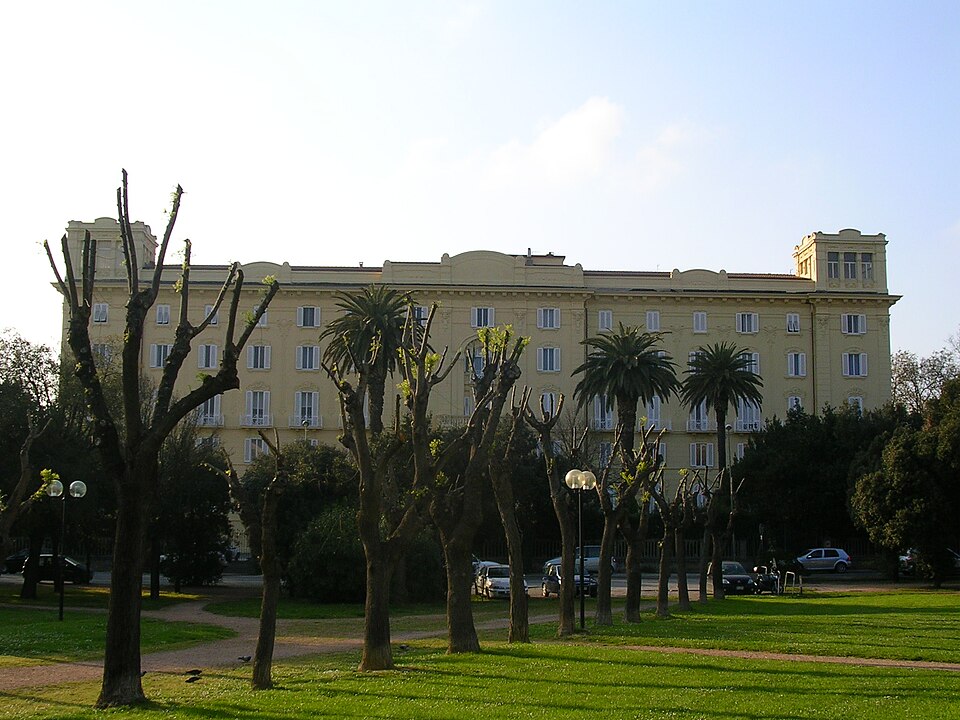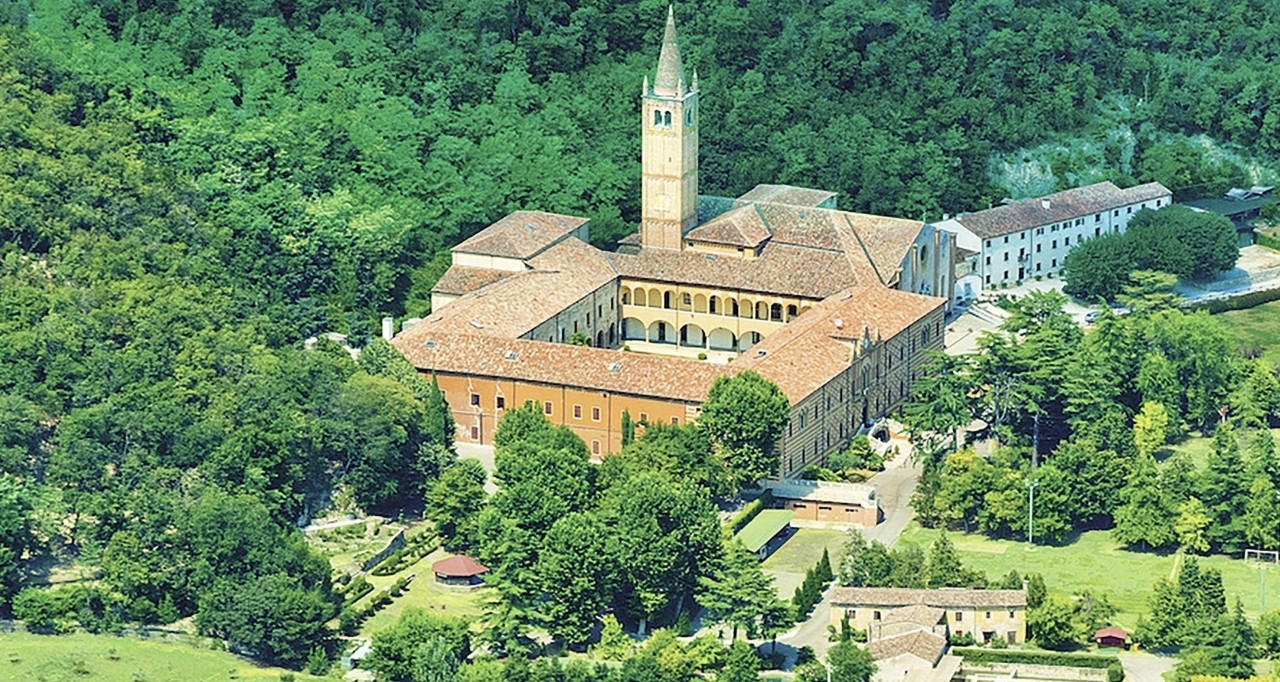
The Salesian complex in Monteortone has come to market with approximately 10,000 sqm of built area, 25 hectares of land, accommodation facilities, thermal spa infrastructure and a historic estate that would be extremely difficult to replicate. The asking price has not been disclosed. But in hotel investment, value should not be determined by what the seller wants to achieve. It should be determined by the future income the asset can generate and by the amount of capital required to unlock that income.
The transaction
The Salesian complex in Monteortone, within the municipality of Abano Terme, has been put up for sale.
The property comprises a substantial real estate and landholding portfolio: the former convent, accommodation facilities, restaurant and event spaces, thermal facilities and approximately 25 hectares of land, with a total internal area reported at around 10,000 sqm.
The price is confidential.
And that absence of a publicly disclosed asking price is precisely what makes the case particularly interesting.
Because it allows the analysis to be reversed.
Instead of asking:
What is the property worth?
The investor should ask:
How much can I afford to pay for the property while still achieving a return consistent with the level of risk involved?
This is the same approach that should underpin any acquisition assessed by InvestimentiAlberghieri.it, the advisory work carried out through HotelManagementGroup.it, the value-creation strategies developed by Investhotel.it, and the professional analysis published on RobertoNecci.it.
The first number that changes the entire investment case: 182 sqm per room
Publicly available information indicates an accommodation capacity of approximately 55 rooms.
If we divide 10,000 sqm of built area by 55 rooms, the result is:
approximately 182 sqm of built space per key.
That is an exceptionally high ratio.
And it is probably the first figure an investor should focus on.
Hotels do not generate revenue in direct proportion to the amount of floor space they own.
They primarily generate revenue through:
-
rooms;
-
food and beverage;
-
wellness and thermal treatments;
-
meetings;
-
events;
-
ancillary services;
-
commercial use of common areas.
An extremely high amount of built space per room can therefore represent both:
an exceptional positioning opportunity
and
an exceptionally heavy cost structure.
Heating, cooling, maintaining, insuring, protecting and renovating 10,000 sqm costs money regardless of whether the hotel is selling 30, 40 or all 55 rooms.
Monteortone therefore cannot be assessed simply as a 55-room hotel.
It needs to be analysed as a destination property.
Twenty-five hectares: valuable real estate or unproductive capital?
The estate extends over approximately 250,000 sqm of land.
That is an extraordinary amount of land compared with the existing hotel capacity.
But here again, the theoretical real estate value of the land does not automatically translate into economic value for a hotel investor.
The real question is:
How much of those 25 hectares can contribute to ADR, occupancy or ancillary revenues?
The opportunities are significant:
-
outdoor wellness;
-
health and fitness trails;
-
sports activities;
-
weddings;
-
events;
-
corporate retreats;
-
destination dining;
-
private functions;
-
activities linked to the Euganean Hills;
-
thermal experiences;
-
medical wellness;
-
nature-based experiences;
-
premium guest activities.
If properly designed and monetised, the land could become a major value multiplier.
If it simply remains landscaped parkland, however, it may primarily generate maintenance costs.
Abano offers a strong demand base — but that alone is not enough
Abano Terme and Montegrotto form one of Europe's leading thermal tourism destinations.
That reduces one of the typical risks associated with hotel repositioning: the destination already benefits from established tourism demand.
But that also means competition is significant.
The project cannot be based on simply recreating a traditional thermal hotel.
It needs to appeal simultaneously to:
-
wellness travellers;
-
leisure guests;
-
short-break demand;
-
international travellers;
-
medical wellness guests;
-
event demand;
-
weddings;
-
corporate retreats;
-
cultural tourism;
-
the Euganean Hills;
-
Padua;
-
Venice.
The difference between a strong investment and a mediocre one will therefore depend above all on positioning.
Three potential operating scenarios
Because the acquisition price, historical financials, detailed condition of the buildings, required investment and development plan are not publicly available, the following figures should be considered illustrative scenarios only.
They do not represent a formal valuation or appraisal of the property.
Their purpose is to show what type of operating model might be capable of supporting the investment.
| Scenario | Annual Revenue | Estimated EBITDA | Capitalisation Yield | Indicative Operating Value |
|---|---|---|---|---|
| Traditional thermal hotel | €3.2m | €0.57m | 9.0% | €6.3m |
| Upper-upscale resort | €5.4m | €1.3m | 7.75% | €16.8m |
| Luxury destination resort | €8.0–8.5m | €2.3m | 6.75% | approx. €34m |
These scenarios demonstrate just how heavily the value of the property depends on its future operating model.
The same real estate can support radically different valuations.
Scenario 1 — Retaining a traditional thermal hotel model
Assume:
55 rooms
Average occupancy: 60%
ADR: €170
Annual room nights sold: approximately 12,000
Rooms revenue: approximately €2 million
Additional F&B, thermal spa and events revenue: approximately €1.1 million
Total revenue: approximately €3.2 million
At an EBITDA margin of 18%:
EBITDA: approximately €570,000
Capitalising that EBITDA at 9% produces:
an indicative operating value of approximately €6.3 million.
The problem becomes immediately apparent.
Under this configuration, it becomes difficult to support:
a significant acquisition price + substantial CAPEX + financing costs + pre-opening expenditure.
This is probably the least attractive scenario.
Scenario 2 — Upper-upscale resort repositioning
Now assume a genuine repositioning strategy.
Stabilised occupancy: 68%
ADR: €225
Rooms revenue: approximately €3.1 million
F&B, wellness, thermal spa, events and meetings revenue: approximately €2.3 million
Total revenue: approximately €5.4 million
EBITDA margin: 24%
EBITDA: approximately €1.3 million.
Capitalising this figure at a 7.75% yield produces:
a stabilised value of approximately €16.5–17 million.
At this point, the project begins to develop a credible investment case.
But the decisive variable is still missing:
How much capital is required to get there?
CAPEX: the figure that could determine the entire investment
A complex of this scale requires far more than refreshed bedrooms and new furniture.
A proper due diligence exercise should assess at least:
-
structural condition;
-
roofing;
-
mechanical and electrical systems;
-
HVAC;
-
energy efficiency;
-
fire safety;
-
accessibility;
-
kitchens;
-
restaurants;
-
spa facilities;
-
pools;
-
thermal infrastructure;
-
guestrooms;
-
public areas;
-
technology;
-
external landscaping;
-
heritage and architectural restrictions;
-
professional fees;
-
pre-opening costs;
-
working capital.
Across 10,000 sqm, relatively small differences in the cost per square metre produce very large differences in total project cost.
€800/sqm = €8 million
€1,200/sqm = €12 million
€1,500/sqm = €15 million
€2,000/sqm = €20 million
And that is before fully factoring in the acquisition price.
The real cost of the transaction is therefore not simply the price of the property.
It is:
Acquisition Price + CAPEX + Professional Fees + Pre-Opening + Working Capital + Cost of Finance.
Returns must be measured against total invested capital
This leads to one of the most important metrics in development and repositioning transactions:
EBITDA Yield on Cost
Formula:
Stabilised EBITDA / Total Investment Cost
Assume the upper-upscale scenario generates €1.3 million of stabilised EBITDA.
Case A
Total investment:
€20 million
EBITDA:
€1.3 million
Yield on cost:
6.5%
For a transaction involving development risk, refurbishment risk, repositioning risk and operational ramp-up, that return may be inadequate.
Case B
Total investment:
€16 million
Yield on cost:
8.1%
The investment case improves, although the premium over the risk profile would still need to be assessed carefully.
Case C
Total investment:
€14 million
Yield on cost:
9.3%
The opportunity begins to look considerably more attractive.
And this is precisely why acquisition price cannot be analysed independently from CAPEX.
If repositioning Monteortone required €10 million of investment, an investor willing to commit €14 million in total would theoretically have only:
€4 million available for the acquisition price, financing costs and other transaction components.
This is deliberately simplified.
But it demonstrates the mechanism.
The most compelling scenario: creating a destination, not merely a hotel
There is a third possibility.
And it is the scenario most capable of unlocking the property's potential.
Not simply refurbishing the existing hotel.
But creating a:
Thermal & Wellness Destination Resort
capable of combining:
-
hospitality;
-
historic architecture;
-
thermal facilities;
-
wellness;
-
medical wellness;
-
food and beverage;
-
nature;
-
events;
-
corporate business;
-
retreats;
-
destination weddings.
Under this scenario, assume:
Occupancy: 72%
ADR: €295
Rooms revenue: approximately €4.3 million
Ancillary revenue: approximately €4 million
Total revenue: more than €8 million
EBITDA margin: 28%
EBITDA: approximately €2.3 million.
Capitalised at a 6.75% yield:
indicative stabilised value: approximately €34 million.
The potential changes dramatically.
But so do:
-
CAPEX requirements;
-
operational complexity;
-
execution risk;
-
branding costs;
-
distribution costs;
-
commercial investment;
-
the length of the ramp-up period.
A higher terminal value does not automatically mean a higher investment return.
The central question: are 55 rooms enough?
This remains one of the most important issues.
Are 55 rooms sufficient?
With 10,000 sqm of built area, the existing ratio is approximately:
182 sqm per key.
If capacity could be increased to 80 rooms:
125 sqm per key.
At 100 rooms:
100 sqm per key.
Even then, the ratio would remain generous for a resort.
Naturally, any increase in capacity would need to be assessed from an:
-
urban planning;
-
construction;
-
permitting;
-
heritage;
-
hotel classification
perspective.
But economically, this analysis could materially change the value of the entire transaction.
Because adding rooms does not simply increase revenue.
It also spreads the fixed costs associated with 10,000 sqm of built space across a much broader revenue base.
The right acquisition price comes from a reverse valuation
The correct question should therefore not be:
“What is the seller asking?”
It should be:
“How much can I pay while still achieving a return that compensates me for the risk?”
This is a reverse valuation approach.
Start with the stabilised value.
Then deduct:
-
CAPEX;
-
professional fees;
-
pre-opening expenditure;
-
working capital;
-
financing costs;
-
developer profit;
-
contingency;
-
required return.
What remains is the theoretical maximum acquisition price.
A simplified example
Assume:
Stabilised value:
€17 million
CAPEX:
€8 million
Professional fees + pre-opening + working capital:
€2 million
Risk allowance and required profit:
€2 million
Indicative maximum acquisition price:
approximately €5 million.
If the seller instead required €10 million, the total investment would move towards €20 million.
With stabilised EBITDA of €1.3 million:
Yield on Cost = 6.5%.
At that point, the architectural and historical appeal of the estate may not be enough to compensate for the financial risk.
What could materially change the valuation?
Before submitting any offer, an investor would need answers to at least seven questions.
1. Can the room count be increased?
This may be one of the single most important value drivers.
2. What is the condition of the building systems?
This alone could move CAPEX by several million euros.
3. What is the status of the thermal operation?
Permits, concessions, wells, water capacity and characteristics would all require detailed verification.
4. What restrictions apply to the historic buildings?
Heritage adds value, but it can also restrict redevelopment options.
5. Can the 25 hectares be monetised?
The land needs to contribute to the business model rather than simply to visual appeal.
6. What is the optimal positioning?
A traditional thermal hotel and a destination resort produce radically different values.
7. Who will operate and brand the property?
If the business plan requires ADR levels approaching or exceeding €300, international positioning and distribution capability become critical.
The real opportunity
Monteortone brings together characteristics that are exceptionally difficult to reproduce:
history + thermal facilities + scale + 25 hectares + an established destination + proximity to Padua and Venice.
Those elements could support an extraordinary hotel product.
But there is no automatic relationship between the uniqueness of the property and the profitability of the investment.
If anything, the opposite is true.
The more complex the asset, the more rigorous the financial analysis needs to be.
That is the same principle underlying the investment analyses published by InvestimentiAlberghieri.it, the professional insights on RobertoNecci.it, the value-creation strategies developed by Investhotel.it, and the advisory activities of HotelManagementGroup.it.
So, what is Monteortone worth?
With the information currently available publicly, assigning a single valuation figure would not be professionally defensible.
But one conclusion is clear.
If it remains a traditional 55-room thermal hotel, its ability to support a high investment basis appears limited.
If it is repositioned as an upper-upscale resort, the potential value increases materially.
If it becomes a genuine international destination property, its potential value could be substantially higher still.
But one rule applies in every scenario:
Value must remain consistent with return.
A property may have enormous historical value.
It may possess significant real estate value.
It may carry exceptional symbolic value.
But a professional investor needs to ask a fourth question:
How much capital must I deploy to transform it into a business capable of adequately remunerating that capital?
Conclusion
The Salesian complex in Monteortone is an extremely interesting hospitality asset.
But its complexity demands discipline.
10,000 sqm do not automatically create value.
Twenty-five hectares do not automatically create value.
A thermal water resource does not automatically create value.
A historic monastery does not automatically create value.
They become valuable when they can be converted into:
ADR + occupancy + ancillary revenue + EBITDA + cash flow + exit value.
Before any acquisition negotiation, an investor therefore needs at least:
-
technical due diligence;
-
planning and zoning due diligence;
-
market analysis;
-
optimal room-count assessment;
-
CAPEX plan;
-
business plan;
-
investment return analysis;
-
stabilised valuation;
-
definition of the maximum acquisition price.
Only then should the offer be made.
Because in professional hotel investment, the analysis does not begin with what the seller wants to receive.
It begins with what the buyer can reasonably earn.
Hotel Investment Analysis & Advisory
InvestimentiAlberghieri.it provides economic and strategic analysis for hotel acquisitions, conversions, repositionings and value-creation projects.
Our analysis may include:
-
asset valuation;
-
CAPEX assessment;
-
business planning;
-
potential ADR and occupancy;
-
GOP and EBITDA;
-
return on invested capital;
-
assessment of direct operation, lease, management contract or disposal strategies;
-
stabilised value;
-
exit strategies.
To submit an investment opportunity for assessment:
info@investimentialberghieri.it