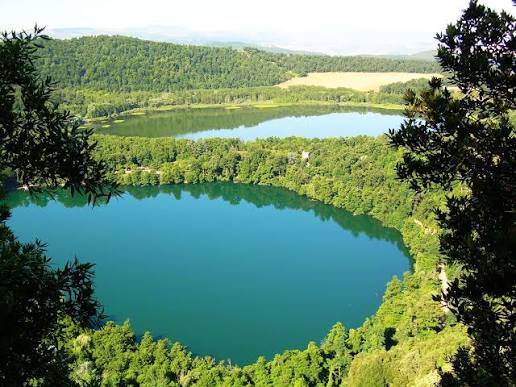
In Monticchio Laghi, within the municipality of Rionero in Vulture, a hospitality complex comprising approximately 2,630 sqm of hotel accommodation and a further 955 sqm dedicated to a multifunctional venue, entertainment space and wellness centre is returning to auction. The base price has fallen from €4.704 million in December 2025 to the current €1.984 million, while the minimum bid now stands at €1.488 million. That represents a 57.8% repricing and makes the opportunity appear substantially more attractive. But this is precisely where the investment analysis begins: an implied acquisition cost of approximately €46,500 per key does not necessarily mean the hotel is “cheap”. The real question is how much capital will ultimately be required to transform the asset into an operation capable of delivering an adequate risk-adjusted return.
Investment Snapshot
Location: Monticchio Laghi, Rionero in Vulture, Potenza, Italy
Asset: hospitality complex comprising 32 rooms, restaurant and bar facilities, wellness centre, entertainment venue and multifunctional event space
Approximate total built area: 3,585 sqm
Base price: €1,984,500
Minimum bid: €1,488,375
Minimum bid per key: approximately €46,500
Reduction versus December 2025 base price: approximately 57.8%
Auction date: 24 September 2026
The Court of Potenza, as part of enforcement proceeding no. 107/2024, is offering for sale a tourism and hospitality complex in Monticchio Laghi, within the municipality of Rionero in Vulture in the province of Potenza.
The procedure is particularly relevant for InvestimentiAlberghieri.it because it raises one of the central questions in distressed acquisitions:
when an auction price keeps falling, at what point does the discount become a genuine investment opportunity?
The answer cannot be found simply by comparing the current auction base with the original asking level.
Investors need to move from price to value and, more importantly, from value to the prospective return on total invested capital.
The Asset: 32 Rooms, F&B, Wellness and Almost 3,600 sqm of Built Space
The property comprises a main hotel building of approximately 2,630 sqm and a second building of approximately 955 sqm, configured for a multifunctional venue, entertainment/disco-pub operation and wellness centre.
Available information describes a hotel with 32 en-suite rooms, together with restaurant facilities, bar, kitchen, technical areas and ancillary accommodation.
The two buildings therefore provide approximately 3,585 sqm of total space.
That figure alone highlights one of the transaction’s most important economic characteristics.
With only 32 keys spread across almost 3,600 sqm, the ratio of total built area to room count is exceptionally high.
A significant proportion of the capital tied up in the asset is therefore not directly dedicated to room revenue generation.
The wellness centre, multifunctional space, entertainment venue, restaurant and other ancillary areas should consequently be analysed not merely as amenities but as distinct business units.
The question is straightforward:
do these spaces generate EBITDA, or do they absorb capital?
Auction Terms
The current auction provides for:
Base price: €1,984,500
Minimum bid: €1,488,375
Minimum bidding increment: €15,000
Bid submission deadline: 23 September 2026 at 11:00 a.m.
Auction date: 24 September 2026 at 11:00 a.m.
Based on the reported 32 rooms, the minimum bid equates to approximately:
€46,512 per key.
The base price equates to approximately:
€62,016 per key.
Viewed in isolation, these metrics appear extremely low.
But price per key is only a preliminary benchmark.
For an asset with such a significant non-room component, it may even become misleading unless the investor first reconstructs the entire operating model.
From €4.704 Million to €1.984 Million: Four Auctions Tell a Story
The most striking feature of the procedure is the progressive compression of the auction price.
The reported sequence of base prices is:
16 December 2025 — €4,704,000
10 March 2026 — €3,528,000
26 May 2026 — €2,646,000
24 September 2026 — €1,984,500
Each stage represents a 25% reduction from the previous level.
Overall, the base price has fallen from €4.704 million to €1.9845 million.
That is a reduction of approximately €2.72 million, or 57.8%.
The property is therefore currently being offered at just over 42% of its December 2025 auction base.
This is a substantial repricing.
But it does not prove that the property is undervalued.
It demonstrates that, at the previous pricing levels, the market failed to establish a clearing price.
Those are two fundamentally different propositions.
The Price Has Fallen. Has the Risk Fallen as Well?
This should be the investor's first question.
All else being equal, every reduction in the acquisition price mathematically improves the potential return.
But in hospitality special situations, all else rarely remains equal.
As time passes, the following may increase:
-
deferred maintenance;
-
physical deterioration;
-
loss of staff;
-
erosion of commercial positioning;
-
relaunch requirements;
-
technological obsolescence;
-
capex requirements;
-
working capital needed to restart or stabilise operations.
The headline discount must therefore be compared with any increase in the cost to cure.
This is one of the core principles behind the extraordinary hospitality transactions analysed by Investhotel.it: a lower purchase price creates value only where the reduction in acquisition cost exceeds the additional risk and capital required to normalise the asset.
€46,500 per Key: Why the Number Can Be Misleading
Dividing the minimum bid of €1,488,375 by 32 rooms produces an implied acquisition price of approximately €46,500 per key.
That is clearly worth examining.
But it is not yet evidence that the transaction is attractive.
Assume, purely for analytical purposes, that a purchaser subsequently needed to invest €2 million in capex, another €500,000 in working capital, pre-opening expenses and transition costs, plus additional contingency reserves.
The economic cost of the acquisition would look entirely different from the bid submitted at auction.
For this reason, in distressed hotel acquisitions the appropriate benchmark is not:
Auction Price / Keys
but rather:
Total Investment Cost / Stabilised Keys
and, more importantly:
Total Investment Cost / Stabilised EBITDA.
Only these ratios allow the opportunity to be compared meaningfully against alternative hotel investments.
Purchase Price and Total Investment Cost Are Not the Same Thing
The Purchase Price is the amount paid to acquire the property.
The Total Investment Cost is the total amount of capital required to bring the asset to the operating configuration contemplated by the business plan.
For a transaction such as Monticchio Laghi, it should include at least:
**purchase price
-
taxes and transaction costs
-
technical capex
-
FF&E
-
potential room refurbishment
-
wellness and F&B investment
-
technology
-
pre-opening costs
-
marketing and distribution
-
working capital
-
professional fees
-
contingency reserve.**
It is Total Investment Cost that should be compared with prospective EBITDA.
Not the auction price.
The Real Economic Anomaly: 3,585 sqm for Only 32 Keys
This may be the single most interesting feature of the transaction.
Dividing the approximately 3,585 sqm of reported total space by 32 rooms produces more than 110 sqm of built area per key.
Clearly, this does not mean that each room measures 110 sqm.
It means that the complex contains a substantial amount of non-room space.
And this is where a major part of the investment thesis will be won or lost.
A hotel with extensive ancillary facilities can be highly attractive when those spaces generate revenue and contribution.
It can become structurally inefficient when they primarily generate:
energy consumption, maintenance, labour, cleaning, insurance and capex.
Space, therefore, does not automatically equal value.
Space becomes valuable only when it can be monetised.
Wellness: Amenity or Profit Centre?
The wellness centre warrants its own analysis.
In a leisure destination, a successful wellness proposition can:
-
support higher ADR;
-
extend the operating season;
-
create dedicated packages;
-
attract local demand;
-
increase average length of stay;
-
reduce reliance on peak-season leisure demand.
However, to become a genuine profit centre, it must generate sufficient demand to cover energy costs, staffing, maintenance and replacement capex.
Due diligence should therefore assess not merely the existence of the wellness centre, but its underlying business case.
The Entertainment Venue Raises a Different Question
The entertainment/disco-pub area can likewise be interpreted in two ways.
It may represent a leisure component capable of attracting external customers and increasing on-property guest expenditure.
Alternatively, it may be a space with limited compatibility with the hotel's future positioning, carrying significant operating costs and seasonal risk.
The strategic question therefore becomes:
retain, reposition or repurpose?
Should the current use be maintained?
Should the concept be repositioned?
Or should the space be converted to a more economically productive use?
In a proper hotel due diligence process, no area should automatically be considered untouchable.
Every square metre should economically justify its function.
The Multifunctional Space Could Support Season Extension
The same principle applies to the multifunctional event space.
If correctly sized, configured and commercialised, it could support events, meetings, small conferences, banqueting, weddings and corporate demand.
That could be particularly relevant in reducing seasonality.
But again, an investor should avoid assigning theoretical value to a space merely because it exists.
The correct question is:
how much incremental revenue and GOP can it generate each year?
Before Valuing the Hotel, Investors Need to Value Monticchio Laghi as a Destination
A hotel does not perform in a vacuum.
Its ability to generate ADR, occupancy and RevPAR ultimately depends on the depth and quality of demand in its destination.
Monticchio Laghi has meaningful natural and landscape attractions within the wider Vulture area.
However, investors must distinguish between tourism appeal and the economic depth of hotel demand.
They are not the same thing.
A destination may be attractive while still generating insufficient year-round demand to support a complex hospitality operation.
Commercial due diligence should therefore assess, among other factors:
-
tourist arrivals and overnight stays;
-
seasonality;
-
average length of stay;
-
geographic source markets;
-
leisure demand;
-
group business;
-
events;
-
corporate demand;
-
competitive supply;
-
ADR;
-
occupancy;
-
distribution channels;
-
capacity to attract international demand.
The objective should be to determine the asset's Revenue Ceiling.
In other words: how much revenue can this property realistically generate in this destination?
The Business Plan Must Start with Rooms, but It Cannot End There
The 32-room inventory should be modelled under at least three scenarios.
Downside Case
Conservative occupancy, moderate ADR, pronounced seasonality and slower commercial penetration.
Base Case
Performance consistent with realistic positioning and an effective commercial strategy.
Upside Case
Successful repositioning, stronger ADR, improved distribution, profitable wellness operations and greater season extension.
These scenarios drive:
Room Revenue = Available Rooms × Occupancy × ADR
followed by:
Total Revenue = Room Revenue + F&B + Wellness + Events + Other Revenue.
Only then can a normalised GOP be derived.
Operating Break-Even: The Critical Control Point
Before underwriting upside, an investor should establish the operating break-even point.
The analysis should determine the minimum combination of occupancy and ADR required for the property to cover:
**variable operating costs
-
fixed operating expenses
-
payroll
-
utilities
-
maintenance
-
marketing
-
administrative expenses
-
financing costs consistent with the debt structure.**
For an asset with extensive non-room facilities, break-even may be considerably higher than for a simpler hotel configuration.
Conceptually:
Break-even Revenue = Fixed Operating Costs / Contribution Margin
From this figure, investors can derive the minimum room revenue required and therefore the necessary occupancy and ADR combination.
This exercise is crucial because it differentiates between:
a hotel capable of operating sustainably at realistic performance levels
and
a hotel that requires exceptional trading performance merely to cover its cost structure.
GOP Matters More Than Revenue
A property with a restaurant, bar, wellness centre, entertainment venue and multifunctional space may generate apparently attractive total revenues.
But each revenue stream carries a different margin profile.
Rooms generally deliver higher contribution margins than F&B.
Wellness and entertainment can be profitable, but they can also be highly labour- and energy-intensive.
For this reason, asset value should ultimately be linked to its ability to generate Gross Operating Profit, followed by EBITDA and free cash flow.
The operational due diligence — the area in which HotelManagementGroup.it provides the relevant operating perspective — should therefore reconstruct departmental profitability across:
Rooms
F&B
Wellness
Events
Entertainment
Undistributed Operating Expenses
Fixed Charges.
Only then can investors identify which business units create value and which destroy it.
Maximum Bid Price: What Should an Investor Actually Offer?
The auction base is €1,984,500.
The minimum bid is €1,488,375.
Neither figure tells a rational investor what it should actually pay.
That number must be derived backwards.
First, the investor builds the stabilised business plan.
Then it determines the economic value of the asset.
Finally, it deducts all capital required to reach that stabilised configuration.
Conceptually:
Stabilised Enterprise Value
– Required Capex
– FF&E
– Working Capital
– Transaction Costs
– Pre-opening / Relaunch Costs
– Contingency Reserve
– Execution Risk Discount
= Maximum Bid Price.
If the result falls below the minimum bid, the transaction may not be attractive even at the lowest permitted price.
If it is materially higher, the investor may have a genuine margin of safety.
That is the correct way to approach a hotel auction.
A 57.8% Discount Is Not the Investor's Return
The move from €4.704 million to €1.9845 million can create a powerful cognitive bias.
An investor may feel that it is “buying at almost a 60% discount”.
But a discount to what?
The original auction base does not necessarily represent fair market value.
More importantly, it does not represent the stabilised value of the hospitality operation.
Investor return is not created by the difference between:
€4.704 million – acquisition price.
It is created by the difference between:
future stabilised asset value – Total Investment Cost.
That distinction is fundamental.
What Must the Hotel Earn to Justify the Investment?
The analysis should begin with the investor's required return.
Assume conceptually that the Total Investment Cost equals X.
The next question is what level of stabilised EBITDA the property must produce in order for the investment to remain consistent with:
-
cost of capital;
-
destination risk;
-
seasonality;
-
asset liquidity;
-
execution risk;
-
exit multiple.
The question is therefore not:
“Is €1.49 million cheap for 32 rooms?”
It is:
“What EBITDA must the property generate for the total capital invested to achieve the required return?”
That is an entirely different question.
And it is the question that should determine the bid.
Capex Is Likely to Be the Decisive Variable
Before taking any investment decision, a comprehensive Property Condition Assessment would be required.
The review should cover, among other areas:
structural condition, roofs, façades, guestrooms, bathrooms, electrical systems, HVAC, fire safety, lifts, kitchen, wellness facilities, public areas, windows, insulation, energy efficiency, IT systems and regulatory compliance.
Capex should then be divided into at least four categories:
Immediate Capex — works required before reopening or relaunch;
Deferred Maintenance — expenditure that has been postponed;
Repositioning Capex — capital required to achieve the intended market positioning;
Replacement Reserve — recurring capital needed to maintain the asset's standards.
An underestimate of €500,000 of capex on an acquisition priced at approximately €1.5 million can materially alter the projected IRR.
Reprogramming the Ancillary Spaces Could Create Upside
The large amount of ancillary space also creates optionality.
There is no reason to assume that every space must retain its existing function.
Subject to planning, technical and regulatory review, an investor could analyse potential internal adaptive-reuse strategies, including:
-
additional guestrooms;
-
suites;
-
serviced apartments;
-
medical or specialised wellness;
-
meetings and events;
-
independent restaurant concepts;
-
sport and outdoor facilities;
-
other complementary resort uses.
The Highest and Best Use does not necessarily need to replicate the property's current configuration.
Eight Questions That Should Be Answered Before Any Bid
Before participating in the auction, an investment committee should have documented answers to at least the following questions:
1. What is the true technical condition of the property and what capex does it require?
2. What level of hotel demand can Monticchio Laghi realistically support?
3. What ADR and occupancy levels can reasonably be achieved?
4. What can F&B, wellness, events and entertainment realistically contribute?
5. What is the Total Investment Cost?
6. What level of stabilised EBITDA can be achieved?
7. What Maximum Bid Price is consistent with the target return?
8. What credible exit strategy exists over a five- to seven-year horizon?
Without answers to these questions, €1.488 million is merely a price.
It is not yet an investment opportunity.
The Financing Structure Must Reflect Seasonality
The capital structure also deserves careful consideration.
A leisure property in a potentially seasonal destination should not be burdened with debt sized against overly optimistic cash-flow assumptions.
Investors should stress-test at least:
DSCR, Loan-to-Cost, Loan-to-Value, interest coverage, break-even occupancy and liquidity reserves.
Leverage should enhance equity returns without undermining the transaction's resilience during weaker trading periods.
Where Value Could Be Created
The Monticchio opportunity presents several potential value-creation levers.
Acquisition basis: substantial price compression compared with previous auction rounds.
Operational turnaround: improvement in revenue, distribution, productivity and cost structure.
Repositioning: redesigning the product toward more profitable customer segments.
Space optimisation: monetising or repurposing underutilised non-room areas.
Season extension: using wellness, events and F&B to reduce seasonality.
Exit: selling a stabilised property once cash flow and operating track record have been rebuilt.
It is the combination of these levers — not the headline discount — that may generate investment returns.
The Exit Must Be Underwritten Before Entry
An asset in a secondary destination will generally be less liquid than a hotel in Rome, Milan, Florence or Venice.
The eventual buyer may therefore be more likely to be an operator, local entrepreneur, family office or specialist investor than a large international core fund.
That directly affects the potential exit multiple.
And the exit multiple directly influences the maximum price that can be justified today.
For this reason, the exit strategy should be defined before the acquisition, not afterwards.
The Real Metric Is the Risk-Adjusted Entry Basis
The most important conclusion may be this.
An investor should not ask whether the entry price is low in absolute terms.
It should ask whether the price is sufficiently low relative to the risks being assumed.
The Risk-Adjusted Entry Basis must reflect:
**destination risk
-
operating risk
-
technical risk
-
capex risk
-
execution risk
-
financing risk
-
exit liquidity risk.**
A seemingly low acquisition price may still be too high if these risks are not adequately compensated.
Conversely, a complex asset can become attractive when the entry price provides a sufficient margin of safety.
That is the essence of special-situations investing.
Monticchio Laghi Is a Textbook Hospitality Special Situation
The opportunity is not compelling merely because 32 rooms may theoretically be acquired at approximately €46,500 per key.
It is compelling because investors are being presented with a situation in which the entry price has been heavily compressed while the underlying operational complexity remains.
The discount is visible.
The value still needs to be proven.
That is precisely the distinction between a property auction and a genuine hospitality special situation.
The analysis developed on Robertonecci.it consistently reflects the principle that hotel value is ultimately linked to the ability of the property and operating business to generate sustainable earnings: a hotel is not worth simply what its square metres or room count suggest, but what its operating model can generate in cash flow.
Monticchio Laghi is a particularly clear example.
Conclusion: The Price Has Become Interesting. Now the Investment Case Has to Be Proven
The move from €4.704 million to €1.9845 million has radically changed the entry point.
The minimum bid of €1,488,375 implies an acquisition value of approximately €46,500 per key.
Those figures deserve attention.
But they do not yet constitute an investment thesis.
The real analysis begins after that.
How much capex is required?
How much working capital?
What ADR can the market support?
What occupancy?
How much can the wellness operation contribute?
Is F&B a profit centre or a structural cost?
Should the entertainment venue be retained, repositioned or repurposed?
How much of the built area can genuinely be monetised?
What is the operating break-even point?
What level of stabilised EBITDA can the property generate?
And, above all:
what is the Maximum Bid Price that enables the investor to achieve its target return while maintaining a Risk-Adjusted Entry Basis consistent with the transaction's full risk profile?
Only when that question has a numerical answer does the discount become value.
Until then, it remains merely an auction price reduction.
And in hospitality special situations, the ability to distinguish between a low price and an attractive investment is one of the investor's most important competitive advantages.
For further analysis of hotel auctions, distressed procedures and hospitality investment opportunities: InvestimentiAlberghieri.it.
For acquisitions, disposals, turnarounds and extraordinary hotel transactions: Investhotel.it.
For hotel valuations, strategic analysis and hospitality-sector insights: Robertonecci.it.
For operational due diligence, management, positioning and hotel performance improvement: HotelManagementGroup.it.
For further information and transaction enquiries: info@investimentialberghieri.it
This article is provided solely for informational and analytical purposes and does not constitute an offer, investment recommendation or solicitation. Prices, deadlines and transaction terms should be verified against the official documentation relating to the procedure. Any prospective investor should conduct its own independent legal, planning, technical, tax, financial and operational due diligence before making any investment decision.