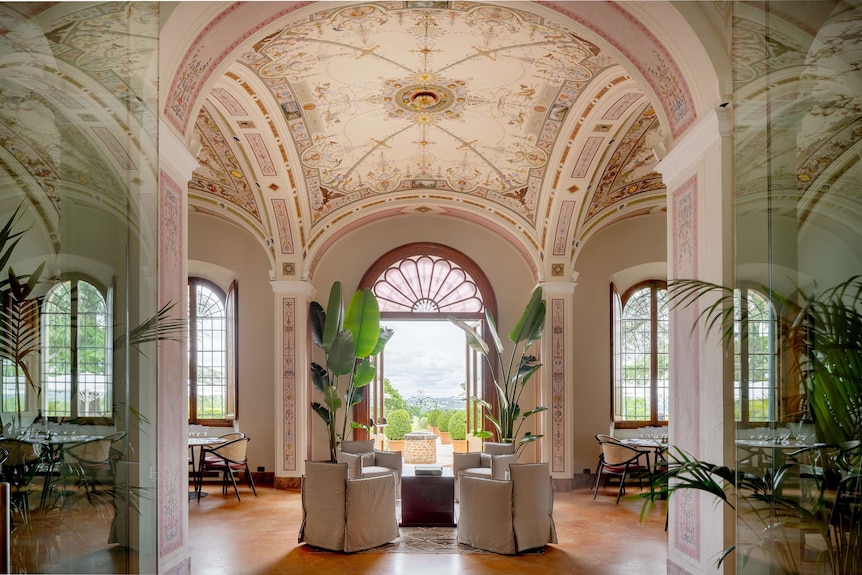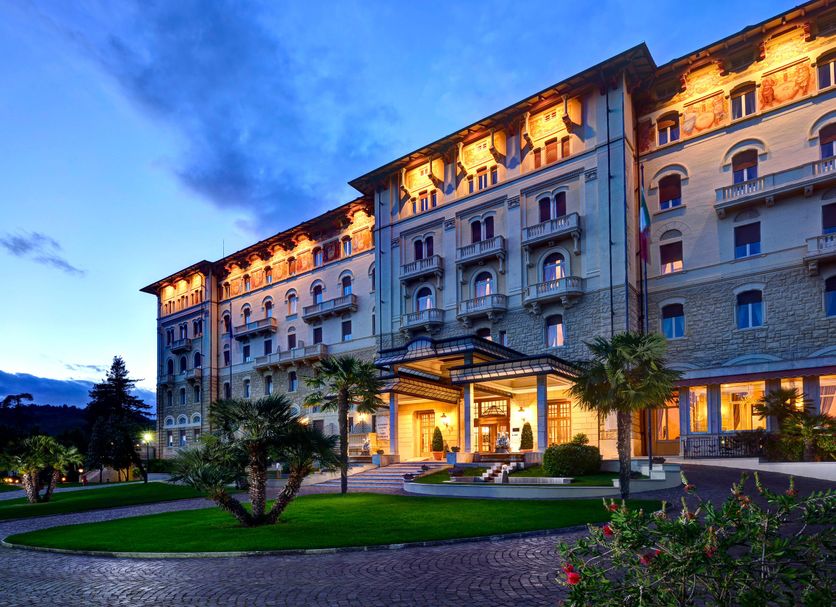
The change of ownership of Italy’s historic wellness retreat marks a new chapter for one of Europe’s most distinctive hospitality assets. An analysis of historical financial performance, indebtedness and strategic development opportunities reveals an investment whose success will depend on the ability to translate real estate prestige, international market positioning and operational excellence into sustainable financial returns.
By Roberto Necci – Hospitality Investment & Strategic Advisory
25 November 2026 | InvestimentiAlberghieri.it – Hospitality Investment Intelligence
Executive Summary – The Investment Thesis
The acquisition of Palazzo Fiuggi through an investment vehicle associated with Greg O’Hara, founder of US investment firm Certares Management, represents a particularly significant transaction within the Italian hospitality investment landscape.
The investment sits at the intersection of five major strategic themes:
-
The acquisition of an iconic, historically significant real estate asset with substantial barriers to replication.
-
Exposure to the international luxury medical wellness market.
-
The development of a business model centred on preventive healthcare, wellbeing and longevity.
-
The potential restructuring of the company’s operational, financial and capital framework.
-
Value creation through improved operating performance and profitability.
An examination of the available corporate financial information, however, reveals a considerably more complex picture than the property’s international reputation might suggest.
Against reported revenues of approximately €11 million in 2025, Fiuggi Palace S.r.l. is reported to have recorded a net loss of €5.85 million, bringing cumulative net losses over the five-year period from 2021 to 2025 to approximately €33.5 million.
According to financial data provider Xray Finance, the company also reported net financial debt of approximately €41.5 million and negative shareholders’ equity of €14.8 million in 2024.
Subject to verification against the complete statutory financial statements, these figures suggest that the transaction may have the characteristics of an operational and financial turnaround, as well as those of a high-profile real estate investment.
The fundamental question is not simply how much was paid for Palazzo Fiuggi, but what level of profitability the business must achieve to generate an adequate return on the total capital invested.
1. Palazzo Fiuggi: Inside the Acquisition
According to information published by YunoAI on 22 July 2026 and subsequently reported by the local press on 24 November, Odette Wellness Properties S.r.l., an investment vehicle associated with Greg O’Hara, reportedly acquired 100% of the share capital of Fiuggi Palace S.r.l. on 8 July 2026.
The transaction involved the acquisition of shares previously held by:
-
Magomed Bazhaev, who owned 90% of the company;
-
Lorenzo Giannuzzi, who held the remaining 10% and played a leading role in the property’s international repositioning.
According to the same sources, the transaction was reviewed under Italy’s Golden Power regime and was reportedly deemed outside its scope.
Although the financial terms have not been officially disclosed, market sources estimate the transaction value at between €35 million and €50 million.
Transaction Overview
| Investment Metric | Available Information |
|---|---|
| Asset | Palazzo Fiuggi Wellness Medical Retreat |
| Location | Fiuggi, Lazio, Italy |
| Target company | Fiuggi Palace S.r.l. |
| Reported acquiring entity | Odette Wellness Properties S.r.l. |
| Principal investor | Greg O’Hara |
| Shareholding acquired | 100% |
| Reported transaction date | 8 July 2026 |
| Indicative transaction value | €35–50 million |
| Rooms and suites | 102 |
| Medical spa facilities | 6,000 sq m |
| Private parkland | 8 hectares |
| Reported FY2025 revenue | €11.01 million |
| Reported FY2025 net loss | €5.85 million |
| Reported FY2024 net financial debt | €41.49 million |
| Reported FY2024 shareholders’ equity | -€14.80 million |
The association between the acquiring vehicle and Greg O’Hara does not necessarily establish that the investment was made directly through a fund managed by Certares.
The precise ownership and financing structure of the acquisition remains subject to further documentary confirmation.
2. From Grand Hotel Palazzo della Fonte to an International Medical Wellness Destination
Originally built in 1913, Palazzo Fiuggi is one of the most distinctive examples of Italy’s historic hospitality heritage.
Formerly known as the Grand Hotel Palazzo della Fonte, the property was acquired at auction in 2019 for approximately €16.5 million and subsequently underwent an extensive redevelopment programme reportedly costing a further €32 million.
Historical Investment Cost
| Investment Component | Reported Amount |
|---|---|
| Real estate acquisition | €16.5 million |
| Refurbishment and repositioning | €32.0 million |
| Total historical investment | €48.5 million |
Reopened in 2021, Palazzo Fiuggi was repositioned as an international medical wellness destination, combining luxury accommodation, diagnostic services, personalised wellness programmes, physical activity, specialist treatments and nutritional expertise, including contributions from renowned chef Heinz Beck.
The redevelopment transformed a historic thermal spa hotel into a highly differentiated hospitality product targeting predominantly affluent international guests.
From an investment perspective, however, this repositioning also fundamentally altered the operating profile of the business.
Palazzo Fiuggi cannot be assessed in the same way as a conventional five-star hotel.
It is a multidisciplinary, capital-intensive enterprise requiring specialist infrastructure, advanced operational capabilities and the coordination of expertise across hospitality, healthcare and wellness.
3. Palazzo Fiuggi’s Financial Performance: More Than €33 Million in Cumulative Net Losses
An examination of the corporate financial information available through commercial databases provides important context for the acquisition.
Historical Financial Performance, 2021–2025
| Financial Year | Revenue | Net Profit / Loss | Net Profit Margin |
|---|---|---|---|
| 2021 | €1.46m | -€6.07m | -416.0% |
| 2022 | €8.10m | -€8.49m | -104.8% |
| 2023 | €11.53m | -€6.63m | -57.5% |
| 2024 | €10.45m | -€6.45m | -61.7% |
| 2025 | €11.01m | -€5.85m | -53.1% |
| Total | €42.55m | -€33.49m | -78.7% |
Sources: RegistroAziende.it and ReportAziende.it. Analysis by InvestimentiAlberghieri.it based on rounded figures obtained from commercial financial databases.
Particularly noteworthy is the company’s performance over the three-year period from 2023 to 2025, following the initial start-up phase.
During this period, the company reportedly generated aggregate revenues of approximately €33 million while recording cumulative net losses of €18.93 million.
FY2025 showed some improvement compared with the previous financial year, with revenue increasing by 5.3% and the reported net loss narrowing.
Nevertheless, the net loss remained equivalent to more than half of annual revenue.
Accounting losses should not automatically be interpreted as an inability to generate operating cash flow of a corresponding magnitude.
Depreciation, amortisation, financing costs, impairment charges and other accounting items can materially affect the statutory net result.
A meaningful assessment must therefore extend beyond reported net income to encompass operating profitability, capital structure and cash flow generation.
4. Capital Structure: The Critical Financial Dimension of the Transaction
According to data published by Xray Finance, Fiuggi Palace S.r.l. reported the following financial indicators for FY2024.
FY2024 Financial Overview
| Financial Indicator | Reported Value |
|---|---|
| Revenue | €10.45m |
| EBITDA | €636,000 |
| EBITDA margin | 6.09% |
| Net loss | €6.45m |
| Total assets | €45.74m |
| Net financial debt | €41.49m |
| Shareholders’ equity | -€14.80m |
| Net debt / EBITDA | 65.2x |
| Shareholders’ equity / total assets | -32.4% |
Source: Xray Finance. Figures relate to 31 December 2024, prior to the reported acquisition.
The substantial difference between positive EBITDA and a significant statutory net loss highlights the need to examine the financial and accounting components below EBITDA.
A comprehensive financial due diligence exercise would need to address:
-
Depreciation and amortisation of property, plant and equipment.
-
Financing costs and interest expenses.
-
Shareholder loans.
-
Potential impairment charges.
-
Debt composition, maturity profiles and repayment obligations.
-
Potential waivers or conversions of former shareholders’ claims.
-
Subsequent recapitalisation measures.
The reported net debt-to-EBITDA ratio of more than 65 times indicates a substantial imbalance between historical financial indebtedness and operating earnings.
An updated classification of financial liabilities is therefore essential to understanding the underlying economics of the transaction.
It remains unclear whether the existing indebtedness was retained, repaid, refinanced, converted into equity or otherwise addressed as part of the acquisition.
Negative shareholders’ equity reported for FY2024 also warrants an examination of subsequent capital contributions and loss-absorption measures. It does not, in itself, establish the company’s current solvency position.
A further point requiring investigation emerges from Xray Finance’s company rankings, which associate revenue of approximately €11 million with negative EBITDA of around €301,000, apparently relating to FY2025.
If confirmed by the complete statutory financial statements, this would suggest that operating profitability deteriorated despite the improvement in the reported net result.
A reduction in accounting losses does not necessarily indicate an improvement in underlying operating performance.
This distinction is fundamental when assessing hospitality acquisitions.
5. What Was Actually Paid for Palazzo Fiuggi?
One of the most important questions surrounding the transaction concerns the nature of the reported acquisition consideration.
In corporate acquisitions, several distinct financial concepts must be clearly differentiated.
Equity Value: the value attributable to the company’s shareholders.
Enterprise Value: the value of the operating business, taking account of the relevant financial adjustments.
Real Estate Value: the value attributable to the underlying property assets.
Total Investment Cost: the aggregate capital required to acquire, finance, restructure and subsequently develop the investment.
In the absence of access to the share purchase agreement and related transaction documentation, it is not possible to establish which of these financial measures corresponds to the reported €35–50 million transaction range.
Illustrative Enterprise-to-Equity Value Bridge
Assuming, purely for illustrative purposes, a transaction value of €42.5 million:
| Financial Component | Illustrative Amount |
|---|---|
| Assumed Enterprise Value | €42.50m |
| Historical FY2024 net financial debt | €41.49m |
| Implied theoretical Equity Value | €1.01m |
Alternatively, if the €42.5 million represented the consideration paid for the shares and historical net financial debt remained unchanged:
| Financial Component | Illustrative Amount |
|---|---|
| Assumed Equity Value | €42.50m |
| Historical FY2024 net financial debt | €41.49m |
| Implied theoretical Enterprise Value | €83.99m |
These deliberately simplified scenarios are not intended to reconstruct the actual acquisition.
They demonstrate, however, how the same reported transaction figure can lead to radically different financial interpretations.
This is precisely where specialist hospitality financial advisory becomes essential.
Through Investhotel Capital Partners, our professional platform focuses on hotel valuations, transaction analysis, financial restructuring and the strategic assessment of hospitality investments.
Understanding the relationship between acquisition consideration, debt, equity and future capital requirements is central to any credible investment appraisal.
6. Price per Key and Revenue Multiples
Using the indicative acquisition range reported by market sources, several preliminary transaction metrics can be calculated.
Indicative Transaction Metrics
| Investment Metric | Low Case | Midpoint Case | High Case |
|---|---|---|---|
| Indicative consideration | €35m | €42.5m | €50m |
| Consideration per key | €343,137 | €416,667 | €490,196 |
| Consideration / FY2025 revenue | 3.18x | 3.86x | 4.54x |
| Consideration / FY2024 EBITDA | 55.0x | 66.8x | 78.6x |
These ratios should not be interpreted as confirmed EV/Revenue or EV/EBITDA transaction multiples, given the uncertainty surrounding the financial perimeter of the acquisition.
Furthermore, price per key is a particularly limited valuation metric for Palazzo Fiuggi.
The property incorporates approximately 6,000 square metres of medical spa facilities, specialist infrastructure and eight hectares of private parkland, all of which contribute to its overall investment profile.
Nevertheless, the analysis suggests that the potential transaction value cannot readily be explained by historical operating earnings alone.
The underlying investment thesis may instead be driven by real estate quality, strategic positioning and the potential for a substantial improvement in future profitability.
7. Why International Capital Is Targeting the Longevity Economy
According to the Global Wellness Economy Monitor 2026, published by the Global Wellness Institute on 11 November 2026, the global wellness economy reached approximately $7.5 trillion in 2025, representing year-on-year growth of 8.9%.
The institute projects that the sector could reach $10.9 trillion by 2030.
Global Wellness Sector Growth in 2025
| Market Segment | Annual Growth |
|---|---|
| Wellness real estate | +23.2% |
| Spa industry | +12.8% |
| Wellness tourism | +11.4% |
| Mental wellness | +11.0% |
| Global wellness economy | +8.9% |
Source: Global Wellness Institute, November 2026.
Longevity is attracting growing interest from international investors, particularly within market segments characterised by significant discretionary spending power.
Traditional luxury hospitality is increasingly being complemented by business models in which accommodation forms part of a broader proposition built around health, preventive care, wellbeing and quality of life.
For hospitality investors, medical wellness may offer several potential competitive advantages:
-
Greater differentiation from conventional luxury hospitality.
-
Increased total expenditure per guest.
-
Highly specialised products and services.
-
Enhanced customer retention through recurring programmes.
-
Opportunities to develop international operating platforms.
-
Diversification of revenue streams.
However, market growth does not automatically translate into sustainable profitability at the individual asset level.
In an analysis published on 24 November 2026, the Global Wellness Institute also highlighted the potential risk of an investment bubble in the longevity sector.
Scientific credibility, responsible communication of health benefits and a commercially sustainable operating model will be essential in distinguishing durable businesses from investments driven primarily by elevated market expectations.
The growth of an industry should never be confused with the profitability of every company operating within it.
8. The Operating Model: Selling Programmes, Not Simply Rooms
Palazzo Fiuggi cannot be adequately assessed using conventional hotel performance indicators alone.
At a medical wellness retreat, guests purchase an integrated programme of accommodation, specialist services, treatments and personalised experiences.
The guestroom represents only one component of the overall commercial proposition.
Management must therefore focus on the contribution and profitability of the complete guest programme.
Strategic Operating Performance Indicators
| KPI | Investment and Operating Relevance |
|---|---|
| ADR | Average daily room rate |
| RevPAR | Room revenue productivity |
| TRevPAR | Total revenue per available room |
| GOPPAR | Gross operating profit per available room |
| Revenue per Guest Day | Total daily expenditure per guest |
| Contribution Margin per Programme | Profit contribution generated by individual programmes |
| Treatment Room Utilisation | Productivity of specialist treatment facilities |
| Revenue per Treatment Hour | Revenue generated by available treatment capacity |
| Customer Acquisition Cost | Cost of acquiring new guests |
| Customer Lifetime Value | Long-term financial value of customer relationships |
| Repeat Guest Ratio | Customer retention and loyalty |
Assuming theoretical availability of 102 rooms over 365 days, Palazzo Fiuggi would have annual capacity of approximately 37,230 room nights.
Based on reported FY2025 revenue, the ratio of aggregate company revenue to theoretical available room nights would amount to approximately €296 per available room night.
This is neither conventional hotel RevPAR nor a verified TRevPAR figure derived from internal operating data.
It does, however, provide a preliminary measure of the revenue productivity of the overall infrastructure.
To achieve annual revenue of €18 million, the equivalent metric would need to increase to approximately €484 per available room night, representing growth of around 64%.
The operational challenge lies in achieving such an increase without a disproportionate rise in marginal and structural costs.
In a medical wellness business, the ability to monetise specialist facilities must be assessed alongside room productivity, staffing efficiency and programme-level profitability.
9. The Operational Turnaround: What Revenue and EBITDA Could Be Required?
To explore the potential financial evolution of the investment, InvestimentiAlberghieri.it has developed four illustrative stabilised operating scenarios.
Stabilised Operating Performance Scenarios
| Financial Metric | Conservative | Intermediate | Upside | High Performance |
|---|---|---|---|---|
| Annual revenue | €12m | €15m | €18m | €22m |
| Growth versus FY2025 | +9% | +36% | +64% | +100% |
| EBITDA margin | 10% | 20% | 25% | 30% |
| EBITDA | €1.20m | €3.00m | €4.50m | €6.60m |
| CAPEX reserve, 5% of revenue | €0.60m | €0.75m | €0.90m | €1.10m |
| EBITDA less CAPEX reserve | €0.60m | €2.25m | €3.60m | €5.50m |
| Indicative return on €50m invested | 1.2% | 4.5% | 7.2% | 11.0% |
Source: InvestimentiAlberghieri.it financial modelling. These are hypothetical scenarios and do not represent management forecasts or an announced business plan.
The assumed total investment of €50 million is a modelling convention intended to incorporate potential additional funding requirements following the acquisition. It does not represent the confirmed transaction cost.
The indicative returns are calculated before taxation, debt service, working capital movements and extraordinary capital expenditure.
The intermediate scenario demonstrates that revenue growth exceeding 36%, combined with a 20% EBITDA margin, might still generate relatively modest returns on the assumed invested capital.
The upside scenario would require annual revenue of €18 million and EBITDA of €4.5 million.
Achieving these figures would require substantial improvements in commercial productivity, organisational efficiency and cost management.
Revenue growth alone is not a value creation strategy. The ability to convert incremental revenue into sustainable operating cash flow is what ultimately determines investment performance.
10. Break-Even Analysis: How Much Must Palazzo Fiuggi Improve?
Achieving financial break-even represents only the first milestone in a potential turnaround.
Positive EBITDA alone may be insufficient where an enterprise faces significant depreciation, financing costs and recurring investment requirements.
Assuming an initial negative EBITDA of approximately €301,000 — a preliminary figure requiring verification — the following sensitivity analysis illustrates the potential revenue growth required to reach an EBITDA target of €4.5 million.
EBITDA Improvement Sensitivity
| Incremental Contribution Margin | Additional Revenue Required | Resulting Annual Revenue |
|---|---|---|
| 40% | €12.00m | €23.01m |
| 50% | €9.60m | €20.61m |
| 60% | €8.00m | €19.01m |
| 70% | €6.86m | €17.86m |
The model assumes a constant fixed-cost structure and no additional cost-efficiency measures.
It does not account for potential increases in structural costs required to support higher operating volumes.
The analysis illustrates why revenue growth in isolation may not be sufficient to achieve the desired operating performance.
A credible turnaround strategy would need to address four interconnected priorities:
-
Revenue growth and optimisation.
-
Improved contribution margins across individual programmes.
-
Enhanced operational productivity and structural cost efficiency.
-
Restructuring and optimisation of the capital structure.
A sustainable turnaround must be operational as well as financial. Debt restructuring can provide a business with additional time and financial flexibility, but it cannot substitute for the ability to generate operating earnings.
11. Investment Returns: What Profitability Would Justify the Capital Committed?
Assuming total invested capital of €50 million and an annual capital expenditure reserve equivalent to 5% of revenue, it is possible to calculate the EBITDA required to achieve different indicative operating return thresholds.
Required EBITDA by Target Operating Return
| Indicative Return | Required EBITDA Less CAPEX Reserve | Required EBITDA on €18m Revenue | Required EBITDA Margin |
|---|---|---|---|
| 5% | €2.50m | €3.40m | 18.9% |
| 6% | €3.00m | €3.90m | 21.7% |
| 8% | €4.00m | €4.90m | 27.2% |
| 10% | €5.00m | €5.90m | 32.8% |
| 12% | €6.00m | €6.90m | 38.3% |
These figures represent simplified operating returns on assumed invested capital rather than an internal rate of return or an actual shareholder return.
The analysis indicates that, to generate an indicative operating return of 8% on a total investment of €50 million, Palazzo Fiuggi would need to produce approximately €4.9 million in EBITDA on annual revenue of €18 million.
This would imply an EBITDA margin exceeding 27%.
Such a margin would represent a demanding operating target for a business characterised by specialist staffing requirements, sophisticated infrastructure and significant capital intensity.
Capital allocation discipline and rigorous operating cost management would therefore become central to investment performance.
12. Exit Strategy: What Could Palazzo Fiuggi Be Worth in Five to Seven Years?
For a financial investor, value creation is not limited to annual operating returns.
It also encompasses the ability to realise capital appreciation at the end of the investment holding period.
Different stabilised EBITDA levels and illustrative exit multiples can be used to construct a valuation sensitivity matrix.
Illustrative Exit Valuation Matrix
| Stabilised EBITDA | 10x Multiple | 12x Multiple | 14x Multiple | 16x Multiple |
|---|---|---|---|---|
| €3m | €30m | €36m | €42m | €48m |
| €4m | €40m | €48m | €56m | €64m |
| €5m | €50m | €60m | €70m | €80m |
| €6m | €60m | €72m | €84m | €96m |
| €7m | €70m | €84m | €98m | €112m |
The multiples are hypothetical sensitivity assumptions rather than market benchmarks derived from verified comparable transactions. The resulting figures represent theoretical Enterprise Values.
A comprehensive valuation would also require an independent assessment of the underlying real estate, a discounted cash flow analysis and a review of genuinely comparable transactions.
Illustrative Five- and Seven-Year Investment Returns
Assuming an initial unlevered investment of €50 million, with no additional capital contributions or interim distributions:
| Assumed Net Exit Proceeds | Five-Year Annualised Return | Seven-Year Annualised Return |
|---|---|---|
| €60m | 3.7% | 2.6% |
| €80m | 9.9% | 6.9% |
| €100m | 14.9% | 10.4% |
The model assumes no residual indebtedness or disposal costs.
An actual equity IRR calculation would require detailed modelling of interim cash flows, financing arrangements, capital contributions, distributions and net exit proceeds.
Nevertheless, these scenarios demonstrate the potential for substantial capital appreciation if the new ownership succeeds in transforming the property into a consistently profitable business with a defensible international market position.
The principal drivers of exit value would include:
-
Stabilised operating earnings.
-
Sustainable cash flow generation.
-
Capital structure and financial risk.
-
Real estate quality and replacement cost.
-
Competitive positioning.
-
Brand equity.
-
The depth of the prospective buyer market.
Ultimately, a successful exit would depend not merely on an improvement in the perceived prestige of the asset, but on the creation of a stronger and more investable operating business.
13. Greg O’Hara and the Potential Development of an International Wellness Platform
Greg O’Hara founded Certares, an investment firm specialising in the travel, tourism and hospitality industries.
His investment background suggests a potential strategic rationale extending beyond the acquisition of an individual property.
Palazzo Fiuggi could potentially become a strategic component of a broader investment platform focused on European luxury wellness and longevity.
Potential value creation opportunities could include:
-
Expanded international distribution capabilities.
-
Greater penetration of the North American market.
-
Strategic commercial partnerships.
-
Shared specialist operating capabilities.
-
Enhanced customer acquisition and retention.
-
Development of scalable programme formats.
-
Potential replication across complementary destinations.
There is, however, insufficient publicly available evidence to attribute a specific industrial development plan to the new ownership.
These opportunities should therefore be regarded as a potential investment thesis rather than an officially announced corporate strategy.
The distinction between a conventional real estate investment and an operating platform lies in the ability to generate additional value through the coordination of multiple assets, capabilities and business activities.
From this perspective, Palazzo Fiuggi could potentially benefit not only from access to capital, but also from access to a wider international commercial ecosystem.
14. Principal Investment Risks
An investment committee assessing a transaction of this nature would need to undertake comprehensive financial, commercial, operational, regulatory and real estate due diligence.
Investment Risk Assessment Framework
| Risk Category | Key Due Diligence Focus |
|---|---|
| Operating risk | Normalised operating profitability |
| Financial risk | Debt, liquidity and recapitalisation requirements |
| Commercial risk | Customer acquisition and retention |
| Organisational risk | Productivity and continuity of specialist expertise |
| Technology risk | Obsolescence of medical and wellness infrastructure |
| Healthcare regulatory risk | Licensing, liability and compliance |
| Reputational risk | Service quality and substantiation of health-related claims |
| Real estate risk | Maintenance and preservation of the historic property |
| Capital expenditure risk | Recurring and extraordinary investment requirements |
| Exit risk | Liquidity of the investment and terminal valuation |
Particular attention should be devoted to the profitability of individual revenue-generating departments, the composition of shareholder financing and the actual capital requirements necessary to support any turnaround.
A comprehensive multi-year business plan would also be essential.
Such a plan should incorporate an integrated profit and loss statement, balance sheet and cash flow forecast, supported by sensitivity analysis and a detailed assessment of debt sustainability.
For a specialist medical wellness retreat, due diligence should extend beyond conventional hospitality considerations to include the regulatory framework governing healthcare services, the commercial sustainability of individual programmes and the productivity of specialist infrastructure.
The objective is not simply to determine whether Palazzo Fiuggi is an attractive property.
It is to establish whether the underlying business can support the proposed investment thesis.
15. Hospitality Governance: The Real Engine of Asset Value Creation
The Palazzo Fiuggi case highlights a broader structural challenge facing the Italian hospitality industry.
Real estate quality, brand prestige and product excellence must be supported by governance, organisational structures and financial control systems proportionate to the complexity of the investment.
The separation between real estate ownership, hotel operations and financial planning remains common throughout the hospitality industry.
Where these functions are insufficiently aligned, a substantial gap can emerge between investor expectations and the actual economic performance of the business.
Through RobertoNecci.it, Investhotel.it and Hotel Management Group, we provide an integrated approach to hospitality advisory, focused on protecting owners’ economic interests and enhancing the long-term value of hospitality assets.
Our areas of expertise include:
-
Hospitality financial and strategic advisory.
-
Hotel business and real estate valuations.
-
Hospitality investment analysis.
-
Business planning and financial modelling.
-
Operational and financial turnaround strategies.
-
Financial control and profit management.
-
Hotel asset management.
-
Ownership governance.
-
Hotel management and lease agreement analysis.
-
Operational restructuring and organisational development.
The objective is not necessarily to transform an independent hotel into a branded property affiliated with a major international hotel group.
Rather, it is to enable hotel owners to adopt the financial discipline, management expertise and operational control systems of leading international hospitality organisations while preserving the identity and independence of their assets.
Strategic Hospitality Advisory for Owners, Investors and Financial Institutions
This strategic insight outlines how specialist hospitality advisory can support profitability improvement, operational restructuring, financial performance enhancement and long-term capital value creation.
The approach is particularly relevant to independent hotel owners, luxury resorts, historic properties, family-owned hospitality businesses and institutional investors seeking professional operating governance without relinquishing strategic control of their assets.
Independent ownership need not mean operational isolation. With the appropriate management expertise, governance framework and financial discipline, independent hotels can access many of the capabilities traditionally associated with major international hospitality groups.
16. Palazzo Fiuggi and the Future of Hospitality Investment in Italy
The transaction illustrates the continuing attraction of Italy’s hospitality real estate heritage to international capital.
Architectural quality, historic destinations, natural landscapes, culinary traditions and thermal spa heritage represent competitive advantages that are exceptionally difficult to replicate.
Nevertheless, ownership of a prestigious property does not, in itself, guarantee commercial or financial success.
The increasing participation of professional investors could accelerate the evolution of the Italian hospitality market towards business models more closely focused on measurable performance, institutional governance, financial sustainability and long-term value creation.
In this environment, specialist hospitality advisors are likely to play an increasingly important role throughout the investment lifecycle, rather than solely during the transaction phase.
Their contribution extends from preliminary asset assessment and due diligence to business planning, operating model selection, financial restructuring, performance monitoring and eventual exit preparation.
Italy’s hospitality investment opportunity is therefore not limited to the acquisition of attractive real estate.
It also encompasses the transformation of distinctive hospitality assets into professionally governed, financially sustainable and internationally competitive businesses.
Conclusion – Prestige Is an Asset. Profitability Must Be Earned.
Palazzo Fiuggi represents an exceptional hospitality asset in terms of history, market positioning, real estate quality and international development potential.
Its distinctive characteristics could enable the property to benefit from the continued expansion of the luxury medical wellness market.
Historical financial information, however, illustrates the complexity of transforming such a specialised hospitality proposition into a sustainably profitable investment.
The success of the new ownership will depend on its ability to convert infrastructure quality, international recognition and product differentiation into measurable financial performance.
If the investor succeeds in improving operational productivity, optimising the capital structure and increasing sustainable profitability, Palazzo Fiuggi could become one of Europe’s most compelling hospitality value creation case studies within the medical wellness sector.
The broader lesson for hospitality investors is clear.
A hotel is not necessarily worth what it cost to develop. Nor is its investment value determined by the prestige of its name. Its economic value ultimately depends on its ability to generate sustainable returns on invested capital while preserving the quality of the underlying asset and the resilience of the operating business.
This is the balance upon which successful hospitality investments are built.
Luxury is a market positioning strategy. Profitability is a financial outcome. Value is the consequence of making that outcome sustainable over time.
Hospitality Investment & Strategic Advisory
Acquiring, Valuing, Restructuring and Enhancing Hospitality Assets
InvestimentiAlberghieri.it provides hospitality investment intelligence and specialist strategic insights for institutional investors, private equity firms, banks, family offices, real estate owners, hotel companies and hospitality entrepreneurs.
Our integrated professional ecosystem combines expertise across hospitality finance, investment analysis, asset valuation, operational performance, governance and strategic development.
-
Investhotel Capital Partners – Hospitality investment advisory, hotel valuations and corporate transactions.
-
RobertoNecci.it – Specialist hospitality consulting, financial advisory and strategic management.
-
Hotel Management Group – Hotel governance, asset management, financial control and operational value creation.
Whether assessing a hospitality acquisition, restructuring an existing hotel business, improving operating profitability or developing a long-term investment strategy, our approach is built around a clear understanding of the relationship between real estate value, operating performance and capital returns.
To discuss an investment opportunity, commission a financial assessment or arrange a confidential hospitality advisory consultation, please contact:
info@investimentialberghieri.it
Sources and References
-
AlessioPorcu.it – Palazzo Fiuggi Acquisition, 24 November 2026
-
Xray Finance – Fiuggi Palace S.r.l., Financial and Corporate Data
-
Xray Finance – Corporate Financial Data for Companies Based in Fiuggi
-
ReportAziende – Fiuggi Palace S.r.l., Historical Financial Performance
-
Global Wellness Institute – Global Wellness Economy Monitor 2026
Methodological Note and Disclaimer
This article constitutes independent editorial analysis based on publicly available information.
Corporate financial information has been obtained from commercial financial databases and remains subject to verification against the complete statutory financial statements.
The acquisition consideration, financing arrangements and any subsequent recapitalisation measures have not been independently confirmed through official transaction documentation.
The operational scenarios, financial projections, valuation multiples and investment return calculations presented in this article are illustrative analytical models. They do not constitute company forecasts, certified valuations, investment recommendations or statements of the new ownership’s intentions.
Historical financial information should not be interpreted as representing the company’s current financial position.
This analysis does not imply that the author or any associated advisory platform has been engaged by the parties involved in the transaction.