The cessation of operations by Precise Tale Poggio alla Sala, the termination of the hotel lease agreement and the failure to reach an agreement at a regional negotiating table raise a critical question for hotel investors: how much of a property's value depends on the continuity and sustainability of its operating model?
A hotel investment may benefit from exceptional real estate, a compelling luxury positioning and a strong commercial identity. None of these attributes, however, automatically guarantees operational continuity or the long-term sustainability of its business model.
The situation involving Poggio alla Sala, an upscale resort near Montepulciano in Tuscany, provides a particularly relevant case study of the relationship between real estate ownership, hotel operations, contractual arrangements and investment value.
On November 16, 2026, the Tuscany Regional Government announced that negotiations concerning Precise Tale Poggio alla Sala S.r.l., a company previously associated with Precise Hotels & Resorts, had ended without an agreement.
According to the official statement, the company ceased operations in October 2026 following the termination of the hotel's lease agreement.
The situation affects a property that employed approximately 80 people on average, many on seasonal contracts. A collective redundancy procedure has also been initiated involving nine permanent employees.
A further meeting is scheduled for November 19, 2026.
The case highlights three distinct but closely interconnected dimensions of hotel investment: the value of the underlying real estate, the continuity of the operating business and the financial sustainability of the management structure.
Poggio alla Sala: A Luxury Hospitality Asset in Tuscany
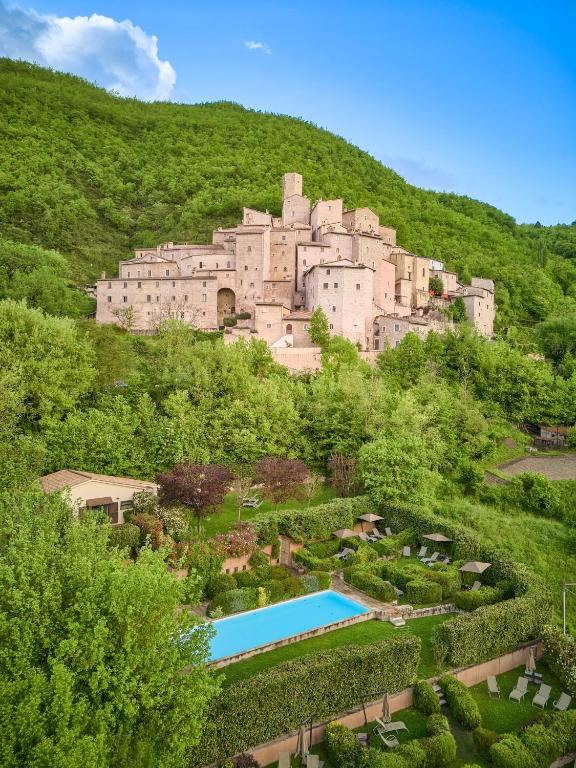
Poggio alla Sala is a hospitality estate developed around a historic property near Montepulciano, in the rolling countryside of southern Tuscany.
The resort has been positioned within the luxury hospitality segment, offering guest accommodation, dining facilities, wellness amenities and swimming pools.
Precise Hotels' website describes the property as offering 60 luxury suites and accommodation units. The precise number of commercially available keys would need to be confirmed through an updated assessment, as historical marketing materials have described the accommodation inventory differently.
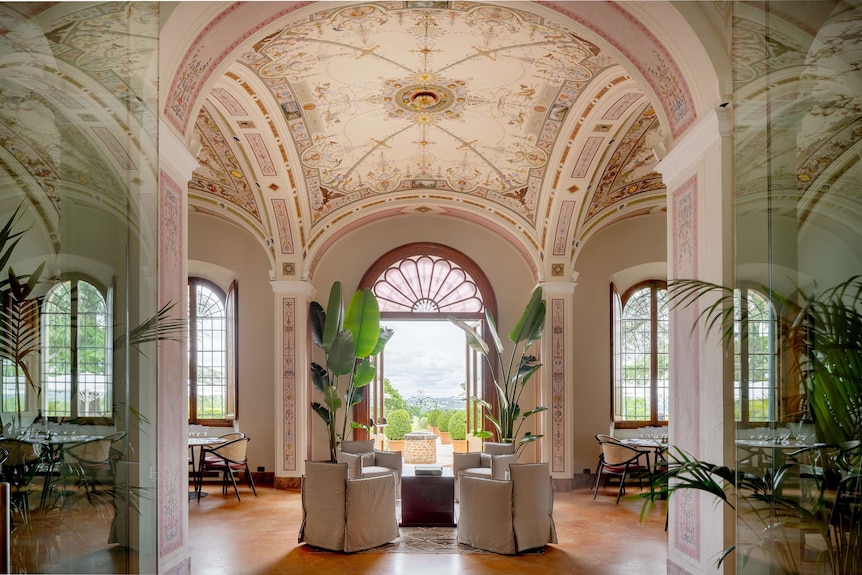
The estate benefits from several characteristics typically associated with premium hospitality assets: architectural heritage, a distinctive natural setting, multiple buildings and a range of amenities extending beyond accommodation.
These features may support competitive positioning and pricing potential. They can also generate substantial maintenance, staffing, refurbishment and operating costs.
For investors, the quality of the real estate must therefore be assessed alongside the property's ability to generate sustainable operating cash flow.
A Previously Announced Transaction in 2021
The property's recent history includes an important transaction.
On September 30, 2021, Christie & Co and Coldwell Banker Commercial announced the sale of Poggio alla Sala to Precise Hotels, identifying Bayview Italia as the previous owner involved in the transaction.
At the time, the property was described as a hospitality asset requiring redevelopment and repositioning, with 51 rooms distributed across several buildings.
Subsequent developments involved the restoration of the estate and its repositioning within the luxury hospitality market.
The 2021 transaction is a documented historical event. It does not, on its own, establish the property's current ownership structure or the scope of any potential transaction referred to in statements made in November 2026.
This distinction is essential: the ownership of hotel real estate, the holding of a leasehold interest and the operation of the hotel business may involve separate legal entities with different rights, responsibilities and risk exposures.
What Happened in November 2026?
The Tuscany Regional Government's statement of November 16 identifies several material developments.
Precise Tale Poggio alla Sala S.r.l. ceased operations in October 2026 following the termination of the hotel lease agreement.
The company was described by the regional authorities as being in the process of dissolution.
Trade unions requested institutional intervention after the company initiated a collective redundancy procedure affecting nine permanent employees.
The November 16 meeting ended without an agreement.
During the discussions, reference was also made to a prospective new buyer. However, publicly available information has not established the buyer's identity, the precise scope of the proposed transaction or the content of a future business plan.
There is therefore insufficient public evidence to conclude that a new property acquisition has been completed or that a replacement hotel operator has already been appointed.
Equally, the cessation of operations by the previous operating company does not automatically establish that judicial insolvency proceedings have commenced, that insolvency has been formally determined or that the underlying real estate has suffered a corresponding loss in value.
What has been documented is a material operational and contractual disruption requiring further assessment of the resort's future prospects.
The Central Investment Question: A Hotel Is Worth More Than Its Real Estate
In hospitality investment, economic value results from the interaction of several distinct components.
The first is the underlying real estate: its location, physical attributes, planning status, condition and potential uses.
The second is the hotel operating business: its ability to generate revenue, achieve sustainable margins, maintain commercial positioning and operate through an effective management organisation.
The third is the contractual and governance framework connecting real estate ownership, capital expenditure and day-to-day operations.
When one of these components becomes disrupted, the others may be affected.
The termination of a hotel lease, for example, may have implications for reservation continuity, commercial agreements, staffing, operating systems and the time required to restore normal operations.
This does not necessarily mean that the real estate has lost value to the same extent.
It does, however, mean that the property's ability to convert its physical assets into sustainable income must be reassessed and demonstrated.
A related discussion can be found in RobertoNecci.it's analysis of tailored hotel consulting and how independent hotels can achieve the efficiency of major international chains while preserving their identity.
The underlying principle is that effective hotel performance requires the integration of strategic expertise, operational discipline, financial oversight and an appropriate management model.
Five Areas Investors Should Examine
Where a hotel experiences operational disruption of the kind reported at Poggio alla Sala, a professional investment assessment cannot be confined to architectural quality or historical commercial performance.
A comprehensive review should address five key areas.
1. Real Estate Ownership and Transaction Perimeter
The first step is to establish the property's current legal ownership, identify any distinction between property-owning and operating entities, review encumbrances and assess the contractual implications of the terminated lease.
References to a prospective buyer do not establish whether the proposed transaction concerns the freehold property, company shares, operating assets or another contractual interest.
Each structure has different legal, financial and commercial implications.
2. Financial and Operating Performance
An investment assessment should reconstruct the hotel's historical performance using verified financial and operating information.
Relevant indicators include:
-
Revenue by department and revenue mix.
-
Occupancy, average daily rate (ADR) and revenue per available room (RevPAR).
-
Departmental costs and contribution margins.
-
Gross operating profit (GOP).
-
Lease costs and other fixed contractual commitments.
-
Working capital requirements and operating cash flow.
-
Seasonal performance and demand concentration.
The critical question is not simply how much revenue the hotel generated historically, but what level of sustainable operating income it could produce under a normalised management structure.
Without reliable financial statements, management accounts and forecasts, a defensible assessment of sustainable profitability or investment value cannot be made.
3. Sustainability of the Contractual Structure
A hotel lease must be consistent with the property's operating economics.
The relationship between rent, expected revenue, seasonality, required investment and the operator's capacity to absorb risk is central to financial sustainability.
A rental commitment that appears affordable under an optimistic revenue scenario may become problematic when trading performance falls below expectations, fixed costs remain inflexible or additional maintenance expenditure becomes necessary.
The Poggio alla Sala case illustrates the importance of examining the relationship between landlord and operator.
It does not, however, provide sufficient evidence to conclude that the lease was terminated because the rent was excessive or because of any particular financial imbalance.
Such conclusions would require access to the relevant agreements and financial records.
4. Operational Continuity and Human Capital
Luxury hospitality businesses depend on more than buildings and facilities.
Service quality, institutional knowledge, employee capabilities and operational leadership are critical components of the guest experience and the commercial proposition.
The loss of key personnel, the need to rebuild operational teams and potential changes to employment arrangements can materially influence both restart costs and the time required to restore service standards.
The employment situation at Poggio alla Sala must also be interpreted accurately.
The hotel's historical average workforce of approximately 80 people included seasonal employees, while the collective redundancy procedure identified in the regional announcement concerned nine permanent employees.
These figures must not be presented as though all 80 employees were subject to the same redundancy procedure.
5. Business Planning, Capital Requirements and Investment Returns
Any prospective investor or incoming operator should develop a business plan demonstrating the economic sustainability of the proposed operating model.
This should incorporate alternative scenarios for occupancy, average rates, revenue, operating costs, capital expenditure, working capital and investment returns.
Sensitivity analysis should assess how the financial outcome changes under different assumptions regarding demand, pricing, operating margins and the timing of reopening.
The investment decision should ultimately reflect not only the acquisition or entry price, but also the capital required to implement the business plan and the project's ability to generate an appropriate risk-adjusted return.
Three Potential Scenarios for the Resort's Future
Based on the publicly available information, no definitive future operating structure can currently be established.
Three possible approaches can nevertheless be considered for analytical purposes.
These are hypothetical scenarios, not transactions or management arrangements announced by the parties.
| Potential scenario | Economic implications | Critical due diligence considerations |
|---|---|---|
| New hotel lease agreement | Separation between property ownership and the operating risk assumed by the tenant | Rent affordability, guarantees, capital expenditure commitments and operator financial strength |
| Owner-operated hotel | Greater strategic control, accompanied by direct exposure to operating performance and business risk | Management capabilities, organisational structure, funding and working capital |
| Management agreement with a specialist operator | Day-to-day operations delegated to a third party under a fee-based arrangement | Incentive alignment, contractual accountability, performance targets and net returns to ownership |
The appropriate solution would depend on the ownership structure, asset condition, investment requirements and the level of operational risk the capital provider is prepared to assume.
The process should not begin with the selection of a hotel brand or management company.
It should begin with an independent assessment of the asset's economic potential and the contractual structure best suited to delivering sustainable returns.
Further discussion of hotel investment, valuation and transaction structures is available through Investhotel.it's hospitality investment and industry insights.
Operational Continuity as a Driver of Investment Value
The situation in Montepulciano raises a broader question for the Italian hospitality investment market.
Growing investor interest in hotels must be accompanied by equally rigorous scrutiny of contractual arrangements, governance structures and operating models.
A high-quality property can retain significant long-term potential even when its previous operator ceases trading.
Realising that potential, however, requires capital, management expertise and an organisation capable of delivering measurable performance.
In this context, hotel governance should not be regarded as a secondary administrative function.
It is a central component of value creation, risk management and long-term asset protection.
This approach is reflected in the work of Hotel Management Group, which focuses on hotel governance, advisory, management and operational performance.
For owners and investors, the objective should extend beyond identifying a company willing to operate a property.
It should be to establish a framework in which responsibilities, financial commitments, incentives and performance outcomes are properly aligned.
Poggio alla Sala: What Will Matter in the Coming Weeks?
The regional meeting scheduled for November 19 will be an important opportunity to assess developments in the employment discussions.
From an investment perspective, however, several separate questions remain unresolved.
These include the property's current ownership structure, the scope and status of any prospective acquisition, the future contractual arrangements and the existence of a credible plan to restore operational continuity.
The answers will be essential to any meaningful assessment of the property's economic prospects.
Real estate availability and investor interest are not, by themselves, sufficient conditions for a sustainable hotel business.
Value is created and protected when the property is supported by an operating structure capable of generating income, managing risk and preserving the expertise required to deliver a consistent hospitality product.
The Poggio alla Sala situation therefore reinforces a fundamental investment principle:
The value of a hotel does not reside solely in its physical assets. It also depends on the quality, resilience and financial sustainability of the operating model that turns those assets into an income-producing business.
Independent Advisory for Hotel Investments and Asset Value Enhancement
InvestimentiAlberghieri.it provides independent financial, strategic and operational analysis for hotel owners, investors, hospitality operators and stakeholders involved in the development, restructuring and value enhancement of hospitality assets.
Services may include:
-
Preliminary investment assessments and feasibility studies.
-
Hotel business planning and financial modelling.
-
Assessment of hotel lease and management agreement sustainability.
-
Analysis of alternative operating and ownership structures.
-
Strategic reviews of hotel profitability and operating performance.
-
Support for investment, repositioning and business restructuring decisions.
Our approach combines financial analysis, commercial assessment and operational expertise to support informed investment decisions.
For a confidential discussion or an independent preliminary assessment:
info@investimentialberghieri.it
This article is an independent analysis prepared for informational purposes only. It does not constitute an offer to sell, an investment solicitation or a representation that InvestimentiAlberghieri.it holds any mandate relating to the property discussed.
Sources
-
Tuscany Regional Government — Official statement on Precise Tale Poggio alla Sala, November 16, 2026
-
Christie & Co — Announcement of the Poggio alla Sala transaction, September 30, 2021
Information current as of November 17, 2026. Corporate, contractual and employment-related statements are based on publicly available sources as of that date. The investment and operating scenarios discussed are analytical considerations, not transactions or plans formally approved by the parties.