The Municipality acquired the public property for a symbolic €1. A private investor is funding its redevelopment. Public ownership is retained. The result will be a 10-room, 23-bed hotel scheduled to open by June 2027. The Balai project may be small in scale, but its financial structure is far more significant: it demonstrates how a public-asset enhancement concession can turn an income-producing liability into a hospitality asset without transferring ownership of the real estate.
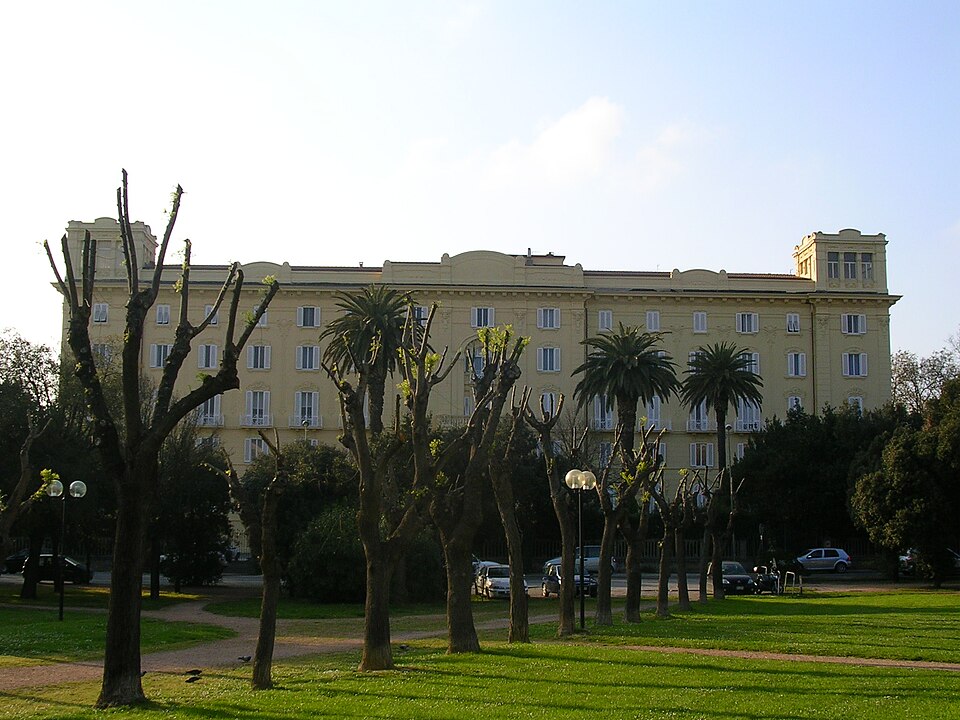
Construction works have resumed in Porto Torres on the former Balai Youth Hostel, a municipally owned seafront property that is being converted into a low-impact, energy-efficient hotel.
The project will comprise 10 rooms and 23 beds, with an 18-month construction programme and a stated target of opening by June 2027, allowing the property to capture the summer season.
The building has effectively been stripped back to its structural core: the deteriorated roof and floor slabs have been removed, with mainly the original load-bearing walls remaining.
At first glance, this may appear to be a conventional hotel redevelopment.
It is not.
To understand the Balai investment case, the full value chain must be considered:
public asset → concession → private CAPEX → hospitality product → operating cash flow.
That progression is precisely what makes this transaction relevant from a hospitality investment perspective.
The First Remarkable Detail: The Municipality Acquired the Property for €1
The real estate history of the former hostel deserves particular attention.
In 2021, the Municipality of Porto Torres approved the acquisition from the Region of Sardinia of the property located at Via Balai 87/D, then part of the Region's available property portfolio, for the symbolic price of €1.
This may appear to be a minor detail.
Economically, it is anything but.
The value of a disused public asset does not necessarily correspond to its transfer price.
A building may have:
-
virtually no acquisition cost;
-
substantial capital expenditure requirements;
-
complex planning and permitting issues;
-
ongoing maintenance and safety costs;
-
no existing income;
-
no EBITDA;
-
no immediately monetisable operating value.
The purchase price of the real estate and the true cost of the investment are therefore two entirely different concepts.
This distinction is fundamental when assessing distressed, publicly owned or conversion-driven hospitality assets — one of the core themes analysed by InvestimentiAlberghieri.it.
From a Symbolic €1 Acquisition to an Enhancement Concession
In 2023, the Municipality launched an open tender under Article 3-bis of Italian Decree-Law 351/2001 for the award of the former hostel through a concessione di valorizzazione — an enhancement concession.
The final award was granted on 24 July 2023 to Mit Engineering & Consulting S.r.l.
This is where the case becomes particularly interesting.
Under the tender framework, the enhancement concession gives a private party the right to economically exploit a publicly owned property for a predetermined period, in exchange for its redevelopment, functional conversion and maintenance, while ownership remains with the public authority.
From a financial perspective, this effectively separates two components:
ownership of the real estate
from
the economic right to exploit the real estate.
For the investor, the investment paradigm changes completely.
There is no requirement to acquire the underlying property.
Instead, the investor must deploy sufficient capital to transform the asset and secure a contractual period long enough to recover that capital while generating a return commensurate with the risk assumed.
The Tender Already Reveals the Economic Logic of the Transaction
The terms established by the Municipality are particularly relevant.
The annual concession fee at tender base was €12,000, with bidders permitted to submit only higher offers.
However, the tender also incorporated a mechanism designed to support the investment phase: during the first 36 monthsfollowing execution of the concession agreement, the annual fee would amount to only 10% of the concession fee offered.
Thereafter, the full concession fee would apply.
The underlying financial logic is straightforward.
During the period in which the concessionaire:
deploys capital → undertakes construction → generates no operating revenue,
the concession cost is substantially reduced.
Once:
the asset becomes operational → revenues begin → cash flow is generated,
the concession fee moves towards its full economic level.
This is structurally consistent with the economics of a development investment.
Up to 50 Years: Why Concession Duration Is a Financial Variable, Not an Administrative Detail
Another element of the tender deserves particular attention.
The duration of the concession was to be determined by reference to the achievement of the project's economic and financial equilibrium, subject to a maximum term of 50 years.
The concession period proposed by each bidder was also one of the variables evaluated as part of the tender.
This is fundamental.
For a hotel operated under concession:
the greater the initial CAPEX, the longer the period typically required to recover it.
A concession must therefore be understood as a finite-duration economic right.
And because that right expires, the value of the investment depends on the project's ability to generate sufficient cash before the concession terminates.
This differs fundamentally from acquiring freehold ownership.
The Municipality Even Embedded CAPEX, Rent and Duration into the Tender Formula
Perhaps the most sophisticated aspect of the procedure lies in the economic criteria used to assess bids.
The quantitative component of the tender simultaneously considered:
N = concession duration
Cn = concession fee offered
V inv. = value of the investment
through a comparison formula incorporating all three variables.
Eligible investments included expenditure relating to the redevelopment of the property and improvement of the surrounding areas, as reflected in each bidder's Economic and Financial Plan.
The Municipality was therefore not simply selecting the bidder willing to pay the highest rent.
The economic question was more sophisticated:
How much capital is the private investor prepared to deploy, for how long will it exploit the asset, and what consideration will it pay to the public-sector owner?
These are precisely the variables that a professional hospitality investor should incorporate into its underwriting.
The Hotel: 10 Rooms, 23 Beds and a Difficult-to-Replicate Location
The completed hotel will comprise ten rooms.
The ground floor will accommodate four guestrooms — two triples and two doubles — together with the lobby and reception, a bar/breakfast area and service facilities.
The first floor will comprise a further six rooms: one triple and five doubles.
The property occupies a site of approximately 640 sqm, directly overlooking the Bay of Balai.
And the location is likely to represent the transaction's most important economic driver.
For a ten-room hotel, competition cannot realistically be based on scale.
It must instead be based on the ability to convert a scarce, difficult-to-replicate location into pricing power.
With Only 10 Rooms, Every Euro of ADR Matters
The small scale of the property fundamentally changes its operating model.
Ten rooms mean a theoretical maximum inventory of:
10 rooms × 365 days = 3,650 available room nights per year.
For illustrative purposes only — and without suggesting that these figures represent the actual Hotel Green Balai business plan — consider three simple scenarios:
| Scenario | Occupancy | ADR | Theoretical Room Revenue |
|---|---|---|---|
| Conservative | 50% | €130 | €237,250 |
| Base Case | 60% | €160 | €350,400 |
| Upside | 70% | €190 | €485,450 |
The table immediately highlights the issue.
At a 150-room hotel, a pricing mistake may sometimes be partially offset by volume.
At a ten-room hotel, it cannot.
Value must be extracted through:
ADR + occupancy + seasonality + disciplined cost management.
This is where the real estate asset becomes a hospitality business.
RevPAR Is Not Enough: The Analysis Must Extend to GOP
Professional underwriting must therefore go beyond room revenue.
Each scenario should estimate:
RevPAR
= ADR × Occupancy
followed by:
Total Revenue
= Room Revenue + ancillary revenues
and ultimately:
GOP — Gross Operating Profit.
For a hotel of this size, labour productivity becomes critical.
A reception function structured like that of a conventional full-service hotel, an oversized administrative organisation, excessive F&B infrastructure or high distribution costs could rapidly erode margins.
The property will probably need to operate more like a highly digitalised micro-hospitality platform than a traditional hotel.
Digital check-in, revenue management, distribution, housekeeping, maintenance and administration will all need to be designed around the actual scale of the operation.
These are precisely the operational and asset-management issues that distinguish real estate value from hospitality enterprise value and which form part of the advisory work developed by HotelManagementGroup.it.
The Real Underwriting Question Is Not What the Property Costs — It Is How Much Capital the Project Absorbs
This is where one of the most common misconceptions surrounding public real estate becomes apparent.
The Municipality acquired the property for €1.
That does not mean the hotel costs €1.
The real capital requirement of the project should include, at a minimum:
Hard Costs
Structural works, building works, MEP systems, windows and doors, finishes and construction.
Soft Costs
Design, project management, construction supervision, professional advisers and permitting.
FF&E
Furniture, fixtures and equipment for guestrooms and public areas.
OS&E
Operating supplies and equipment required to open the hotel.
Pre-Opening Costs
Recruitment, training, systems, commercialisation and marketing.
Working Capital
Liquidity required during the opening and ramp-up period.
Financing Costs
Interest expense and fees relating to any debt funding.
Contingency
Allowances for variations, cost overruns and unforeseen expenditure.
It is the aggregate of these items — rather than the nominal acquisition cost of the building — that determines the true Total Project Cost.
The Most Important Risk Today Is Execution Risk
The project also demonstrates another characteristic typical of hotel conversions.
Between the award of the concession and the opening of the hotel lies a period during which multiple risks are concentrated:
planning risk, permitting risk, construction risk, CAPEX inflation risk and timing risk.
The concession was awarded in July 2023; the preliminary design was subsequently approved, while the project also required an urban-planning amendment and a formal multi-agency approval process. The Municipality approved the executive design in July 2025.
Only after completing this process could the project transition fully from contractual concept to hotel construction.
Time-to-market is therefore not merely a technical variable.
It is a financial one.
What Is the Cost of Losing an Entire Season?
Assume, again solely as a financial illustration, that the hotel could generate approximately €350,000 of room revenue at stabilisation.
A six-month delay would not simply mean "six months later".
It could translate into:
-
lost revenue;
-
extended pre-opening costs;
-
additional financing expenses;
-
capital remaining tied up for longer;
-
a delayed ramp-up curve;
-
a later break-even point;
-
lower net present value.
And if the delay were to result in the loss of an entire summer season, the economic impact could be even more significant.
The target opening by June 2027 is therefore strategically important because it aligns completion of the construction phase with the property's principal commercial window.
IRR, Payback and DSCR: How an Investor Should Analyse the Project
An investment of this nature should not be assessed solely on expected operating profit.
A proper Discounted Cash Flow analysis should be developed over the concession period.
At a minimum, the model should calculate:
Unlevered IRR
The return generated by the project independently of its financing structure.
Levered IRR
The return generated on invested equity after incorporating debt financing.
Equity Multiple
The ratio between total cash returned to the investor and the equity invested.
Payback Period
The number of years required to recover the original capital investment.
DSCR
Where debt financing is involved:
Cash Flow Available for Debt Service / Debt Service.
This measures the project's ability to service its financial obligations.
NPV
The present value of the cash flows generated over the available concession period.
This is where the difference between an attractive hotel and an attractive hotel investment becomes clear.
And What About Terminal Value?
In conventional real estate investment, a significant portion of total returns may derive from the exit value of the underlying property.
A concession changes that equation.
The investor may not own a freehold asset that can simply be sold at the end of the holding period.
The financial model must therefore carefully assess:
-
remaining concession term;
-
treatment of capital improvements;
-
maintenance obligations;
-
reversibility of improvements;
-
potential compensation mechanisms;
-
hand-back conditions;
-
transferability of the concession;
-
financeability of the concession rights.
Terminal value cannot automatically be modelled in the same way as for a freehold hotel.
That difference can have a substantial impact on valuation.
Acquisition structures, concessions, leases, business leases and other extraordinary hospitality transactions are also analysed on Investhotel.it.
Sustainability Must Generate EBITDA, Not Merely Marketing Value
The future Hotel Green is being developed as a low-impact, energy-efficient property, incorporating natural materials.
That is undoubtedly positive.
But an investor should move beyond the ESG narrative.
The relevant question is:
How much additional CAPEX does the sustainability strategy require, and how much OPEX can it save over the life of the investment?
Energy efficiency creates value when it results in:
lower consumption → lower OPEX → higher GOP → stronger cash flow → greater economic value of the concession.
Sustainability therefore becomes financially meaningful when it moves from marketing language into the P&L.
Porto Torres: The Main Risk Is Not Building the Hotel. It Is Positioning It Correctly
Another common mistake in hotel conversions is to assume that the project is complete once construction ends.
In reality, that is when hospitality risk truly begins.
Hotel Green Balai will need a clear strategy covering:
Demand Segmentation
Leisure travellers, couples, independent travellers, short breaks, transit demand and international guests.
Competitive Set
Not merely hotels in Porto Torres, but the wider range of accommodation alternatives considered by the same customer.
Pricing Architecture
BAR, non-refundable rates, advance-purchase offers, minimum-length-of-stay restrictions and seasonality.
Channel Mix
Direct bookings, OTAs, tour operators and potentially wholesale distribution.
Brand Positioning
Green hotel, boutique hotel, lifestyle small hotel or another clearly differentiated proposition.
Season Extension Strategy
How to generate revenue outside the peak summer period.
These decisions will ultimately determine what a room at the property is worth in the market.
Not its star rating.
The Location May Generate a Scarcity Premium
For a ten-room property, the seafront location could prove especially valuable.
A difficult-to-replicate asset may generate what can effectively be described as a scarcity premium.
The relevant question is not:
What is the average room rate in Porto Torres?
The better question is:
How much is the market prepared to pay to stay in this specific location, with this specific product, at this specific time of year?
The distinction is critical.
The first question produces benchmarking.
The second produces investment insight.
Hotel valuation must always connect real estate, product, market positioning and operational capability — themes also developed through the hospitality analysis and research available at RobertoNecci.it.
Why Balai Matters Far More Than Its 10 Rooms
Hotel Green Balai will clearly not transform Italy's hotel market through its ten guestrooms.
But the underlying financial and real estate model could be replicated on a much larger scale.
Italy holds an enormous inventory of:
-
former convents;
-
military barracks;
-
seaside colonies;
-
lighthouses;
-
former hospitals;
-
youth hostels;
-
schools;
-
municipal buildings;
-
former military assets;
-
state-owned properties;
-
disused social-care facilities.
Many exhibit the same paradox:
high potential value, but zero current income-generating capacity.
Public-sector owners may not have the capital, expertise or economic incentive required to redevelop them.
Private investors may have both capital and expertise but may not wish to acquire the underlying freehold.
A concession structure is designed to address precisely this misalignment.
The Economic Model Becomes
Public Sector
grants the right to use the asset
-
retains ownership
-
reduces the burden of an unproductive property
-
receives a concession fee
-
recovers and enhances public heritage.
Private Investor
avoids the upfront cost of purchasing the freehold
-
deploys CAPEX
-
develops the hospitality product
-
assumes operating risk
-
monetises the economic right to use the property.
Local Economy
recovers a disused asset
-
gains new accommodation capacity
-
creates employment
-
generates tourism demand
-
reactivates existing real estate economically.
When these three interests are properly aligned, concessions can become a highly effective tool for hospitality-led urban and territorial regeneration.
A Concession Does Not Automatically Make a Project Bankable
There is, however, an important caveat.
Obtaining a property through concession rather than acquisition may reduce the real estate capital requirement, but it does not eliminate investment risk.
A lender will still assess:
-
CAPEX;
-
equity contribution;
-
concession duration;
-
business plan;
-
stability of cash flows;
-
DSCR;
-
security package;
-
permitting;
-
construction risk;
-
ramp-up assumptions;
-
operator capability;
-
step-in rights;
-
downside recovery value.
Bankability therefore depends on the quality of the entire contractual and financial structure.
Not on the low nominal entry price of the real estate.
The Real Value of Hotel Green Balai Will Only Become Clear After Opening
The construction project can create a better building.
The architectural concept can create a more attractive hotel.
The location can generate demand.
Sustainability can reduce energy costs.
But only operations can turn those characteristics into investment returns.
From 2027 onwards, the metrics that matter will therefore be:
ADR
Occupancy
RevPAR
Total Revenue
GOP
GOPPAR
Cash Conversion
Return on Invested Capital.
Because the ultimate success of the transaction will not be measured by the hotel's opening ceremony.
It will be measured by whether future cash flows are sufficient to remunerate the capital invested over the life of the concession.
Conclusion: €1 May Acquire a Property — But It Does Not Create an Investment
The Balai case offers an important lesson for the Italian hospitality investment market.
In 2021, a disused public property was transferred to the Municipality of Porto Torres for the symbolic price of €1.
In 2023, an enhancement concession was awarded to a private-sector operator.
The project subsequently moved through design, planning amendments, permitting and executive approval.
Today, construction is intended to transform that building into a 10-room, 23-bed hotel scheduled to open by June 2027.
This sequence perfectly illustrates the difference between price, value and return.
The price can be €1.
Value depends on the economic rights embedded in the asset.
Return depends on the hotel's ability to generate cash flow.
That is the framework through which many future conversions of Italian public-sector assets should be assessed.
The relevant question is not simply:
"What is the property worth?"
It is:
"How much capital is required to transform it, what EBITDA can it generate, for how long can the asset be economically exploited, and what return can it deliver on invested equity?"
When those four variables are aligned, a disused building can become a viable hospitality investment.
When they are not, even a property acquired for €1 can prove too expensive.
CTA
Are you assessing a concession, hotel conversion, acquisition or property with hospitality redevelopment potential?
InvestimentiAlberghieri.it provides feasibility studies, hotel valuations, investment scenario analysis, CAPEX reviews, financial modelling and assessments of alternative operating and value-enhancement strategies.
Contact: info@investimentialberghieri.it
News source: L’Unione Sarda, 30 August 2026.