The redevelopment of a hotel associated with the Turin 2006 Winter Olympics raises broader questions about public hospitality asset management, investment sustainability and the strategic role of professional hotel advisory services.
24 November 2026 | InvestimentiAlberghieri.it — Hospitality Investment & Asset Advisory
Pragelato's Ski Jumping Hotel: A €2.1 Million Investment in Olympic Hospitality Heritage
Twenty years after the Turin 2006 Winter Olympics, the real estate and infrastructure developed for the Games continue to present significant economic, tourism and regional development challenges.
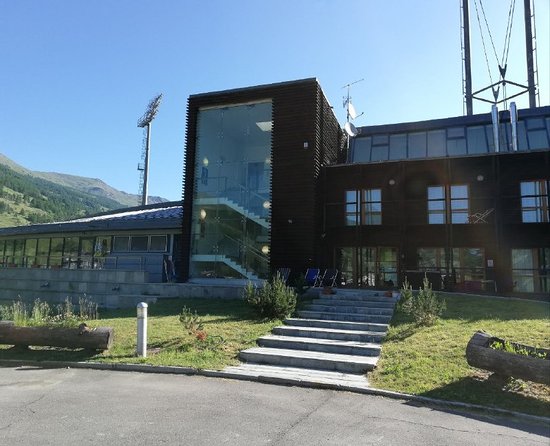
The Ski Jumping Hotel in Pragelato, in the province of Turin, is set to undergo a refurbishment programme aimed at reopening the property, supported by €2.1 million in funding.
The agreement, officially announced by the Metropolitan City of Turin on 23 November 2026, involves Vincenzo Coccolo, Commissioner responsible for implementing Italian Law No. 65/2012, the Via Lattea Olympic Municipalities Mountain Union, the Metropolitan City of Turin and the Municipality of Pragelato.
The objective is to restore an unused property to its original hospitality function, with particular emphasis on accommodating sports teams, national squads and ski clubs.
The refurbishment works are expected to be completed by 2028.
However, the significance of the project extends well beyond property redevelopment and infrastructure investment.
The real challenge is not simply reopening a hotel, but establishing an operating model capable of ensuring its long-term financial sustainability.
This is a fundamental consideration for many hospitality investments across Italy, particularly where publicly owned real estate must serve economic, social and regional development objectives simultaneously.
Ski Jumping Hotel: Key Investment Details
| Indicator | Details |
|---|---|
| Property | Ski Jumping Hotel |
| Location | Pragelato, province of Turin |
| Region | Piedmont, Italy |
| Ownership | Metropolitan City of Turin |
| Refurbishment funding | €2,100,000 |
| Initial funding instalment | €1,050,000 |
| Contracting authority | Via Lattea Olympic Municipalities Mountain Union |
| Designated management authority | Municipality of Pragelato |
| Current operating status | Closed |
| Expected completion | By 2028 |
| Proposed primary market | Sports-related accommodation |
| Definitive operating model | Yet to be determined |
| Number of guestrooms | Not verified in the available sources |
The allocated funding also covers furniture and equipment required for reopening.
The commencement of construction remains subject to the approval and validation of the detailed design.
Based on the information currently available, no formal procurement procedure for the appointment of a private hotel operator has been identified.
Primary source: Metropolitan City of Turin — Ski Jumping Hotel Refurbishment Programme.
The Legacy of the Turin 2006 Winter Olympics: From Infrastructure Investment to Sustainable Value Creation
Major international sporting events generate substantial infrastructure investment, urban regeneration and additional hospitality capacity.
Their economic sustainability, however, cannot be assessed solely by reference to the period during which the event takes place.
The real test is whether the infrastructure continues to fulfil a meaningful economic and social function in the years that follow.
A hotel originally developed to accommodate exceptional demand generated by an Olympic event must subsequently compete in a conventional hospitality market characterised by seasonality, competition and fluctuating demand.
The existence of a hospitality property, even within an attractive tourism destination, does not automatically establish the existence of a commercially sustainable hotel business.
The Pragelato project therefore highlights the importance of integrating infrastructure investment with a credible long-term operating strategy.
Through Investhotel.it and InvestimentiAlberghieri.it, hospitality investment analysis focuses precisely on this relationship between real estate assets, operating capacity, business organisation and sustainable value creation.
Why Investing €2.1 Million in a Hotel Does Not Necessarily Make It Financially Sustainable
Property refurbishment projects frequently concentrate on securing funding, developing architectural plans and completing construction works.
These activities are essential, but they are not sufficient.
A refurbished hotel continues to incur operating expenses even when occupancy falls below sustainable levels.
Payroll, utilities, maintenance, insurance, distribution and guest services generate financial commitments that must be covered either by operating revenue or by other explicitly identified funding sources.
In the case of publicly owned hospitality assets, there is a risk that sufficient capital may be available for refurbishment without a corresponding financial framework for sustaining the hotel business once it reopens.
Three distinct layers of investment must therefore be considered:
-
Real estate investment: refurbishment, regulatory compliance and preservation of the physical asset.
-
Operational investment: business organisation, equipment, technology, staffing and commercial development.
-
Strategic investment: establishing a competitive market position capable of generating demand and supporting long-term operational continuity.
The overall quality of the investment depends on the effective integration of these three components.
A refurbished building is a real estate asset. A hotel capable of delivering sustainable financial performance is also a functioning business.
This distinction should underpin every professional hospitality investment assessment.
Pragelato and Sports Tourism: A Potential Strategy for Reducing Seasonality
The proposed positioning of the Ski Jumping Hotel places considerable emphasis on accommodating sports teams and ski clubs participating in winter and summer training programmes.
This specialisation could provide a meaningful competitive advantage over conventional mountain hotels.
Organised sports tourism offers several characteristics that may support more predictable hospitality operations:
-
Accommodation requirements that can be scheduled well in advance.
-
Opportunities to establish recurring commercial relationships.
-
Demand from organised groups.
-
Potentially longer average lengths of stay.
-
Accommodation requirements associated with training camps and athletic preparation.
-
Opportunities to generate business during traditional low-season periods.
The redevelopment of the property could therefore be accompanied by a commercial strategy targeting sports federations, competitive sports organisations, ski clubs and event organisers.
Subject to the property's public-service objectives and future legal and operating framework, complementary market segments could also be considered, including outdoor tourism, cycling, hiking, sports education and leisure travel.
These are potential development opportunities rather than confirmed commercial initiatives or contractual commitments.
Their viability would need to be established through a comprehensive feasibility study.
Sports-related demand must ultimately be quantified and converted into actual revenue through commercial agreements, appropriate pricing strategies and efficient operating structures.
How Much Revenue Does a Mountain Hotel Need to Break Even?
Financial sustainability cannot be assessed solely on the basis of potential revenue.
A credible investment analysis must establish the operating break-even point: the level of business activity required to cover the relevant cost base.
To illustrate the importance of this assessment, consider a hypothetical 40-room hospitality property.
The room count and all other assumptions used in the following model are illustrative and do not represent verified operating data for the Ski Jumping Hotel.
Illustrative Operating Assumptions
| Parameter | Assumption |
|---|---|
| Guestrooms | 40 |
| Annual operating days | 300 |
| Available room nights | 12,000 |
| Average Daily Rate (ADR) | €90 |
| Ancillary revenue per occupied room | €20 |
| Total revenue per occupied room | €110 |
| Variable cost per occupied room | €40 |
| Annual fixed operating costs | €400,000 |
Based on these assumptions, three alternative occupancy scenarios can be assessed.
Illustrative Annual Operating Performance
| Indicator | Conservative | Base Case | Upside Case |
|---|---|---|---|
| Occupancy | 45% | 60% | 70% |
| Room nights sold | 5,400 | 7,200 | 8,400 |
| Room revenue | €486,000 | €648,000 | €756,000 |
| Ancillary revenue | €108,000 | €144,000 | €168,000 |
| Total revenue | €594,000 | €792,000 | €924,000 |
| Variable operating costs | €216,000 | €288,000 | €336,000 |
| Fixed operating costs | €400,000 | €400,000 | €400,000 |
| Simplified operating profit/(loss) | −€22,000 | €104,000 | €188,000 |
| Operating margin | −3.7% | 13.1% | 20.3% |
Illustrative financial model only. These figures do not constitute operating forecasts for the Ski Jumping Hotel. The calculations exclude any rent or concession fees, depreciation, taxation, financing costs and additional capital expenditure not included in the assumptions.
The model demonstrates how the same physical hospitality asset can deliver substantially different financial outcomes depending on occupancy levels.
Assuming unchanged average room rates and cost structures, an increase in occupancy from 45% to 70% produces an annual operating profit improvement of €210,000.
This difference illustrates the economic value of professional hotel management, effective commercial positioning and disciplined operating controls.
Hotel Break-Even Analysis: Why the Length of the Operating Season Matters
Under the assumptions outlined above, the contribution margin per occupied room is €70.
The annual operating break-even point is therefore approximately 5,715 room nights sold.
With 40 guestrooms available for 300 days, the occupancy required to achieve operating break-even would be approximately 47.6%.
However, what happens when the property operates over a shorter season?
| Annual Operating Days | Break-Even Occupancy |
|---|---|
| 365 | 39.1% |
| 300 | 47.6% |
| 250 | 57.1% |
| 220 | 64.9% |
| 180 | 79.4% |
Calculations assume unchanged annual fixed costs, room inventory, average rates and contribution margins. In practice, certain operating expenses would vary depending on the length of the operating season.
The analysis highlights the strategic importance of reducing seasonality.
A hotel operating for only a limited number of months must either achieve substantially higher occupancy levels or adopt a more flexible operating cost structure.
In Pragelato, the ability to attract sports-related demand during both winter and summer could potentially extend the operating season and improve asset utilisation.
The commercial viability of this strategy must nevertheless be validated through market research, prospective customer agreements and detailed cost analysis.
Extending the operating season is not simply a marketing objective. It can fundamentally change the financial sustainability of a hospitality investment.
Publicly Owned Hotels: Which Operating Model Should Be Adopted?
The Municipality of Pragelato will need to establish the legal, administrative and operational arrangements through which the hospitality asset will be managed.
This stage could prove just as important as the physical refurbishment itself.
Several operating models may be considered for publicly owned hospitality assets, subject to applicable legislation, public procurement requirements and the property's designated institutional purpose.
Direct Operation
The public authority retains control over the organisation and delivery of hospitality services, assuming the economic and operational responsibilities associated with the chosen model.
Its sustainability depends on access to appropriate hospitality expertise, organisational resources and effective performance management systems.
Appointment of a Specialist Hotel Operator
Where legally permissible, operations may be entrusted to a third-party organisation with relevant hospitality management experience.
The contractual framework would need to establish operating obligations, service standards, investment responsibilities, performance requirements and financial terms.
Concession or Lease Agreement
A concession or lease structure could allocate defined operating responsibilities and commercial risks to a specialist operator.
Any proposed concession fees, rental payments or public-service obligations must be assessed against the hotel's realistic earnings potential.
An excessively demanding financial framework could undermine the long-term viability of the operating business.
Professional Hotel Management and Advisory
A further option could involve external hospitality management expertise to design the operating structure, implement performance management systems and provide ongoing operational support, within the applicable legal framework.
There is no universally superior operating model.
The appropriate solution must emerge from an assessment of financial sustainability, public policy objectives, risk allocation, organisational capabilities and long-term asset preservation.
The alternatives described above are general strategic options and should not be interpreted as operating arrangements already approved for the Ski Jumping Hotel.
The Public Value of Hospitality Investment: Profitability, Regional Impact and Financial Sustainability
A publicly owned hotel may serve objectives that extend beyond those associated with conventional private real estate investment.
Supporting sports teams, promoting the destination, facilitating competitive sporting activities and contributing to local economic development may all represent legitimate public-interest objectives.
However, these benefits must be assessed separately from the hotel's direct financial performance.
A comprehensive investment appraisal should consider:
-
The operating profitability of the hospitality business.
-
Any requirement for recurring public financial support.
-
Wider economic benefits for the local community.
-
Growth in tourism and sports-related overnight stays.
-
Preservation of publicly owned real estate.
-
Employment creation and complementary economic activity.
Where public-service obligations generate costs that cannot be fully recovered through commercial revenue, those costs should be identified, quantified and funded transparently.
Financial sustainability does not necessarily require profit maximisation.
It does, however, require a credible alignment between the project's objectives, operating commitments and available financial resources.
The economic return of a public hospitality investment should be assessed alongside its wider social and regional contribution, without confusing the two.
Tailored Hotel Advisory: Bringing the Efficiency of International Hotel Chains to Independent Properties
The Pragelato redevelopment provides an opportunity to address a strategic issue affecting a substantial proportion of Italy's hospitality real estate market.
The quality of a property, the availability of investment capital and the existence of potential market demand are not sufficient, on their own, to guarantee satisfactory financial performance.
Specialist hotel management expertise is essential.
Major international hotel groups have built their competitive advantages through structured operating systems, standardised procedures, service quality frameworks, cost controls, revenue management and systematic performance measurement.
These capabilities do not need to be exclusive to hotels operating under international brands.
Independent hotels, publicly owned hospitality assets and specialist accommodation facilities can also adopt professional management methodologies while preserving their individual identity and institutional purpose.
Roberto Necci's Advisory Approach: International Hotel Management Standards Without Sacrificing Independence
This principle is explored in greater depth in the following strategic analysis:
TAILORED HOTEL ADVISORY: THE EFFICIENCY OF MAJOR HOTEL CHAINS WITHOUT SACRIFICING YOUR HOTEL'S IDENTITY
The underlying philosophy is that professionalising hotel operations does not require standardising the property's identity. It requires introducing the management systems, financial disciplines and organisational capabilities necessary to transform a real estate asset into an economically sustainable hospitality business.
For projects such as the Ski Jumping Hotel redevelopment, an integrated advisory framework could include:
-
Preliminary assessment of the property and its hospitality infrastructure.
-
Analysis of tourism and sports-related demand.
-
Development of an appropriate commercial positioning strategy.
-
Assessment of alternative organisational and operating models.
-
Preparation of operating budgets and a comprehensive financial business plan.
-
Break-even analysis and assessment of working capital requirements.
-
Organisational design and implementation of financial control systems.
-
Definition of key performance indicators and service standards.
-
Support in defining the economic and operational requirements of any future management procurement process.
-
Ongoing performance monitoring and identification of corrective measures.
Professional hotel advisory should ideally be integrated into the investment planning process from the outset, ensuring that architectural and infrastructure decisions remain aligned with the intended operating model.
Waiting until refurbishment works have been completed before addressing the management strategy can result in a technically upgraded property that is not necessarily suited to the commercial realities of its target market.
The objective of hospitality advisory is not merely to improve the management of an existing hotel. It is to ensure that the entire investment is designed around a viable operating business.
For further information on this methodology and related professional advisory services, visit RobertoNecci.it.
Public Hospitality Investment: Integrating Technical Design with Financial Business Planning
The Ski Jumping Hotel project highlights the need to reconsider conventional approaches to hospitality property redevelopment.
Architectural and engineering design should progress alongside financial and operational planning.
Guestroom configurations, public areas, food and beverage facilities, operational workflows, technology infrastructure and building energy efficiency can have financial consequences lasting for decades.
Poor functional design may lead to higher staffing requirements, reduced productivity, excessive energy consumption or an inability to meet guest expectations efficiently.
A comprehensive hospitality investment plan should therefore address at least the following areas:
| Assessment Area | Strategic Objective |
|---|---|
| Market feasibility | Quantify realistic demand |
| Commercial positioning | Define the product and target customer segments |
| Functional design | Optimise space utilisation and operational workflows |
| Capital expenditure | Assess total investment requirements |
| Financial business planning | Establish long-term economic sustainability |
| Organisational design | Determine staffing levels and management capabilities |
| Financial and operational controls | Monitor performance and budget variances |
| Risk assessment | Test the resilience of alternative scenarios |
| Contractual framework | Allocate responsibilities and financial risks |
The integration of these disciplines is central to the hospitality investment advisory approach developed through Investhotel.it and InvestimentiAlberghieri.it.
The objective is to establish a direct relationship between capital expenditure, operational performance and long-term asset value.
Beyond Refurbishment: Protecting the Long-Term Value of Public Hospitality Assets
The economic assessment of a hospitality redevelopment project should extend beyond the initial construction budget.
The preservation of asset value also depends on the ability to finance ongoing maintenance, future refurbishment requirements, equipment replacement and technological upgrades.
A hotel that achieves short-term operating break-even but fails to generate sufficient resources for future capital expenditure may gradually become financially unsustainable.
For publicly owned properties, this creates a potential cycle in which substantial initial investments are followed by operational difficulties and further requirements for public funding.
An integrated financial framework should therefore distinguish between:
-
Initial refurbishment expenditure.
-
Pre-opening and operational start-up costs.
-
Working capital requirements.
-
Recurring maintenance expenditure.
-
Future furniture, fixtures and equipment replacement.
-
Long-term building preservation requirements.
The investment decision should be based on the entire asset lifecycle rather than exclusively on the cost of reopening.
This is particularly relevant to hospitality properties developed around major sporting events, where long-term operating demand may differ significantly from the original assumptions underpinning the investment.
Conclusion: Pragelato's Success Will Be Measured After the Hotel Reopens
The allocation of €2.1 million to refurbish the Ski Jumping Hotel represents an important step towards recovering part of the Turin 2006 Olympic legacy.
However, the ultimate success of the project will not be determined solely by the completion of construction works.
It will depend on the property's ability to remain operational, attract sustainable demand, deliver appropriate service standards, control operating costs and contribute to the economic development of the surrounding region.
Physical refurbishment is the starting point.
Financial planning, professional hotel management and long-term operating sustainability are the conditions required to preserve the value of the investment.
A hotel should not be designed merely to open. It should be designed to operate successfully.
This principle should guide not only the redevelopment of the Ski Jumping Hotel in Pragelato, but also the wider programme of public and private investment in Italy's hospitality real estate sector.
Professional Advisory for Hotel Investment, Redevelopment and Hospitality Asset Management
InvestimentiAlberghieri.it provides a specialist platform for hotel owners, institutional investors, real estate companies, public authorities, foundations and hospitality operators seeking to assess, develop or reposition accommodation assets.
Professional advisory services may include:
-
Hotel feasibility studies.
-
Financial and economic investment assessments.
-
Operational sustainability analysis.
-
Financial business planning and budgeting.
-
Hotel business and hospitality real estate valuation.
-
Organisational and operating model development.
-
CAPEX assessment and refurbishment strategies.
-
Support in evaluating hotel management and operating arrangements.
-
Financial control and profitability improvement.
Before committing capital to the refurbishment of a hospitality property, it is essential to understand how the asset will be operated, how it will generate revenue and how its economic value can be preserved over time.
Discover How Independent Hotels Can Benefit from the Operating Efficiency of International Hotel Chains
Request a Confidential Preliminary Assessment of Your Hospitality Investment Project
Email: info@investimentialberghieri.it
Our advisory approach is designed to support real estate, financial and operational decision-making through independent analysis, professional methodologies and structured investment assessments.
It does not depend on acting as an intermediary in property transactions.
Professional Resources
InvestimentiAlberghieri.it — Hospitality real estate intelligence, investment analysis and asset value enhancement.
Investhotel.it — Hotel investment strategies, acquisitions and hospitality asset repositioning.
RobertoNecci.it — Strategic hotel advisory, hospitality management and business performance improvement.
Sources and Methodological Notes
-
Metropolitan City of Turin — Official Announcement, 23 November 2026.
-
ANSA — More Than €2 Million Allocated to Pragelato's Ski Jumping Hotel.
-
L'Eco del Chisone — Agreement to Refurbish the Ski Jumping Hotel.
Methodological Disclaimer
The financial scenarios, hypothetical room inventory, operating assumptions and break-even calculations presented in this article are intended exclusively for illustrative and methodological purposes.
They do not constitute verified historical financial results, operating forecasts, market valuations or investment appraisals for the Ski Jumping Hotel.
The alternative operating structures discussed should not be interpreted as decisions already adopted by the public authorities involved in the redevelopment project.
Any formal investment or operating proposal would require independent market research, technical due diligence, financial analysis and an assessment of the applicable legal and public procurement framework.