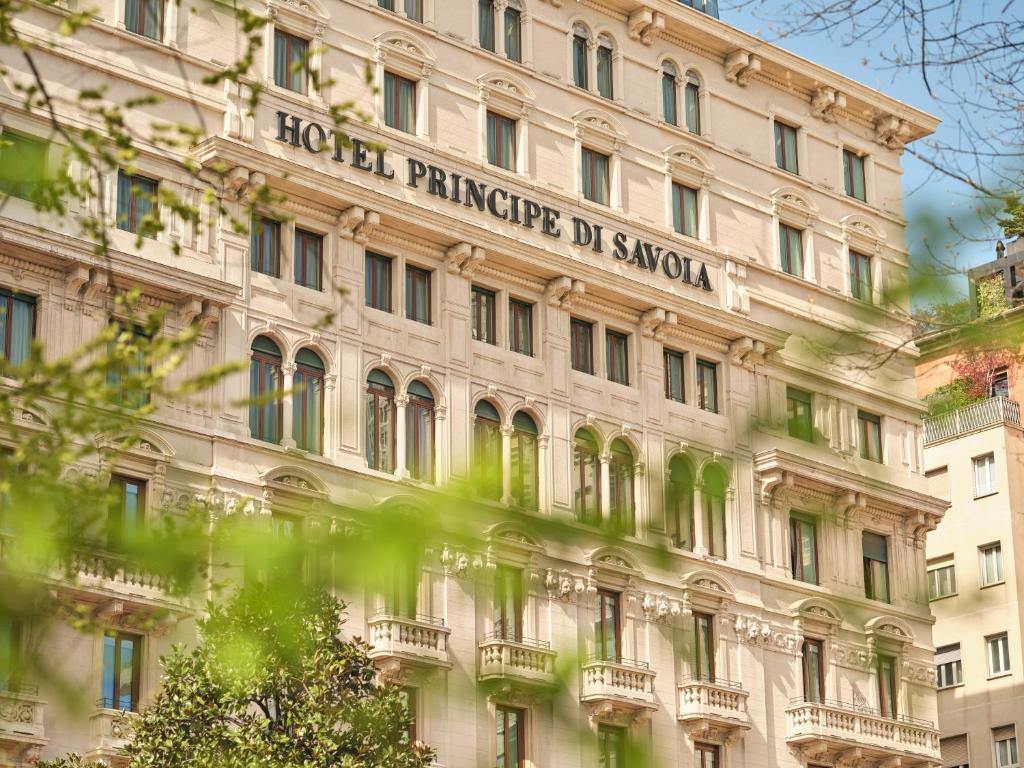
From 1 January 2027, Milan’s Hotel Principe di Savoia will suspend operations for an extensive transformation programme, with reopening scheduled for 2029. From an investment perspective, however, the key question is not how impressive the hotel will look once the works are completed. The real issue is whether higher EBITDA, stronger market positioning and an increase in asset value will be sufficient to remunerate the CAPEX, financing costs and foregone profitability generated during the closure period.
This is the fundamental question behind any major hotel renovation.
A hotel does not create value simply because it has been refurbished.
Value is created when, following the transformation, the property is capable of generating cash flows, operating margins and asset value that justify the total capital absorbed by the project.
Hotel Principe di Savoia, one of Milan’s landmark luxury hotels and part of Dorchester Collection, therefore provides an especially relevant case study for the hotel investment market.
The property is scheduled to close on 1 January 2027, with reopening expected in 2029, as part of what ownership has described as one of the most significant investments in the hotel’s history.
The overall CAPEX has not been publicly disclosed.
This makes the project particularly interesting from a methodological investment perspective.
A Hotel Renovation Is Not an Interior Design Exercise
Within hospitality, the term “renovation” is often used to describe projects of very different scale and strategic significance.
Replacing furniture, renovating bathrooms or updating finishes is one thing.
Redesigning:
-
room inventory;
-
room sizes;
-
layouts;
-
food & beverage;
-
wellness facilities;
-
rooftop spaces;
-
private residences;
-
customer segmentation;
-
pricing strategy;
means intervening directly in the economic model of the hotel.
This is precisely what makes the Principe di Savoia project particularly significant.
The transformation is expected to materially reshape the product, with larger guestrooms, a reduced room inventory, new private residences, redesigned food and beverage concepts, an enhanced wellness proposition and a stronger utilisation of rooftop areas.
The objective is therefore not simply to create a more contemporary hotel.
It is to create an asset capable of generating greater value per square metre, per key and per guest.
The Economics of a Major Hotel Renovation
A project of this scale should be assessed through a relatively simple investment equation:
**Direct CAPEX
-
financing costs
-
foregone GOP/EBITDA during closure
-
pre-opening and repositioning costs
= total economic capital absorbed**
This must then be compared with:
**Incremental future EBITDA
-
enhanced pricing power
-
additional ancillary revenues
-
potential real estate monetisation
-
increase in the asset’s terminal value**
If the second group of benefits does not adequately remunerate the first, the renovation may produce a better hotel without necessarily producing a better investment.
That distinction is fundamental.
Fewer Rooms Do Not Necessarily Mean Less Value
One of the most interesting aspects of the project is the planned reduction in room inventory combined with an increase in average room size.
In contemporary luxury hospitality, maximising the number of keys is not necessarily the optimal strategy.
In some cases, greater value can be achieved through fewer rooms that are:
-
larger;
-
more distinctive;
-
less directly comparable with competing inventory;
-
capable of supporting higher rates;
-
weighted more heavily towards suites and premium categories.
The investment logic therefore becomes:
fewer keys, greater value per key.
For this strategy to succeed, however, ADR and contribution margins per room must increase sufficiently to compensate for the reduction in available inventory.
This is where genuine hotel asset management becomes critical.
The relevant question is not simply how many rooms the hotel will have following the renovation.
The question is how much income each key will be capable of generating after repositioning.
At Investhotel.it, the relationship between CAPEX, turnaround strategies, asset value and financial sustainability is a central component of hotel investment analysis.
The Hidden Cost: Two Years of Suspended Operating Capacity
One of the most common mistakes in evaluating major hotel renovations is to focus exclusively on construction costs.
But a closed hotel does not sell rooms.
It does not generate RevPAR.
It does not generate food and beverage revenues.
It does not generate GOP.
For a luxury property operating in a market such as Milan, the economic cost of an extended closure can therefore be substantial.
The true cost of the transaction is not simply:
How much will the renovation cost?
It is:
How much total capital will be absorbed before the hotel returns to income generation?
This necessarily includes the operating profit forgone during the closure period.
The decision to suspend operations completely for an extended period therefore reflects a clear strategic choice: to sacrifice short-term profitability in an attempt to achieve a more competitive and more profitable asset over the long term.
The Key Principle: CAPEX Must Generate Additional EBITDA
The fundamental principle remains straightforward.
Every euro of CAPEX should ultimately be linked to an ability to generate additional EBITDA or additional asset value.
CAPEX cannot be assessed purely in terms of expenditure per key.
It must be connected to:
-
post-renovation ADR;
-
RevPAR;
-
stabilised occupancy;
-
GOP margin;
-
EBITDA;
-
F&B revenues;
-
wellness revenues;
-
ancillary revenues;
-
real estate value;
-
exit value.
In other words, a major renovation must be analysed as a genuine investment case.
This analysis should precede the architectural design process rather than follow it.
Private Residences Change the Financial Structure of the Project
The introduction of a residential component is arguably one of the most strategically significant aspects of the entire transformation.
Private residences integrated within a luxury hotel can introduce an additional economic dimension.
The model evolves from:
hospitality operating income
to:
hospitality + real estate + recurring services.
Depending on the structure of the transaction, a residential component can potentially:
-
monetise part of the asset;
-
accelerate capital recovery;
-
diversify revenue sources;
-
enhance brand value;
-
generate recurring service income;
-
create an integrated hospitality and residential ecosystem.
Branded residences have become one of the most significant trends within international luxury hospitality.
The Principe di Savoia project should therefore be considered within this broader structural evolution of the sector.
F&B, Rooftop and Wellness Become Profit Centres
Another strategically important aspect is the role of non-room revenue-generating areas.
Restaurants, rooftops, bars, events and wellness facilities are no longer simply supporting amenities.
In an urban luxury hotel they can become genuine stand-alone profit centres.
The relevant question is therefore no longer simply:
How much can ADR increase?
It is also:
How much can Total Revenue per Available Room increase?
And, at a deeper level:
How much revenue can the property generate from customers who are not staying at the hotel?
This is where the traditional concept of a hotel begins to evolve.
The property is no longer simply a place in which to stay overnight.
It becomes an urban platform combining:
-
food and beverage;
-
wellness;
-
events;
-
lifestyle;
-
hospitality;
-
real estate.
Hotel Obsolescence Is Not Simply About Interiors
There is also a broader issue of obsolescence.
A hotel can benefit from:
-
an outstanding location;
-
a prestigious history;
-
international recognition;
-
a powerful brand;
and still progressively lose competitiveness if its physical product no longer meets evolving market expectations.
Hotel obsolescence is therefore not merely technical.
It can also be:
-
commercial;
-
distribution-related;
-
experiential;
-
functional;
-
pricing-related.
As frequently discussed on Robertonecci.it, the value of a hotel cannot simply be equated with the value of the underlying real estate.
Value derives from the combined ability of:
real estate + product + brand + management + market
to generate sustainable income.
Renovation therefore becomes an instrument for preserving and enhancing long-term asset value.
Three Mistakes to Avoid
1. Starting With the Design Rather Than the Market
The first mistake is determining what should be built before defining:
-
target customer;
-
competitive set;
-
pricing;
-
optimal sizing;
-
demand;
-
expected profitability.
The physical project should be the consequence of the business plan.
Not the other way around.
2. Looking Only at CAPEX per Key
CAPEX per key is a useful metric.
But it is not enough.
The key question is what return each room will generate following completion of the works.
Two renovation projects with an identical CAPEX per key can produce completely different financial outcomes.
3. Confusing Expenditure With Value Creation
Spending substantial amounts of capital does not necessarily create substantial value.
Value is created only when the capital invested produces:
greater profitability, stronger competitiveness and a higher terminal value.
Renovation Should Begin With the Business Plan
For any major hotel transformation, at least three scenarios should ideally be assessed.
Scenario A — Maintenance
Primarily maintenance-driven expenditure, preserving the hotel’s current positioning.
Scenario B — Refurbishment
Significant renovation while substantially retaining the existing operating model and positioning.
Scenario C — Repositioning
A fundamental transformation of the product, target customer, inventory, revenue streams and pricing strategy.
The Principe di Savoia project appears clearly aligned with the third scenario.
This is precisely what makes the transaction particularly interesting from an investment perspective.
A More Beautiful Hotel Is Not Enough
The real test of the investment will therefore come after the property reopens.
The market will need to assess:
-
ADR;
-
RevPAR;
-
occupancy;
-
GOP;
-
EBITDA;
-
customer mix;
-
F&B profitability;
-
wellness profitability;
-
residential value;
-
the property’s ability to monetise its new positioning.
Only then will it be possible to assess how much economic value the transformation has actually created.
The Fundamental Investment Principle
A hotel renovation should ultimately be treated as an industrial investment.
The correct question is not:
How much will the works cost?
The correct question is:
How much economic value will the invested capital generate?
This is the distinction between a refurbishment programme and a genuine asset strategy.
Every major transformation should therefore be preceded by comprehensive technical, economic, financial and operational due diligence, capable of linking architectural design, CAPEX, positioning, profitability and the post-completion value of the asset.
This is the approach developed through InvestimentiAlberghieri.it, alongside the analysis, turnaround and asset enhancement activities carried out through Investhotel.it, HotelManagementGroup.it and the professional insights published on Robertonecci.it.
Hotel Principe di Savoia is preparing to close for a radical transformation.
But from an investor’s perspective, there will ultimately be only one meaningful measure of success:
the value created after 2029 must exceed the total capital absorbed before reopening.
CTA
Are you considering the renovation, repositioning or implementation of a major CAPEX programme for a hotel asset?
Before moving into architectural design, it is essential to assess:
-
economic sustainability;
-
CAPEX requirements;
-
expected profitability;
-
market positioning;
-
financial structure;
-
return on invested capital;
-
post-renovation asset value.
Contact: info@investimentialberghieri.it
www.investimentialberghieri.it