Room00 is strengthening its presence in Rome through two new transactions in strategically important areas of the Italian capital.
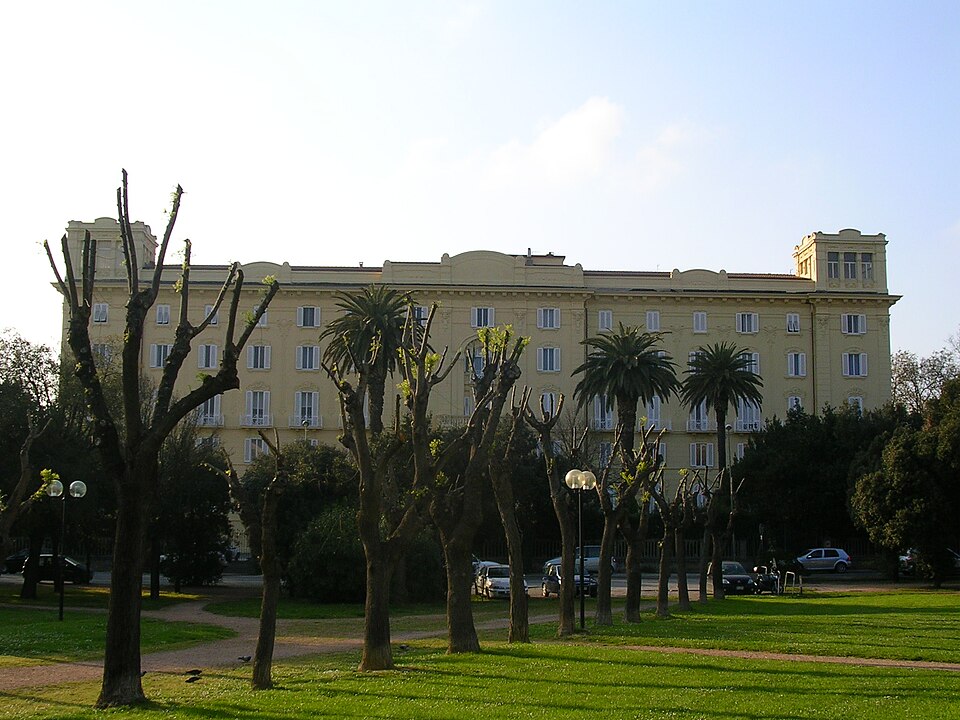
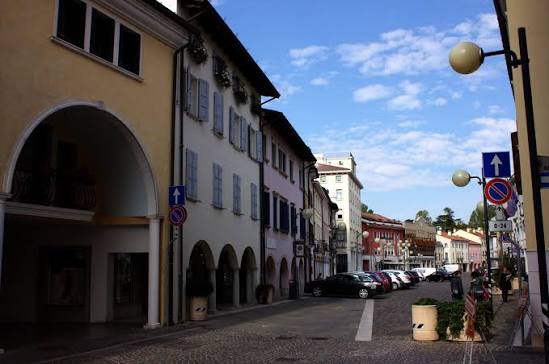
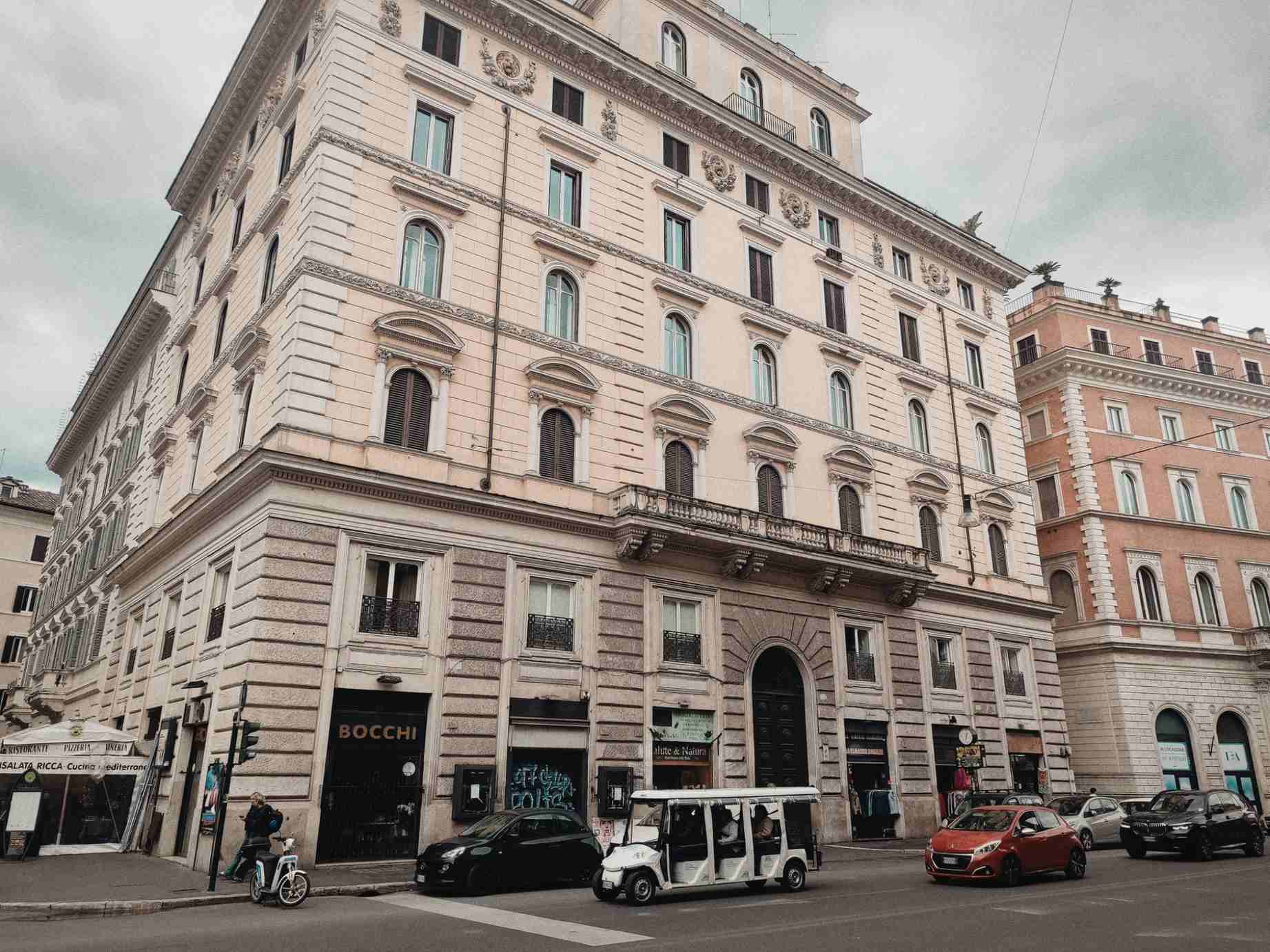
Kryalos SGR has completed, on behalf of the Kryalos Room00 Fund, the acquisition of an existing hotel at 85 Via Giovanni Amendola, close to Roma Termini railway station, and a property complex at 4–6 Largo Toniolo, near Piazza di Spagna, which is set to undergo a full conversion into a hotel.
Together, the two assets will add 95 rooms to Room00 Group’s Rome portfolio.
In connection with the Largo Toniolo acquisition, UniCredit has also arranged a €27.5 million financing facility for the Kryalos Room00 Fund.
The transaction is significant not only because of its scale, but because it illustrates the investment model increasingly shaping the European hospitality market: institutional ownership through a regulated investment vehicle, structured bank debt and operations entrusted to an international hotel group with a diversified brand portfolio.
The transaction at a glance
The first asset is located at 85 Via Giovanni Amendola, between Roma Termini station and Via Nazionale.
The property:
-
covers approximately 2,000 square metres;
-
was originally developed in the 1970s;
-
was refurbished in 2021;
-
is already configured for hotel use;
-
comprises 50 rooms.
The hotel will operate under Room Urban Hostel, Room00 Group’s premium hostel brand.
The second asset is situated at 4–6 Largo Toniolo, within walking distance of Piazza di Spagna and Rome’s prime luxury retail district.
The building:
-
has a total surface area of approximately 2,800 square metres;
-
extends over seven above-ground floors;
-
includes a basement level;
-
will undergo a comprehensive refurbishment;
-
will be converted into a 45-room boutique hotel.
The property will be operated under Letoh, Room00’s boutique hospitality brand.
The choice of two separate brands is central to the investment strategy. Each property is being matched with a concept designed around its location, physical characteristics, target clientele and achievable rate positioning.
Termini and Piazza di Spagna: two entirely different hotel markets
The transaction brings together two Rome micro-markets governed by very different commercial dynamics.
Via Giovanni Amendola: connectivity, volume and rapid guest turnover
The Termini district benefits from rail traffic, direct airport connections, public transport infrastructure and one of the largest concentrations of accommodation supply in Rome.
In this location, the Room Urban Hostel format can attract a broad demand base including:
-
international travellers;
-
younger guests;
-
groups and small groups;
-
short-stay visitors;
-
cultural tourists;
-
price-conscious travellers;
-
guests using Rome as part of a wider European itinerary.
Value creation will depend on more than room occupancy.
The relevant operating indicators will include revenue per available bed, customer acquisition costs, distribution efficiency, payroll productivity, utilisation of communal areas and operating profit.
A high-volume property can generate attractive returns, but only when pricing, staffing and distribution costs remain under control.
Largo Toniolo: boutique positioning and higher room value
The Largo Toniolo property presents a fundamentally different proposition.
Its proximity to Piazza di Spagna, the Tridente district and Rome’s leading luxury shopping streets supports the development of a boutique product aimed at guests with greater spending power and stronger expectations regarding location, design, service and experience.
Value creation will depend on:
-
architectural and interior design quality;
-
room configuration;
-
strength of the hotel identity;
-
ability to command a premium average daily rate;
-
online reputation;
-
refurbishment cost control;
-
differentiation from independent hotels in Rome’s historic centre.
The combination of Room Urban Hostel and Letoh demonstrates that Room00 is not applying a single standardised concept to every building.
The group is using a shared operating platform, technology and distribution infrastructure while adapting the guest proposition to the economics of each individual asset.
This is a key principle frequently highlighted by InvestimentiAlberghieri.it: hotel value is not created by location alone. It comes from the alignment of property, brand, target demand, operating model and capital structure.
The €27.5 million facility is not the acquisition price
The financing figure must be interpreted carefully.
Kryalos announced that UniCredit had completed a €27.5 million financing facility for the Kryalos Room00 Fund in connection with the acquisition of the Largo Toniolo property.
The purchase prices of the two individual assets were not disclosed.
It would therefore be incorrect to assume that the €27.5 million facility represents the total consideration paid for the properties.
The financing may cover several components of the investment, potentially including:
-
part of the acquisition price;
-
conversion and refurbishment expenditure;
-
professional and technical costs;
-
taxes and transaction expenses;
-
capitalised interest during development;
-
contingency reserves;
-
pre-opening expenditure;
-
broader liquidity requirements within the fund.
A complete assessment of leverage would require additional information, including the acquisition prices, equity contribution, loan-to-value ratio, loan-to-cost ratio, interest rate, maturity and repayment profile.
For investors analysing hotel transactions, this distinction is essential.
Acquisition price, total investment cost and bank financing are three different figures.
Treating them as interchangeable can produce misleading conclusions regarding value per room, equity returns and debt sustainability.
The fund-operator-bank model
The transaction follows a structure that is increasingly common across European hotel real estate:
-
the Kryalos Room00 Fund owns the assets;
-
Kryalos SGR manages the investment vehicle;
-
UniCredit provides debt financing;
-
Room00 manages and positions the hotels;
-
the most appropriate brand is selected for each property.
The model separates real estate ownership from hotel operations, allowing institutional capital to invest in hospitality without building an in-house operating platform.
That separation does not eliminate risk. It redistributes risk across a more complex contractual structure.
The investment outcome will depend on alignment between the fund, lender and operator across several critical areas:
-
construction budget and delivery timetable;
-
revenue assumptions;
-
product and service standards;
-
operating costs;
-
future capital expenditure;
-
minimum performance requirements;
-
reporting and governance rights;
-
exit strategy.
As repeatedly examined by RobertoNecci.it, a hotel investment is not won or lost at the notary’s office.
Its value is created over time through operating discipline, financial control, commercial positioning and the ability to protect margins throughout the investment cycle.
Largo Toniolo carries the greater development risk
Of the two properties, Largo Toniolo is likely to carry the more substantial development risk.
The building must be converted into a fully functioning hotel. Returns will therefore depend not only on future trading performance but also on the successful execution of the development programme.
Key risk areas are likely to include:
-
planning and administrative approvals;
-
potential heritage restrictions;
-
urban planning compliance;
-
mechanical and electrical systems;
-
fire safety requirements;
-
accessibility;
-
construction logistics in the historic centre;
-
cost inflation;
-
opening delays;
-
operational efficiency of the final layout.
Dividing the approximately 2,800 square metres by the proposed 45 rooms produces a gross ratio of more than 62 square metres per room.
This does not indicate the actual size of the guestrooms, because the figure includes corridors, communal areas, technical spaces and the basement. It does, however, show the amount of built area that must ultimately be converted into revenue-generating functions.
Profitability will depend on limiting inefficient or underutilised areas and ensuring that every significant space contributes either directly or indirectly to the hotel’s commercial positioning.
The operational approach developed by Necci Hotels places particular emphasis on reviewing hotel projects from the perspective of day-to-day management.
Poor staff circulation, inadequate storage, oversized public areas or inefficient back-of-house layouts can create permanent operating costs that continue long after the construction budget has been closed.
Room00 targets 12 properties in Rome
Room00 sees Rome as a central platform for its Italian expansion.
According to the company, the two new assets bring its Rome portfolio to four properties, with a target of 12 hotels in the city within the next 24 months. The group has also indicated that a further six transactions are currently under consideration or development.
Room00’s wider portfolio is spread across four brands:
-
Room Urban Hostel;
-
TOC Classy Hostels;
-
Select Natural Hotels;
-
Letoh.
The group’s growth strategy is therefore not based on isolated acquisitions. It is building a multi-brand platform capable of serving different hospitality segments while sharing technology, distribution capabilities, commercial expertise and central operating functions.
Rome is particularly suitable for this model because of the depth and diversity of its demand.
The city can support premium hostels, lifestyle hotels, boutique properties, luxury hotels and conversion projects, provided each concept is aligned with the characteristics of its location.
Why Rome continues to attract hotel capital
Rome offers investors a combination that few European cities can replicate:
-
substantial international leisure demand;
-
cultural and religious tourism;
-
major events;
-
strong rail and air connectivity;
-
corporate and institutional demand;
-
redevelopment opportunities;
-
independent hotels with repositioning potential;
-
multiple districts capable of supporting different rate strategies.
The city also presents material investment risks:
-
complex approval procedures;
-
inefficient historic buildings;
-
high refurbishment costs;
-
fragmented hotel supply;
-
operational weaknesses;
-
varying seasonality across individual districts;
-
increasing pressure on real estate prices.
A strong destination does not automatically make every hotel investment financially sustainable.
The valuation work carried out by Investhotel.it starts with the property’s capacity to generate sustainable cash flow, rather than with the prestige of its address.
Even a hotel in an outstanding location can destroy capital when it is acquired at an excessive price, financed with unsustainable leverage or operated under the wrong commercial model.
What the transaction tells us about the Italian market
The Kryalos-Room00-UniCredit transaction offers four important lessons.
Institutional capital is looking beyond traditional luxury
Investors are no longer focused exclusively on five-star hotels and landmark properties.
Premium hostels, boutique hotels and hybrid hospitality concepts can become institutional-grade investments when they are supported by a credible operator, a scalable platform and a clear commercial strategy.
The brand should follow the asset
Both properties will be managed by Room00, but under different brands.
This is the correct sequence: analyse the location, building and demand first, then select the brand capable of maximising the asset’s potential.
Banks finance business plans, not just buildings
UniCredit’s involvement suggests that the financing assessment covered the investment vehicle, operator, redevelopment strategy and projected cash flow—not only the underlying real estate.
Value is created after completion
The acquisition price matters, but it is only the starting point.
The final outcome will depend on construction quality, delivery timing, rate positioning, occupancy, distribution, cost control and the operator’s ability to deliver the expected performance.
The real test will be stabilised returns
The transaction announcement marks the beginning of the investment process, not its conclusion.
The eventual success of the two projects will need to be assessed against a series of measurable indicators:
-
total investment per room;
-
final refurbishment cost;
-
actual opening date;
-
average daily rate;
-
occupancy;
-
RevPAR;
-
total revenue per available room;
-
payroll costs;
-
distribution commissions;
-
gross operating profit;
-
debt-service coverage;
-
stabilised asset value.
Only once the hotels are open and trading at normalised performance levels will investors be able to determine whether the initial strategy has created value.
The central issue is therefore not simply the acquisition of 95 rooms in Rome.
It is the ability to transform two fundamentally different properties into profitable, recognisable and financially sustainable hotel businesses capable of remunerating both equity and debt.
Are you considering acquiring, converting or repositioning a hotel?
A prestigious address and an optimistic business plan are not enough to protect invested capital.
Before acquiring, financing or appointing an operator, investors should independently assess:
-
the true value of the property;
-
the total capital requirement;
-
the sustainability of the debt;
-
the reliability of financial projections;
-
the profitability of the operating model;
-
the hotel management agreement;
-
refurbishment and development risks;
-
the expected return on equity.
Hotel Management Group supports hotel owners, investors, banks, funds and operators with hotel due diligence, valuations, business planning, debt analysis, repositioning strategies, operator selection, performance control and asset management.
Do not sign an acquisition agreement, financing package or hotel management contract based solely on figures provided by the seller or proposed operator.
Contact info@investimentialberghieri.it now to request an independent and confidential review of the transaction.
An error identified before signing costs the price of professional advice. An error discovered after completion can cost millions.
Roberto Necci - r.necci@robertonecci.it