Sant’Elpidio a Mare: Hotel Tender Receives No Bids — The Market Wants an Investment Case Before It Wants a Hotel
No bids were submitted for the concession of the former care home on Via Cunicchio, which was intended to be converted into a hotel. The case goes well beyond Sant’Elpidio a Mare and highlights a fundamental issue in hospitality investment: before setting the rent, concession term and tender conditions, an investor needs to understand whether the project can generate sufficient demand, EBITDA, cash flow and returns on invested capital.
Sometimes the market delivers its verdict through silence.
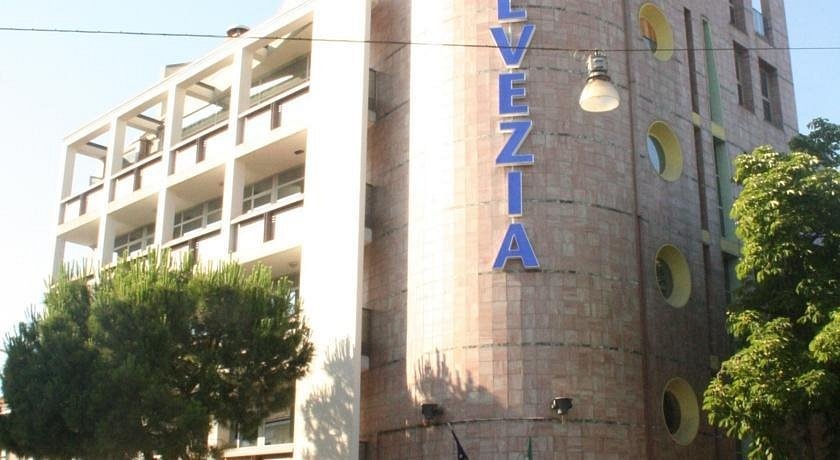
That is what happened in Sant’Elpidio a Mare, in Italy’s Marche region, where the tender for the concession and hotel conversion of the former care home on Via Cunicchio failed to attract any bids.
According to publicly available information on the procedure, the opportunity involved a property of approximately 850 square metres arranged over four floors, together with around 400 square metres of garden, under a 20-year concession extendable by a further five years, with an annual base rent of approximately €43,600.
The concessionaire would also have been responsible for extraordinary maintenance and the works required to convert the property into a hotel.
Some operators reportedly contacted the municipality for further information, but none ultimately converted that preliminary interest into a formal bid.
This deserves a deeper economic analysis.
A hotel tender receiving no bids does not necessarily mean that the rent is too high.
Nor does it necessarily mean that the hotel concept itself cannot work.
What it does indicate is that, under the proposed conditions and based on the information available to the market, no investor identified a sufficiently compelling risk-adjusted return to commit capital.
That is precisely where the analysis should begin.
Do Not Start by Asking What the Property Costs. Ask What the Business Can Generate
One of the recurring mistakes in hotel investment is to start with the real estate and then attempt to fit a business model around it.
The process should work the other way around.
First, assess the project’s ability to generate revenue and operating profit.
Then determine how much capital the business can support.
Only afterwards should the investor establish what level of rent, CAPEX and contractual structure is compatible with those cash flows.
The relevant question is therefore not whether €43,600 per year is high or low in absolute terms.
The real question is:
How much EBITDA can the proposed hotel generate, and how much capital must be invested to generate it?
Over a 20-year concession, the initial nominal rent alone would amount to approximately €872,000, before taking into account any indexation, the cost of capital or the time value of money.
But rent represents only one component of the investment.
The investor would also need to consider:
-
conversion works;
-
mechanical, electrical and plumbing systems;
-
regulatory compliance;
-
guest rooms and bathrooms;
-
furniture, fixtures and equipment;
-
potential food & beverage areas;
-
technology systems;
-
design and professional fees;
-
permits and approvals;
-
pre-opening costs;
-
initial marketing expenditure;
-
working capital;
-
financing costs.
In other words, the investor is not simply assessing a building.
The investor is assessing a hotel business that must first be created within that building.
This is the perspective adopted by InvestimentiAlberghieri.it when analysing acquisitions, concessions, repositionings and hospitality conversion opportunities.
850 Square Metres Does Not Mean 850 Square Metres of Revenue-Generating Space
Gross floor area is a real estate metric.
Saleable rooms are a hotel metric.
Between the two lies the entire process of designing an operational hospitality product.
An investor must assess:
net usable areas, vertical circulation, corridors, technical rooms, accessibility requirements, fire safety, reception areas, storage, housekeeping facilities, plant rooms, common areas, building services and any spaces allocated to ancillary uses.
Only after completing this exercise is it possible to determine how many rooms can actually be created — and, more importantly, whether those rooms can generate enough revenue to support the investment.
The local debate around the project referred to the possibility of developing approximately twelve rooms.
If such a configuration were technically confirmed, this would become a crucial consideration because every component of the investment would need to be supported by a relatively limited room inventory.
The first critical metric would therefore become:
CAPEX per key.
Immediately followed by:
Revenue and EBITDA per available room.
This is the point at which a real estate conversion either becomes — or fails to become — an investable hotel project.
The Numbers That Should Exist Before a New Tender Is Launched
Before committing capital, a professional hotel investor should be able to build at least a preliminary operating and financial model.
At a minimum, the following metrics should be available.
1. Effective number of keys
Not a theoretical room count, but the number of rooms supported by a technically validated layout.
2. Total CAPEX and CAPEX per key
Including construction, building services, FF&E, professional fees, pre-opening expenses and an appropriate contingency allowance.
3. Stabilised ADR
The average daily rate that the market can realistically support once the property reaches a normalised trading position.
4. Stabilised occupancy
Not an aspirational figure, but an occupancy level supported by actual destination demand and relevant market benchmarks.
5. RevPAR
The key intersection between pricing and occupancy performance.
6. Ancillary revenues
Food & beverage, events and other services should be assessed independently and should not be used to artificially compensate for weaknesses in the core rooms business.
7. GOP
Gross operating profit must be based on a clearly defined operating model and realistic cost structure.
8. Normalised EBITDA
This is one of the key measures for assessing the sustainable economic value generated by the operation.
9. Debt service and DSCR
Where part of the CAPEX is debt-funded, projected cash flows must be tested against financing requirements.
10. Payback period, IRR and return on invested capital
Because a project may be technically feasible while remaining financially unattractive.
The appropriate sequence for analysing a hospitality project is therefore:
Demand → Keys → ADR → Occupancy → RevPAR → Revenue → GOP → EBITDA → Cash Flow → Investment Return → Sustainable Rent
Not the other way around.
Demand Comes Before Supply
A hotel does not automatically generate tourism simply because it opens its doors.
Before preparing a credible business plan, the investor must understand who is expected to stay at the property, why they would choose the destination, how much they would be prepared to pay and how frequently that demand can be generated throughout the year.
The analysis should therefore cover, at a minimum:
-
leisure demand;
-
corporate demand;
-
events and exhibitions;
-
cultural attractions;
-
wider tourism flows;
-
accessibility;
-
transport connections;
-
seasonality;
-
hotel competitors;
-
alternative accommodation;
-
average length of stay;
-
source markets;
-
the destination’s ability to generate overnight stays.
The debate that followed the unsuccessful tender also raised the need for a broader tourism strategy linking hospitality, retail, culture, services and mobility.
That view forms part of the local political debate rather than an established economic conclusion, but it nevertheless raises exactly the right question for an investor:
What market is expected to support the hotel economically?
A Hotel Can Strengthen a Destination. It Can Rarely Create One on Its Own
This is arguably the most important aspect of the entire case.
The relationship between a hotel and its destination works in both directions.
A well-positioned hotel can:
-
increase accommodation capacity;
-
strengthen destination positioning;
-
attract underserved customer segments;
-
extend visitor stays;
-
support restaurants and local retail;
-
encourage new events and initiatives.
At the same time, the destination must provide enough demand to support the hotel.
A hotel can be a multiplier for a destination. It should not be expected to substitute for the destination itself.
This principle becomes particularly important in smaller historic towns, where investors need to assess not only the property but also the entire economic ecosystem surrounding the investment.
Lowering the Rent May Not Be Enough
When a tender receives no bids, one of the most immediate responses may be to reduce the rent.
That is certainly one option.
But it may not address the underlying issue.
The municipality has indicated its intention to reconsider certain elements of the tender in order to make the opportunity more attractive.
From an investment perspective, however, the first step should be to identify which variable actually prevented operators from bidding.
For example, if the problem is:
-
excessive CAPEX;
-
an insufficient number of keys;
-
limited achievable ADR;
-
insufficient prospective occupancy;
-
a concession term that does not adequately match the investment;
-
financing constraints;
-
inadequate returns on invested capital;
then a relatively modest reduction in annual rent may have only a limited impact on the project economics.
Before changing the price, the key question should therefore be:
Which variable is preventing the project from meeting the investor’s minimum required return?
The Concession Term Is a Financial Variable
A 20-year concession, extendable by a further five years, may appear long when viewed purely from a real estate perspective.
For a hotel investor, the assessment is different.
The duration needs to be considered in relation to the amount of capital required upfront.
If the concessionaire is expected to fund substantial construction and fit-out costs in an asset that will ultimately revert to the owner, every euro invested needs to be recovered and adequately remunerated within the concession period.
The higher the CAPEX, the more important the following factors become:
-
concession length;
-
initial rent-free or reduced-rent periods;
-
stepped rent structures;
-
commencement of rent relative to hotel opening;
-
extension mechanisms;
-
treatment of unamortised investments;
-
responsibility for major capital works;
-
guarantees required from the concessionaire;
-
exit provisions.
At Investhotel.it, these factors are analysed as part of the overall economic sustainability of the investment, because contractual structure is itself a component of investment return.
From Fixed Rent to Sustainable Rent
There is also a broader methodological issue.
In a hospitality project, rent should not necessarily be the starting point.
It may instead be one of the outputs of the financial model.
Once revenue, GOP, EBITDA, financing requirements and the investor’s required return have been estimated, it becomes possible to determine the level of rent that the business can sustainably support.
In highly simplified terms:
Hotel Revenue
– Operating Costs
= GOP
GOP
– Unallocated and Structural Costs
= EBITDA
EBITDA
– Debt Service
– Reinvestment Requirements
– Minimum Return on Equity
= Economic Capacity Available for Rent
This is fundamentally different from setting the rent first and asking the investor afterwards to determine whether the business can afford it.
A Failed Tender Can Become a Valuable Market Test
The absence of bids should not necessarily be viewed as a failure.
It may instead provide valuable market information.
Some operators reportedly requested information, yet none submitted a final proposal.
The relevant question therefore becomes:
At what point did the investment decision break down?
Between initial interest and a binding bid lies a critical analytical process:
-
property assessment;
-
product concept;
-
CAPEX estimate;
-
demand analysis;
-
revenue forecast;
-
operating model;
-
cash-flow analysis;
-
return assessment;
-
risk assessment;
-
investment decision.
Understanding at which stage investors stepped away could provide far more insight than simply lowering the rent.
The Real Value Is Not in the Building. It Is in the Cash Flow the Building Can Generate
The Sant’Elpidio a Mare case illustrates one of the fundamental principles of hospitality real estate.
A building has real estate value.
A hotel also has operating value.
The two do not necessarily coincide.
An architecturally attractive property may support a weak business.
A less remarkable building, if properly positioned and operated, may generate strong and sustainable cash flows.
This is why hotel analysis must combine:
Real Estate + Market + Product + Operations + Finance
This integrated approach underpins the analysis published by InvestimentiAlberghieri.it and the advisory work carried out through HotelManagementGroup.it.
RobertoNecci.it also explores issues relating to hotel governance, management, valuation and the economic and financial sustainability of hospitality businesses.
From Available Property to Bankable Hotel Investment
Before bringing an opportunity of this nature back to the market, it would therefore be useful to develop a genuine investment case.
Not to guarantee that the project will succeed — no feasibility study can eliminate entrepreneurial risk — but to make that risk understandable, measurable and financially modelled.
A professional investment memorandum should answer at least the following questions:
How many keys can realistically be developed?
What will it cost to bring them to market?
What demand can the property capture?
What ADR can the destination support?
What occupancy can realistically be achieved?
What RevPAR follows from those assumptions?
What EBITDA can the hotel generate?
How much capital needs to be invested?
How long will it take to recover that capital?
What return can the investor reasonably target?
What level of rent can the project sustain without undermining its economics?
When these answers exist, an investor can make an informed decision.
When they do not, the investor is effectively being asked to finance uncertainty.
The Real Lesson from Sant’Elpidio a Mare
The former care home therefore offers a lesson that extends well beyond this individual project in the Marche region.
An available property is not enough.
A hotel designation is not enough.
Publishing a tender is not enough.
And lowering the price may not be enough either.
A viable hotel investment exists when five elements are simultaneously aligned:
Demand, Product, Operations, Capital and Return.
The unsuccessful tender may therefore provide an opportunity to reverse the process.
Rather than starting with a building and looking for someone willing to turn it into a hotel, start with the market and determine what kind of hotel can be economically sustainable within that building.
The distinction may appear subtle.
For an investor, it is fundamental.
Because the ultimate objective should not merely be to award a concession.
It should be to create a hotel investment that is economically sustainable, financeable and capable of generating long-term value.
InvestimentiAlberghieri.it
InvestimentiAlberghieri.it analyses acquisitions, concessions, redevelopment projects, conversions, turnarounds and hospitality investments through an integrated real estate, operational, economic and financial perspective.
For preliminary assessments, hotel valuations, feasibility studies, investment analysis and hospitality investment memoranda:
info@investimentialberghieri.it