Historic character, capital requirements and hotel management: the conditions that could turn a heritage conversion into a financially sustainable investment.
By Roberto Necci — Analysis updated on 15 November 2026
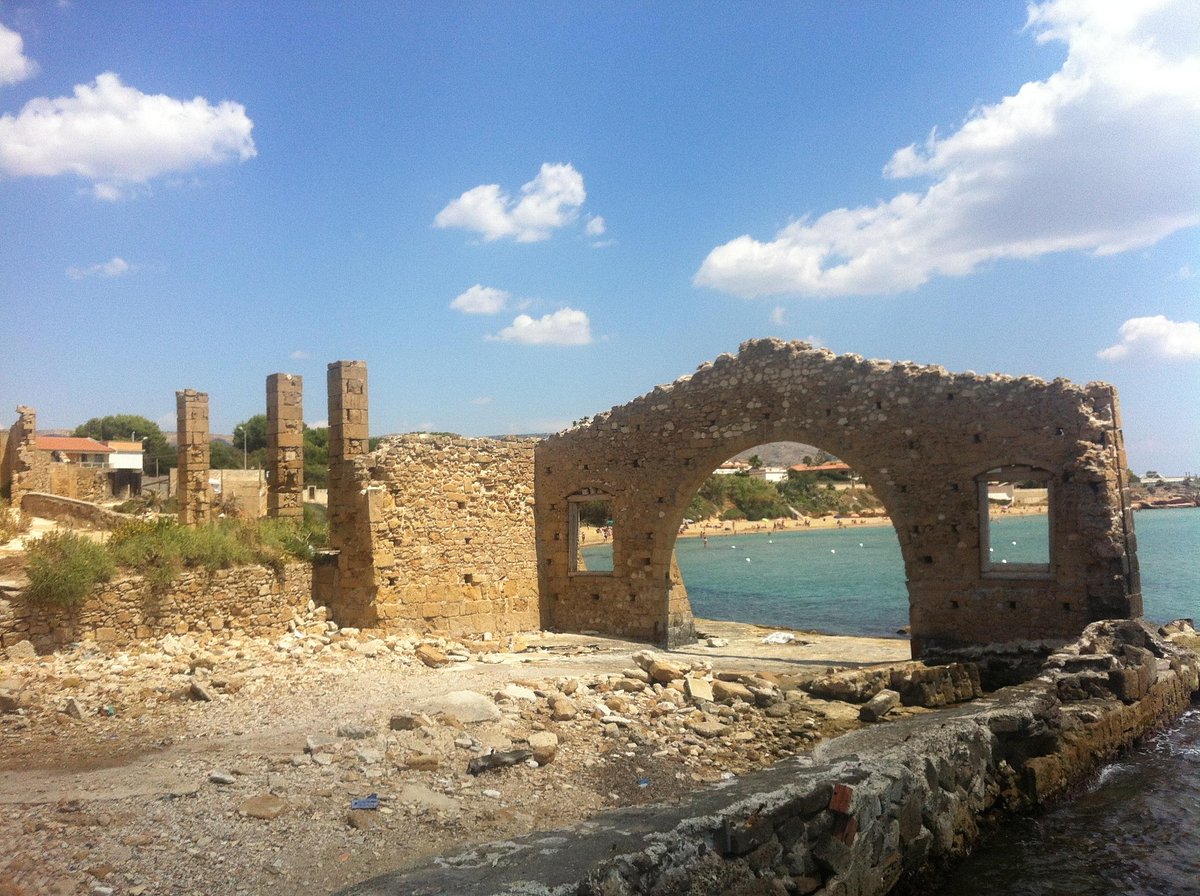
The historic Tonnara di Avola, in the province of Syracuse, Sicily, is the subject of a proposal to convert the former tuna-processing complex into a luxury five-star hotel. The preliminary concept envisages 80–90 suites overlooking the sea, restaurants, a swimming pool and wellness facilities. According to reports published on 13 November 2026, the initiative is being promoted by Albert Engineering & Project.
The stated aim is to have the project ready for construction within twelve months, following completion of the design and approval process. This is a milestone preceding construction. The reports reviewed do not specify an opening date, a total development budget, a financing structure or a hotel operator.
For those following the hotel investment market, the proposal raises a fundamental question: how can a distinctive historic property become a business that generates earnings, funds the preservation of its buildings and delivers a return on invested capital?
The answer requires architecture, market demand, operating capability and financial viability to be assessed together.
From historic character to a viable hotel
The Italian heritage organisation FAI’s profile of the Tonnara describes its former role in storing and processing fish, reflected in the complex’s warehouses, industrial buildings and chimney. That history could give the guest experience a distinctive identity.
Every decision about the layout also has economic consequences. Suite sizes influence room inventory; the location of kitchens and service areas affects staff movements; and access, building services and back-of-house space shape both capital costs and operating efficiency.
The design must therefore reconcile conservation requirements, a practical hotel layout and the intended standard of service. A successful conversion should allow guests to experience the character of the place while enabling staff to work efficiently and keeping maintenance costs manageable.
Coordinating these disciplines is central to the approach outlined by Hotel Management Group. For a heritage conversion, this means bringing owners, designers, financial advisers and future hotel management into the discussion before the most expensive decisions are finalised.
Budget for the full investment cycle
Financial viability depends on the total capital required to reach stabilised operations. This includes the cost of acquiring or securing the right to use the property, professional fees, construction, building services, furniture, fixtures and equipment, contingencies and financing.
Pre-opening expenditure must also be funded: recruitment and training, the commercial launch, technology systems and opening supplies. Working capital and the cash required while revenues build are equally important. The need for funding can continue well beyond the opening date.
Within the investment appraisal and advisory disciplines covered by Investhotel Capital Partners, a sound starting point is the sustainable financial performance of the proposed business. Expected cash flows, assessed against development timing, risk and the required return, should inform how much capital the project can justify.
The appraisal should also consider adverse scenarios: delays in obtaining approvals, construction cost increases, a postponed opening and slower revenue growth. The risk analysis addressed by Hotel Intelligence helps identify these vulnerabilities before they become urgent funding requirements.
A delay that causes the hotel to miss an important trading period can increase financing costs while reducing the revenue available to support its initial operations. The development programme must therefore be linked to the cash flow forecast and the conditions governing the release of funding.
The funding plan should remain viable under a credible downside scenario.
Build the demand forecast month by month
A luxury positioning must be supported by identifiable demand: source markets, reasons for travel, length of stay, willingness to pay and booking channels. For Avola, the assessment should examine the potential contribution of coastal holidays, cultural experiences, food and wine, and wellness at different times of the year.
The operating forecast should be built month by month, specifying opening days, available suites, occupancy and average room rates. Distribution and customer acquisition costs must be explicit, so that headline rates can be distinguished from the revenue retained after selling costs.
These decisions sit at the intersection of positioning, revenue management and distribution—the areas addressed by Hotel Marketing Lab. The channel mix should reflect the target customer, the expected margin and the potential to generate repeat business.
Restaurants, spa facilities and any events business also need their own operating assessment, covering demand, capacity, staffing and direct costs. Their inclusion should be justified by both their contribution to the guest experience and their expected financial performance.
Technology, an area covered by Hospitech, should support this commercial discipline. Reservation platforms, property management systems and customer relationship tools need to share information that helps management make decisions. Understanding who books, through which channels and at what acquisition cost is particularly valuable during the opening period.
Align the operating model with the brand strategy
The operating model determines who funds day-to-day costs, employs staff, controls commercial decisions and carries operating risk.
Owners can operate the hotel directly, appoint an operator under a management agreement or lease the property or hotel business to an operator. Brand affiliation is a separate decision that must fit the operating model: the brand and the operator can be different organisations.
| Model or arrangement | What to assess before signing |
|---|---|
| Direct operation with specialist support | Internal capabilities, decision-making responsibilities and the capital available to fund operations |
| Hotel management agreement | Fees, budget approval rights, performance tests, contract duration and termination provisions |
| Lease of the property or hotel business | Rent sustainability, the operator’s financial strength, and responsibility for maintenance and capital expenditure |
| Brand affiliation | Expected incremental revenue, total costs, required standards and compatibility with the property’s identity |
In hotel management and development, the areas covered by Necci Hotels, an operator’s capabilities need to match the specific requirements of the property and its owner. For a historic tonnara, the assessment should include opening experience, service organisation and an understanding of the ongoing costs of preserving the buildings.
FURTHER READING — Management expertise and hotel identity
The relationship between management discipline and commercial independence is explored in Tailored Hotel Consultancy: The Efficiency of Major Chains Without Losing Your Hotel’s Identity.
For a heritage conversion, this means developing management systems, performance reporting and service standards around the character of the property and the objectives of the business.
Luxury service starts with the team
Service quality depends on an organisation designed before the hotel opens. The general manager, department heads and commercial team should help translate the intended positioning into staffing levels, procedures, response times and financially sustainable service standards.
The recruitment of key managers, the specialist field of Vertex Executive Search, should begin with clearly defined responsibilities and expected outcomes. Recruitment must then be supported by training. Financial literacy, departmental organisation and management decision-making are among the areas addressed by Roberto Necci Academy.
For a project of this kind, it would also be sensible to assess the availability of local staff, any transport or accommodation requirements, and the conditions that could help retain experienced teams from one season to the next.
Operational experience from businesses such as Hotel Domidea and other professionally managed accommodation models, including Well Done Apartments, can help identify transferable management practices. Staffing levels, room rates and financial assumptions must then be tailored to the individual project.
Governance and cash flow must develop together
Effective hotel governance defines who makes decisions, who monitors performance and what information the owner receives. The management accounting and performance control approach of HotelControl addresses the next step: turning operating and financial data into information that management can act on.
During development, the essentials include an updated budget, a payment forecast, a clear record of changes and timely reporting of variances. Once the hotel is operating, performance measures should connect revenue with staffing costs, distribution expenses, utilities, maintenance and cash flow.
Operating profit and cash available to the owner measure different things. The financial model must make clear which costs are included in the reported operating result and which cash requirements sit beyond it. These may include furniture and equipment replacement, further capital expenditure, changes in working capital, taxes and debt service.
Property valuation also requires consistent assumptions about cash flows, the forecast period, risk and the value attributed to the asset at the end of that period. A valuation based principally on the proposed suite count or an untested profit margin would create a misleading impression of precision.
A credible plan shows which variables have the greatest effect on performance and when corrective action may be required.
The relationship with Avola is part of the investment strategy
For a project of this kind, its relationship with the surrounding area should translate into practical commitments: accessibility, how the development fits into the landscape, resource use, opportunities for local suppliers and constructive relationships with the community.
Extending the operating season, for example, requires demonstrable demand during the additional months and a suitable range of services. The decision should be supported by an assessment of the incremental financial contribution and the staffing requirements of remaining open.
The connection between investment and the local economy, also explored in the editorial work of Roma Economia Urbana, provides a useful way to consider the relationship between a hotel, public services, public space and neighbouring businesses. Applied to Avola, this perspective encourages the expected local benefits to be expressed in measurable terms.
Employment, local purchasing and experiences offered to guests can all become project indicators. Their contribution should be assessed during operations, distinguishing the original objectives from the results actually achieved.
The evidence needed for an investment decision
To move from an announcement to an informed investment decision, a hotel conversion should be supported by evidence in at least the following areas.
| Area | Evidence required | Decision supported |
|---|---|---|
| Property and approvals | Legal control of the property, technical due diligence, permitted uses and the approval process | Establishing what can be developed and within what timeframe |
| Capital and financing | A complete sources-and-uses statement, available funding, contingency reserves and the funding timetable | Testing financial viability through development and the opening period |
| Market demand | Demand analysis, a relevant competitive set and documented monthly forecasts | Defining the hotel product and its commercial positioning |
| Operations | Organisational structure, responsibilities, operator agreements and any brand affiliation costs | Allocating risk and retaining appropriate control over the business |
| Performance and value | Profit and loss forecasts, cash flow projections and consistent sensitivity scenarios | Assessing returns and the capacity to absorb departures from the base case |
The Tonnara di Avola proposal provides a useful opportunity to examine the future of hotel conversions in Sicily. Historic character can create a distinctive proposition; its economic value must be developed through credible demand assumptions, capable management and adequate funding.
This is also the perspective behind the content available through Hotel Investments and Roberto Necci’s Substack newsletter: connecting property development, investment decisions and operating performance.
The quality of the investment will ultimately depend on its ability to preserve the place, satisfy its guests and sustain the business that brings it back to life.
For a preliminary assessment of a hotel conversion, acquisition or repositioning project, including its market positioning, financial plan and operating model, contact info@investimentialberghieri.it.